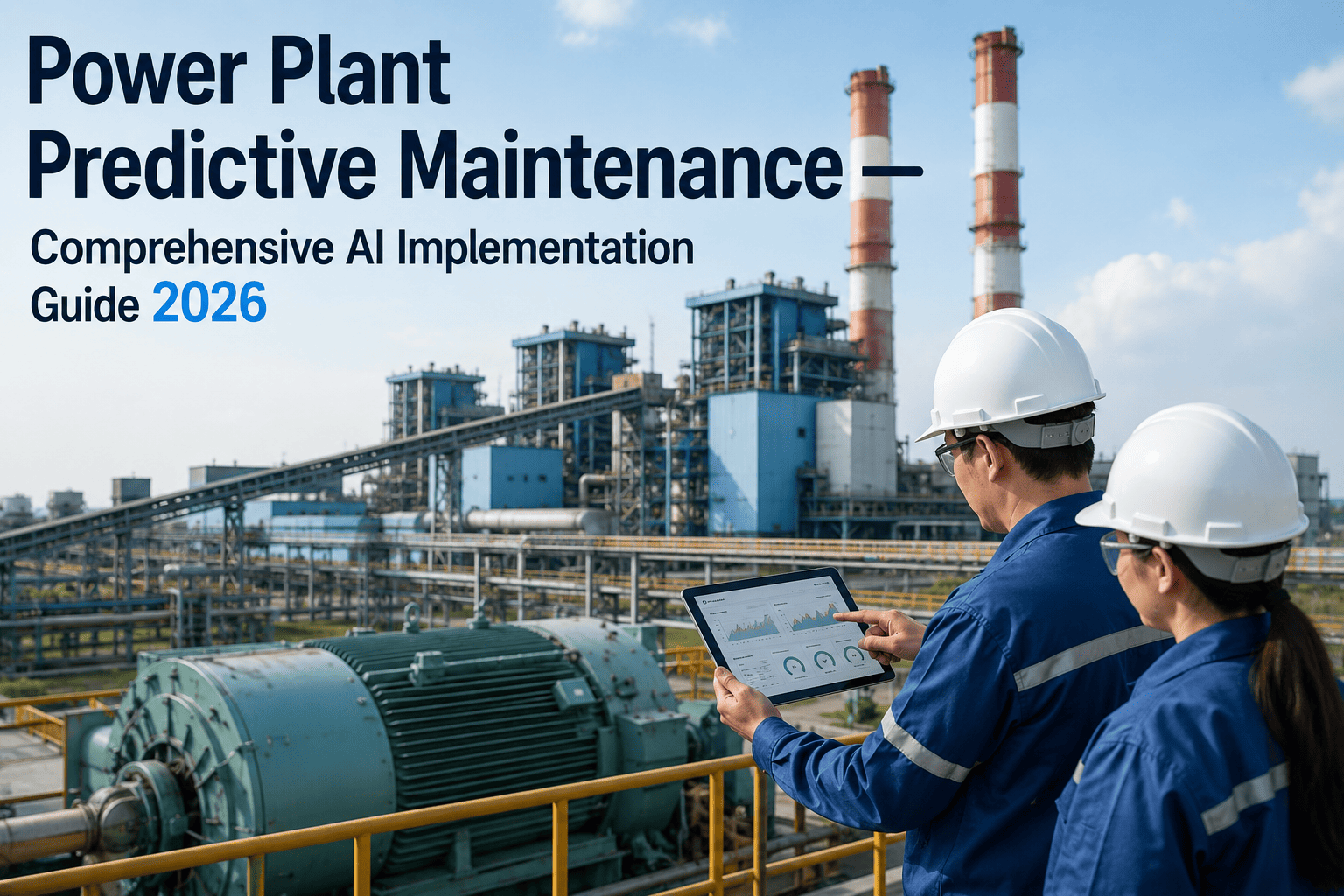
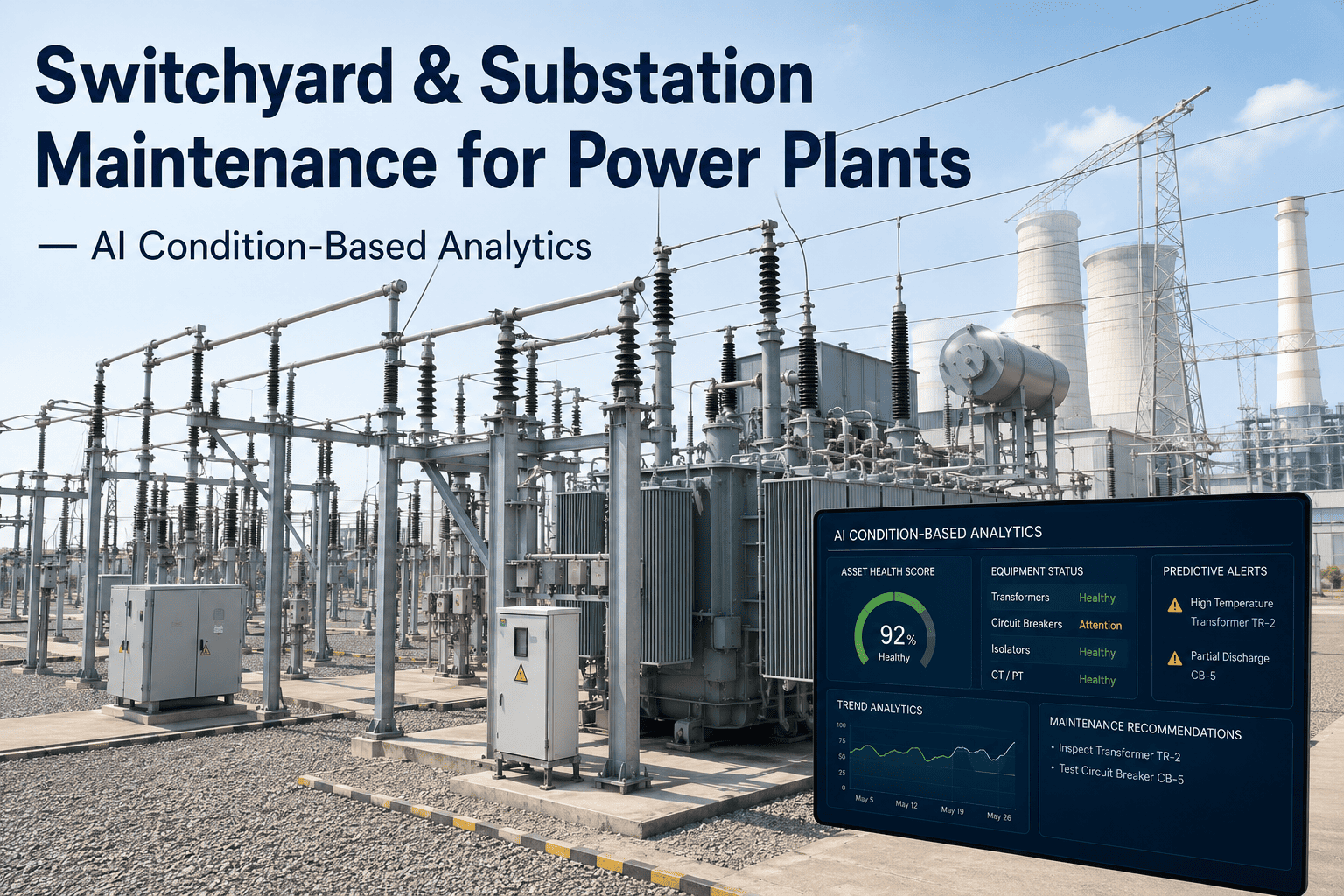
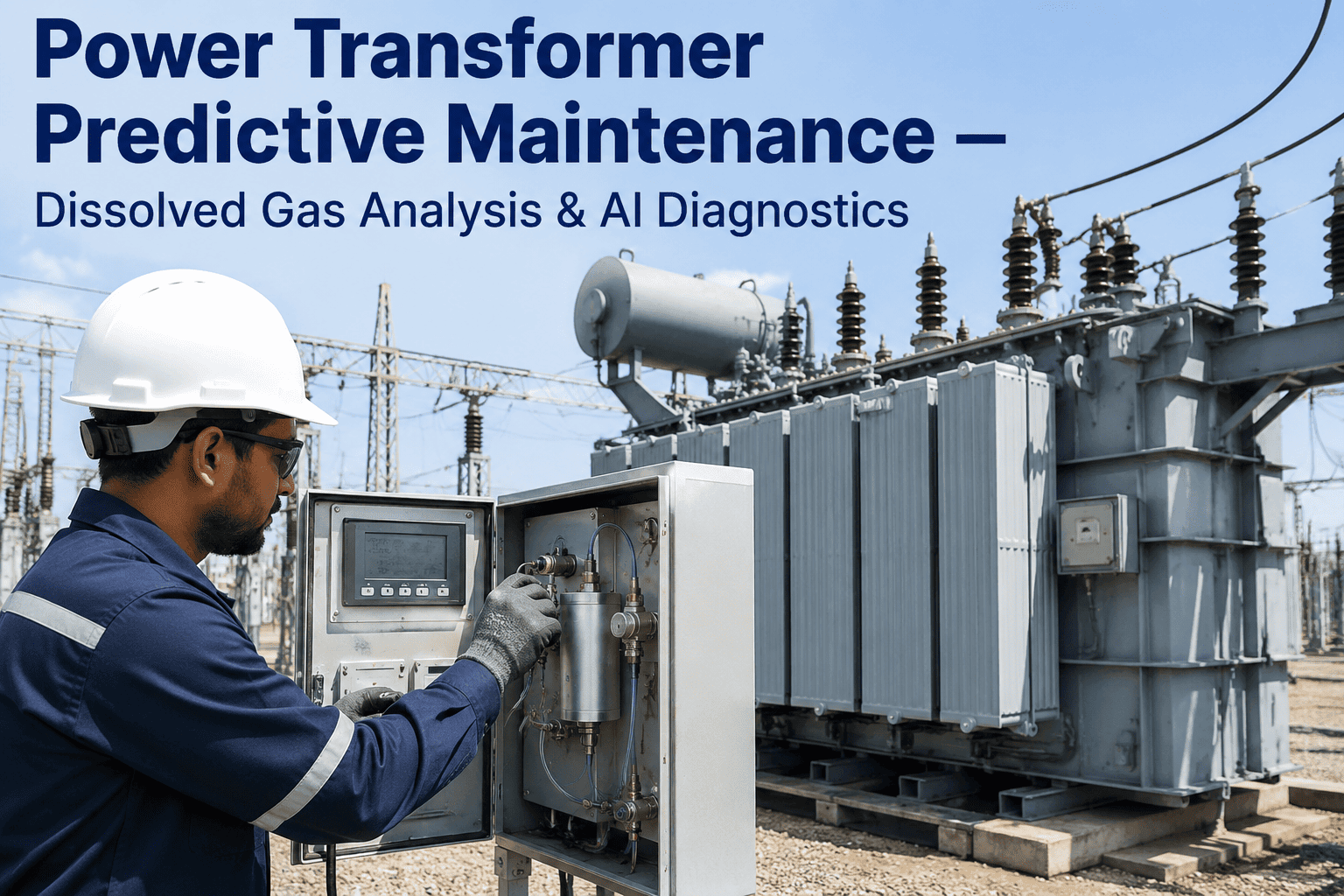
A turbine bearing that fails without warning does not actually fail without warning — it sends a detectable signal weeks before the trip, in vibration data, temperature trends, or acoustic patterns that a monthly inspection round is never scheduled to catch. Power plant Maintenance Managers running turbines, generators, boilers, transformers, and balance-of-plant equipment on a mix of calendar schedules and break-fix response are absorbing forced outages that the underlying data already predicted. A comprehensive AI predictive maintenance program covers every major equipment class with the specific fault signatures and warning windows each one produces, turning scattered sensor data into a single reliability program instead of a pile of unread historian trends. iFactory's platform runs this exact model across your plant's critical assets. Book a demo to see it configured for your turbines, boilers, and generators.
AI-Driven · Power Generation · Comprehensive Predictive Maintenance
The Comprehensive AI Predictive Maintenance Guide for Power Plant Equipment
One platform, every critical asset class — turbines, generators, boilers, transformers, and balance-of-plant equipment monitored continuously, with forced outages cut by 45% and maintenance costs down 25%.
45%
Average reduction in forced outages after full AI predictive maintenance deployment
25%
Average reduction in total maintenance cost compared to calendar-based programs
90%+
Of forced outages traced to just six critical equipment categories plantwide
4–12 wks
Typical advance warning window before a developing fault becomes a forced outage
The Cost of Reactive Maintenance
Four Ways Calendar-Based Maintenance Bleeds Value From a Power Plant
None of these problems are visible on a maintenance schedule. They only become visible in the forced outage log, months after the underlying degradation started.
4–5x Cost
Emergency Repairs Cost Multiples of Planned Work
Forced outages trigger emergency labor premiums, expedited parts shipping, and replacement power purchases at spot-market prices — costs that a scheduled repair during a planned outage window simply does not incur.
Over-Maintained
Healthy Equipment Gets Serviced Anyway
Calendar-based schedules service equipment regardless of actual condition, consuming technician hours and parts budget on assets that were showing no signs of degradation in the first place.
Cascading Risk
One Auxiliary Failure Forces a Full Unit Trip
A single feedwater pump or fan failure can force a complete unit shutdown within minutes, even though the pump itself was a low-cost component compared to the outage it triggered.
Invisible Data
The Warning Signal Existed but Nobody Was Watching
Most forced outages are preceded by weeks of detectable degradation in vibration, temperature, or acoustic data that a monthly inspection round or an unmonitored historian tag never surfaces in time.
Full Plant Coverage
Six Critical Equipment Categories, Monitored as One Program
These six categories account for the large majority of forced outages plantwide. Each one produces a distinct set of fault signatures and a different advance warning window.
Steam and Gas Turbines
Detects: blade fatigue, bearing wear, rotor eccentricity, blade path erosion
Warning window: 30–90 days
Vibration spectrum analysis, bearing temperature trending, and rotor alignment tracking catch the degradation patterns responsible for the highest-cost single-event outages in the plant.
Generators
Detects: winding insulation breakdown, rotor imbalance, cooling system degradation
Warning window: 6–18 months
Partial discharge monitoring and stator vibration analysis surface insulation and winding faults on the components with the longest replacement lead times in the plant.
Boilers and HRSGs
Detects: tube wall thinning, corrosion, fatigue and creep cracking
Warning window: 6–18 months
Ultrasonic thickness trending and thermal strain monitoring catch tube degradation months before rupture — critical since boiler tube leaks drive over half of forced outages at coal-fired plants.
Transformers
Detects: insulation aging, hot spots, dissolved gas anomalies
Warning window: 3–18 months
Dissolved gas analysis and thermographic hot-spot detection identify the fire and safety risks that aging transformer fleets carry, well ahead of failure.
Balance-of-Plant Auxiliaries
Detects: pump cavitation, fan imbalance, valve wear
Warning window: 2–8 weeks
Vibration and motor current monitoring on pumps, fans, compressors, and valves catches the auxiliary failures that most often cascade into a full unit trip.
Condensers and Cooling Systems
Detects: tube fouling, cooling tower degradation, efficiency drift
Warning window: Real-time trend
Flow and temperature trending catches efficiency loss before it compounds into a heat rate penalty that shows up on every megawatt-hour generated.
How the Program Works
A Four-Stage Intelligence Pipeline, Not Guesswork With Better Sensors
1
Continuous Data Ingestion
SCADA, DCS, and IoT sensor data streams continuously into the platform from every monitored asset, not on a monthly inspection cycle.
2
AI Anomaly Detection
Models trained on each asset's own operating history compare real-time performance against its established baseline, not a generic industrial threshold.
3
Failure Forecast
A detected anomaly is converted into a specific failure timeline, cost impact estimate, and recommended action instead of a generic alarm.
4
Work Order Generation
High-confidence alerts automatically generate a CMMS work order with diagnosis, parts, and priority already attached, so the maintenance team acts on intelligence, not a dashboard nobody checks.
iFactory Monitors Every Critical Asset Class From One Platform.
Turbines, generators, boilers, transformers, and balance-of-plant equipment — connected to your existing DCS historian and CMMS, with a working pilot delivered in six to twelve weeks.
Reactive vs. Predictive
The Cost Difference Between Reacting and Predicting
Cost Driver
Reactive / Calendar-Based
AI Predictive Maintenance
Cost Per Horsepower
$17–18 annually in corrective maintenance
$7–13 annually with predictive monitoring
Emergency Parts Orders
Rush-shipped at 35–45% premium pricing
Ordered 30–60 days ahead at negotiated pricing
Technician Time
Significant share consumed by emergency response
Redirected to planned, scheduled work
Scheduled Maintenance on Healthy Assets
Performed regardless of actual condition
Extended when condition data shows no degradation
Outage Type
Unplanned trip during peak generation
Scheduled repair during a planned outage window
From the Field
What Full Plant Coverage Actually Prevented
We had vibration monitoring on our turbines already, but our boiler tubes, transformers, and feedwater pumps were still running on calendar inspections. The first year we brought all six equipment categories onto one platform, the system caught a turbine bearing degradation fifty-two days before projected seizure — that alone would have covered the annual platform cost several times over. But the bigger shift was on the boiler side. We caught progressive tube wall thinning thirty-eight days before our predicted rupture threshold and replaced the section during a scheduled weekend outage instead of an emergency shutdown. Across the full first year, we avoided fourteen forced outages that our previous maintenance regime would not have caught until the equipment actually failed.
— Maintenance Manager, 1,200MW Coal-Fired Power Station, U.S. Midwest
14Forced outages avoided in the first year of full deployment
52 daysAdvance warning on the largest single avoided event
61%Drop in unplanned downtime after full deployment
Conclusion
The Data That Predicts Your Next Forced Outage Already Exists
Turbines, generators, boilers, transformers, and balance-of-plant equipment all produce detectable degradation signatures weeks or months before a forced outage — the sensor data usually already exists somewhere in the historian. What most plants are missing is not the data, but a single AI layer that watches all six equipment categories continuously and converts that data into a specific, actionable warning before the failure event.
iFactory's platform connects to your existing DCS historian and CMMS and delivers a working pilot on your highest-priority assets in six to twelve weeks. Book a Demo to see full plant coverage configured for your equipment.
Frequently Asked Questions
Power Plant Predictive Maintenance — What Maintenance Managers Ask First
Which equipment should a power plant prioritize first when starting a predictive maintenance program?
Start with the fifteen to twenty percent of assets responsible for the majority of forced outages — typically steam or gas turbines, boiler tube sections, generators, main transformers, and critical feedwater pumps. These assets combine high failure cost with detectable degradation signatures, which means monitoring them first proves program value fastest and generates the budget momentum to expand coverage plantwide.
Book a demo to identify the highest-priority assets at your specific plant.
Can AI predictive maintenance work with an older plant's legacy SCADA and DCS systems?
Yes. AI predictive maintenance platforms connect to legacy historian systems through standard protocols including OPC-UA, Modbus TCP, and OSIsoft PI, so an older control system architecture is not a barrier to deployment. Older plants often have an advantage here — a historian with five or more years of operating history gives the AI model a deeper baseline of normal and abnormal behavior to learn from than a newer plant with limited operating history would provide.
How long does it take to see measurable results after deploying AI predictive maintenance?
Rules-based detection for known failure signatures, such as stuck valves or established bearing degradation patterns, typically achieves high accuracy from the first weeks of deployment because the underlying logic is pre-built. Predictive failure forecasting that learns each specific asset's individual baseline improves over three to six months, with most programs reaching strong prediction accuracy on major failure modes by roughly the six-month mark.
What does a typical AI predictive maintenance pilot cost, and what is the expected payback?
Initial deployment on a focused set of high-priority assets typically runs in the tens of thousands of dollars for sensors and integration. Payback for power generation assets is rarely measured in months in the traditional sense — a single prevented turbine or generator forced outage frequently exceeds the platform's entire annual cost by a wide margin, since major forced outages routinely run into six or seven figures in combined repair and lost generation cost.
Contact support to scope a pilot sized to your plant's critical assets.
Does predictive maintenance replace the existing maintenance team and processes?
No. AI predictive maintenance is designed to convert the maintenance team from reactive firefighting into planned, condition-based work — it generates the work order, diagnosis, and priority, but a technician still performs the inspection and repair. The existing CMMS, work order process, and technician expertise remain central to the program; the AI layer changes when and why a work order gets created, not who executes it.
See What Your Plant's Own Data Is Already Telling You
Full coverage across turbines, generators, boilers, transformers, and balance-of-plant equipment — connected to your existing historian and CMMS, with a working pilot in six to twelve weeks.