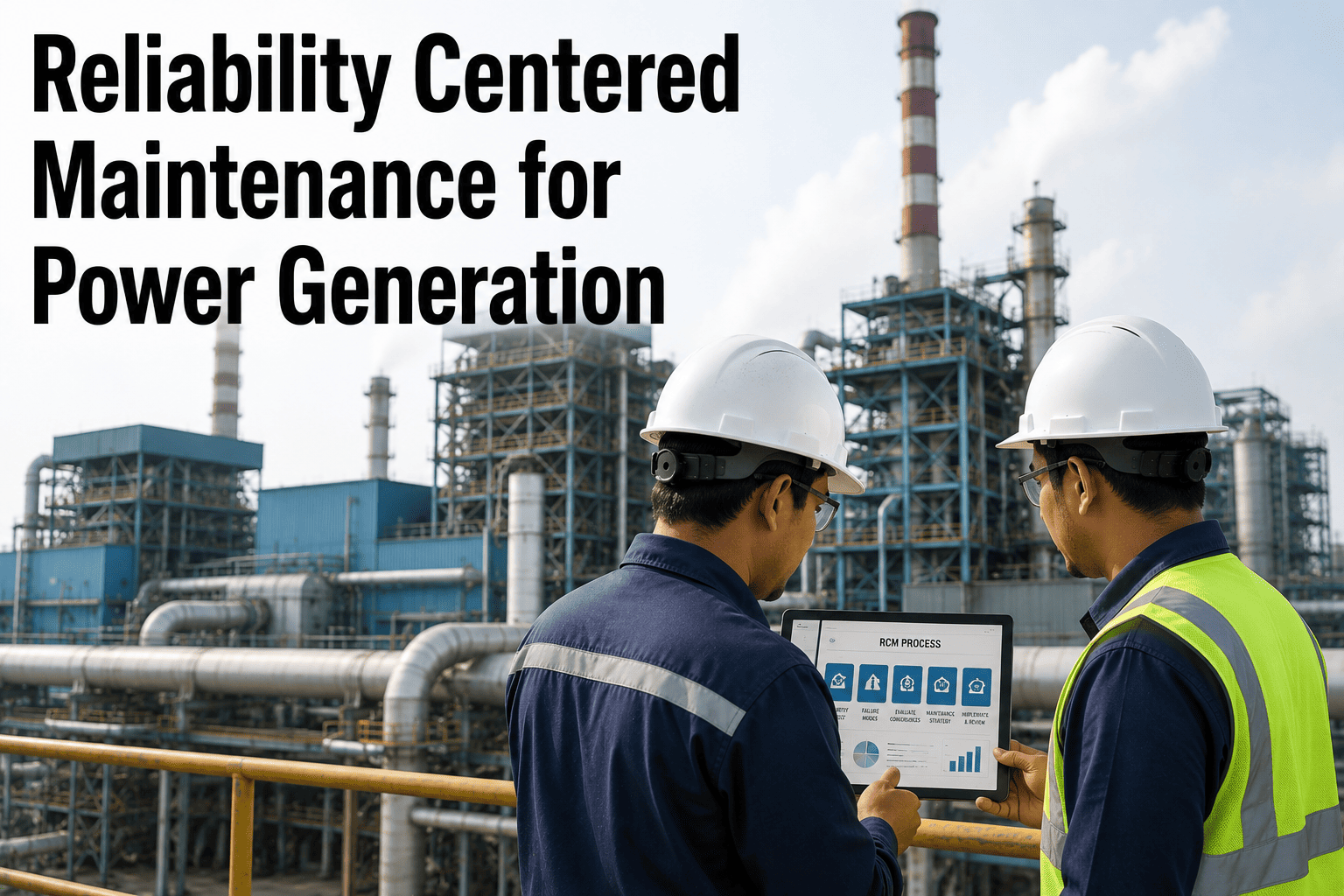
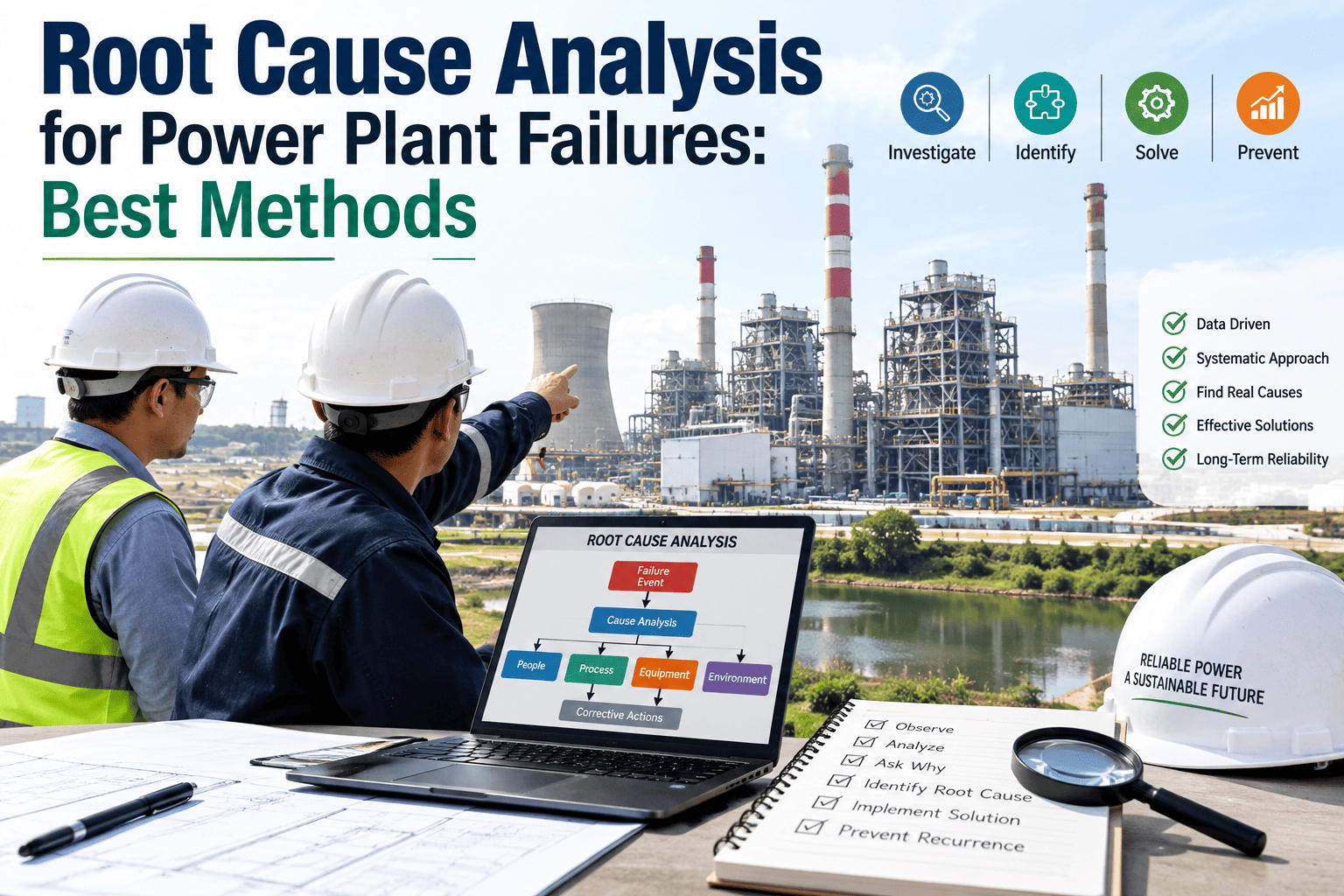
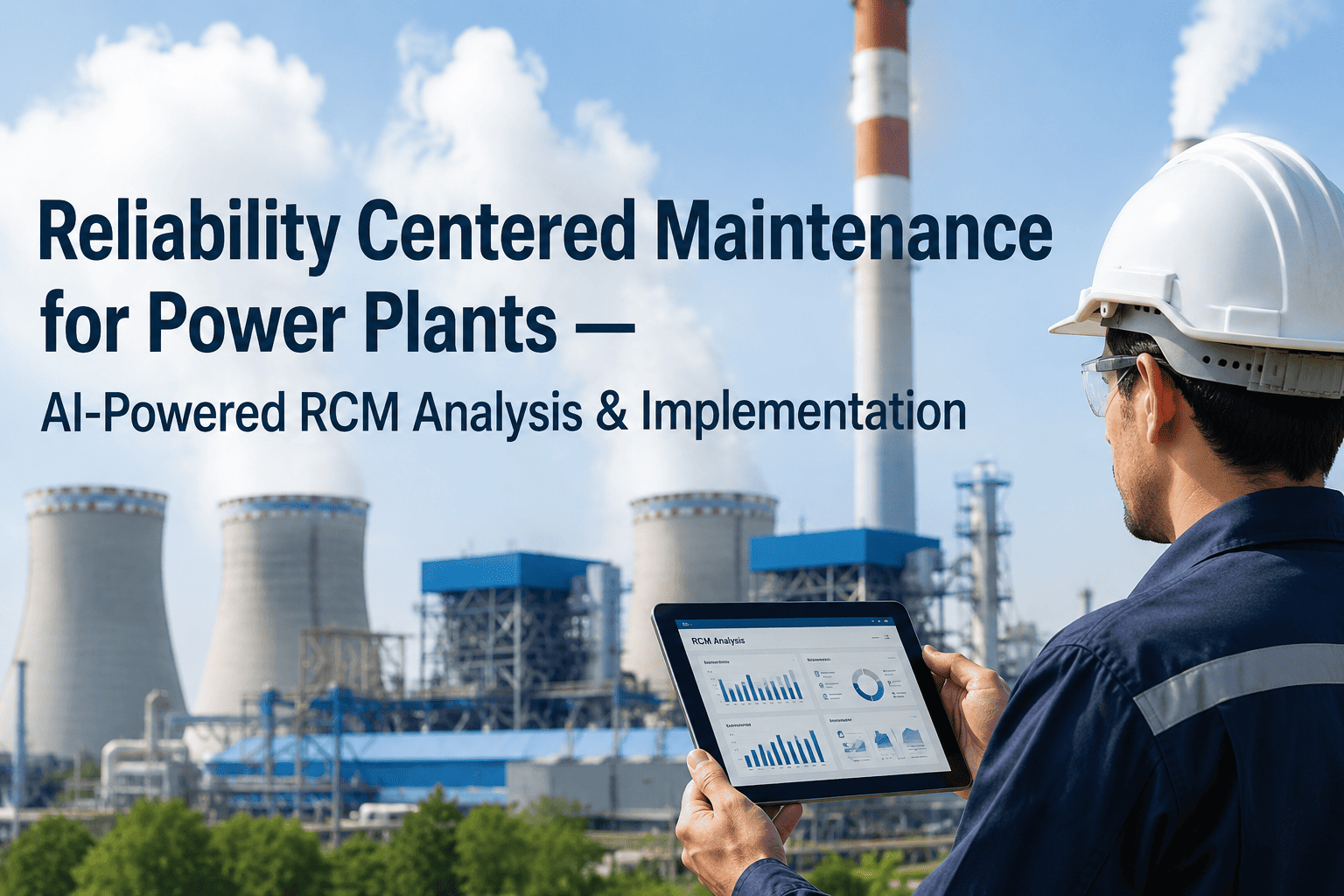
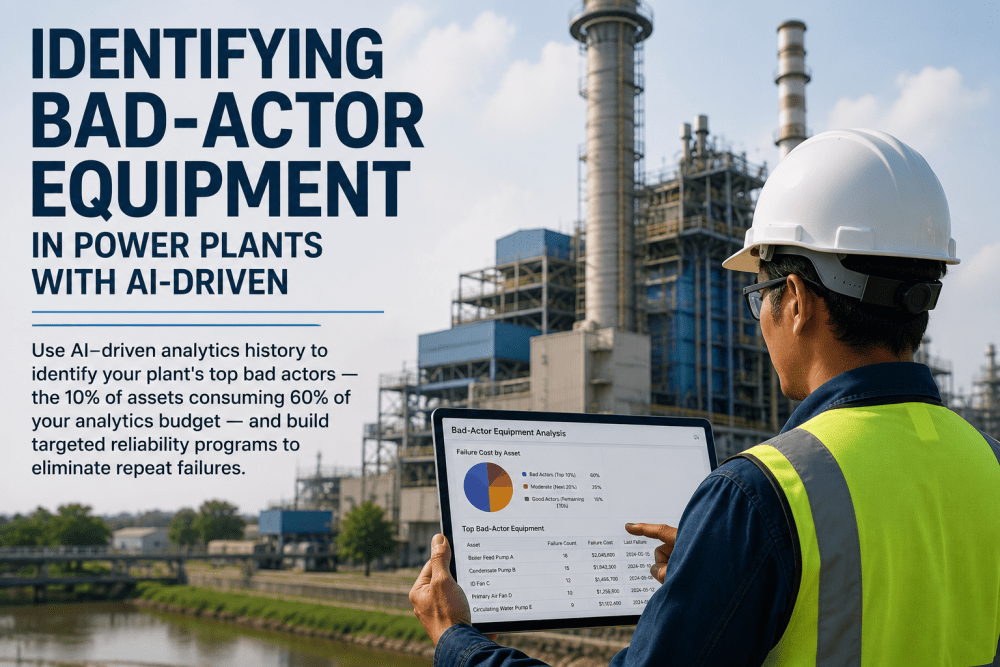
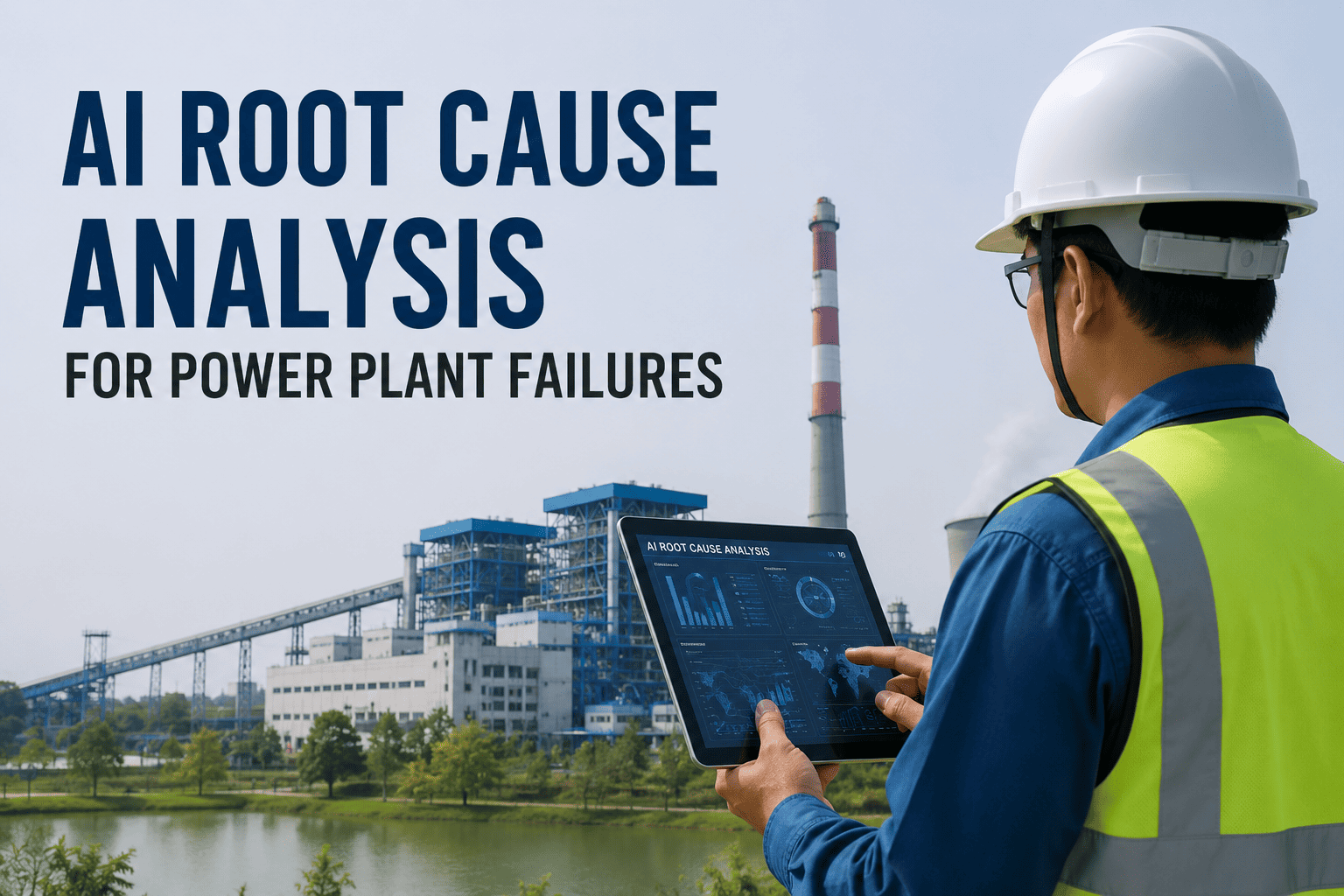
Most maintenance programs at power plants are inherited. Someone set the schedules 15 years ago based on OEM recommendations, a plant engineer added tasks after a bad event in 2011, another engineer removed some tasks after a budget cut in 2018, and today the PM schedule is a fossil record of decisions nobody currently at the plant made. Reliability-Centered Maintenance flips that. RCM starts from function — what is this asset supposed to do — and works backward to task selection through failure modes and consequences. The methodology is defined by SAE JA1011, structured around seven questions, and when applied to gas turbines, boilers, generators, and balance-of-plant equipment, it consistently strips out unnecessary tasks, closes gaps in coverage, and shifts the maintenance mix toward strategies that actually match how the equipment fails. To model what an RCM analysis would surface on your fleet, the iFactory support team can walk through a scoping conversation grounded in your current PM baseline and forced outage history.
Reliability Engineering · Power Generation
Stop Maintaining Assets. Start Maintaining Functions.
Reliability-Centered Maintenance for turbines, boilers, generators, and balance-of-plant systems. SAE JA1011-compliant analysis, consequence-driven task selection, and a maintenance program built around how your equipment actually fails — not around a 20-year-old OEM schedule.
40%
Typical reduction in PM task hours
25-30%
Improvement in forced outage rate
7
JA1011 questions per asset
4
Failure consequence categories
The Seven Questions
Every SAE JA1011 Analysis Answers These — In Order — For Every Asset
RCM is not a certification. It is a methodology defined by SAE JA1011 as a specific sequence of seven questions that every analysis must answer for every asset in scope. Skip a question, apply tasks without consequence analysis, or fail to document a decision, and the process does not qualify as RCM regardless of what label it carries. Here is the sequence, applied through the lens of power generation equipment. The order matters. Each question depends on the answers to the ones before it, which is why a process that jumps straight to "what task should we schedule" without first establishing function and consequence is not producing an RCM output — it is producing a task list that happens to have failure modes attached.
Q1
Function and Performance Standards
What is the asset supposed to do, and to what standard? A gas turbine is not just "a turbine" — its function might be to deliver 180 MW at 98 percent availability at design-point efficiency, in a specific ambient envelope. Every downstream analysis flows from getting this right.
Q2
Functional Failures
In what ways can it fail to meet those standards? A turbine can fail hard (trip offline), fail soft (produce 150 MW instead of 180), fail on efficiency, or fail on emissions. Each mode is a distinct functional failure with its own downstream analysis.
Q3
Failure Modes
What causes each functional failure? Blade cracks, combustor liner erosion, seal degradation, fuel nozzle fouling, control system faults — each cause is a distinct failure mode. Modes are ranked by likelihood and severity for further analysis.
Q4
Failure Effects
What happens when each mode occurs? Blade crack progression to failure can mean forced outage, downstream damage, days of unplanned repair, and lost generation revenue. The effect analysis is what makes consequence classification possible.
Q5
Failure Consequences
How does each failure matter? RCM classifies every failure into one of four consequence categories — hidden, safety and environmental, operational, or non-operational — and the category drives the entire task selection logic downstream.
Q6
Proactive Tasks
What proactive task, if any, prevents or predicts this failure? RCM evaluates three proactive task types in strict order of preference — on-condition monitoring, scheduled restoration, scheduled discard — and selects the highest-preference task that is both technically feasible and worth doing.
Q7
Default Actions
If no proactive task is appropriate, what default action applies? Failure-finding tasks for hidden failures, redesign when consequences are unacceptable and no proactive task works, or deliberate run-to-failure when the economics support it.
Consequence Categories
Task Selection Follows Consequences, Not Asset Value
This is the shift that makes RCM different from schedule-based PM. Every failure mode is classified into one of four consequence categories, and the category determines which maintenance strategies are even considered. A high-value asset with only non-operational consequences may correctly land on run-to-failure. A low-value auxiliary with hidden safety consequences may need aggressive proactive tasks. Value alone does not decide. This is often the hardest shift for maintenance organizations to accept because it explicitly says that some expensive equipment does not need scheduled maintenance and some inexpensive equipment does — which is the opposite of how legacy PM programs typically allocate attention.
Hidden
Undetectable Under Normal Operation
Failures that stay invisible until a second failure exposes them — protective systems, backup equipment, standby generators. Failure-finding tasks are the primary strategy, because you cannot condition-monitor what you cannot see.
Example: turbine emergency trip valve stuck open on demand.
Safety and Environmental
Direct Harm Potential
Failures that could injure people or breach environmental limits. Proactive task must reduce failure probability to a tolerable level, and if no proactive task works, redesign is mandatory — run-to-failure is not permitted.
Example: boiler tube rupture, generator hydrogen leak, fuel gas containment loss.
Operational
Production or Revenue Impact
Failures that reduce output, drive forced outage, or push efficiency down. Task is justified if the cost of prevention over the failure mode's life is less than the cost of the failure itself. This is where most gas turbine hot section decisions land.
Example: compressor blade cracking, HRSG tube fouling, transformer cooling fault.
Non-Operational
Repair Cost Only
Failures that only affect repair or replacement cost. Task justified only if prevention over the mode's life costs less than the repair itself. Deliberate run-to-failure is often the correct answer here, and RCM is what makes that choice defensible.
Example: peripheral pump housing wear on a non-critical service.
Model What RCM Would Change in Your Current PM Program
iFactory will scope a pilot RCM analysis on one critical asset — a gas turbine, HRSG, or generator — and show which existing tasks would be removed, added, or reclassified under a JA1011-compliant analysis.
Task Hierarchy
The Task Selection Ladder — Highest Preference First
RCM does not treat all maintenance strategies as equal. There is a strict order of preference for proactive tasks, and only after all three proactive options have been ruled out does the analysis fall back to default actions. This ordering is one of the biggest differences between RCM and traditional PM planning, which typically defaults to time-based intervention as the first option. Under RCM the default is on-condition monitoring wherever a measurable early-warning signal exists, which is why RCM programs in mature plants consistently push toward condition-based maintenance and away from calendar-driven overhauls that were originally justified because condition monitoring did not exist when the schedule was written.
Tier 1
Highest preference
On-Condition Tasks
Predict the failure before it happens. Vibration analysis on rotating equipment, oil analysis on lube systems, borescope inspection of turbine hot sections, thermal imaging on transformers. Selected first whenever a measurable early warning exists.
Tier 2
If no P-F interval exists
Scheduled Restoration
Restore the item to acceptable condition at a fixed interval. Overhaul, refurbishment, cleaning. Selected when age-related wear-out is dominant and there is no viable early-warning signal to condition-monitor.
Tier 3
If restoration not feasible
Scheduled Discard
Replace the item at a fixed interval regardless of condition. Applies where the item cannot be restored to as-new condition or where restoration is uneconomic. Common for consumables — filters, seals, wear parts.
Default
When no proactive task fits
Default Actions
Failure-finding for hidden failures, redesign when safety consequences cannot be managed proactively, deliberate run-to-failure when non-operational consequences make prevention uneconomic. Explicit choices, documented and defensible.
Applied to Power Generation
How RCM Reshapes Maintenance Across the Plant
The seven questions and four consequence categories apply the same way across industries, but the answers land differently in power generation. Below are the equipment areas where RCM most consistently produces measurable change in the maintenance mix, and what the change typically looks like. The pattern across all four areas is the same — legacy schedules built decades ago on OEM assumptions get displaced by consequence-driven strategies grounded in the specific failure modes and operating context of this plant, at this load profile, with this fuel and cooling setup.
Gas Turbines
From: fixed hot-gas-path inspection intervals
To: condition-based intervention driven by borescope, blade tip clearance, and firing temperature trends
RCM moves gas turbine maintenance away from calendar-based hot-section overhauls toward on-condition strategies tied to measurable degradation signals. Fired-hours-based intervals become a fallback for failure modes where no reliable condition signal exists rather than the default across the whole turbine.
Boilers and HRSGs
From: blanket tube inspection during every outage
To: targeted inspection on tubes with known creep, corrosion, or erosion exposure
Tube failure modes are consequence-classified individually — a superheater tube in a high-flux zone has different consequences than an economizer tube — and inspection scope is sized to consequence rather than blanket across the whole pressure part.
Generators and Transformers
From: heavy time-based electrical testing
To: on-condition monitoring of partial discharge, dissolved gas, and thermal signatures
Generator winding and transformer insulation failure modes have well-characterized early-warning signals. RCM's preference for on-condition tasks pushes the program toward continuous monitoring where signals exist, reducing offline test frequency without reducing coverage.
Balance-of-Plant
From: OEM-recommended schedules on every pump and valve
To: consequence-driven mix including deliberate run-to-failure on low-consequence items
Balance-of-plant is where RCM's non-operational consequence category most changes the maintenance mix. Many pumps, valves, and auxiliary equipment failure modes correctly land on run-to-failure once the analysis quantifies that prevention costs more than the failure itself.
The Team
Why RCM Requires a Multidisciplinary Team — Not Just Maintenance
RCM analysis is not a maintenance department exercise. The methodology requires a multidisciplinary team, because the answers to the seven questions live across different functions in the plant. Operations understands the operating context and what performance actually matters. Maintenance understands failure modes and how tasks translate to the floor. Engineering understands the design intent. A trained RCM facilitator drives the process and enforces JA1011 compliance.
When the team composition is wrong — analysis done by maintenance alone with no operations input, or by an outside consultant with no plant-specific knowledge — the output tends to look like RCM on paper but fail to change behavior on the floor. The seven questions get answered, but the answers do not reflect the real operating context, and the resulting task list never displaces the legacy PM schedule.
Facilitator
Trained in JA1011 methodology, drives the questions in order
Operations Rep
Defines operating context and performance standards
Maintenance Engineer
Failure modes, task feasibility, current program state
Equipment Specialist
OEM design intent and known failure history
Alternatives
When RCM Is the Right Answer — and When PMO Is
Honest scoping matters. RCM is resource-intensive. A full JA1011-compliant analysis on a gas turbine can take weeks of team time. For plants with mature PM programs already in place, PM Optimization typically delivers most of RCM's value at roughly one-sixth the cost by starting from the existing PM list and applying consequence-based screening rather than building the analysis from scratch. Choosing the right approach up front saves months of team effort. Most operators end up running a hybrid — full RCM on new-build systems and highest-consequence equipment, PMO everywhere else — because that pattern captures the strongest returns from each methodology without spending resources where they will not move the reliability needle.
Use RCM when
You are commissioning a new plant or major system. You have no defensible PM baseline. Safety and environmental consequences dominate the risk profile. Regulators or insurers require JA1011-compliant analysis. Critical asset failure modes are poorly understood.
Use PMO when
You have a mature PM program that has evolved over years. Most failure modes and consequences are well-characterized in operational history. Budget or time constraints rule out full RCM. You need to strip legacy tasks quickly without redesigning the whole program.
Turnkey AI Deployment
How iFactory Ships an RCM-Backed Reliability Program
RCM is a methodology, but the maintenance program that comes out of it needs somewhere to live. iFactory delivers the underlying platform — asset registry, failure mode library, task management, condition-monitoring integration, and analytics — as a turnkey system that hosts the RCM output and keeps it current across the fleet. Without a platform that can carry the analysis forward, RCM decays into a binder on a shelf within two years of the original workshop.
Hardware and Software Bundled
Pre-configured NVIDIA AI server for failure analysis and condition monitoring ships racked and ready. Failure mode libraries pre-populated for power generation equipment. AI models pre-trained on turbine, boiler, and generator failure patterns. Rack it, plug power and Ethernet, and the AI is live.
Full Integration Scope
Network cabling, PLC and SCADA integration, condition-monitoring sensor connectors, CMMS handoff for work order execution, operator training, and 24 by 7 remote monitoring. Everything between the field data and the reliability engineer's screen — no separate integrator project required.
Live in 6 to 12 Weeks
Three-phase rollout — pilot RCM analysis on one critical asset in six weeks, expanded coverage to a full unit by week ten, autonomous reliability loop live by week twelve. Trusted by 1,000+ clients with 99.9 percent uptime across the platform stack.
Operator-Friendly AI
Your reliability engineer types: "Show me condition trends on GT-2 hot section for the last 90 days." The system returns vibration, borescope, and firing temperature data with anomaly flags. No PhD in data science required to run the program.
Buyer Questions
RCM for Power Generation — Common Questions
What actually counts as RCM under SAE JA1011, and why does that matter?
SAE JA1011 defines RCM as any process that answers seven specific questions in a specific order for every asset in scope. If the process skips a question, applies tasks without consequence analysis, or fails to document decisions, it is not RCM under the standard — regardless of what the consulting deliverable is called. This matters because the industry accumulated dozens of methodologies through the 1990s that were sold as RCM but omitted key analytical steps, and organizations spent significant resources on programs that never delivered the reliability gains true RCM produces. JA1011 exists to protect operators from that problem by setting a clear, auditable threshold.
Book a demo for a walkthrough of what a compliant analysis looks like on your equipment.
How long does an RCM analysis take on a typical gas turbine or generator?
A full JA1011-compliant analysis on a major asset like a gas turbine typically runs three to six weeks of dedicated team time when the multidisciplinary team is available and the failure history is well-documented. Larger systems — a full HRSG, a complete generator plus its auxiliaries — can extend beyond that. The realistic pace is one major asset at a time, which is why most operators start with the highest-consequence equipment and either expand from there or fall back to PM Optimization for lower-consequence assets. Analysis time drops significantly on subsequent similar assets because the failure mode library and consequence classifications carry over.
We already have a mature PM program. Is full RCM worth it, or should we do PMO?
For most operations with an established PM program that has been evolving over years, PM Optimization delivers most of RCM's value at roughly one-sixth the resource cost. PMO starts from your existing PM list and applies consequence-based screening — retaining tasks that pass, removing tasks that fail, and adding coverage where gaps exist. Full RCM is the right choice when you are commissioning new equipment, when safety consequences dominate, when regulators require JA1011 compliance, or when the current PM program has drifted far enough from operating reality that starting from function is more efficient than optimizing the existing list. Both approaches use the same underlying methodology — the difference is starting point.
Contact support for a scoping conversation on which approach fits your program.
How does the four-category consequence classification change our task list?
The biggest shifts are in two directions. First, non-operational consequences often justify deliberate run-to-failure on equipment currently receiving scheduled maintenance — the analysis quantifies that prevention costs more than the failure itself, and continuing the PM task is not reliability-driven behavior. Second, hidden failures on protective and standby systems often require adding failure-finding tasks that traditional PM programs miss, because these failures do not surface until a second event exposes them. Safety and environmental failures see the smallest change to task selection but the biggest change to justification quality — the analysis produces defensible documentation of why each task is chosen rather than inheriting choices from history.
What is the honest deployment timeline, and what does our team need to do?
A pilot RCM analysis on one critical asset runs live in about six weeks from kickoff. Expanded coverage across a full generating unit typically lands between weeks ten and twelve. On your side, we need a reliability lead to coordinate scope, an operations representative to define operating context and performance standards, a maintenance engineer with failure-mode knowledge, and IT support for the condition monitoring and CMMS integration piece. The turnkey scope includes the hardware, software, integration, facilitator training, and 24 by 7 remote monitoring, so the internal effort is subject-matter time from the multidisciplinary team rather than building the technical stack. Most operators see program cost recovery inside the first outage cycle through eliminated unnecessary tasks and reduced forced outage rate.
A Maintenance Program Built From Function — Not Inherited From History
SAE JA1011-compliant RCM for gas turbines, boilers, HRSGs, generators, and balance-of-plant — with consequence-driven task selection, on-condition monitoring integration, and a defensible reliability program you can actually explain to auditors. Book a demo to scope a pilot analysis, or contact support for a program assessment built from your current PM baseline and forced outage history.