A circuit breaker inspected on a fixed three-year cycle and marked healthy can develop a coil current anomaly within four months and be on a path toward failure by month eight — invisible to every inspection scheduled after that point. Substation equipment ages on its own timeline, not on a maintenance calendar, and transformers, breakers, disconnect switches, and bus bar connections rarely fail for the same reason twice. For the maintenance manager responsible for grid interconnection reliability, the gap between a calendar inspection and an actual condition change is exactly where forced outages start. Talk to support to start monitoring your switchyard's critical assets continuously.
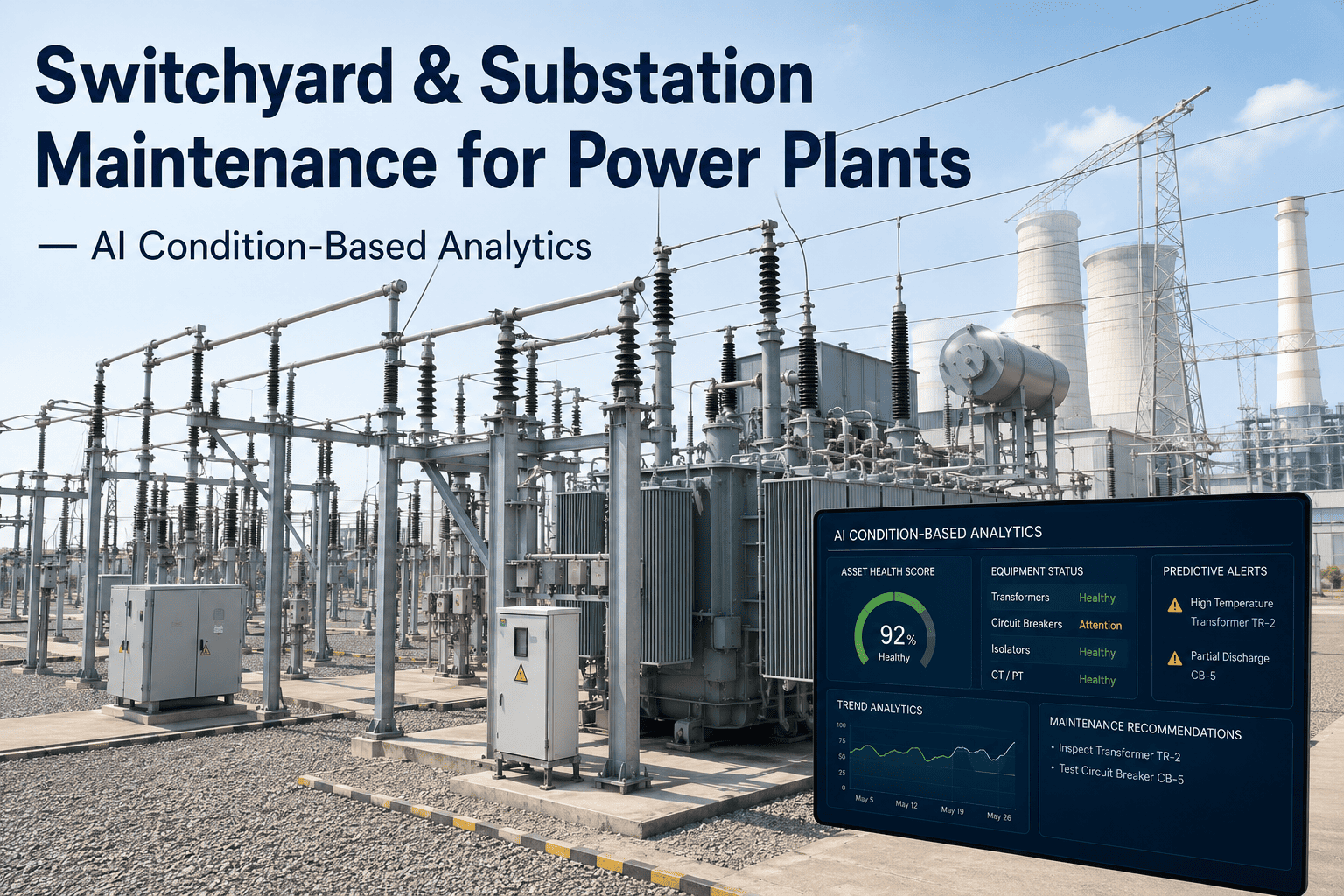
Track transformer health, breaker condition, disconnect switch wear, and bus bar integrity in one continuous view of every asset that connects your plant to the grid.
Every Switchyard Asset, One Health View
Switchyard reliability is only as strong as its weakest connected asset. iFactory builds a condition profile for each equipment class rather than treating the substation as a single monitoring point.
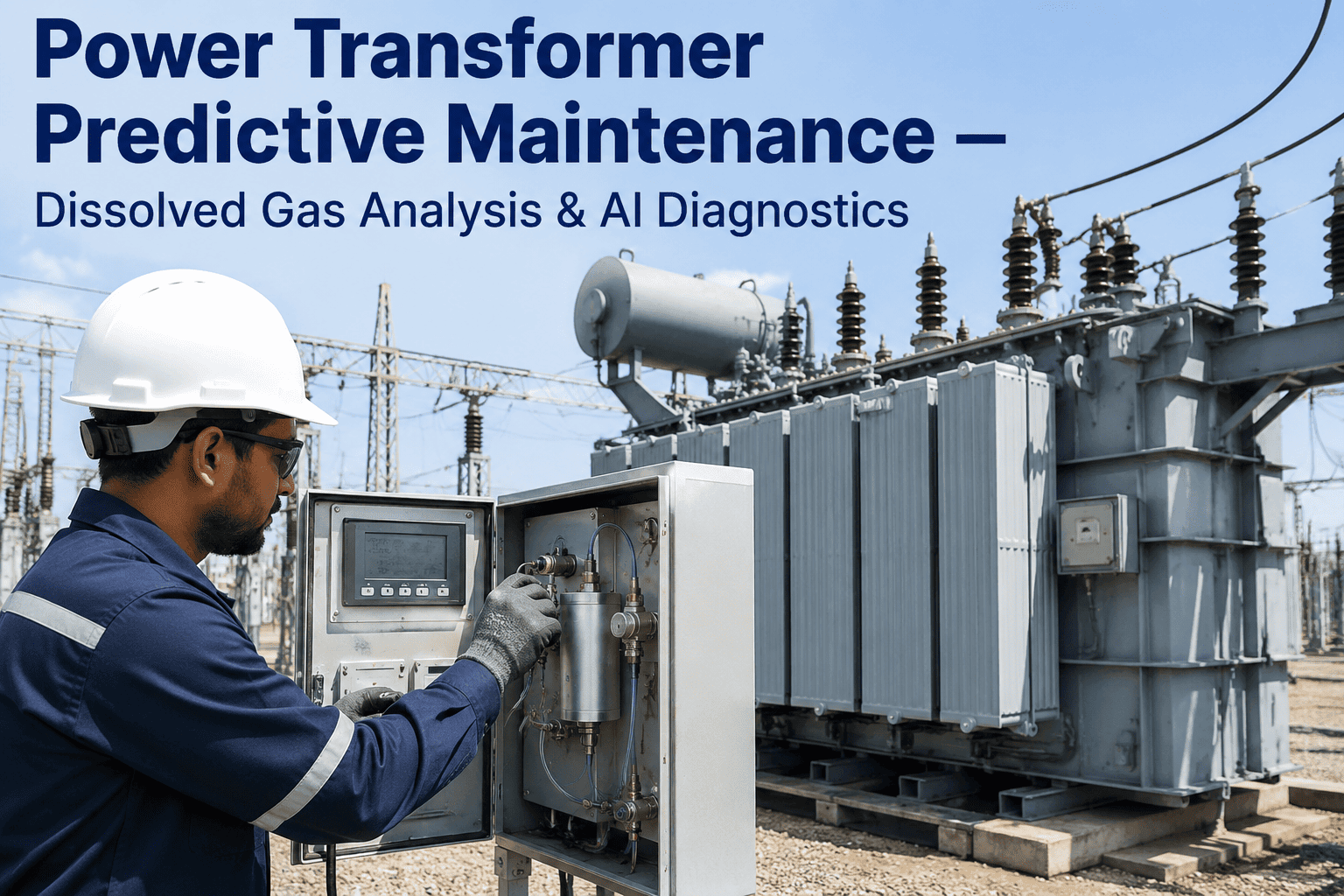
Dissolved gas analysis, winding temperature, and bushing tan-delta trends are tracked together, since winding and bushing issues account for most major transformer failures.
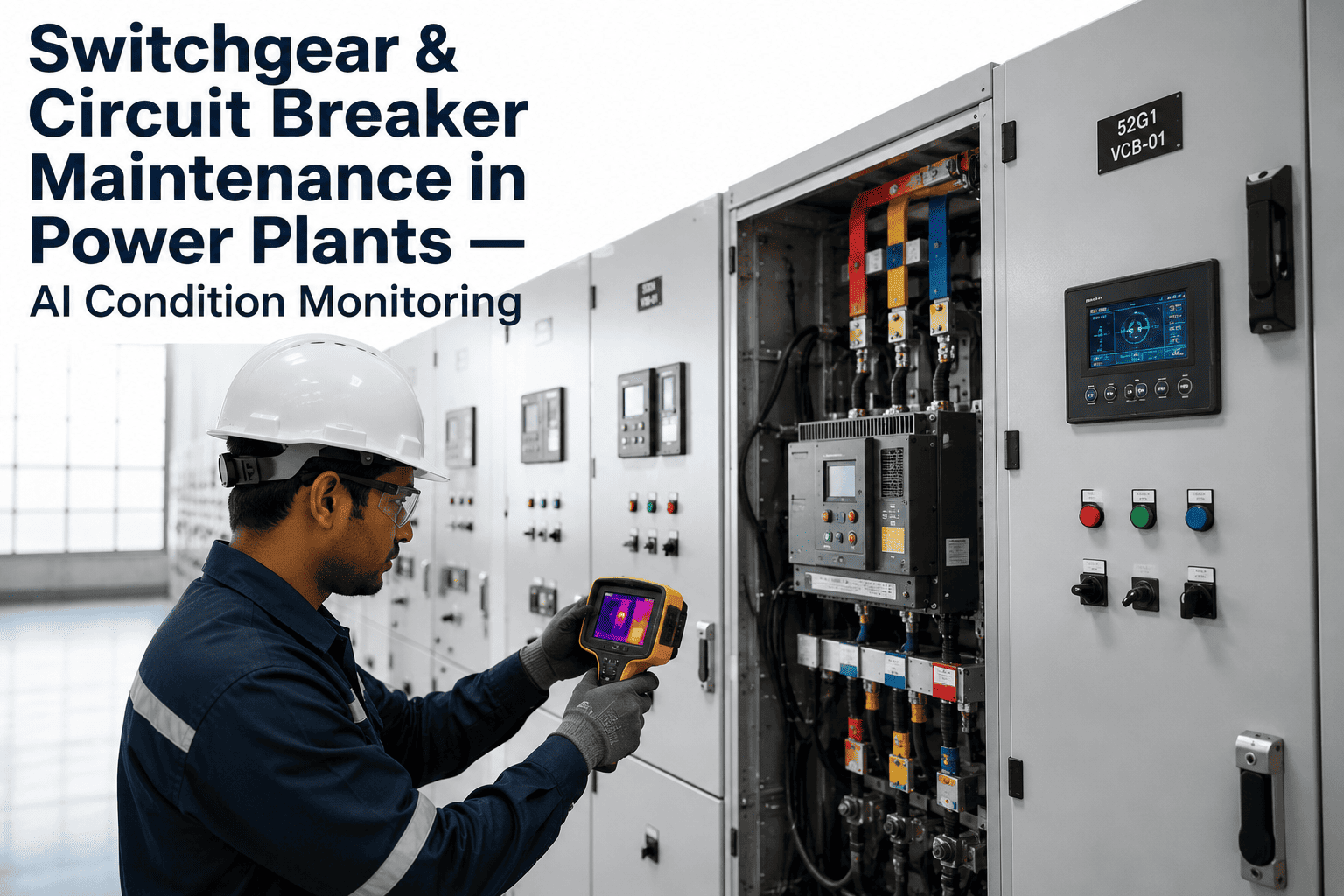
Trip coil current, contact travel time, and SF6 or vacuum interrupter pressure are monitored continuously, catching the mechanical wear that causes most breaker failures long before a scheduled test would.
Contact resistance and blade alignment are tracked to catch the loose joints and overheating that lead to arcing damage during switching operations.
Infrared thermal patterns across bus bar joints reveal rising contact resistance from corrosion or loosening well before a hot spot becomes a flashover.
Current and voltage transformer insulation and accuracy drift are tracked, since a degraded CT or PT can quietly compromise both metering and protection.
Battery internal resistance and float voltage are monitored, because a weak station battery can leave breakers unable to trip at the exact moment protection calls for it.
The Inspection Gap Between Fixed Cycles and Real Condition
Long-term failure studies on power transformers show a failure rate that stays roughly constant across the equipment's operating life rather than climbing steadily with age. That single finding undercuts the logic of pure time-based maintenance: if age alone does not reliably predict failure, then a fixed inspection calendar will keep missing the assets that are actually degrading between visits, while spending resources re-checking assets that were already fine.
Condition-based monitoring flips that logic. Instead of asking how old an asset is, it asks how the asset is actually behaving right now, and flags the ones that are drifting away from their own healthy baseline — regardless of whether they are two years old or twenty.
The Leading Failure Modes by Equipment Type
Oil aging, paper degradation, and moisture ingress remain the largest single contributor to major transformer failures across large utility fleets.
Bushings fail less often than windings, but when they do, the consequence is often the most severe — moisture ingress and partial discharge can escalate to tank rupture or fire.
Most breaker failures are mechanical rather than electrical — loose joints, contamination in insulation, and fatigue from vibration in current-carrying parts.
OLTC contacts adjust taps under live load, and heat accelerates their aging exponentially — even small temperature increases shorten remaining life significantly.
Overgrown vegetation blocking cooling, ignored oil leaks, and unusual noise left uninvestigated are recurring, preventable contributors to eventual equipment failure.
Fixed-Interval Inspection vs. Continuous Condition Monitoring
| Metric | Fixed-Interval Inspection | AI Condition Monitoring |
|---|---|---|
| Detection of developing faults | Only visible at next scheduled visit | Continuous, near real time |
| Maintenance basis | Calendar age of the asset | Actual measured condition |
| Breaker mechanical wear | Caught only during periodic testing | Tracked via trip coil and travel time trends |
| Bushing and winding risk | Assessed on a multi-year test cycle | Trended continuously via DGA and tan-delta |
| Response to a developing fault | Reactive, after the next inspection | Proactive work order before failure |
Watch iFactory Flag a Breaker Trip Coil Anomaly Before It Becomes a Failure
In a 30-minute session, we walk through the full condition monitoring loop using real switchyard data — asset baselines, anomaly scoring, and the alert path that turns a developing fault into a scheduled repair instead of an emergency outage.
From Sensor Data to a Scheduled Work Order
DGA monitors, breaker travel time sensors, thermal cameras, and protection relay data feed into the platform through your existing SCADA infrastructure.
Each transformer, breaker, and switch gets its own learned normal, since a healthy signature on one unit can look like a fault on another.
Deviations are ranked by how close the asset is to a protection-critical failure, so your team addresses the breaker at risk of not tripping before the one that just needs cleaning.
A scheduled repair, complete with diagnosis and required parts, replaces the emergency call that would otherwise follow a switchyard failure.
Frequently Asked Questions
Power transformers and circuit breakers typically deliver the fastest payback, since transformers carry the highest replacement cost and breakers consume the largest share of routine maintenance budgets. Starting there builds the data foundation you can later extend to disconnect switches, bus bar connections, and instrument transformers. Talk to connect your transformers and breakers first.
No. Continuous monitoring changes what your inspection team focuses on, shifting technician time away from routine calendar-driven rounds and toward the specific assets flagged as trending away from healthy. Physical inspections remain necessary for verification and for equipment that cannot be sensored cost-effectively.
Yes. iFactory is built to layer on top of existing dissolved gas analysis monitors, breaker sensors, and SCADA feeds rather than replace them, using standard industrial protocols. Book a demo to see integration options for your specific substation architecture.
The system builds a behavioral baseline from each asset's own historical operating data rather than assuming a generic age-based curve. Since failure research shows that transformer failure rates stay fairly constant across age rather than rising predictably, an asset's own trend line is a far more reliable signal than its birth year.
The anomaly is scored for severity and tied to a likely cause — trip coil degradation, contact wear, or interrupter pressure loss — and a work order is generated automatically with the diagnosis attached. This turns a silent, developing fault into a scheduled repair long before the next fixed inspection would have caught it. Talk to see this running on your own breakers.
iFactory AI Condition Analytics for Substation and Switchyard Reliability
iFactory connects to your existing substation sensors and SCADA infrastructure to give maintenance managers continuous visibility into transformer health, breaker condition, disconnect switch wear, and bus bar integrity — closing the gap that fixed-interval inspections leave open.