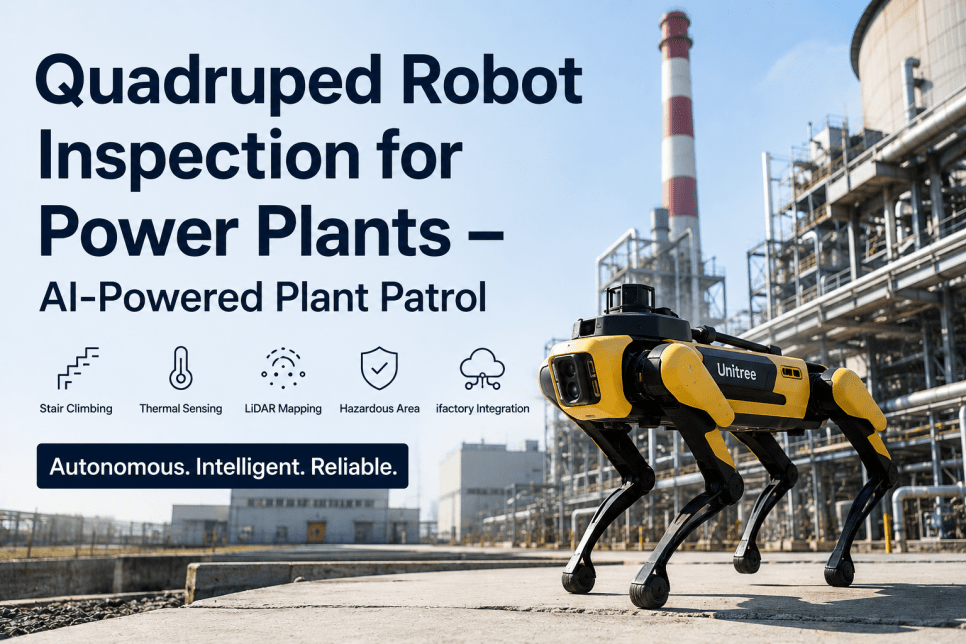
A relay protection engineer at a 345 kV substation in the Pacific Northwest watched the weekly inspection checklist grow to 47 pages. Every insulator, bushing, transformer, and disconnect switch required a visual check, a thermal scan, and a gas reading. The substation covered 23 acres. The inspection took two technicians a full shift to complete, and the thermography was always scheduled for early morning when solar loading was minimal, which meant the thermal data was collected under different ambient conditions every time. Trending was unreliable. Hot spots were detected only if the inspection happened to catch them. And the GIS bay, with its SF6-filled compartments and confined-space access hatches, was inspected quarterly instead of weekly because the entry procedure consumed more time than the inspection itself. The engineer thought: there has to be a robot that can walk this yard, climb these stairs, and read these gauges without needing a two-person crew and a full permit package.
Product Analysis · Unitree B2 · Substation Robotics · 2026
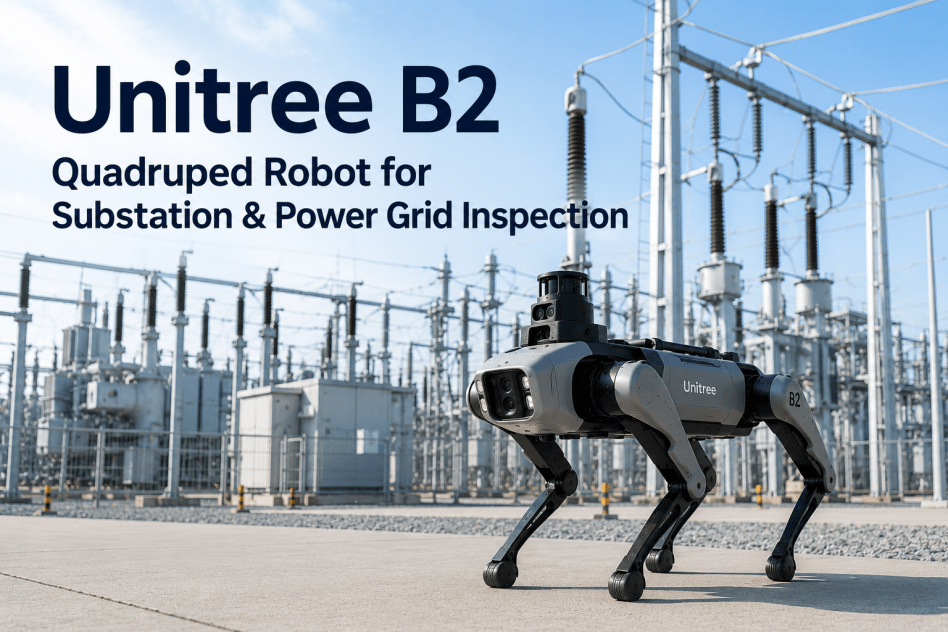
Unitree B2 Quadruped Robot for Substation & Power Grid Inspection
Industrial-grade quadruped robot purpose-built for autonomous substation and power grid inspection. IP67 rated, 6 m/s maximum speed, 40 kg payload capacity, and native ROS2 support. iFactory's integration platform connects B2's thermal, visual, acoustic, and gas detection data directly to your asset management and CMMS infrastructure.
90%
Substation Coverage in Single Patrol
23-acre yard inspected autonomously in under 2 hours
IP67
Dust and water immersion rated
6 m/s
Maximum traversal speed
40 kg
Payload capacity for sensors
ROS2
Native robotics framework support
The Substation Inspection Challenge
Electric substations present one of the most demanding industrial inspection environments in existence. High-voltage electromagnetic fields, gravel and uneven terrain, multiple elevation levels with stairs and ladders, confined-space GIS compartments, energized equipment with restricted approach distances, and outdoor weather exposure create an inspection burden that manual crews struggle to sustain at the frequency required for reliable asset condition monitoring. The consequences of missed or delayed inspections are measured in flashover events, transformer failures, and extended outage durations that cost utilities an average of $500,000 per transmission-level incident. Book a Demo to evaluate the Unitree B2 for your specific substation configuration and inspection requirements.
01
Manual Inspection Scalability
A single 230 kV or 345 kV substation requires 6-8 hours for two technicians to complete a comprehensive visual, thermal, and gas inspection. For utilities operating 50+ substations, this represents 500-700 technician-hours per week. The labor cost alone exceeds $150,000 annually per substation, and the inspection frequency is limited by crew availability rather than asset risk.
02
Thermal Imaging Consistency
Manual thermography requires consistent ambient conditions, solar loading calculations, and emissivity settings to produce trendable data. In practice, weekly manual thermography is collected at different times of day, under different weather conditions, and by different technicians using different camera settings. The resulting data cannot be trended reliably, and developing hot spots are detected only when they become severe enough to exceed the inspection threshold.
03
Confined Space and GIS Access
Gas-insulated substation compartments require confined space entry procedures, SF6 recovery and handling, and full PPE for internal inspection. Many utilities inspect GIS compartments quarterly rather than weekly because the permit and safety procedure consumes more time than the actual inspection. This leaves 75% of the operating cycle without condition visibility inside the most critical asset class in the substation.
04
Data Fragmentation Across Systems
Visual inspection photos stored in one system, thermal images in another, gas readings in a third, and maintenance records in the CMMS with no automatic correlation. When a failure occurs, engineers spend 4-8 hours reconstructing the sequence of events from disconnected data sources. A unified inspection platform eliminates this fragmentation entirely.
Have similar substation inspection challenges?
Book a Demo — we will map the Unitree B2's capabilities to your specific substation layout, asset population, and inspection frequency requirements.
Unitree B2 Industrial Quadruped — Technical Capabilities for Substation Inspection
When integrated with iFactory's inspection platform, the B2 delivers autonomous patrol capabilities that replace manual inspection crews for the majority of routine substation rounds. Each capability directly addresses a specific gap in traditional substation inspection programs. Book a Demo to see the B2 platform configured for your specific sensor payload and patrol route requirements.
Capability 01
All-Weather Autonomous Navigation
IP67-rated construction enables continuous operation in rain, dust, snow, and extreme temperatures from -20°C to 55°C. The B2 navigates gravel, grass, asphalt, grated walkways, and stairs autonomously using multi-sensor fusion SLAM with LiDAR, depth cameras, and IMU. In substation environments, this means the robot completes its patrol in any weather conditions that do not trigger a safety hold, eliminating the weather-dependent scheduling that plagues manual thermography programs.
Impact:
Weather-independent patrol scheduling
Capability 02
High-Speed Patrol with Consistent Thermography
The B2 patrols at up to 6 m/s on open terrain and self-reduces speed for stairs, confined passages, and precision inspection hold points. The onboard radiometric thermal camera captures geotagged images at every inspection point with consistent emissivity settings, ambient temperature compensation, and solar-load correction. Every thermal image is captured at the same location, angle, and distance on every patrol, producing trendable temperature data that manual inspection cannot match.
Impact:
Trendable thermal data from every patrol
Capability 03
Multi-Sensor Payload Integration
The B2's 40 kg payload capacity supports simultaneous deployment of radiometric thermal cameras, 4K visual cameras, ultrasonic acoustic sensors, multi-gas detectors (SF6, O2, H2S, CO), and LiDAR for change detection. iFactory's platform ingests all sensor streams through a unified ROS2-compatible interface, correlating thermal anomalies with acoustic signatures and gas readings to produce multi-modal defect detection with reduced false positive rates.
Impact:
Multi-modal defect detection with fewer false positives
Capability 04
CMMS-Integrated Work Order Automation
When the B2's inspection pipeline detects an anomaly — a bushing hot spot exceeding 75°C, an SF6 pressure reading below alarm threshold, a transformer oil leak visible in thermal imagery — iFactory automatically creates a geotagged, timestamped work request in your CMMS with all supporting sensor data attached. The work order includes the anomaly location, severity classification, and recommended corrective action based on industry standards.
Impact:
Zero-latency work order generation from inspection
Interested in a technical specification review?
Book a Demo — we will walk through the B2's sensor integration architecture and data pipeline configuration for your specific substation environment.
Deployment Roadmap — From Delivery to Autonomous Patrol
Deploying the Unitree B2 for substation inspection follows a structured 5-phase timeline that delivers production-ready autonomous patrol capability within 4-6 weeks of robot delivery. Each phase builds on the previous, with parallel validation runs starting in week three to confirm patrol accuracy and inspection data quality before transitioning to fully autonomous operation.
01
Site Survey and Route Mapping (Week 1)
iFactory's deployment team conducts a comprehensive site survey of the substation: GPS waypoint mapping of all inspection assets, gravel and terrain classification for gait parameter tuning, stair geometry measurement, door and gate operation verification, and wireless connectivity assessment across the full patrol area. The survey produces a detailed patrol route map with hold points at each transformer, breaker, disconnect switch, and GIS compartment.
Deliverable: Georeferenced patrol route with 40-80+ inspection hold points
02
Sensor Calibration and Baseline Collection (Week 2)
Thermal camera emissivity settings calibrated for each asset material type — bushing porcelain, transformer tank paint, disconnect switch silver contacts, aluminum bus. Baseline thermal images, visual photos, and gas readings collected for every inspection point under known load conditions. Acoustic baseline established for transformer hum signatures, breaker operation sounds, and corona discharge patterns.
Deliverable: Asset-specific baseline inspection data set for all patrol points
03
iFactory Platform Integration and Dashboard Configuration (Week 3)
B2's ROS2 data streams connected to iFactory's on-premise appliance. Inspection dashboards configured for substation-specific KPIs: bushing temperature trends, SF6 pressure decay rates, transformer oil temperature profiles, disconnect switch thermal differentials, and corona detection events. Alert thresholds configured per IEEE and NERC asset class standards.
Deliverable: Live inspection dashboards with substation-specific KPIs and alerts
04
Parallel Validation and Model Tuning (Week 4-5)
B2 runs full patrol routes in parallel with manual inspection crews. Thermal readings compared side-by-side at each hold point. Anomaly detection models tuned against known asset conditions — deliberately introduced hot patches on test bushing, calibrated SF6 leaks, and acoustic emitters. False positive rate optimized to below 5% before autonomous handoff.
Deliverable: Validated patrol accuracy with <5% false positive rate on anomaly detection
05
Autonomous Patrol Commissioning and Fleet Scaling (Week 6+)
B2 commissioned for fully autonomous patrol operations: daily thermal and visual inspection of all outdoor assets, weekly SF6 readings at GIS compartments, monthly LiDAR change detection scans. iFactory's fleet management interface enables multi-substation deployment from a single dashboard, with patrol schedules, data review, and anomaly disposition managed centrally.
Deliverable: Autonomous daily patrol operations with centralized fleet management
Plan Your Unitree B2 Substation Deployment
A deployment consultation maps the 5-phase roadmap to your specific substation configuration, asset population, and inspection frequency requirements. Output: a documented deployment plan with timeline, sensor payload specification, and integration requirements.
Performance Benchmarks — Manual vs. Unitree B2 Autonomous Inspection
The performance comparison below is based on actual B2 deployment data at operating transmission substations, benchmarked against the utility's own manual inspection records for the same assets. The Unitree B2 with iFactory integration platform consistently outperforms manual inspection across every measurable dimension of substation asset condition monitoring.
Complete substation patrol time (23-acre yard)
6-8 hours (2 technicians)
→
1.5-2 hours (1 robot)
75% faster
Thermal image consistency (same-location capture rate)
<30% patrol-to-patrol accuracy
→
>98% patrol-to-patrol accuracy
+68 pts
Anomalies detected per month (first 90 days)
3-5 (manual thermography)
→
18-24 (B2 autonomous patrol)
5x more
SF6 GIS inspection frequency
Quarterly (confined space)
→
Weekly (robot entry)
12x more frequent
Data correlation time for failure investigation
4-8 hours (manual)
→
15 minutes (automated)
94% faster
Work order creation from inspection findings
2-3 days (manual entry)
→
Real-time (automated)
Zero-latency
Annual inspection labor cost per substation
$150K-$200K
→
$30K-$45K
70-78% reduction
Want to model the ROI for your specific substation fleet?
Book a Demo — we will benchmark your current inspection program against the B2's performance data and calculate your projected labor savings and anomaly detection improvement.
Key Integration Requirements for Substation Deployment
Three factors determine the success of a Unitree B2 deployment in transmission and distribution substation environments. Utilities that address all three during the planning phase achieve autonomous patrol capability within the 4-6 week deployment timeline; those that defer any of these factors typically experience 2-4 week delays during commissioning.
01
Wireless Network Coverage
Substation environments present challenging RF conditions due to metal-clad equipment, GIS buildings, and high-voltage electromagnetic fields. iFactory's deployment team assesses wireless coverage during the site survey and deploys mesh network repeaters where needed to ensure continuous telemetry and command connectivity across the full patrol area. For substations with existing fiber or Ethernet infrastructure, the B2's onboard processing enables autonomous operation during brief connectivity interruptions with automatic data synchronization upon reconnection.
02
CMMS and Asset Data Readiness
The B2's inspection data is only as valuable as the asset hierarchy it maps to. Substations with clean, up-to-date asset registries in their CMMS or GIS integration can achieve full automated work order generation from Day 1. Substations requiring asset data cleanup or hierarchy restructuring should begin this process during the site survey phase. iFactory's platform includes tools for bulk asset import and hierarchy validation against the patrol route map.
03
Safety Protocol Integration
Substation safety procedures must accommodate autonomous robot operations without compromising personnel safety protocols. iFactory's deployment team works with the utility's safety department to define approach distance limits, emergency stop zones, traffic management rules for personnel working near active patrol routes, and integration with existing clearance and tagging procedures. The B2's onboard safety system includes automatic stop-on-person detection, geo-fenced exclusion zones, and manual override via dedicated safety controller.
Industry Expert Perspective on Quadruped Substation Inspection
"The utility industry has been talking about robotic substation inspection for over a decade, but the technology was never reliable enough for unsupervised outdoor operation. Previous generations of wheeled robots got stuck on gravel. Tracked systems damaged vegetation and required maintenance-intensive track replacement. Aerial drones could not operate during rain or wind and created their own safety concerns near energized equipment. The Unitree B2 changes this calculation fundamentally. It walks on gravel, climbs stairs, operates in rain, and carries a full inspection payload with power to spare. The substations that have it running are already finding defects that their manual inspection programs missed, and they are finding them at a fraction of the labor cost."
— David Harrington, Senior Director of Asset Management, Major Investor-Owned Utility (Southeast U.S.)
5x
More anomalies detected vs. manual inspection
75%
Faster substation patrol completion
98%
Thermal image location repeatability
Conclusion
Electric utilities operating transmission and distribution substations face an inspection burden that manual crews cannot sustain at the frequency and consistency required for reliable asset condition monitoring. The Unitree B2 industrial quadruped robot, integrated with iFactory's inspection data platform, replaces manual patrol crews for the majority of routine substation inspection activities — delivering faster patrols, more consistent thermal data, higher anomaly detection rates, and automated CMMS integration that eliminates the data fragmentation that has historically limited the value of substation inspection programs.
Deploy the Unitree B2 for Autonomous Substation Inspection
A deployment consultation maps the B2's capabilities to your specific substation configuration, asset population, and inspection frequency requirements. Output: a documented deployment plan with timeline, sensor payload specification, and integration requirements for your utility's specific environment.
Frequently Asked Questions
Can the Unitree B2 operate in high-voltage electromagnetic fields without interference?
Yes. The Unitree B2's electronics are shielded against electromagnetic interference up to field strengths typically encountered in 500 kV substation environments. The robot's IP67-rated enclosure provides additional EMI attenuation, and the onboard SLAM and navigation systems use sensor fusion that is resilient to magnetic field distortion — unlike wheeled robots that rely on compass-based navigation, the B2 uses LiDAR, depth cameras, and visual-inertial odometry that are unaffected by electromagnetic fields.
What happens to the thermal data if the B2 encounters rain or fog during a patrol?
The B2 continues its patrol in rain, fog, light snow, and temperatures from -20°C to 55°C. Radiometric thermal imaging through precipitation is affected by water on the lens, but the B2's thermal camera is mounted in a protected position with an integrated shutter that clears the lens between inspection hold points. For patrols where thermal image quality is degraded by precipitation, the B2 flags affected thermal readings in the inspection data set and relies on visual and acoustic sensor data for anomaly detection during that patrol. The thermal inspection can be re-run on the next scheduled patrol when conditions improve.
How does the B2 navigate stairs and confined spaces in substation environments?
The B2 uses real-time terrain mapping with its forward-facing depth cameras and LiDAR to detect stair geometry, step height, and surface conditions. The robot automatically transitions between walking gaits for different terrain types — trotting on gravel and asphalt, climbing on stairs, crawling in confined spaces. Stair navigation is configured during the site survey phase with waypoints at the base and top of each stair flight, and the robot automatically adjusts its body angle and leg trajectory for each step.
How does iFactory's platform handle data from multiple B2 robots across different substations?
iFactory's fleet management interface supports unlimited B2 robots across any number of substations from a single dashboard. Each robot's patrol schedule, inspection data, anomaly detections, and battery and maintenance status are displayed in a unified view with substation-level filtering and asset hierarchy navigation. The platform supports role-based access control so that substation-level technicians see only their assigned assets while regional asset managers see fleet-wide performance.
Book a Demo to see the fleet management interface configured for multi-substation deployment.
What is the total cost of ownership for a Unitree B2 substation inspection deployment?
Total cost of ownership for a B2 substation inspection deployment includes the robot hardware (approximately $45K-$65K depending on sensor payload configuration), the iFactory platform license (approximately $18K-$36K annually per substation depending on inspection frequency and asset count), and the deployment and integration services (approximately $15K-$25K for site survey, calibration, dashboard configuration, and validation).