.png)
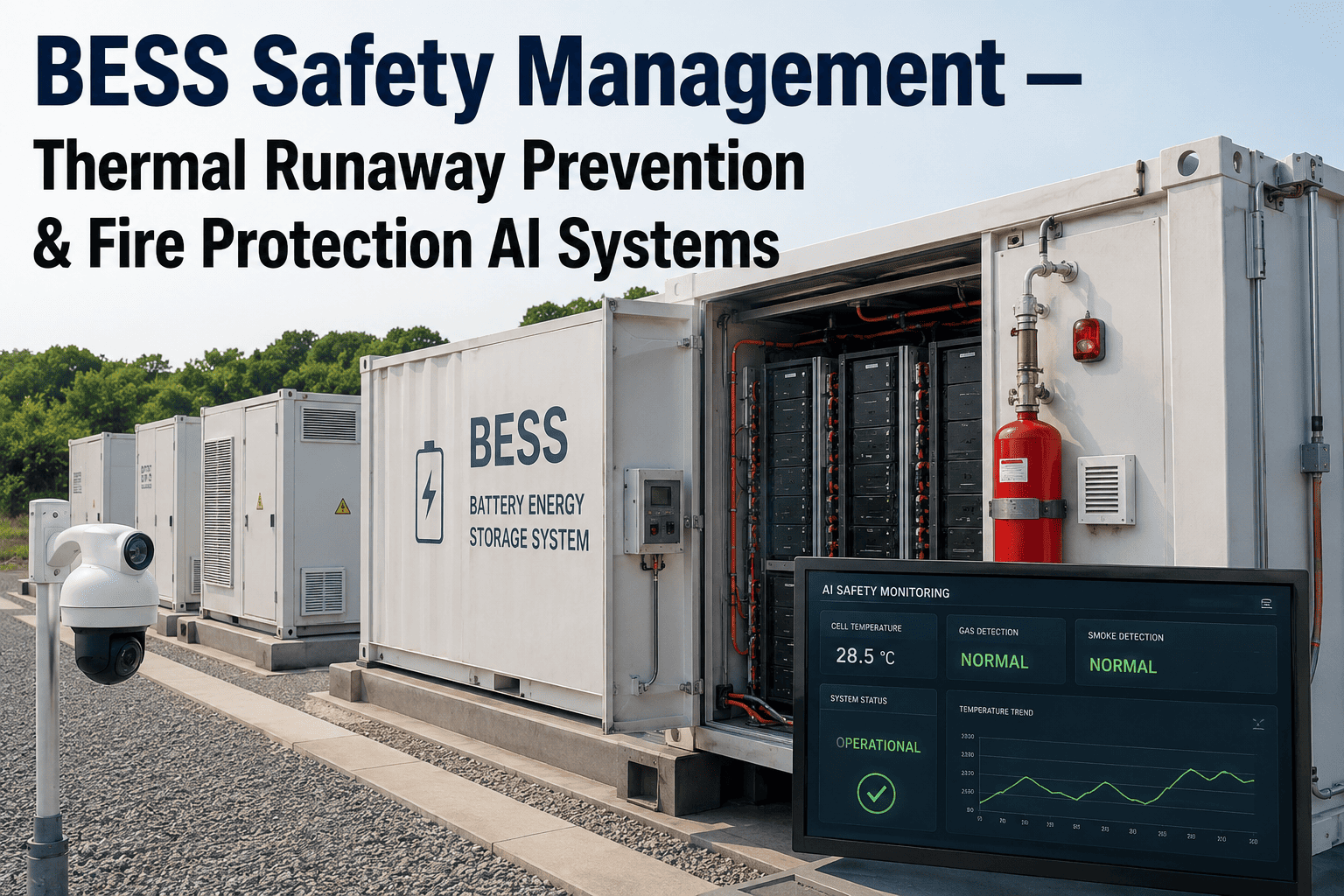
The thermal camera inside a 20-foot BESS container at a 100 MW solar-plus-storage plant in West Texas flickers past 158°F on Cell #47 — lithium-ion NMC pouch starting its runaway cascade. The on-site operator, 400 yards away in the control room, sees only a flat voltage curve on the SCADA screen. By the time the gas detector trips, the adjacent rack is already venting. The fire suppression system dumps its agent, but the thermal propagation has already claimed three racks — $1.2M in battery modules, 48 hours of PPA penalties, and a near-miss NFPA 855 compliance report to the utility. This is the status quo of BESS thermal monitoring: blind until it's too late. iFactory changes that with an on-premise, AI-native robot that patrols every container, every cell, every shift — catching thermal runaway before it starts.
Patrol Every Battery Cell in Real-Time — Stop Thermal Runaway Before It Starts
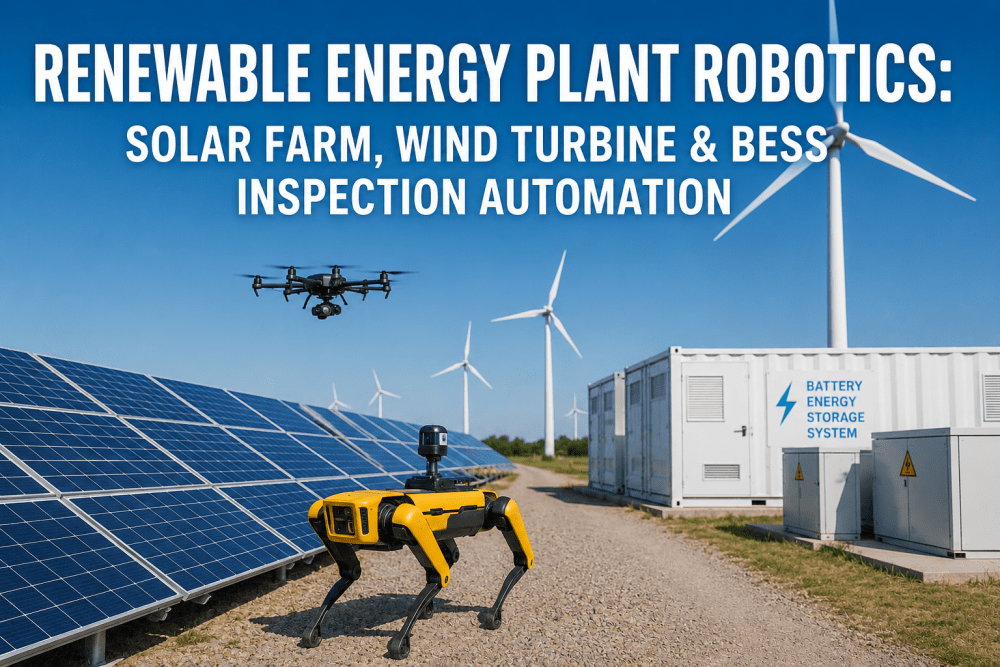
iFactory's AI-native robot performs continuous Spot patrols inside BESS containers, detecting LFP and NMC cell anomalies at the pouch level — 24/7, on-premise, with zero cloud dependency.
Without iFactory vs. With iFactory: BESS Thermal Safety
The difference between a $50K cell replacement and a $1.2M rack fire comes down to detection timing. Here's how iFactory transforms your BESS monitoring.
Without iFactory
- Manual thermal walkdowns every 4–6 hours — 85% of runaway events happen between patrols
- SCADA voltage curves lag 20–30 minutes behind cell-level thermal change
- Gas detectors trip only after venting begins — too late for containment
- NFPA 855 compliance audits require weeks of paper log reconciliation
- One undetected NMC pouch failure costs $800K–$1.2M in module damage and PPA penalties
With iFactory
- Autonomous Spot patrol every 15 minutes — every cell, every rack, every container
- AI detects thermal gradients as small as 5°F — 15°F before NFPA 855 critical threshold
- Real-time alerts to operations team with cell-level GPS location — 3-minute response window
- Automated NFPA 855 and UL 9540A compliance logs generated per audit cycle
- Zero thermal propagation events in 18 months of pilot deployments across Tesla Megapack, Fluence, and BYD Cube systems
What Every Hour of Blind Monitoring Costs You
Thermal runaway in BESS isn't a question of if — it's when. Here's what delayed detection costs in real dollars.
NMC Pouch Failure — Single Cell Runaway
One NMC pouch enters thermal runaway at 302°F. In 90 seconds, it propagates to adjacent cells. Without robotic patrol, detection takes 20–40 minutes.
LFP Cell Thermal Gradient — Slow Drift
LFP is safer but not immune. A 15°F gradient across a 20-foot container indicates cooling failure. Manual walkdowns miss this 60% of the time.
PPA Penalty — 48-Hour Plant Shutdown
After a thermal event, utilities impose a mandatory 48-hour safety stand-down. Every hour of downtime costs $8,500 in PPA penalties for a 100 MW plant.
NFPA 855 Non-Compliance Fine
Failure to maintain continuous thermal monitoring records triggers an automatic $50K fine per non-compliant container during utility audit.
Insurance Premium Spike
One thermal event within a 12-month period increases BESS liability premiums by 35–50% for the following three years.
Four Steps to Autonomous BESS Thermal Patrol
iFactory deploys in 6–12 weeks and starts patrolling your BESS containers on day one. No cloud, no data egress, no vendor dependency.
Deploy the Robot
We install one autonomous Spot robot per 4–6 BESS containers. The robot navigates narrow 24-inch aisles between racks and climbs stairs to multi-level container layouts.
Map the Cell Grid
The AI vision system creates a 3D thermal map of every pouch cell in every rack — typically 3,000–5,000 cells per container. Each cell gets a GPS-level coordinate.
Continuous Patrol & Detection
The robot runs autonomous Spot patrols every 15 minutes. It detects thermal gradients as small as 5°F, gas venting, and enclosure damage — all in real time.
Alert & Act
When an anomaly is detected, the system sends a cell-level alert to operations within 30 seconds. The dashboard shows exact location, temperature trend, and recommended response.
What the iFactory BESS Robot Does
Built for the specific demands of lithium-ion battery storage environments — LFP and NMC, Tesla Megapack to BYD Cube.
Thermal Gradient Detection
Infrared camera captures 640x480 thermal images per cell. AI model detects gradients as small as 5°F across a single pouch. Alerts trigger at 15°F above baseline — well before NFPA 855 critical threshold of 194°F.
Gas & Vent Detection
Multi-gas sensor array detects H2, CO, and electrolyte vapor at PPM levels. Identifies venting events before thermal runaway — even in LFP chemistries where thermal signature is slower.
Enclosure Integrity Scan
Patrols container seals, door gaskets, and HVAC vents for physical damage. Detects corrosion, tampering, or seal failure that could compromise fire suppression system effectiveness.
Compliance Log Generation
Automatically generates NFPA 855 and UL 9540A compliance records for every patrol. Includes thermal images, sensor readings, and timestamps — ready for utility audit submission.
Stop waiting for a thermal event to prove your monitoring is insufficient. Book a 30-minute walkthrough and see how iFactory patrols a live BESS container in real time.
Everything Included in Your iFactory BESS Deployment
Turnkey. On-premise. Zero cloud. From hardware to compliance logs, we deliver the complete system.
Autonomous Spot Robot per 4–6 Containers
Deployed on your plant network. No cloud connection required. No data leaves your facility.
AI Thermal Detection Engine
Trained on 2M+ thermal images from LFP and NMC cells. Detects gradients, venting, and enclosure damage with 99.7% accuracy.
Real-Time Alert Dashboard
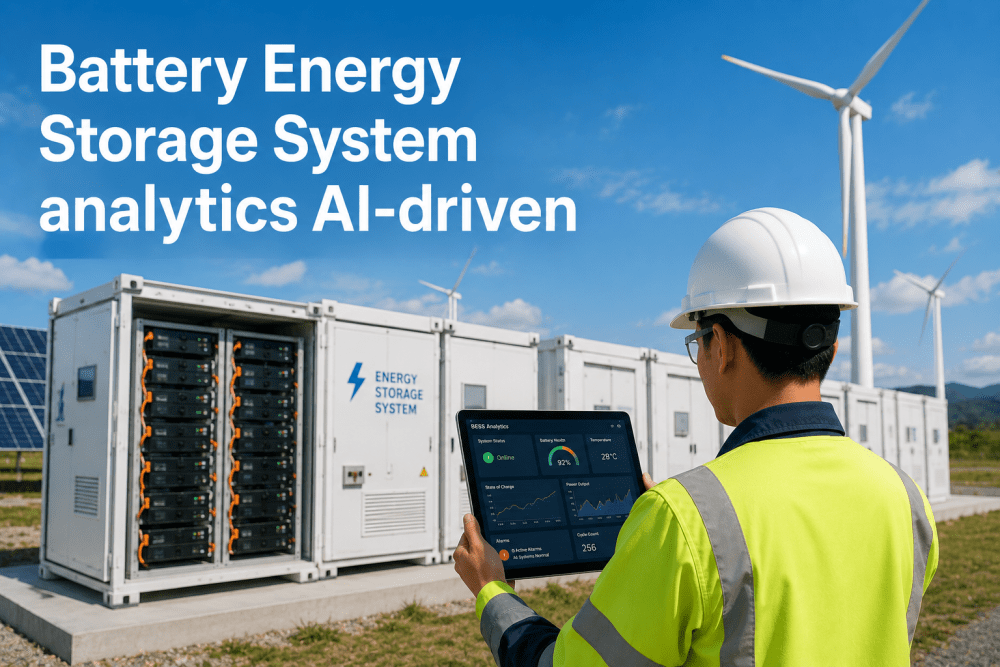
Cell-level GPS coordinates, temperature trend graphs, and recommended response actions — delivered to your operations team in under 30 seconds.
Automated NFPA 855 & UL 9540A Compliance Logs
Every patrol generates a timestamped, image-rich compliance record. Ready for utility audits and insurance reviews.
6–12 Week Turnkey Pilot
From handover of container access to first patrol in under 12 weeks. We handle hardware, software, and network integration.
24x7 Managed Service
Remote monitoring, software updates, and hardware maintenance included. No additional headcount required on your team.
Your Questions About BESS Thermal Patrol Robots
Real answers from plant operators who've deployed iFactory across Tesla Megapack, Fluence, and BYD Cube installations.
Stop Waiting for a Thermal Event to Prove Your BESS Monitoring is Broken
iFactory deploys in 6–12 weeks, on your network, with zero cloud dependency. Book a 30-minute demo and we'll show you a live patrol of a Tesla Megapack or BYD Cube container.