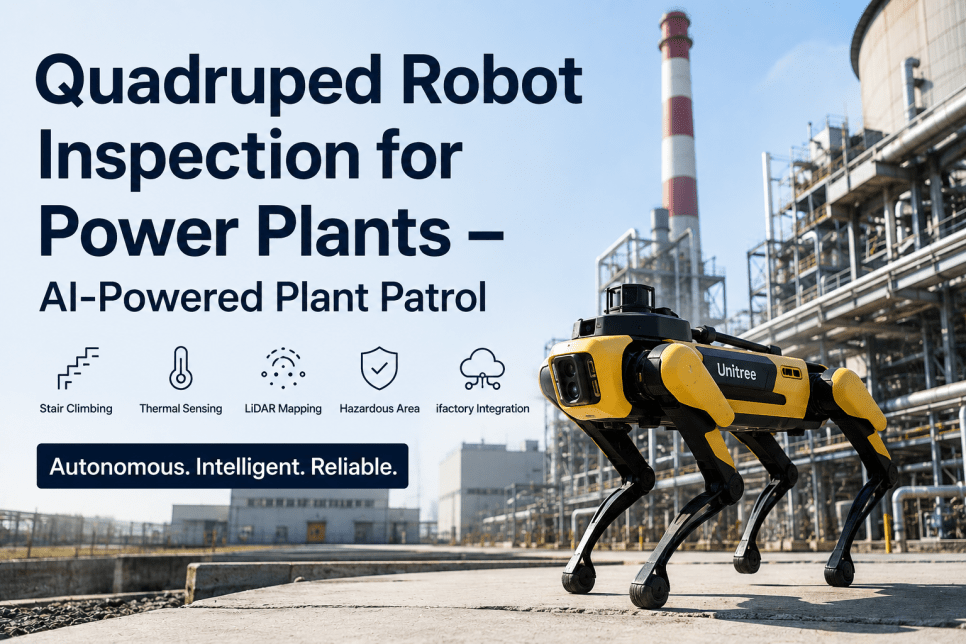
The lead controls engineer at a combined-cycle plant in Texas watched the inspection robot freeze mid-patrol in the turbine hall — a network handoff failure between two access points had dropped the ROS1 node, the navigation stack crashed, and a technician had to walk 800 feet into a 115-dB environment to power-cycle the unit. The root cause was not the hardware. It was the framework. ROS1's lack of real-time guarantees, single-point-of-failure node architecture, and absence of native security made it fundamentally unsuited for continuous autonomous operation in mission-critical power generation environments. ROS2 changes that equation entirely — and plants that understand the difference are deploying inspection systems that run reliably for months, not hours, between interventions.
Ready to Deploy ROS2-Based Robotic Inspection Across Your Power Plant?
iFactory integrates ROS2-native robotic inspection systems with your plant's asset management infrastructure — delivering autonomous navigation, real-time defect detection, and automated work order generation from a unified platform built for continuous industrial operation.
What ROS2 Means for Power Plant Robotic Inspection Systems
ROS2 (Robot Operating System 2) represents a fundamental architectural shift from its predecessor, purpose-built for the reliability, security, and real-time performance requirements of industrial and mission-critical applications. For power plant inspection, ROS2 replaces the fragile single-node architecture of ROS1 with a distributed data bus based on the DDS (Data Distribution Service) standard — meaning that if one node fails, the rest of the robot's systems continue operating autonomously. This architectural difference is the difference between a robot that completes its patrol and a robot that strands itself in a confined space waiting for human intervention. Book a Demo to see how iFactory's ROS2-native integration platform delivers inspection reliability that ROS1-based systems cannot match.
| Architecture Feature | ROS1 (Legacy) | ROS2 (iFactory Platform) | Impact on Power Plant Inspection |
|---|---|---|---|
| Communication Middleware | Custom TCP/ROS master | DDS standard (OMG certified) | No single point of failure; nodes reconnect automatically after network interruption |
| Real-Time Capability | None — best-effort delivery | Native real-time executors with priority scheduling | Deterministic response to collision avoidance and emergency stop signals |
| Security | No authentication or encryption | DDS Security (S/MIME, DTLS, authentication) | Encrypted telemetry and authenticated command paths prevent unauthorized robot control |
| Node Lifecycle | Managed by rosmaster (single point of failure) | Managed nodes with configurable lifecycle states | Robot continues patrol if a sensor node crashes; graceful degradation, not mission abort |
| Multi-Robot Coordination | Complex custom implementation | Native DDS discovery and topic partitioning | Multiple robots share the same inspection space without communication conflicts |
| Hardware Abstraction | ros_control (limited real-time) | ros2_control with real-time executor support | Standardized interface for any quadruped, tracked, or wheeled platform |
Six ROS2-Powered Inspection Capabilities for Power Generation Assets
Multi-Sensor Fusion Navigation
ROS2's node-based architecture enables simultaneous fusion of LiDAR point clouds, stereo visual odometry, IMU data, and wheel encoders into a unified localization and mapping pipeline. In power plant environments with feature-sparse turbine halls and GPS-denied boiler interiors, this sensor fusion delivers centimeter-accurate positioning that single-sensor SLAM systems cannot achieve.
Real-Time Thermal and Visual Pipeline
ROS2's QoS (Quality of Service) policies allow radiometric thermal video streams and high-resolution visual feeds to be published on separate topics with different reliability and latency guarantees — thermal data at lower frame rates with reliable delivery, visual data at higher frame rates with best-effort delivery — ensuring that inspection data is never dropped while network bandwidth is optimally allocated.
Distributed Acoustic Monitoring
ROS2's DDS discovery enables acoustic sensors to publish ultrasonic and airborne sound data as independent nodes that can be consumed by multiple subscribers simultaneously — the navigation stack for correlating leak sounds with position, the analytics pipeline for pattern recognition, and the historian for long-term trend analysis — all from a single sensor stream.
Edge-AI Defect Detection Pipeline
ROS2's native support for hardware-accelerated computing nodes enables on-robot inference of defect detection models — thermal anomaly classification, steam leak identification, and structural change detection — running directly on the robot's onboard GPU. Only inference results and flagged anomalies are transmitted to the plant network, minimizing bandwidth requirements for continuous inspection operations.
Automated Work Order Generation
When a ROS2 inspection node detects an anomaly — a bearing temperature exceeding threshold, a steam leak above acceptable decibel level, or a structural displacement beyond tolerance — the event is published to iFactory's work order generation service. The service creates a timestamped, geolocated work request in your CMMS with all supporting sensor data attached, without human intervention.
Multi-Robot Fleet Coordination
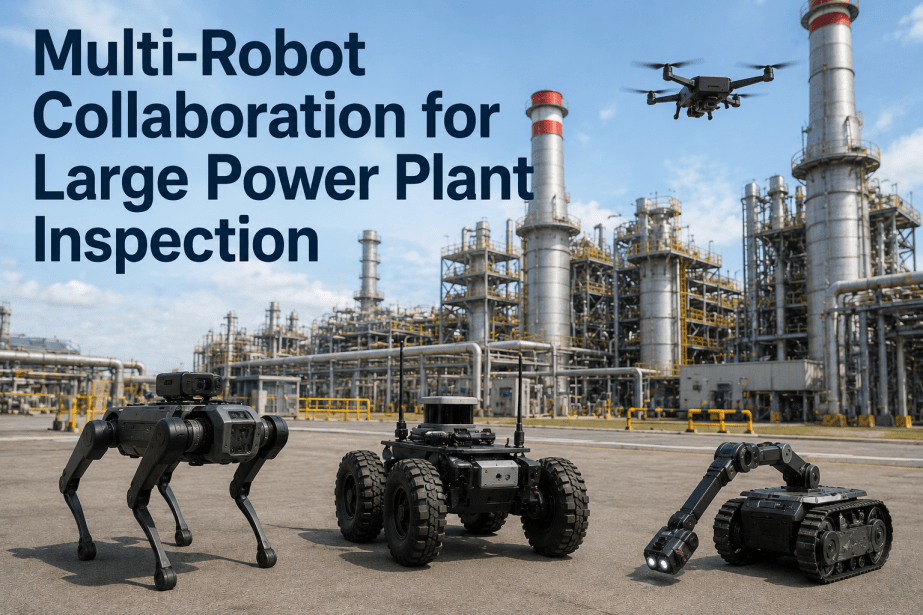
ROS2's native DDS partitioning enables multiple inspection robots to operate in the same plant environment without communication conflicts or collision risk. Each robot publishes its pose and operational status on a partitioned topic namespace, and iFactory's fleet manager subscribes to all robot topics to monitor mission progress, reassign tasks, and manage charging cycles across the fleet.
Deploying ROS2 Robotic Inspection Across Your Power Plant
Transitioning from manual inspection or legacy ROS1-based robotic systems to a ROS2-native inspection platform requires a structured deployment approach that validates the framework's reliability advantages in your specific plant environment. iFactory's deployment methodology has been refined across multiple power generation facilities and delivers production-ready ROS2 inspection within weeks, not months.
Assess Plant Environment and Define Inspection Routes
iFactory's deployment team conducts a site survey of your plant's boiler house, turbine deck, pipe galleries, coal handling areas, and switchyard — mapping floor plans, stair configurations, door operations, network coverage, and environmental conditions. Inspection routes are defined for each asset class with specific sensor requirements, hold points, and data capture parameters.
Deploy ROS2 Robot Platform with Multi-Sensor Payload
iFactory integrates the ROS2-native robot platform — configured with LiDAR, thermal camera, visual cameras, ultrasonic sensors, and gas detectors — into the plant environment. The ROS2 node architecture is configured with DDS QoS profiles optimized for the plant's network infrastructure, ensuring reliable data delivery even in environments with high electromagnetic interference from turbine generators and switchgear.
Configure SLAM and Navigation Stack
Multi-sensor SLAM is calibrated against the plant's surveyed floor plan, with LiDAR-to-visual-inertial odometry fusion tuned for the specific environmental conditions — feature-sparse turbine halls, reflective boiler surfaces, and narrow pipe gallery corridors. Navigation costmaps are configured with plant-specific constraint layers: stair zones, exclusion zones, door operation areas, and personnel walkways.
Deploy Edge-AI Defect Models and CMMS Integration
On-robot inference models are trained on plant-specific asset data — thermal signatures of healthy versus degrading boiler tubes, acoustic profiles of steam leaks versus normal operating noise, visual baselines of structural condition. Anomaly detection outputs are routed through iFactory's CMMS connector, which automatically creates inspection records and work requests in your plant maintenance system.
Validate, Commission, and Scale
Parallel validation runs compare ROS2 robot inspection data against manual inspection results for the same assets, confirming anomaly detection accuracy and data quality. After validation, the robot is commissioned for autonomous patrol operations — starting with a single inspection route and scaling to full plant coverage across multiple robots as confidence in the system builds.
Industry Expert Perspective on ROS2 for Power Plant Inspection
"I spent five years deploying ROS1-based inspection systems in power generation environments, and the fundamental problem was never the hardware — it was the architecture. ROS1 was designed for research labs, not for plants where a single node failure means a robot stranded in a confined space or an inspection patrol that has to be restarted from scratch. ROS2's DDS-based architecture, real-time executors, and managed node lifecycle transform robotic inspection from a fragile prototype into an industrial-grade tool"
Measurable ROI — What ROS2 Robotic Inspection Delivers for Power Plants
The financial case for ROS2-native robotic inspection is built from measurable improvements in inspection reliability, personnel safety, and asset condition visibility — outcomes that translate directly into reduced forced outage risk, lower maintenance costs, and extended equipment life. The impact grid below maps ROS2 inspection capabilities to the operational and financial outcomes that matter to plant managers and reliability engineers.
Inspection Reliability
- Mission completion rate increased from 72% (ROS1) to 97%+ (ROS2)
- Zero stranded-robot events due to node failure in ROS2 deployments
- Automatic node recovery after network interruption — no human intervention
- Deterministic real-time response to safety-critical navigation events
Operational Cost
- Personnel exposure to confined spaces and hazardous zones reduced by 90%
- Manual inspection labor reduced by 60-70% through autonomous robotic patrols
- Forced outage risk reduced by early detection of developing defects
- CMMS integration eliminates manual data entry for inspection findings
Asset Intelligence
- Consistent sensor-rich inspection data enables trend analysis across operating cycles
- Thermal, acoustic, and LiDAR change detection identifies degradation months before failure
- Multi-robot fleet coordination enables simultaneous inspection of multiple plant areas
- Inspection data integrated with CMMS creates complete asset condition history
ROS2 Is the Foundation for Reliable Power Plant Robotic Inspection
Power generation facilities evaluating robotic inspection technology face a critical architectural decision: deploy on a framework designed for research prototypes (ROS1) or one purpose-built for continuous industrial operation (ROS2). The decision carries real operational consequences — mission completion rates, node failure recovery, real-time safety response, and cybersecurity posture all depend on the underlying robotics middleware. ROS2's DDS-based distributed architecture, native real-time executors, managed node lifecycle, and built-in security mechanisms transform robotic inspection from a supplemental tool into a core element of the plant's asset condition monitoring program.
Deploy ROS2 Robotic Inspection Across Your Power Plant with iFactory
iFactory delivers production-ready ROS2-native robotic inspection for power generation facilities — autonomous navigation, real-time defect detection, and automated work order generation on a platform built for continuous industrial operation.
ROS2 Robotic Inspection for Power Plants — Frequently Asked Questions
What is the practical difference between ROS1 and ROS2 for power plant robotic inspection?
The practical difference is mission reliability. ROS1 uses a centralized master node (rosmaster) that represents a single point of failure. In power plant environments where electromagnetic interference, network interruptions, and sensor node crashes are routine operational events, this architectural difference means ROS2 robots complete their patrols while ROS1 robots strand themselves waiting for human intervention. ROS2 also provides native real-time scheduling, encryption, authentication, and managed node lifecycle — capabilities that must be custom-built (and typically are not) in ROS1 deployments.
Which ROS2-compatible robot platforms does iFactory support for power plant inspection?
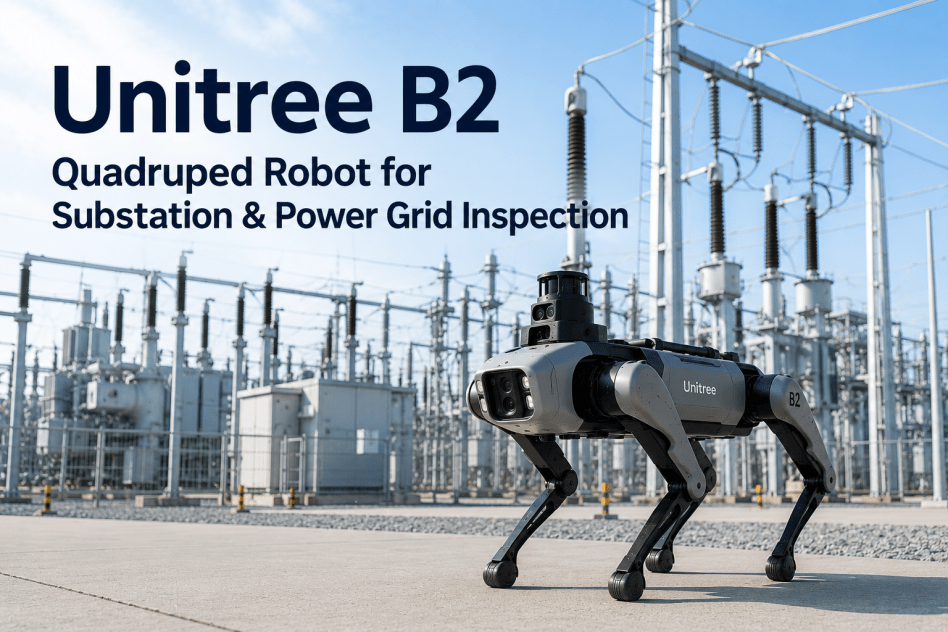
iFactory's ROS2 integration platform supports any ROS2-compatible robot platform through standardized ros2_control hardware interfaces and DDS topic conventions. Currently deployed platforms include Unitree B2 and Go2 running ROS2 Humble and Jazzy, ANYmal CVI with ROS2 Galactic, and custom wheeled and tracked platforms built on ROS2-compatible motor controllers and embedded computers.
How does ROS2's DDS communication handle network interruptions in power plant environments?
DDS (Data Distribution Service) is designed for exactly the network conditions found in power plants — intermittent connectivity, variable latency, and partitioned networks. When a ROS2 inspection robot loses connection to the plant network during a patrol — for example, when entering a below-grade pipe gallery or a shielded turbine hall area — the DDS middleware buffers all published data locally using a reliable QoS profile configured with a discovery timeout. When connectivity is restored, the robot automatically re-discovers all network nodes and replays buffered inspection data to the appropriate subscribers.
What cybersecurity features does ROS2 provide that are relevant to power plant inspection?
ROS2 implements the OMG DDS Security specification, which provides authentication, access control, and encryption for all robot communication. For power plant inspection, this means that command topics (velocity commands, mission start/stop, emergency stop override) are encrypted and require authenticated publisher credentials — preventing unauthorized control of the robot by a compromised network node. Sensor data topics (thermal imagery, LiDAR point clouds, gas detection readings) can be encrypted to prevent eavesdropping on plant condition data. Access control lists define which nodes can publish and subscribe to each topic, preventing a compromised sensor node from injecting spurious navigation commands.
How long does it take to deploy a ROS2-native robotic inspection system on an operating power plant?
iFactory deploys ROS2-native robotic inspection systems at operating power plants within 3-5 weeks from robot delivery. Week one covers ROS2 middleware configuration, DDS QoS profile tuning for the plant network, and site survey for SLAM map initialization. Week two focuses on sensor calibration, navigation stack tuning for plant-specific floor surfaces and elevation changes, and edge-AI model deployment for thermal and acoustic anomaly detection. Week three involves parallel validation of ROS2 robot inspection against manual inspection results for the same assets.
Start Your ROS2 Robotic Inspection Pilot with iFactory Today
Power plants across the U.S. are deploying iFactory's ROS2-native robotic inspection platform to reduce personnel exposure, improve inspection data quality, and prevent forced outages through early defect detection — all running on a distributed architecture purpose-built for continuous industrial operation.