FDA Form 483 observations — issued to pharmaceutical, medical device, and food manufacturers after an FDA inspection finds conditions that may violate FDA regulations — represent the clearest early-warning system for quality system failure. Data integrity has been the most cited 483 observation category for six consecutive years. A manufacturer who receives a data integrity observation in 2026 is almost never dealing with deliberate fraud by individual employees — they are dealing with a quality record system that makes correct record-keeping difficult and incorrect record-keeping easy. iFactory addresses every common data integrity failure mode structurally, not procedurally. This guide shows what FDA inspectors look for, what a Warning Letter actually costs, and what the inspection day looks like with and without iFactory.
What FDA Inspectors Look For — and What iFactory Proves
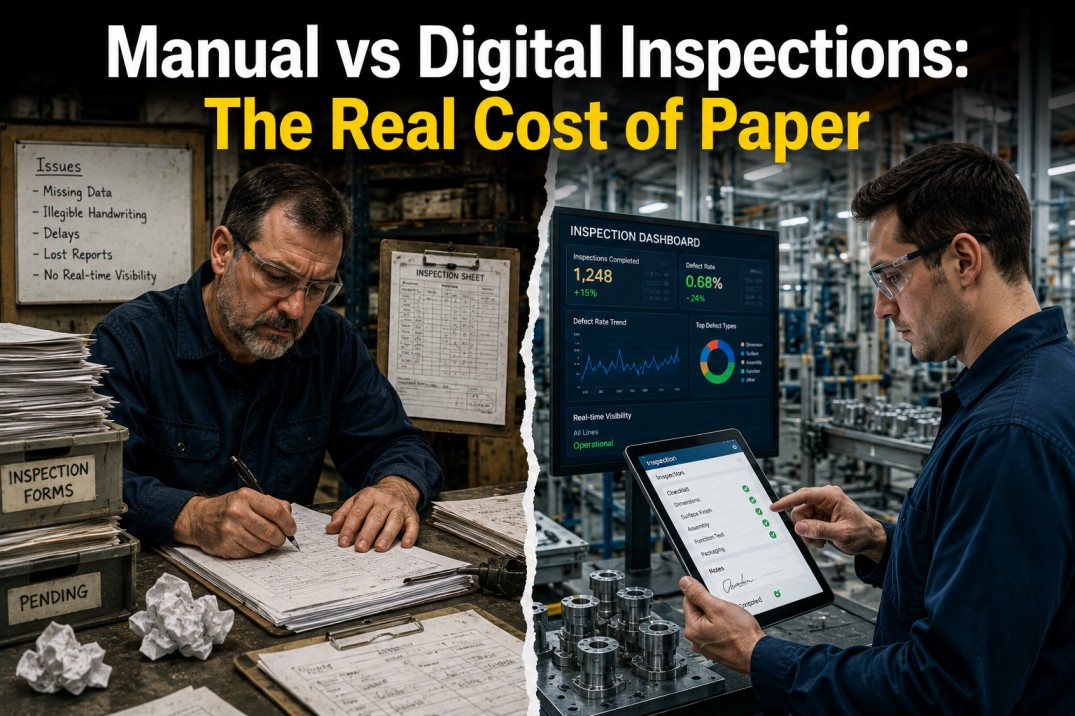
The red notes below show what FDA investigators typically find in paper-based and spreadsheet-based quality systems — the conditions that generate 483 observations. The green notes show exactly what iFactory provides as evidence when the same area is reviewed. Each pair addresses one of the most cited 483 observation categories.
iFactory: Structural Data Integrity — Prevent 483s Before the Inspector Arrives
iFactory enforces individual authentication, immutable audit trail, required field completion, and 21 CFR Part 11 electronic signatures — making the most common 483 observation categories structurally impossible rather than procedurally unlikely.
What an FDA Warning Letter Actually Costs
A Warning Letter is not a fine — it has no fixed penalty. The cost comes from the remediation it requires, the production disruption it causes, and the commercial damage it creates. The receipt below itemises the typical cost components for a mid-size pharmaceutical manufacturer receiving an FDA Warning Letter in 2026.
The FDA Inspection Day — Without iFactory vs. With iFactory
The same FDA inspection. The same five moments in the day. Two completely different outcomes depending on whether the quality record system can retrieve, prove, and demonstrate what the investigator needs to see. The left column is a composite of what manufacturers with paper-based systems experience. The right column is what iFactory customers report.
FDA 483 Observation Frequency — Six-Year Trend by Category
The data below shows how the citation frequency of the top 483 observation categories has changed from 2019 to 2024. Data integrity observations have grown every single year — from 60 citations per 100 inspections in 2019 to 91 in 2024. Each bar represents citation frequency per 100 pharma inspections. Longer bar means more citations that year.
Frequently Asked Questions
What is FDA Form 483 and how serious is it?
FDA Form 483 is the list of inspectional observations issued at the end of an FDA inspection. It is not a public document and is not a citation of violation — it is an opportunity to respond and correct. However, an inadequate response or recurring observations escalate to a Warning Letter, which is public and creates significant regulatory and commercial liability. Manufacturers who receive a consent decree typically received the same data integrity observations in their first 483 that every manufacturer faces — they simply did not address them structurally.
What is the most common FDA 483 observation?
Data integrity has been the most cited FDA 483 observation category for six consecutive years. Observations include records modified without audit trail, shared login credentials that prevent individual attribution, electronic records stored on unvalidated systems, and OOS results that do not match raw instrument data. Data integrity failures are almost never deliberate fraud — they are the result of quality record systems that make correct record-keeping difficult and incorrect record-keeping easy. iFactory structurally prevents all common data integrity failure modes. Book a Demo to see the data integrity architecture.
What is 21 CFR Part 11 and does iFactory comply?
FDA 21 CFR Part 11 establishes requirements for electronic records and electronic signatures to be considered legally equivalent to paper. Key requirements: system validation, tamper-evident audit trail with timestamps, individual authentication for every record, access controls, and electronic signatures unique to one person. iFactory is validated per GAMP 5 guidelines and meets all 21 CFR Part 11 requirements natively — individual authentication, immutable audit trail, required field enforcement, and cryptographically linked e-signatures.
What does a Warning Letter cost a pharmaceutical manufacturer?
Direct costs of an FDA Warning Letter typically range from $3.3 million to $9.8 million — covering remediation consulting, production disruption, regulatory legal counsel, customer contract penalties, and product destruction under Import Alert. Timeline to resolution ranges from 18 months to 4 years. Brand damage and market share loss add further costs beyond direct spend. The cost of iFactory — structurally preventing the observations that lead to Warning Letters — is a fraction of one month of Warning Letter remediation spend. Book a Demo to discuss your compliance scope.
How does iFactory help during an active FDA inspection?
iFactory provides a read-only auditor portal that FDA investigators can access directly during an inspection — retrieving any batch record, inspection report, CAPA file, or audit trail by batch number, lot number, or date in under 30 seconds. Investigators do not wait for staff to locate physical files. Every record includes the complete audit trail, e-signatures, and associated photos. Most iFactory customers report significantly reduced inspection duration and zero documentation-related observations after switching from paper. Book a Demo to see the auditor portal.
iFactory: 21 CFR Part 11 Compliant — Zero 483 Documentation Gaps
iFactory enforces data integrity, routes OOS results automatically, requires CAPA effectiveness verification, and provides a complete auditor portal — so your documentation is the last thing you worry about during an FDA inspection.