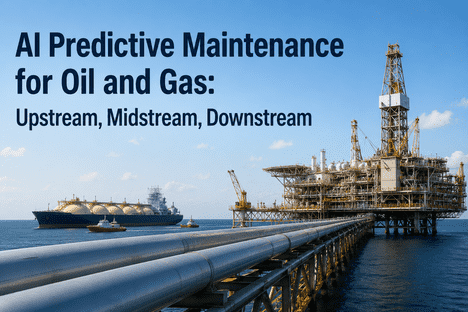
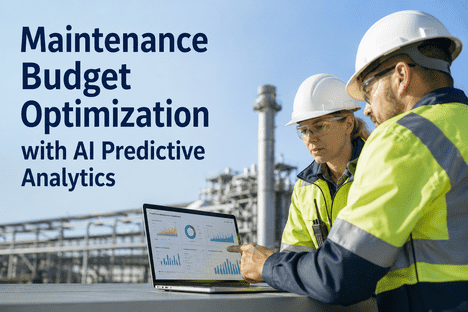
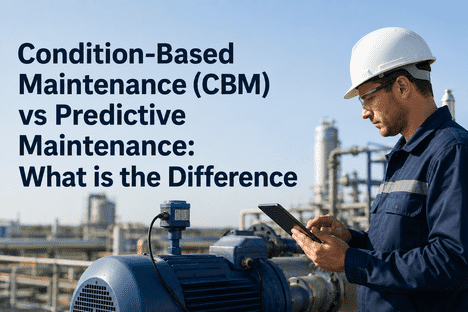
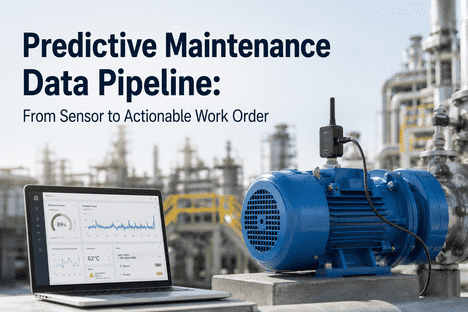
AI Predictive Maintenance for Oil and Gas: Upstream, Midstream, Downstream
By Daniel Carter on June 5, 2026
Oil and gas operators lose an estimated $38 million per year to unplanned downtime across upstream drilling, midstream pipeline, and downstream refining operations — with a single compressor failure in a gas processing plant costing $500,000–$2,000,000 in lost production, emergency logistics, safety incident response, and environmental penalties. Traditional time-based maintenance models cannot address the extreme pressure, temperature, and corrosion conditions that accelerate failure in separators, pumps, compressors, valves, heat exchangers, and furnaces across hydrocarbon production and processing. AI-driven predictive maintenance powered by IoT sensor fusion closes this gap — ingesting vibration spectra, pressure trends, corrosion probe data, acoustic emission, and product quality metrics into machine learning models that forecast compressor valve failure, pipeline pump seal degradation, refinery furnace tube rupture, and wellhead equipment breakdown 2–6 weeks in advance. iFactory's predictive maintenance platform provides this integration layer, connecting DCS historian data, pipeline SCADA telemetry, corrosion monitoring systems, and operator shift observations into a unified intelligence system purpose-built for oil and gas asset reliability. Book a Demo to see how iFactory turns your oil and gas operational data into a live predictive maintenance layer across every critical asset in your upstream, midstream, and downstream operations.
Predictive Maintenance · Oil & Gas 2026
AI Predictive Maintenance for Oil and Gas: Upstream, Midstream, Downstream
Compressor valve & seal failure prediction · Pipeline pump & valve degradation monitoring · Refinery furnace tube & heat exchanger analytics · Drilling rig mud pump & top drive forecasting · All unified in iFactory's O&G reliability platform.
Average annual downtime cost per O&G operator addressed
30–50%
Less unplanned downtime with AI-driven PdM deployment
2–6 wk
Advance warning on compressor, pump, and furnace failures
45%
Of O&G maintenance spend currently reactive — target for reduction
Why Reactive Maintenance Fails Across the Oil and Gas Value Chain
Oil and gas assets operate under extreme conditions — high-pressure gas compression at 200+ bar, cryogenic temperatures in LNG plants, sour gas corrosion in upstream separators, and coking in refinery heater tubes — that accelerate failure in unpredictable patterns. Upstream drilling rigs face mud pump liner fatigue from abrasive drilling fluids and top drive gearbox wear from torque spikes. Midstream pipeline compressors experience valve degradation from liquid slugging and seal failure from lube oil contamination. Downstream refinery furnaces suffer tube creep from localised overheating and catalyst carryover that erodes reactor internals. Fixed-interval maintenance schedules cannot capture the stochastic nature of these degradation mechanisms — identical compressors on the same pipeline may fail months apart depending on gas composition and throughput. AI-driven predictive maintenance replaces the calendar with sensor-driven condition monitoring, detecting the earliest signatures of degradation — compression ratio drift, pressure pulsation harmonics, tube metal temperature gradients, and corrosion rate acceleration — and converting them into scheduled, budgeted maintenance events that protect hydrocarbon production throughput and process safety.
Three Oil and Gas Operational Problems iFactory Solves
01
UPSTREAM
Drilling Rig & Wellhead Equipment Failure — Lost Rig Days and Production Curtailment
Upstream operators face a persistent challenge: mud pump and top drive failures on drilling rigs cause non-productive time that costs $100,000–$500,000 per day in rig spread rate and crew standby. Wellhead compressor failures curtail gas lift and reduce production from high-value wells. iFactory ingests drilling mud pump vibration and flow ripple data, top drive gearbox vibration and torque profiles, draw works brake system temperature, and wellhead compressor performance metrics. ML models trained on historical failure patterns predict mud pump liner fatigue 3–5 weeks in advance, top drive gear tooth degradation 2–4 weeks ahead, and compressor valve failure 4–6 weeks before gas lift interruption. Operators report 35–50% fewer unplanned rig downtime events and reduced NPT spend on critical drilling campaigns. Book a Demo to see iFactory's upstream prediction models in production.
3–5 week lead time$100–500K/day avoided35–50% fewer rig events
02
MIDSTREAM
Pipeline Compressor & Pump Station Degradation — Tariff Loss and Reliability Penalties
Midstream pipeline operators face compressor and pump station reliability targets under tariff agreements, with unplanned outages incurring capacity penalty payments and loss of transportation revenue. iFactory monitors pipeline compressor vibration at running speed and blade pass frequencies, suction/discharge pressure pulsation, seal oil system condition, bearing temperature, and motor current. The platform detects early-stage valve degradation, seal wear, and rotor imbalance 3–6 weeks in advance — enabling planned replacement during scheduled line pigging stops rather than emergency compressor trips that cascade through downstream delivery commitments. iFactory also monitors pipeline pump mechanical seal health via acoustic emission and pressure decay trends, generating work orders with verified seal part numbers from your maintenance BOM. The Shift Logbook captures operator pipeline walk-line observations — valve stem leaks, actuator position drift, pipe support corrosion — alongside sensor data for a complete mid-asset health picture.
3–6 week lead timeCompressor·pump·valve·sealCascading trip prevention
03
DOWNSTREAM
Refinery Furnace, Compressor & Heat Exchanger Failure — Process Unit Derates and Safety Risk
Refinery process unit failures — furnace tube rupture, compressor valve degradation, heat exchanger fouling, and reactor internals damage — cause forced derates of 10–30% or full unit trips that require days to restabilise. iFactory applies ensemble ML models to furnace tube metal temperature profiles, compressor performance curves, heat exchanger approach temperature trends, and corrosion probe data. The platform's continuous learning loop improves prediction precision as more crude diet, throughput rate, and process severity data accumulates. The Shift Logbook captures operator-reported anomalies — unusual furnace flame patterns, compressor surge events, exchanger pressure drop changes — alongside sensor data, creating a richer training corpus for steadily improving prediction accuracy on tube creep, compressor surge margin erosion, exchanger fouling rate, and corrosion under insulation across multiple crude slates and unit configurations.
Ensemble ML modelsFurnace·compressor·exchanger·reactorShift Logbook fusion
How AI Predictive Maintenance Maps to Oil and Gas Equipment
Acoustic emission · vibration · pressure · flow · motor current signature
Seal failures cause 40% of pump downtime; predictive seal-life models with parts reservation
Upstream — Gas Compressor
Valve wear · piston ring fatigue · rod packing leak · bearing knock
RPM-synchronous vibration · pressure-volume curves · oil consumption · rod drop monitor
Gas lift compressor failure curtails oil production 10–25%; predictive models protect production plateau
Oil and Gas Use Cases: What iFactory Delivers Across the Value Chain
Upstream
Drilling Mud Pump Liner Life & Top Drive Gearbox Prediction
Monitoring: Continuous
Mud pump liner and piston failures cause non-productive time on drilling rigs that averages 6–12 hours per event at $20,000–$60,000 per hour rig spread cost. iFactory ingests mud pump vibration at the fluid end and power end, flow ripple via pressure transducers on the discharge line, and motor current data. Machine learning classifiers trained on liner wear patterns predict remaining liner life 3–5 weeks in advance with a confidence score and recommended intervention window aligned with casing point or bit trip schedules. Top drive gearbox vibration analysis detects gear tooth pitting and bearing spalling 2–4 weeks before failure. Every prediction event is logged in iFactory's Shift Logbook with full traceability to the sensor data that triggered the alert.
Pipeline Compressor Valve & Mechanical Seal Life Prediction
Monitoring: Continuous
Pipeline compressor valve failures account for 35–40% of all reciprocating compressor downtime in gas transmission, with each valve replacement requiring 4–8 hours of off-line time. iFactory monitors compressor cylinder vibration at valve cap locations, suction and discharge pressure pulsation, rod drop position on reciprocating units, and seal oil system condition. Compressor performance curves — actual vs theoretical throughput — are calculated continuously to detect flow degradation from valve leakage. When the model predicts valve failure within a configurable threshold, the platform generates a work order referencing the specific valve part number from your equipment BOM and schedules replacement during the planned pigging stop. The same model tracks piston ring wear and rod packing leakage for comprehensive compressor health management. Talk to an Expert about compressor fleet deployment.
Compressor dataVibration · pulsation · rod position · performance curve · seal oil
Valve prediction35–40% of compressor downtime addressed; aligned to pipeline pigging stops
Refinery furnace tube creep and coking are the leading causes of fired heater forced derates, with tube rupture events costing $5,000,000+ in damage repair and lost production over a 4–8 week forced outage. iFactory monitors furnace tube metal temperature arrays across all radiant section zones, burner flame UV intensity, excess O₂ and CO levels, draft pressure, and process outlet temperature trends. Tube metal temperature creep detection models identify localised hot bands 4–6 weeks before tube wall thinning reaches critical levels — enabling targeted tube replacement during planned unit turnarounds. Heat exchanger approach temperature monitoring detects fouling rates and generates cleaning work orders with expected DT improvement, prioritising exchangers by energy penalty and throughput impact. Pre-configured furnace templates cover crude heaters, reformer furnaces, coker heaters, and cracking furnaces in a single configuration step.
Failure prediction4–6 week advanced warning on tube creep and coking
Fouling detectionExchanger approach temp trend with cleaning prioritisation
What iFactory Delivers for Oil and Gas Operations
30–50%
Less unplanned downtime on monitored O&G equipment populations
2–6 week failure prediction with auto work orders across upstream, midstream, downstream
$38M
Total downtime cost addressed per operator per year
Compressor, pump, furnace, and drilling equipment failure cascades
45%
Of O&G maintenance spend currently reactive — target for reduction
Reactive spend 3–5× planned PM cost; predictive mode reduces premium labour and parts
6–12 Wk
Platform deployment with pre-built O&G equipment templates
FAQ: AI Predictive Maintenance for Oil and Gas with iFactory
iFactory is sensor-agnostic and integrates with any sensor infrastructure already in your operating facilities — fixed wireless vibration sensors for rotating equipment (e.g. Emerson, Banner, ifm), online continuous monitoring systems on critical compressors and pumps, PLC/DCS data via Modbus, OPC-UA, or historian connectors (AspenTech, OSIsoft PI, Siemens PCS 7), corrosion probes (ultrasonic thickness, ER/LPR), pipeline SCADA telemetry, and thermal camera exports. The platform also supports manual inspection data entered through the Shift Logbook mobile app — including ultrasonic thickness readings, valve stem leak observations, and corrosion under insulation survey data. Pre-built O&G equipment templates map the recommended sensor types and placement for each asset class across upstream, midstream, and downstream operations.
iFactory is the software intelligence layer and does not supply field sensors — your site selects ATEX/IECEx-certified sensors appropriate for each hazardous zone classification. The platform deploys on-premise within your OT network perimeter or via secure cloud with role-based access control, LDAP/SSO integration, and encrypted data transmission. Data segregation between production units, pipeline segments, and terminal facilities is managed through asset hierarchy configuration. The Shift Logbook supports electronic permit-to-work integration and hazardous area entry logging. iFactory's architecture aligns with ISA-99/IEC 62443 security framework recommendations for industrial control system environments.
The platform can begin generating value with 30 days of operational data — vibration levels, pressure, temperature, flow, and motor current — from as few as 10–20 critical assets such as pipeline compressors, refinery pumps, or drilling mud pumps. The machine learning models use transfer learning from iFactory's industrial equipment population baselines, so you do not need years of failure data to start seeing predictions. As the platform accumulates equipment-specific data, the models self-tune to your facility's operating conditions, throughput rates, and fluid property variations. Most O&G operators see meaningful failure prediction alerts within 60 days of deployment on monitored equipment. For facilities with limited existing sensor coverage, iFactory's recommended starter kit packages wireless vibration sensors and gateway for 20 critical rotating assets with full configuration support.
Yes. iFactory's platform bi-directionally integrates with leading CMMS and ERP systems — SAP, Oracle, Infor, Maximo, IBM TRIRIGA — and pipeline SCADA platforms via REST API, flat file, or database connector. Predictive alerts generated by the AI engine can auto-create work orders in your existing CMMS or be managed within iFactory's work order module with subsequent sync to corporate systems. The integration layer resolves duplicate asset records, synchronises equipment hierarchies across operating units, and maps iFactory's health statuses to your CMMS status codes. Standard integration is completed during the first week of deployment. No rip-and-replace of existing SCADA, CMMS, or ERP systems is required.
iFactory deploys in 2–3 weeks against pre-built O&G equipment templates covering compressors, pumps, mud pumps, furnaces, separators, and pipeline assets. The full ROI programme — assessment, sensor gap analysis (if needed), platform configuration, pilot on 20 critical assets across a single operating unit, plant-wide/site-wide rollout, validation, and training — runs 12–16 weeks end-to-end. Most O&G operators achieve positive ROI within 5 months of go-live on the pilot group, driven by reduced emergency maintenance spend and avoided production curtailment. Typical 12-month results across monitored equipment populations are 30–50% less unplanned downtime and 25–40% lower total maintenance cost. The programme includes 90-day implementation support from a dedicated industry specialist with oil and gas operations domain expertise.
Deploy AI Predictive Maintenance Across Your Oil and Gas Operations
iFactory AI connects upstream drilling, midstream pipeline, and downstream refining asset data into a single predictive maintenance intelligence layer — purpose-built for oil and gas reliability. Pre-built equipment templates for compressors, pumps, furnaces, mud pumps, separators, heat exchangers, and pipeline valves. Deploy in 6–12 weeks with 90-day implementation support. Positive ROI in under 5 months.