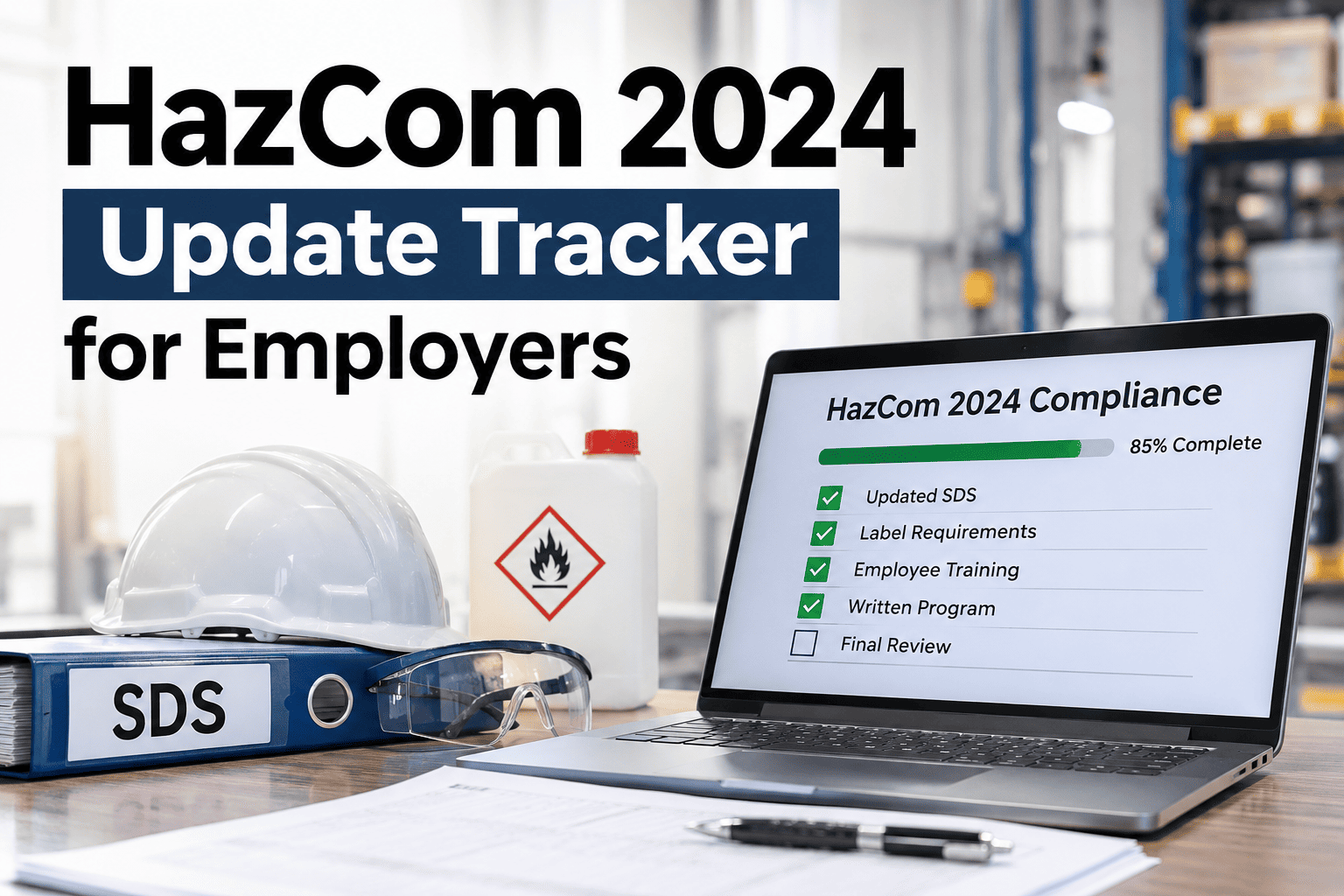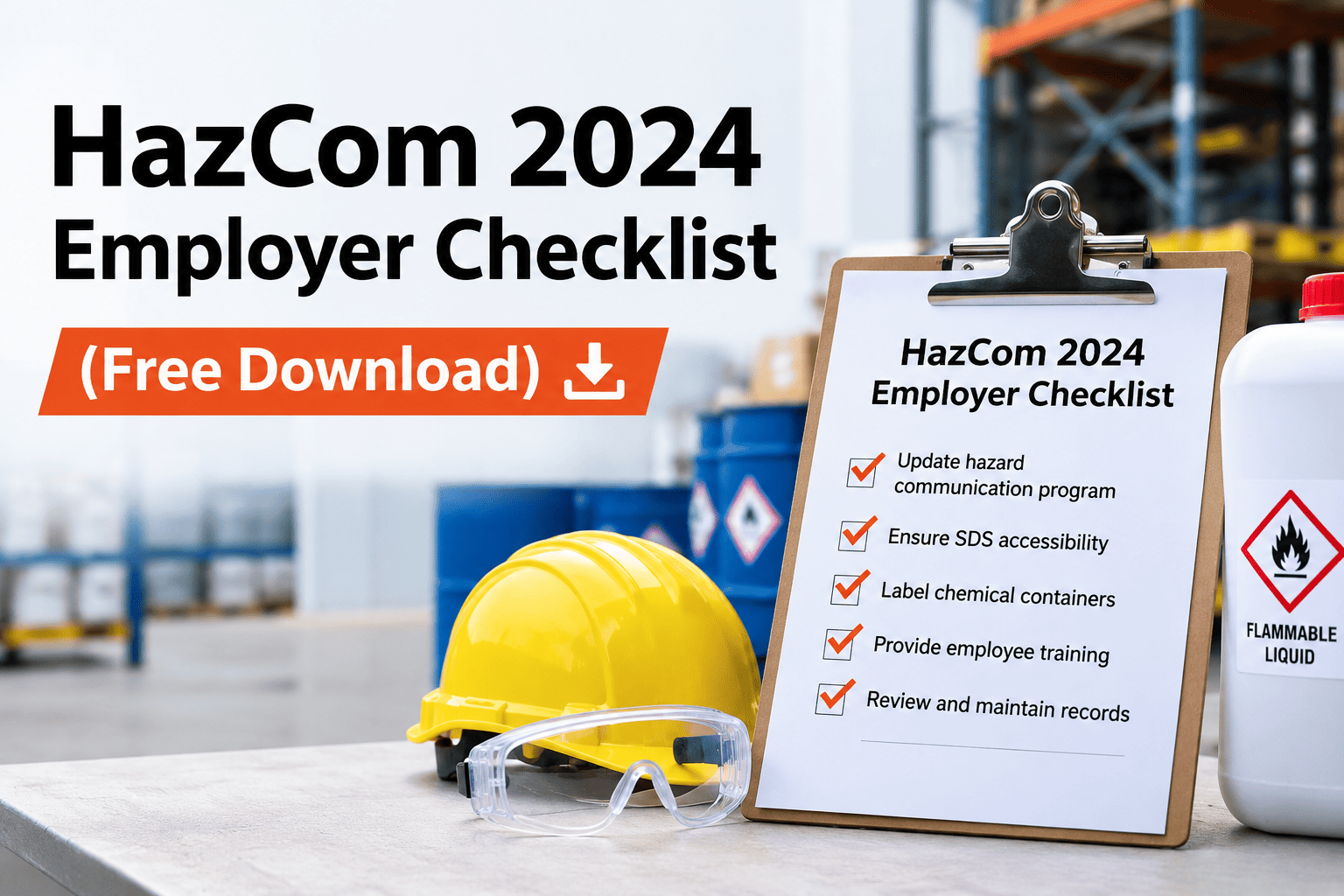
Employers must finish three HazCom 2024 tasks for chemical substances by November 20, 2026: revise workplace labels, the written hazard communication program, and employee training. That is six days from today, and OSHA's four-month extension in January 2026 will not move it again. Most plants hold hundreds of safety data sheets, so the real risk is not knowing which chemicals changed. A shared due-date tracker keeps every label, document and training record visible until the date passes. EHS and plant leaders who want that view can watch a HazCom due-date tracker built from a real chemical list in a short session.
Six Days Left: What Every Employer Must Finish by November 20, 2026
iFactory AI turns the HazCom 2024 requirements into one checklist with a due date on every task, so labels, the written program and training are closed out in time.
What Must Employers Finish by November 20, 2026?
By November 20, employers must, as necessary, revise workplace labeling, the written program and training to reflect the new classifications for substances (Haynes Boone, 2026). The three duties are separate, and each needs its own proof.
Workplace Labels
Secondary container and in-plant labels must carry the revised hazard information.
Written Program
The program must describe your actual practice, because a generic template will not satisfy it (Haynes Boone, 2026).
Employee Training
Staff must learn the newly identified hazards, changed label elements and revised safety data sheets.
Is November 20 the Only HazCom 2024 Date?
No. November 20 covers substances only. Mixtures follow on a later track, with employer duties due May 19, 2028 (National Law Review, 2026).
| Who | Substances | Mixtures |
|---|---|---|
| Manufacturers, importers, distributors | May 19, 2026 | November 19, 2027 |
| Employers: labels, program, training | November 20, 2026 | May 19, 2028 |
How Do You Use the Six Days Left?
Work backwards from Friday. The plan below fits a plant with a normal safety team, and it keeps proof dated at every step.
Put a Due Date on Every Chemical
Bring your chemical list to a 30-minute session and see iFactory AI turn it into a HazCom 2024 checklist with owners and dates.
Which Everyday Products Now Carry New Hazard Labels?
The 2024 rule adds desensitized explosives as a new hazard class and expands the aerosol and chemicals-under-pressure categories (Haynes Boone, 2026). Products treated as routine can now carry new classifications.
What Does a Clean Compliance File Hold?
A clean file shows what changed, who was told and when. Five items are enough to start.
Where Do HazCom Efforts Usually Fail?
Where iFactory AI Fits
iFactory, an on-premise AI platform for manufacturing, includes Safety and Compliance and EHS Management modules. Its HazCom 2024 checklist tracks tasks and due dates in one place.
Due-Date Tracking
Each task carries an owner and a date, from labels to training.
Document Control
Smart Document Management keeps the program and training proof together.
Incident Reporting
Chemical incidents sit beside compliance tasks for one safety view.
Mixtures Tracker
The 2027 and 2028 dates stay visible after November 20 passes.
Expert Review: Is a Last-Week Push Realistic?
Frequently Asked Questions
What is the HazCom 2024 deadline for employers?
The employer deadline for substances is November 20, 2026, after OSHA's four-month extension. Labels, the written program and training must reflect the new classifications. See the full date list set up for your site in a short walkthrough.
Does the November 20 date cover mixtures?
No. Employer duties for mixtures are due May 19, 2028, and suppliers have until November 19, 2027. Keep a second tracker so those dates are not forgotten. Ask how a two-track schedule is built for your chemicals.
Do we need new training for every employee?
Training is required, as necessary, for newly identified hazards, changed label elements and the revised sheet format. Record attendance and comprehension. Log a retraining question in the customer portal by area.
Do retail products need to be reviewed?
Yes, unless you can show both intended use and consumer-level exposure. Spray adhesives and aerosol lubricants are common cases. Walk through a shop-floor product review with a specialist.
Can software keep HazCom due dates organized?
Yes. A tracker with owners, dates and stored proof keeps the work visible to safety, operations and auditors. It supports your judgment and does not replace it. Try the checklist on your own chemical list to judge the fit.
Finish the Week Knowing Nothing Is Overdue
See iFactory AI hold your labels, written program, training proof and every due date in one place, then book a short working session.