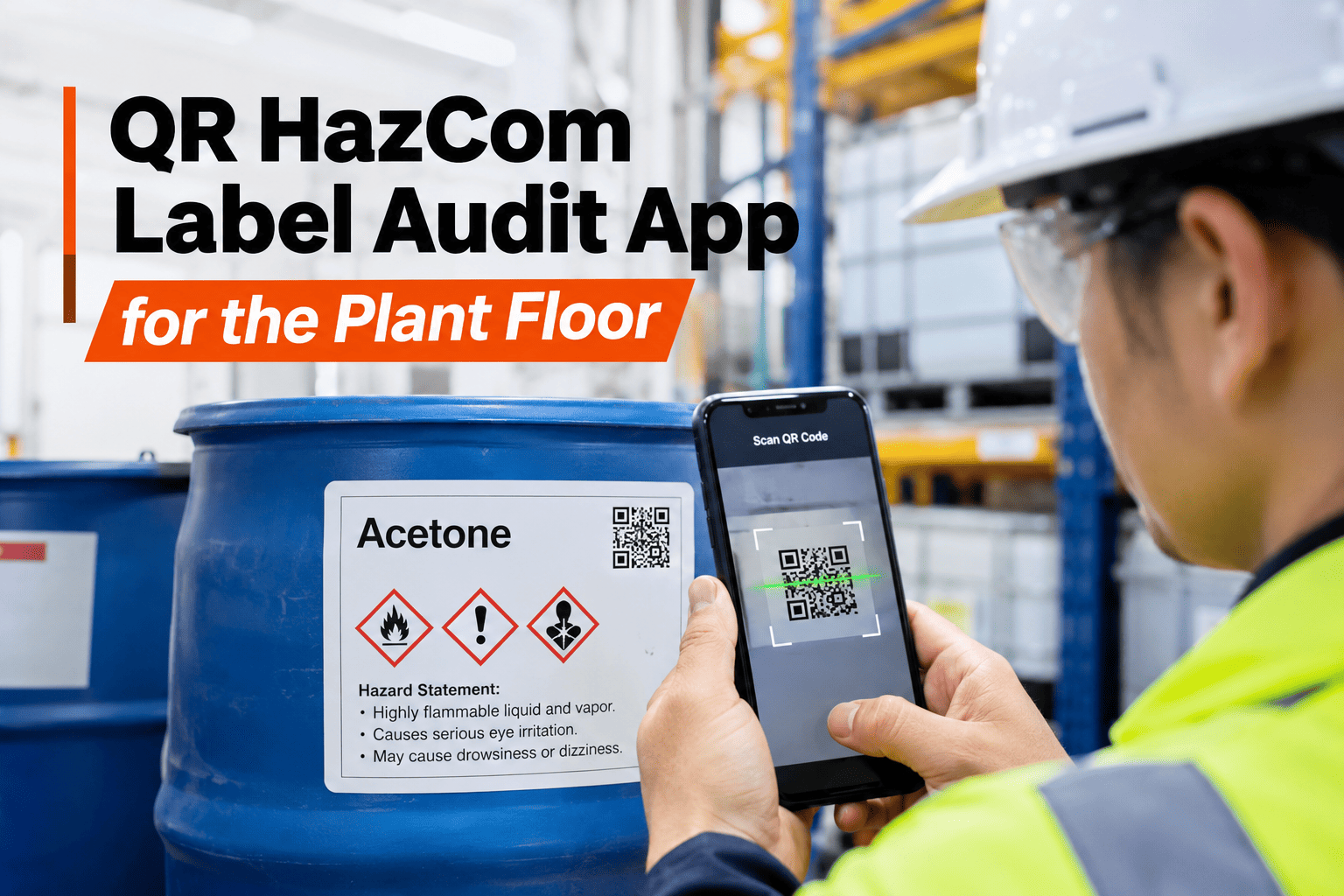
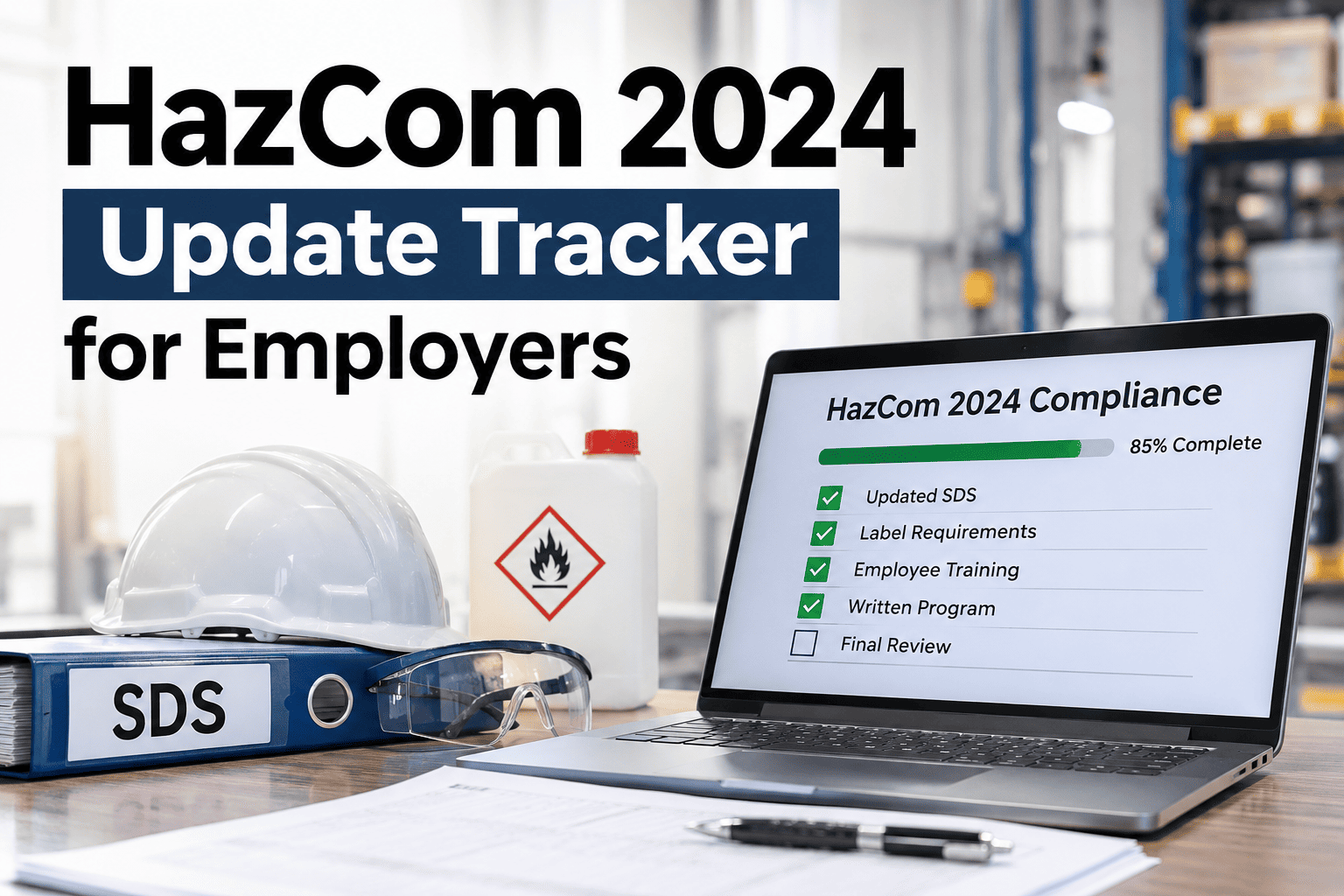
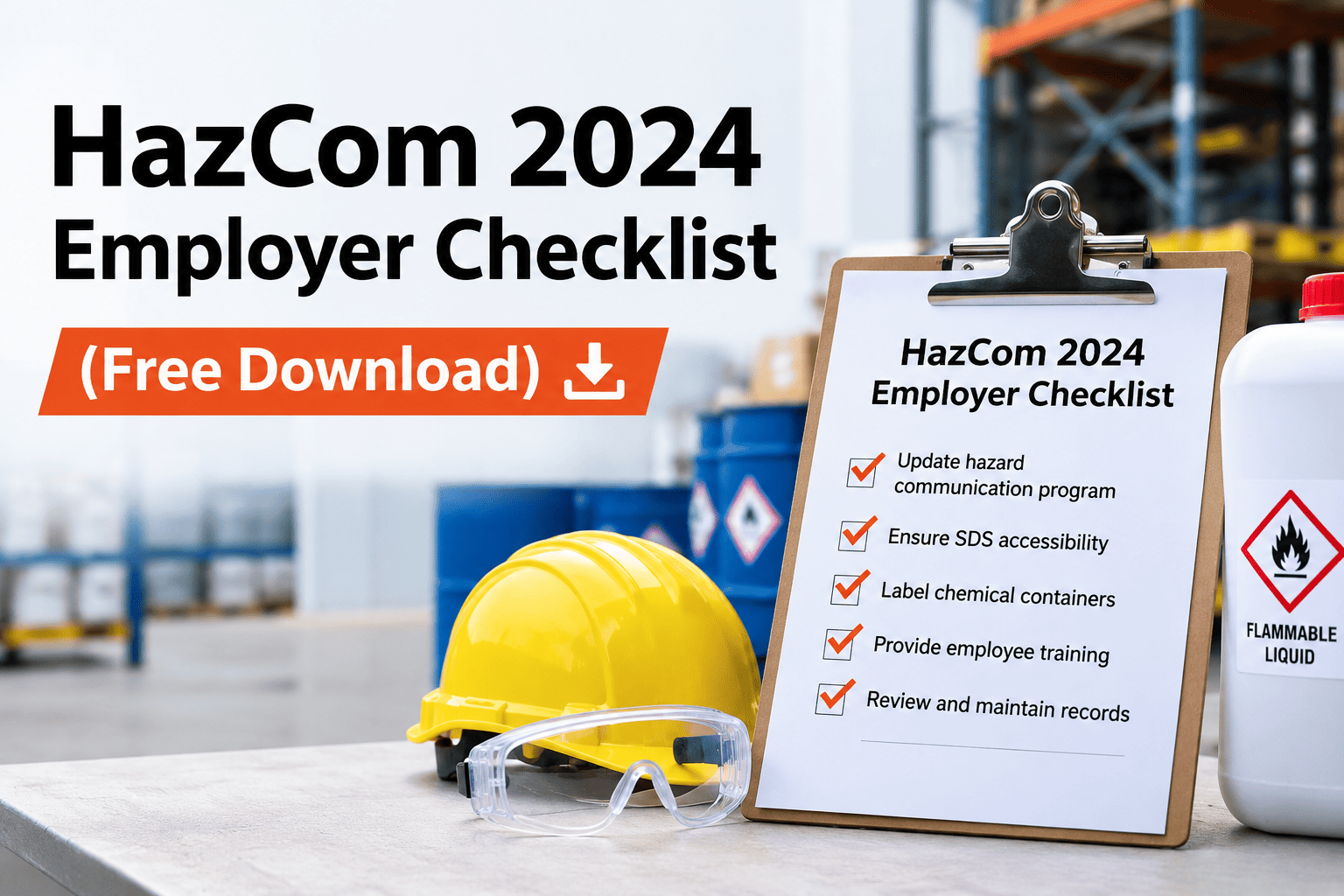
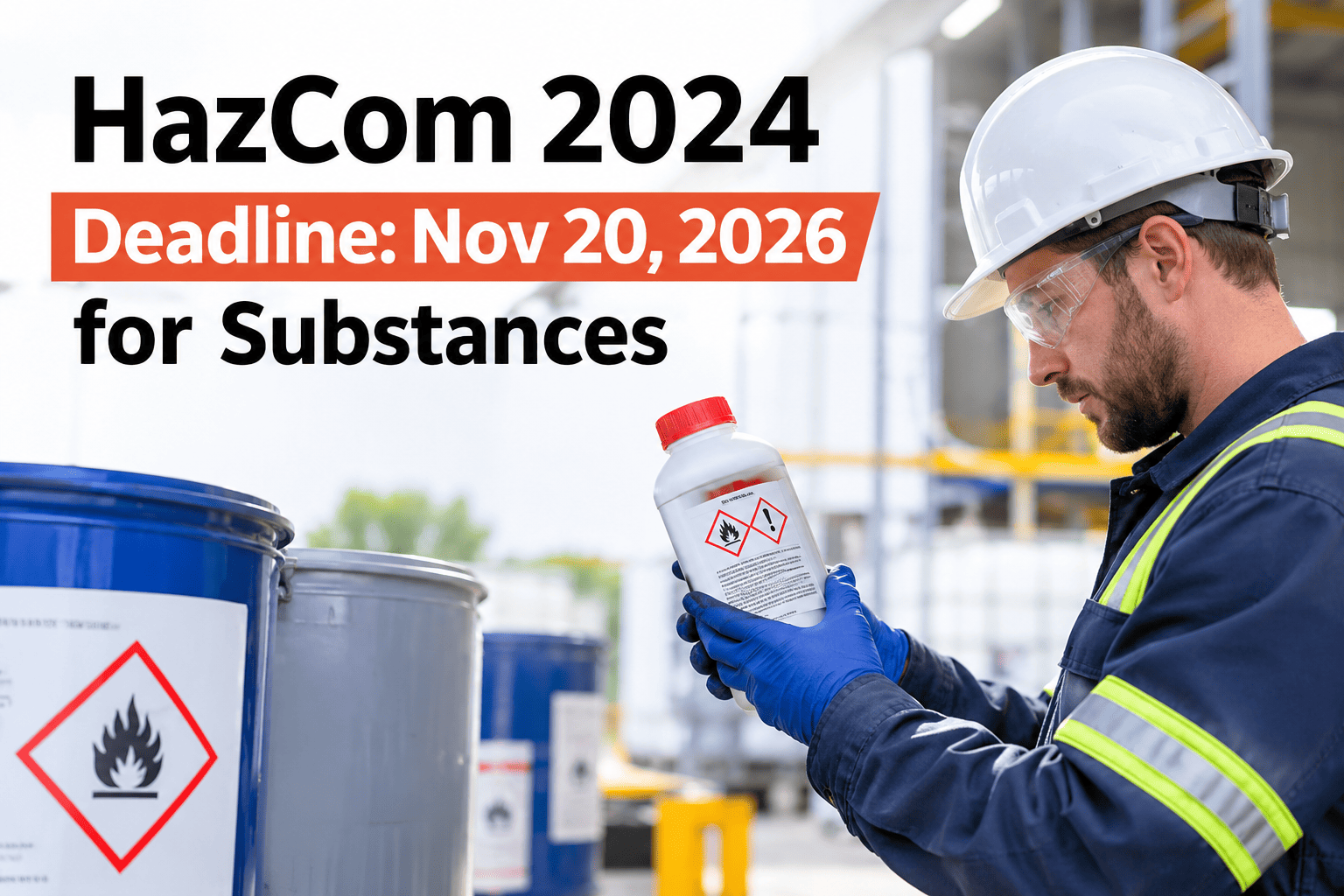
Most HazCom label audits still happen on paper, which means the gap between what is bolted to the drum right now and what the latest SDS says sits undiscovered until an inspector notices it first. A QR code label audit app changes that by putting the comparison directly in the hand of whoever is standing in front of the container. Scan the code, pull the current SDS, check the required label elements, and log any mismatch with a due date attached. For a workforce catching up on the Nov 20, 2026 employer obligations, this is the fastest way to know where the real gaps sit. See how the QR label audit tool works inside the iFactory portal before your next floor walk.
HazCom Field Audits · QR Label Scanning
Scan the Container, Not the Spreadsheet — Audit Labels Where They Actually Live
iFactory, an on-premise AI platform for hazard communication audits, turns a phone scan of a container's QR code into a live comparison against the SDS and the 1910.1200(f)(6) label elements it must carry.
QR Scan
SDS Pulled
Gap Logged
Scan time per containerSeconds
Label elements checked6
Typical storage room, first passUnder 1 hr
Gaps requiring an owner + date100%
Direct answer
What Does a QR Label Audit App Actually Check?
A QR code label audit app is not a yes-or-no toggle for "labelled correctly." It scans a container's unique code, retrieves the matching SDS, and checks the workplace label against the specific elements OSHA requires under 1910.1200(f)(6), flagging any element that is missing, outdated, or mismatched.
A label that looks fine from three feet away can still be missing a required hazard pictogram or carry wording from a superseded SDS revision. A single pass/fail checkbox misses exactly that kind of gap.
Side by side
What the Scan Catches That a Glance Misses
Laid next to each other, an outdated label and a current one often look almost identical until the elements are checked one by one.
Label on the drum
Product name: matches
Hazard pictogram: faded, partly visible
SDS reference: points to prior revision
Mismatch found
vs
Current SDS record
Product name: matches
Hazard pictogram: current, full set required
SDS reference: latest revision on file
Source of truth
The six elements
What a Compliant Workplace Label Must Show Under 1910.1200(f)(6)
OSHA allows employers to use an alternative workplace labeling system, such as NFPA or HMIS, but every system still has to communicate the same core information to the worker standing at the container.
Product identifier
Matches the name used on the current SDS, not an older internal name.
Hazard information
Words, pictures, symbols or a combination giving general hazard information.
Target organ or route
Where the chosen system requires it, the specific hazard pathway is shown.
Consistency across shifts
The same container carries the same label information no matter which crew filled it.
Legibility
Text and symbols are readable under normal plant lighting and after handling.
Traceability to the SDS
A worker can connect the label back to the exact SDS version in effect.
How it runs
The Scan-to-Record Flow, Step by Step
The value of a QR audit is not the scan itself, it is what happens in the few seconds right after.
1
Scan
The container's QR code is scanned on the floor, no lookup needed.
2
Pull
The current SDS and required label elements load automatically.
3
Compare
The physical label is checked element by element against that SDS.
4
Log
Any mismatch is recorded with a photo and the exact element that failed.
5
Assign
A due date and owner are attached so the gap does not sit open.
Find the Labels Already Out of Date
Run a QR audit on one storage area and see how many containers are carrying label information that predates your latest SDS batch.
What audits find
Where the Gaps Cluster, by Type
Across early QR audit rollouts, the same handful of gap types account for most of what gets logged, and one category dominates by a wide margin. This split is illustrative.
Secondary containers never relabeled
Label updated, SDS binder not
Faded or handled-off pictograms
Inconsistent label style by shift
Secondary containers lead by a wide margin because they are filled under time pressure, away from the main labeling station, which is exactly where a floor-level scan adds the most value over a desk-based review.
Timing
Why This Matters for the Nov 20, 2026 Employer Deadline
OSHA's employer obligations landing November 20, 2026 cover updated workplace and secondary-container labels, plus training on any new hazard information from revised SDS sheets (WGA, 2026). A QR audit is the fastest way to confirm those labels were actually updated, not just scheduled for an update.
Teams that rely on a written checklist alone tend to mark a storage area "done" once the main drums are relabeled, while secondary containers filled from them are left on the old label. A scan catches both.
Expert review
What an EHS Auditor Looks For First
An auditor rarely starts with the main storage drums. They start with the secondary containers near the workstations, because that is where relabeling gets skipped under time pressure.
Verdict
Strong when every container, including secondary ones, is scanned against its current SDS.
Watch for
Gaps logged but never assigned an owner or a due date, which is how they go stale.
Do next
Run a full QR sweep of one high-traffic area before scaling the audit plant-wide.
Frequently asked questions
What Safety Teams Ask About QR Label Audits
Do we need new QR codes on every container?
Most plants generate a code per container or per storage location during setup, and the app ties each code to the correct SDS from that point forward.
Start a free trial to see how quickly codes can be generated for an existing storage area.
What exactly gets checked during the scan?
The scan compares the physical label against the product identifier, hazard information, and the other elements required under 1910.1200(f)(6) for your chosen labeling system.
Book a walkthrough to see the comparison against your own label format.
Does this replace a secondary container label audit entirely?
It covers the scanning and comparison step of that audit, logging every gap with a photo and a due date instead of a paper note. A full audit program should still include periodic manual spot-checks alongside it.
Try the audit flow free to see where it fits your existing process.
Can supervisors see open gaps without re-walking the floor?
Yes, every logged gap carries its container, the missing element, a photo, and an assigned due date, so a supervisor can review open items from a dashboard rather than a physical re-walk.
Ask about the dashboard view during a short session.
How long does it take to audit one storage area?
A single scan takes seconds, so the real time driver is how many containers sit in the area, not the tool itself. Most teams clear a mid-size storage room in well under an hour on a first pass.
Run a free audit on your own area to see the actual time for your container count.
Know Which Labels Already Match the SDS — and Which Don't
Scan one storage area with the free QR audit tool in the iFactory portal, then talk to our team about rolling it out plant-wide before your next inspection.