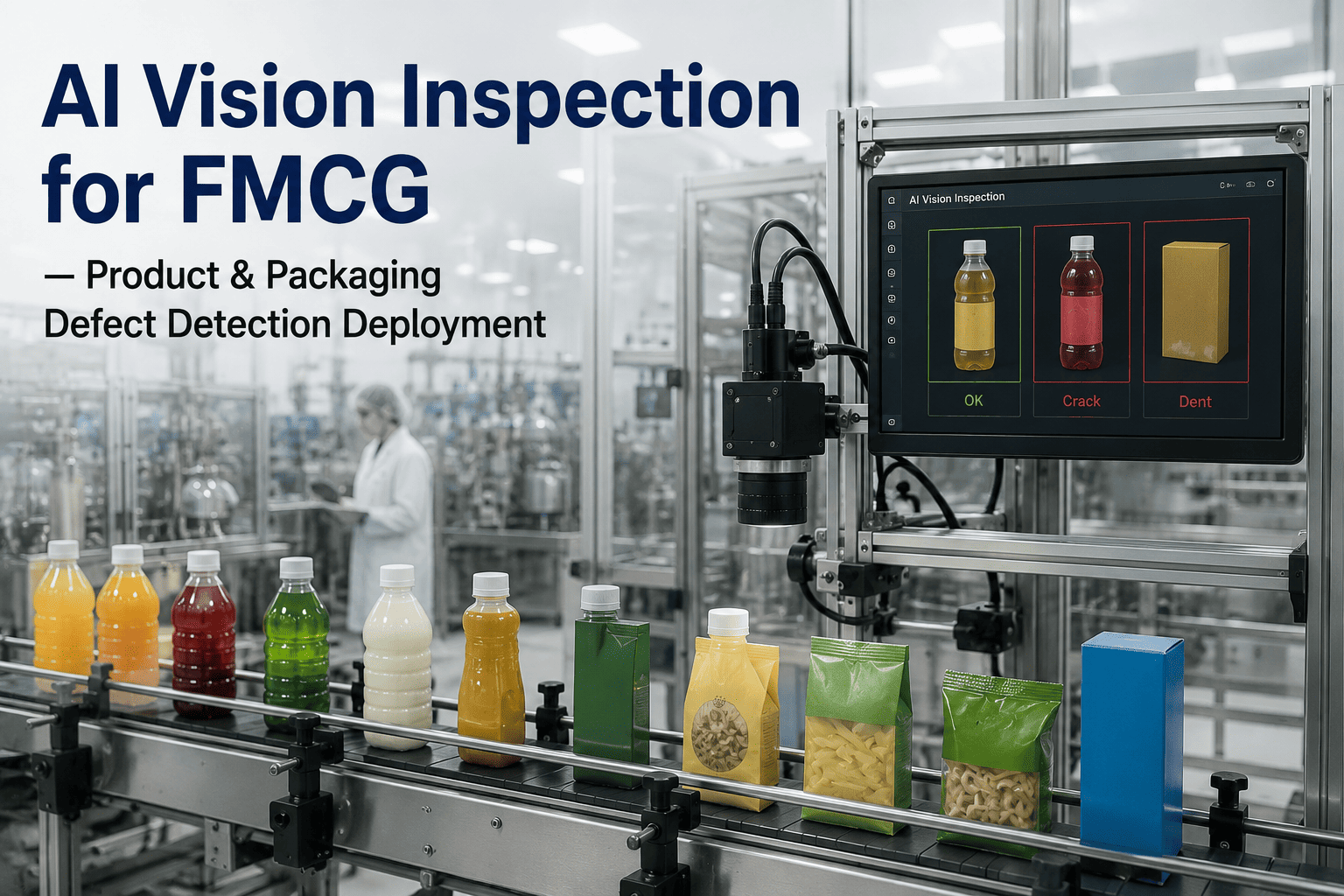
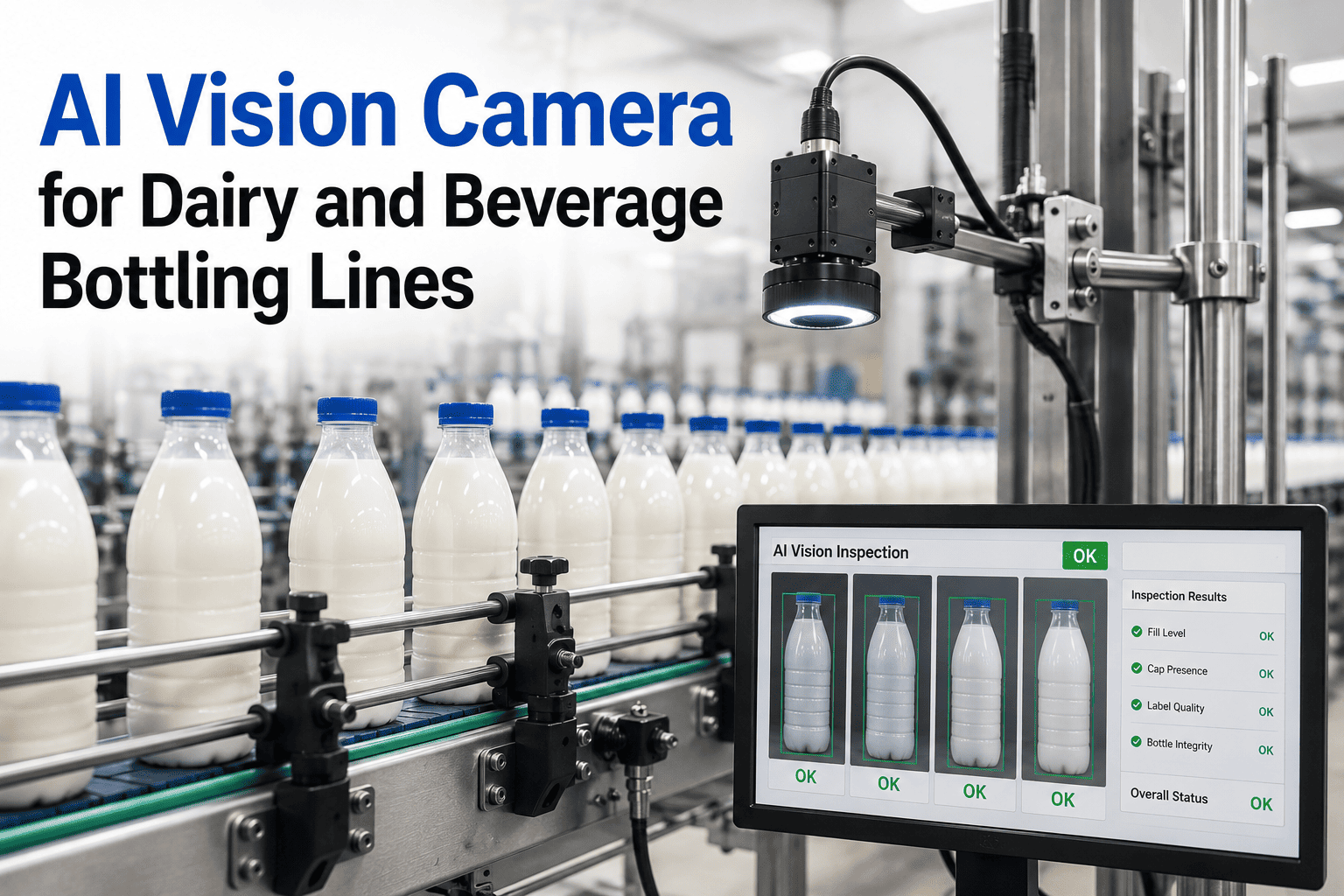
On a beverage line moving a thousand-plus bottles a minute, the human eye gave up long ago. An inspector sampling one bottle in a hundred cannot catch the half-centimeter under-fill that shorts the customer, the cap seated a few degrees crooked that will let the drink go flat, or the label applied two millimeters high that a retailer will reject the whole pallet over. Each of those defects is small. The consequences are not: an under-fill invites regulatory action, an over-fill gives away free product on every bottle, a missing cap means leaks and spoilage, and a single publicized contamination or labeling failure can damage a brand for years — with the average food product recall costing around ten million dollars. AI vision closes the gap by inspecting 100% of containers at full line speed, catching what sampling and tired eyes miss. iFactory's vision defect detection turns every bottle into an inspected bottle.
iFactory Vision Defect Detection
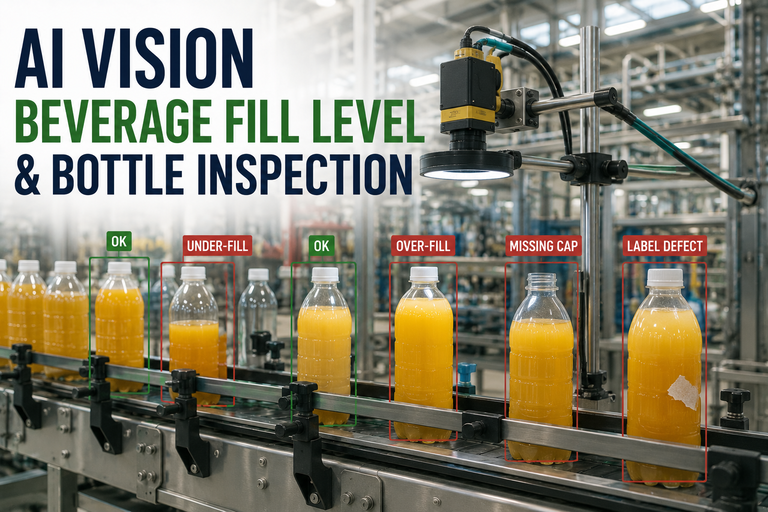
AI Vision Beverage Fill Level & Bottle Inspection
Detect under-fill, over-fill, missing and crooked caps, and label defects on every bottle at full line speed — protect the brand, cut giveaway, and prevent the recall.
Traditional beverage inspection leans on simple photo-sensors and rule-based vision, and both struggle with the realities of a high-speed wet line. Shiny aluminum and glass throw specular reflections that confuse threshold-based systems. Carbonated drinks foam and bubble, fooling a sensor into reading the wrong level. And a line that runs dozens of SKUs forces constant reprogramming. Meanwhile, manual sampling checks a fraction of output — so the defect that ships is the one nobody looked at.
Sampling & Rule-Based
Misses What It Doesn't Look At
Manual checks sample a fraction — most bottles never inspected
Glare off glass and aluminum confuses threshold-based vision
Foam and bubbles in carbonated drinks fool simple level sensors
Every new SKU means reprogramming and line downtime
AI Vision Inspection
Every Bottle, Every Defect
100% inline inspection — every container captured and dispositioned
Deep-learning models see through glare to the real defect
Trained to read fill level through foam and opaque containers
Handles SKU changeovers without reprogramming the line
The Fill-Level Tolerance Band
Fill-level inspection is a dual-sided problem, and AI watches both edges of it. Under-fill cheats the consumer and invites regulatory action; over-fill quietly gives away product on every single bottle and can cause fobbing. The target is a tight band between a minimum and maximum line — and vision verifies every container sits inside it, reading the meniscus even through foam.
Pass / Under-Fill / Over-Fill on the Line
Under-fill — short measure, regulatory and consumer-trust risk
In spec — within the tolerance band, passes
Over-fill — free product given away on every bottle
One Pass, Every Defect Class
Fill level is only the start. As each bottle moves through the inspection station, AI checks the whole container in a single pass — closure, label, code, and contents — because the defects that trigger recalls are spread across all of them. Here is the full taxonomy the vision models cover.
Fill Level
Under-fill and over-fill against the tolerance band, read accurately even through foam, bubbles, and opaque containers.
Caps & Closures
Missing caps, "cocked" or crooked seating, cross-threading, broken tamper bands, and damaged closures that cause leaks or spoilage.
Labels
Missing, misaligned, skewed, wrinkled, or torn labels — present, correctly positioned, and properly adhered on every bottle.
Codes & OCR
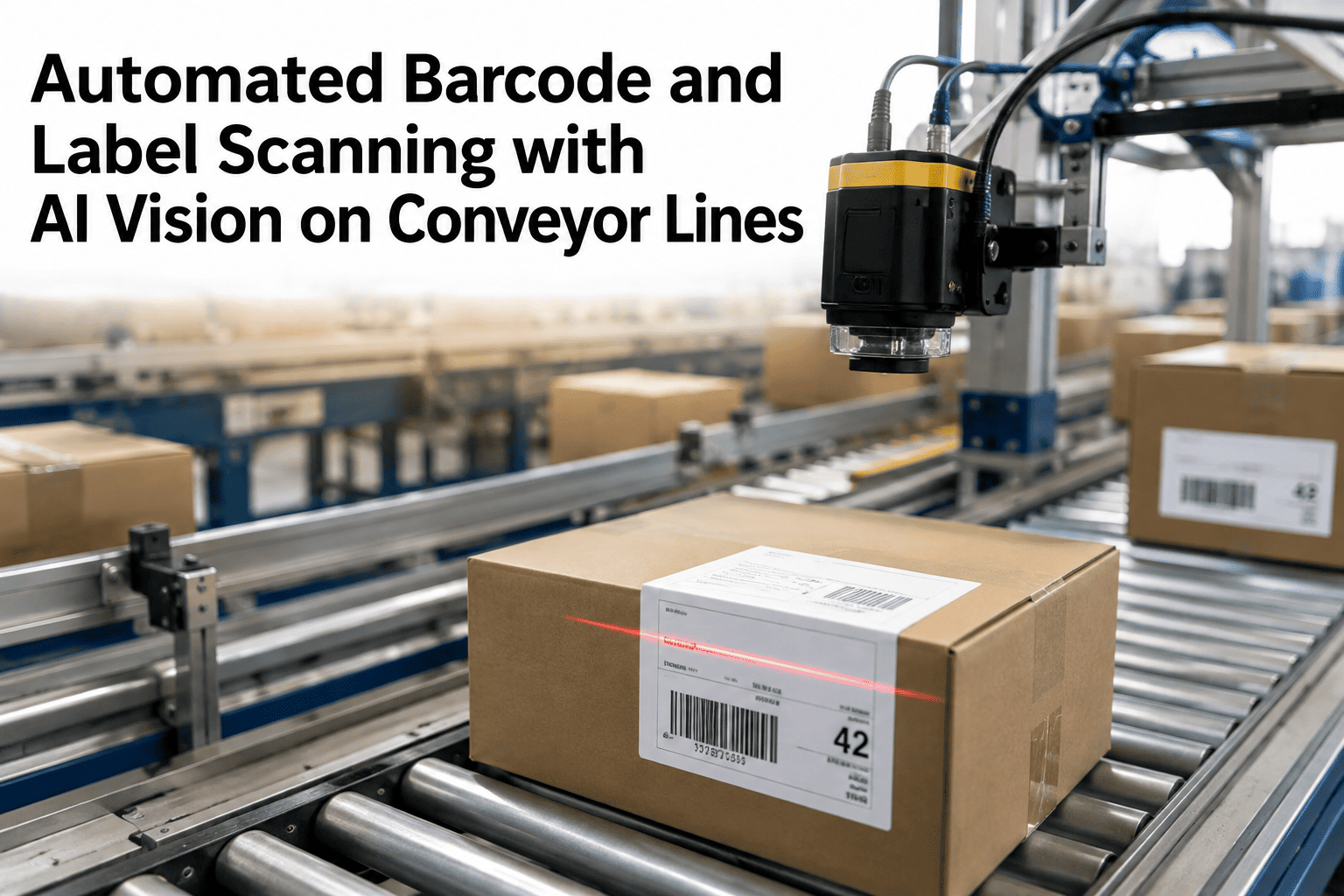
Date codes, lot numbers, and barcodes verified for presence and readability with optical character recognition.
Container
Cracked, chipped, scratched, or deformed glass and PET caught before fill — defects that cause leaks and safety hazards.
Contamination
Foreign objects and floating debris in the contents identified before sealing — the defect class behind brand-damaging recalls.
Want to see AI catch a defect class your line keeps shipping? Book a 30-minute walkthrough and we'll run vision detection on your own bottle and label samples.
Why Deep Learning Beats Rule-Based Vision Here
A beverage line is one of the hardest environments in machine vision: wet, fast, reflective, and full of product variation. Rule-based systems set rigid thresholds and break the moment conditions shift. Deep-learning models learn what a good bottle looks like across all that variation, which is how they reach 99%-plus accuracy where threshold systems generate constant false rejects.
Sees Through Glare
Specular reflection off glass and aluminum defeats threshold vision; AI models distinguish a real defect from a highlight.
Reads Through Foam
Carbonation and bubbles fool simple level sensors; trained models find the true liquid level despite the foam head.
Distinguishes Defect from Variation
Normal product variation isn't a defect; deep learning tells the two apart, slashing the false rejects that plague rule-based QC.
Handles Multi-SKU Lines
Dozens of labels, colors, and sizes on one line — AI manages changeovers without the reprogramming legacy vision demands.
How It Runs on the Line
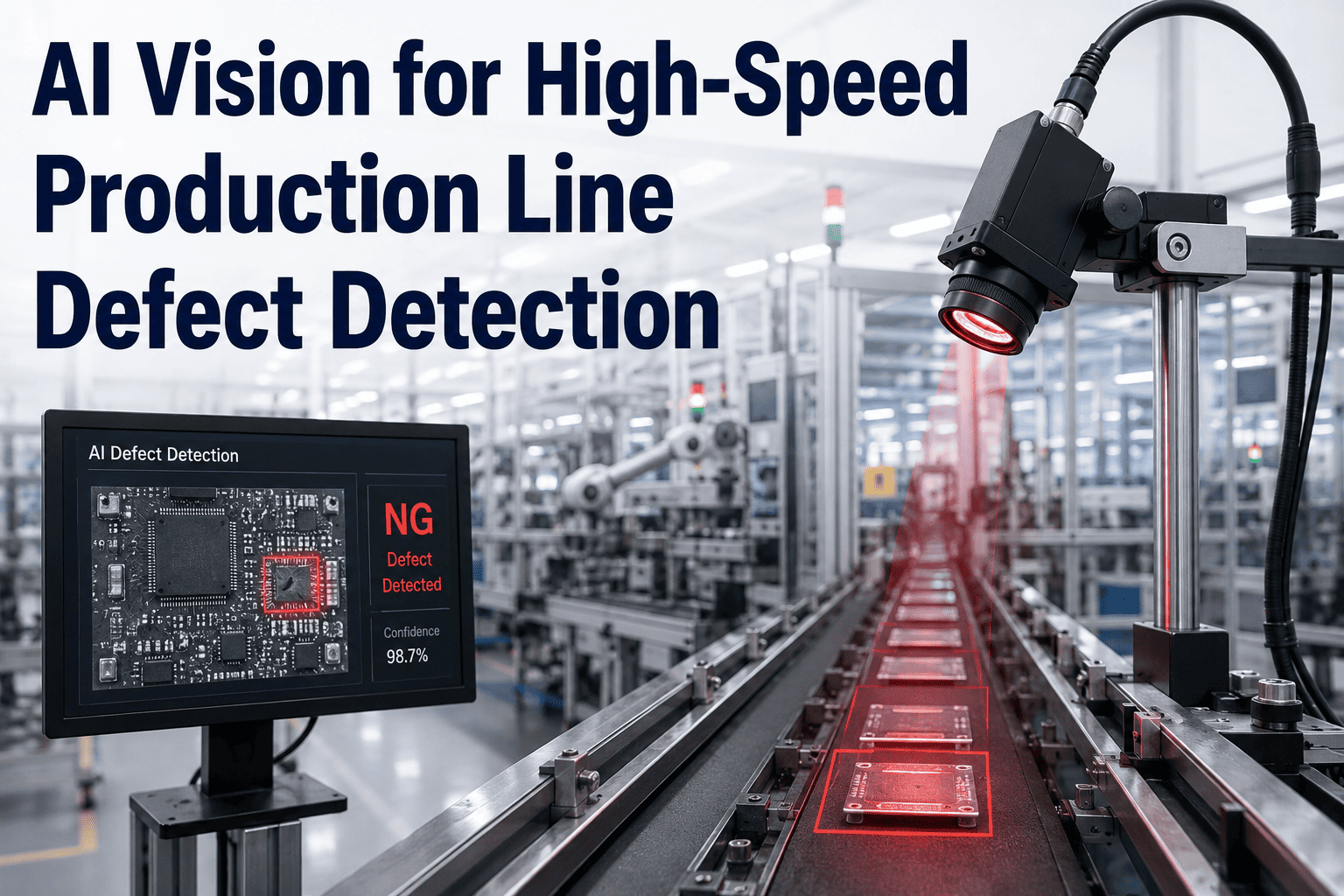
Vision defect detection earns its place by deploying into the harsh, fast reality of a bottling line without slowing it down. Cameras built for the environment capture every container, GPU-accelerated AI dispositions it in under 100 milliseconds, and the reject mechanism pulls the bad bottle — all at full production speed, all feeding quality analytics.
From Bottle to Disposition in Under 100ms
1
Capture
Image Every Bottle
Line-rate cameras and lighting built for wet, reflective, high-speed environments
2
Infer
GPU AI
Deep-learning models analyze fill, cap, label, code, and contents in under 100ms
3
Disposition
Pass or Reject
In-spec bottles continue; defects are flagged and rejected at line speed
4
Analyze
Trend & Improve
Every defect categorized to drive root-cause analysis and process improvement
What 100% Inspection Protects
The case for AI vision on a beverage line is measured in recalls avoided, giveaway recovered, and brand protected. These figures come from beverage and packaging AI-inspection research and deployments.
99%+
Detection accuracy
at full line speed, catching what sampling misses
100%
Of containers inspected
inline verification replaces a sampling exercise
$10M
Recall cost avoided
the average direct cost of a single food product recall
$4.49B
Market by 2029
AI packaging inspection, a category moving fast
Every recall avoided and gram of giveaway recovered starts with inspecting all of it, not some of it. Want the vision plan scoped to your line? Talk to our vision engineers.
Frequently Asked Questions
Can AI vision keep up with our line speed?
Yes. GPU-accelerated inference dispositions each container in under 100 milliseconds, fast enough to inspect 1,000 to 2,000-plus bottles per minute — every one, not a sample. The cameras and lighting are specified for the line rate, so 100% inspection happens at full production speed rather than forcing the line to slow down.
How does it read fill level through foam and bubbles?
That's exactly where deep learning beats simple sensors. Carbonated drinks foam and bubble, which fools threshold-based level detection into reading the wrong line. Models trained on real beverage imagery learn to find the true liquid level despite the foam head and through opaque or tinted containers — handling the variables that confuse rule-based systems.
Will glare off glass and aluminum cause false rejects?
Far less than with rule-based vision. Shiny glass and aluminum throw specular reflections that threshold systems misread as defects, generating constant false rejects. Deep-learning models are trained to see through the glare and distinguish an actual defect from a highlight, which is a large part of why they reach 99%-plus accuracy where legacy vision struggles.
We run many SKUs on one line — does that mean constant reprogramming?
No. A single line may run dozens of SKUs with different labels, colors, and container sizes, and that's precisely where legacy vision bogs down in reprogramming and downtime. AI models handle changeovers without rebuilding the inspection logic each time, so format changes don't cost you setup time on every switch.
What's the single biggest reason to inspect every bottle?
The recall. A single publicized contamination or labeling failure can damage a brand for years, and the average food product recall runs around ten million dollars in direct cost. Sampling leaves the defect that ships as the one nobody looked at; 100% inline inspection turns quality from a statistical bet into verification of every container — protecting both the brand and the bottom line.
Inspect Every Bottle, Not Every Hundredth.
See Vision Defect Detection on Your Line — in 30 Minutes
Bring the defect that keeps slipping through — an under-fill, a crooked cap, a skewed label. We'll show AI capture it at line speed, read fill level through foam, disposition it in under 100ms, and categorize it for root-cause analysis. Your bottles, every one inspected.