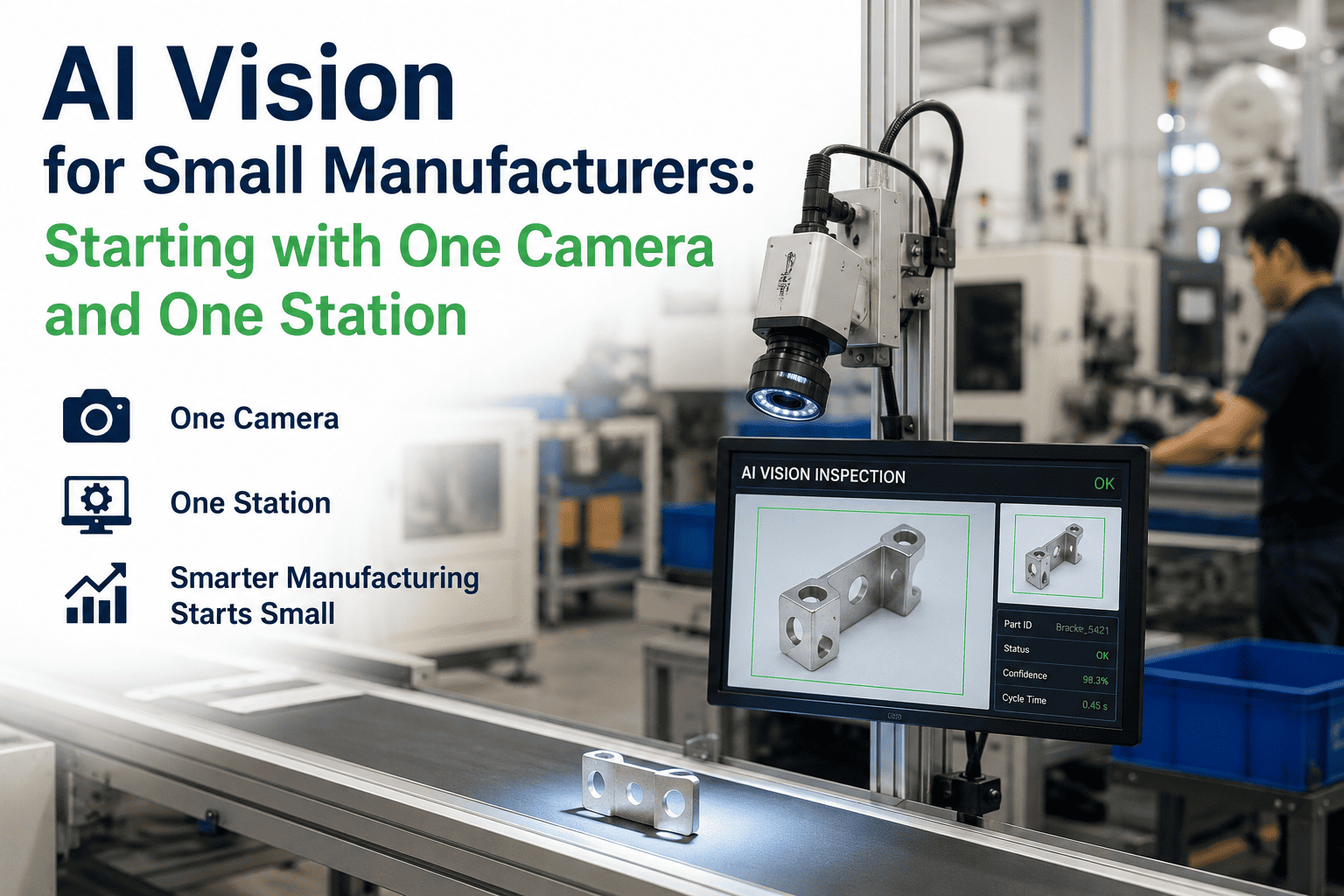
AI Vision Cameras for small and mid-size manufacturers have moved from a niche enterprise technology to a practical, deployable quality control tool accessible to facilities running as few as one or two production lines. For SMEs, the decision to adopt AI vision is not simply about whether the technology works — it is about whether the measurable value justifies the total cost of deployment, integration, and ongoing operation within the resource constraints of a smaller manufacturing business. This page examines that cost-value equation with precision, drawing on real deployment patterns for facilities under 200 employees, and explains how iFactory's AI Vision Camera platform is specifically designed to make that equation work in your favor.
See How AI Vision Cameras Deliver ROI for Smaller Facilities
iFactory's AI Vision Camera platform is built for the budget cycles, IT constraints, and quality goals of small and mid-size manufacturers — not just enterprise plants. Book a demo to see real deployment economics.
What AI Vision Cameras Actually Cost for SME Manufacturers
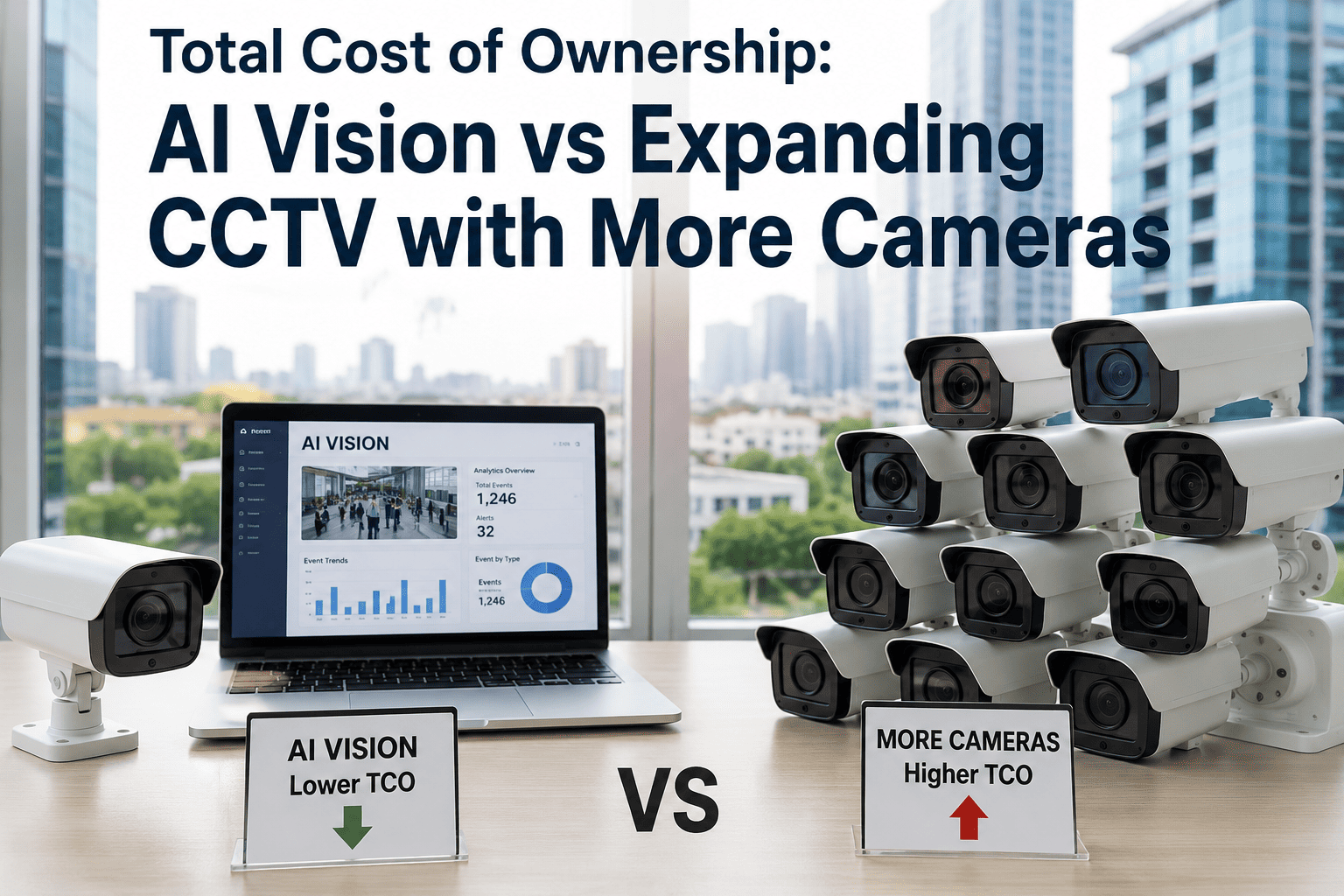
The sticker price of AI vision hardware is only one component of total deployment cost, and for smaller manufacturers it is frequently not even the largest. A realistic cost model for SME AI vision deployment includes camera hardware, mounting and enclosure infrastructure, edge computing or cloud processing fees, software licensing, integration with existing MES or ERP systems, initial model training time, and ongoing retraining as product variants change. Understanding each of these cost categories before evaluating any vendor prevents the common mistake of comparing hardware prices while underestimating integration and operational costs that follow. iFactory's deployment model is designed with SME total cost of ownership in mind — not just per-camera pricing. Manufacturers who Book a Demo receive a facility-specific cost breakdown during the scoping session, not a generic price list.
Hardware Costs
Industrial AI vision cameras suitable for manufacturing environments range from entry-level area scan models to high-resolution line scan systems for continuous web inspection. SMEs typically require 2–8 camera deployments per line, with hardware costs varying by resolution, IP rating, and lens configuration. iFactory's camera recommendations are matched to your specific defect type and line speed — avoiding over-specification that inflates hardware spend unnecessarily.
Camera Hardware · Lenses · IP-Rated EnclosuresSoftware & Licensing
AI vision software licensing structures vary significantly: per-camera seat fees, per-inspection-volume pricing, and flat facility licenses each create different cost curves at different production volumes. For SMEs with seasonal or variable throughput, flat facility licensing typically delivers better predictability. iFactory's platform uses a licensing model designed to remain cost-effective as SME production volumes grow rather than creating price cliffs at volume milestones.
Platform Licensing · Model Training · SaaS FeesIntegration & Deployment
Connecting AI vision outputs to existing production tracking, rejection systems, and quality record databases represents a significant hidden cost for manufacturers without dedicated IT staff. iFactory's platform includes pre-built integration connectors for common SME MES platforms and supports lightweight deployment on existing edge hardware — reducing the system integration scope that typically extends timelines and inflates project budgets for smaller facilities.
MES Integration · Edge Deployment · API ConnectorsOngoing Operational Cost
AI vision systems require periodic model retraining as product variants are introduced, defect modes evolve, or packaging changes. SMEs without in-house computer vision engineers need a vendor whose platform supports guided model updates without requiring specialist contractors for every retraining cycle. iFactory's model management workflow is designed for quality engineers, not data scientists — keeping ongoing operational costs inside existing headcount rather than requiring external AI expertise.
Model Retraining · Maintenance · Support CostsWhere AI Vision Cameras Deliver Measurable Value in SME Operations
Value from AI vision deployment in smaller manufacturing facilities flows through three primary channels: defect detection accuracy improvement over manual inspection, throughput gains from eliminating manual inspection bottlenecks, and customer claim reduction from escaping defects reaching distribution. Each channel delivers quantifiable financial impact that can be modeled against deployment cost before a purchasing decision is made. SMEs evaluating AI vision for the first time who Book a Demo with iFactory gain access to a value modeling worksheet that maps these channels to their specific production volume and defect history during the initial conversation.
Defect Detection Accuracy vs Manual Inspection
Human visual inspection in food, beverage, pharmaceutical, and consumer goods manufacturing operates at accuracy rates that decline with fatigue, shift length, and production speed. AI vision systems maintain consistent inspection accuracy across every shift, every hour of the production day, regardless of lighting variation or operator experience level. For SMEs where a single experienced inspector covers multiple stations, AI vision captures defect categories that manual inspection misses structurally — not because inspectors are inattentive, but because the inspection demand exceeds what unaided human vision can reliably sustain. iFactory's vision models are trained on defect categories specific to your product type, delivering detection performance calibrated to your actual quality risk profile rather than generic benchmark datasets.
Defect Detection · Accuracy Rate · ConsistencyThroughput and Line Speed Gains
Manual inspection gates production speed — lines run at the pace inspectors can reliably assess, not at the mechanical limit of the equipment. AI vision inspection operates at full line speed with no throughput penalty, enabling SMEs to recover capacity that was previously constrained by inspection bottlenecks. In facilities where manual inspection requires line slowdown at peak throughput periods, AI vision deployment directly translates into additional production capacity without capital investment in additional equipment. This throughput gain is particularly significant for small manufacturers with constrained production windows or seasonal demand peaks where every additional production hour has high marginal value.
Throughput · Line Speed · Capacity RecoveryCustomer Claim and Return Cost Reduction
For SMEs supplying retail, foodservice, or industrial customers, a single significant customer claim event can equal or exceed the annual cost of a complete AI vision deployment. Escaped defects that reach distribution channels generate claim processing costs, product return logistics, replacement production runs, and — in regulated industries — potential recall liability that dwarfs inspection infrastructure investment. AI vision systems provide the documented inspection record that supports claim defense and demonstrates systematic quality control to customers and auditors. iFactory's platform generates complete per-unit inspection records that become part of your quality documentation chain, strengthening audit performance and customer confidence simultaneously.
Customer Claims · Return Costs · Audit DocumentationLabor Reallocation, Not Elimination
The value proposition of AI vision for SMEs is not workforce reduction — it is reallocation of skilled quality personnel from repetitive visual inspection tasks to root cause investigation, supplier quality management, and continuous improvement work that creates compounding operational value. In smaller facilities where quality staff wear multiple hats, freeing inspection hours generates immediate organizational capacity for higher-value quality activities. iFactory's deployment approach is designed to integrate AI vision as a quality team capability multiplier — expanding what your existing quality headcount can accomplish rather than replacing the expertise your team already holds.
Labor Reallocation · Quality Team · CapacityDeployment Challenges SMEs Face — and How iFactory Addresses Them
Small and mid-size manufacturers face a different set of AI vision deployment challenges than large enterprise facilities. Limited IT infrastructure, smaller budgets for project management, fewer in-house technical specialists, and tighter production schedules that limit installation windows all shape what a successful deployment model must look like for an SME. Vendors whose deployment methodology was built for automotive or pharmaceutical enterprise environments often underestimate these constraints, creating projects that stall during integration or require expertise SMEs do not have on staff. iFactory's platform and deployment process were designed with SME operational realities as the primary constraint — not adapted from an enterprise product after the fact.
Limited IT Infrastructure
Many SME production facilities run on basic network infrastructure without dedicated industrial Ethernet segments, edge server rooms, or IT staff available during production hours. iFactory's AI vision platform is deployable on compact edge hardware that integrates into existing facility networks without requiring infrastructure upgrades that create project scope and cost beyond the vision system itself.
No In-House AI Expertise
SMEs do not have machine learning engineers or computer vision specialists on staff. iFactory's model training workflow is designed for quality engineers who understand defect categories but have no AI development background — enabling initial model deployment and ongoing retraining without external specialist contractors for routine updates.
Narrow Installation Windows
Smaller manufacturers run lean production schedules with limited planned downtime available for capital equipment installation. iFactory's deployment methodology is optimized for rapid mechanical and electrical installation during scheduled maintenance windows, with camera commissioning and model validation completed without requiring extended line shutdowns.
Multi-SKU Product Variety
SMEs frequently produce higher product variety across fewer production lines than single-SKU enterprise facilities. iFactory's vision platform supports multi-SKU model libraries with fast changeover between inspection configurations — matching the production flexibility that small manufacturers depend on without requiring a separate camera system per product variant.
Cost vs Value: What the Numbers Look Like for SME Deployments
A realistic cost-value analysis for SME AI vision deployment requires anchoring on actual production volumes, defect rates, and inspection labor costs rather than industry-average benchmarks that may not reflect smaller facility economics. The value calculation is straightforward when the right inputs are used: annual cost of escaped defects plus inspection labor cost plus throughput capacity lost to inspection bottlenecks, compared against total annualized AI vision deployment cost including hardware amortization, software, and operational support. For most SME facilities with more than one dedicated quality inspector or with documented customer claim history, this calculation produces payback periods under 18 months. Manufacturers who want to run this calculation against their own facility data before making any commitment can Book a Demo with iFactory and receive a completed value model based on their production specifics.
For facilities with documented defect escape history or manual inspection bottlenecks, AI vision deployment typically achieves payback within 18 months of commissioning.
Typical camera count per SME production line, matched to specific inspection points rather than blanket coverage — keeping hardware cost proportional to inspection value.
AI vision inspects every unit at full line speed — replacing the statistical sampling approach that manual inspection requires, eliminating inspection sampling gaps entirely.
iFactory's platform supports fast changeover between product variant inspection configurations — critical for SMEs running multiple SKUs across shared production lines.
Frequently Asked Questions — AI Vision Cameras for Small & Mid-Size Manufacturers
Can AI vision cameras handle the product variety typical in SME manufacturing?
Yes. iFactory's platform supports multi-SKU model libraries that allow inspection configuration changes at product changeover — the same system that inspects one packaging format in the morning can inspect a different variant in the afternoon without hardware changes. Model training for each variant is completed once and recalled from the library at changeover.
What happens when a new product variant is introduced that the model has not been trained on?
iFactory's model training workflow allows quality engineers to add new product variants to the inspection library using a guided image collection and labeling process that does not require AI expertise. New variant models can typically be trained and validated within days of sample production runs — without external support from machine learning specialists.
How does AI vision camera data integrate with our existing quality records?
iFactory's platform generates per-unit inspection records that can be exported to existing quality management systems through API connectors or standard file formats. For SMEs without formal QMS software, the platform's built-in inspection history database provides the documentation needed for customer audits and regulatory compliance without requiring additional software investment.
Do we need dedicated IT staff to run an AI vision system?
No. iFactory's platform is designed for operation by quality engineers without dedicated IT support. System monitoring, model management, and inspection report generation are all accessible through a browser-based interface that requires no specialist technical knowledge. IT involvement is required during initial installation and network integration but not for ongoing day-to-day operation.
What is the minimum production volume that makes AI vision economically viable for an SME?
Economic viability depends on defect costs and inspection labor costs more than production volume alone. SMEs with high-value products, strict customer quality requirements, or documented claim history often achieve viable economics at relatively modest production volumes. The best way to determine viability for your facility is to run the value calculation with your actual numbers — which iFactory's team will complete with you during a demo session.
Find Out If AI Vision Cameras Make Economic Sense for Your Facility
iFactory's team works directly with small and mid-size manufacturers to model deployment costs against measurable quality and throughput value — so you make the adoption decision with full financial visibility, not vendor assumptions.