AI Vision for Conveyor Belt Foreign Object Detection in Industrial Production

By David Cook on March 11, 2026

ai-vision-conveyor-foreign-object-detection

A single piece of tramp metal on a conveyor belt can destroy $15,000 in crusher heads in seconds — and the unplanned shutdown that follows costs up to $260,000 per hour. In cement, steel, mining, and food processing, foreign objects on conveyors are responsible for catastrophic equipment damage, contaminated product batches, and production losses that cascade across entire facilities. AI vision systems now detect these objects in under 200 milliseconds — before they reach critical equipment. Here's exactly how the technology works, where it's deployed, and why it's becoming essential for any operation that moves materials on a belt.

$260K
Average Hourly Cost of Unplanned Conveyor Downtime
<200ms
AI Detection Speed Per Frame
98%+
Foreign Object Detection Accuracy
82%
Reduction in Crusher Blockages with Vision AI

The Foreign Object Problem: Why Conveyors Are Vulnerable

Conveyor belts move millions of tons of raw materials annually — limestone, coal, grain, recycled scrap, packaged goods. Within these massive material streams, foreign objects infiltrate the production process regularly. The consequences are severe and compound fast.

Foreign Object Enters Belt
Metal fragments, oversized rocks, tools, bolts, wood, plastic, debris from upstream equipment failure

Equipment Destruction
Crusher heads shattered, conveyor belts ripped, screens punctured, mill liners cracked — repair costs from $15K to $500K+ per event
Production Cascade Failure
One belt stoppage halts upstream feeders, downstream hoppers, and connected processes — entire production lines go idle within minutes
Product Contamination
In food, pharma, and chemical processing, a single foreign object in the product stream triggers batch rejection, recalls, and regulatory action
Safety Hazards
Snapped belts, ejected material, jammed crushers — foreign object events are a leading cause of conveyor-related worker injuries
82%
of companies have experienced unplanned downtime in the past three years

800 hrs
average equipment downtime per year for manufacturers

$50K–$100K
daily profit loss when a primary conveyor goes offline

How AI Vision Detects Foreign Objects on Conveyors

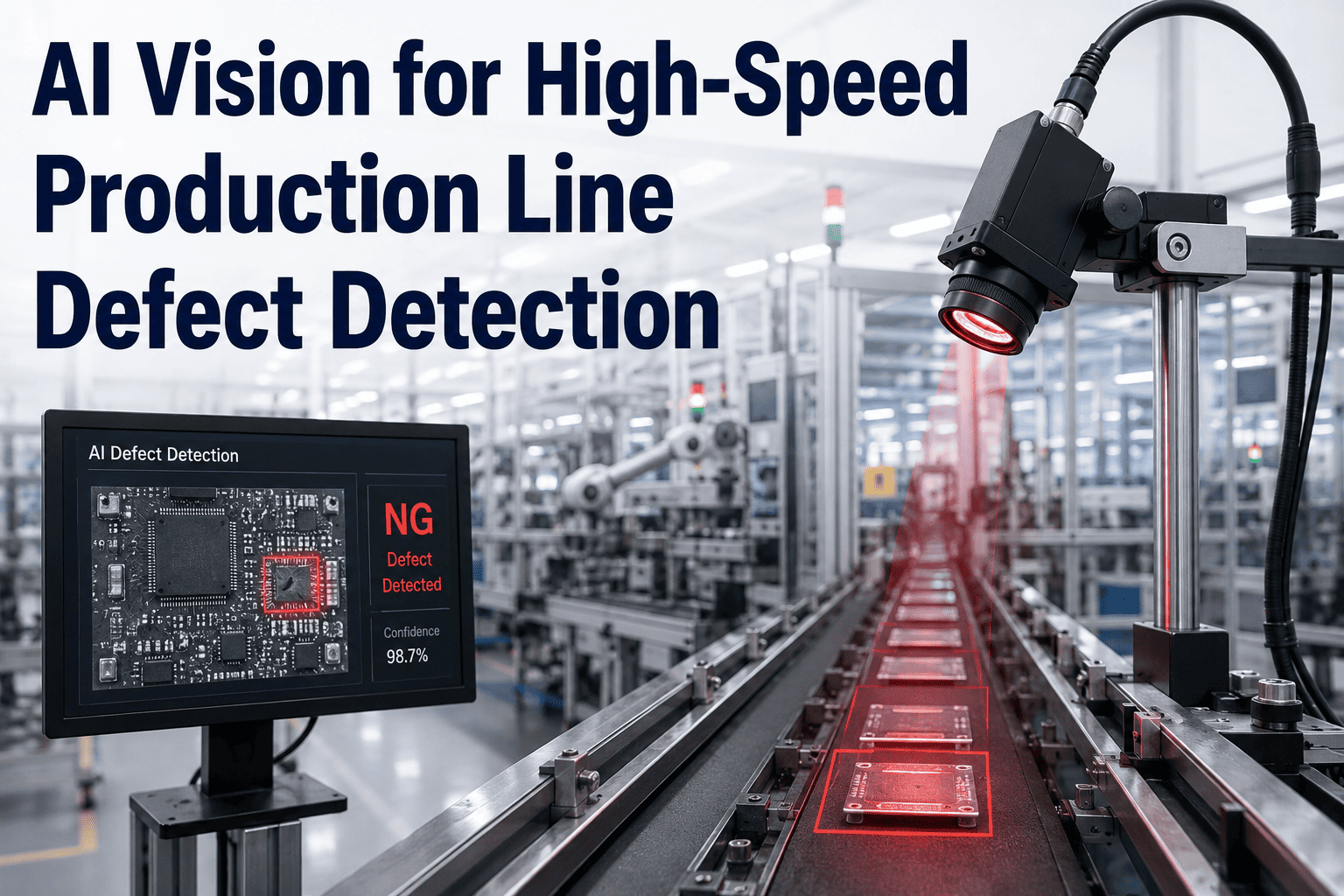
AI-powered conveyor monitoring uses high-speed industrial cameras combined with deep learning models to analyze every frame of material flowing on the belt. Unlike metal detectors (which only catch ferrous objects) or manual inspections (which can't keep pace with belt speed), AI vision identifies any anomaly — metal, wood, plastic, stone, tools, or unexpected material — in real time.

Phase 1
Continuous Visual Capture
High-resolution industrial cameras (4K+) mounted above conveyor belts capture every frame of material flow. Specialized optics — backlighting, structured light, or dark field illumination — enhance contrast between normal material and foreign objects, even in dusty, low-light environments common in mining and cement plants.

Phase 2
Edge AI Inference
Each frame is processed by CNN-based deep learning models running on edge hardware (NVIDIA Jetson, FPGA, or custom ASIC). The model compares material patterns against thousands of trained object classes, distinguishing normal product (coal, clinker, grain) from anomalies (bolts, metal strips, wood debris, oversized rocks) in under 200 milliseconds.

Phase 3
Classification & Severity Scoring
Detected objects are classified by type, size, and risk level. A small pebble on a food line is critical; the same pebble on a mining belt is routine. The system applies industry-specific rules to determine severity, urgency, and recommended action — ensuring operators only respond to real threats.

Phase 4
Automated Response
The system connects to PLCs via MQTT or OPC-UA to execute real-time actions: automatic belt stop, diverter gate activation, or operator alert. Every detection event is logged with timestamp, image capture, object classification, and action taken — creating a complete audit trail for maintenance and compliance review.
Detection is instant. But the real value comes from what happens after — tracked work orders, root cause analysis, and trend reporting. See how iFactory connects AI vision detections to automated maintenance workflows for conveyor systems.

What AI Vision Catches That Other Methods Miss

Traditional detection methods each have blind spots. AI vision eliminates them by seeing everything — regardless of material type, object size, or belt speed.

Detection Method
Metal Objects
Non-Metal Objects
Size Variants
Belt Damage
Speed
Metal Detectors
Yes
No
Limited
No
Fast
X-Ray Systems
Yes
Yes
Yes
No
Moderate
Manual Inspection
Sometimes
Sometimes
Inconsistent
Visual Only
Slow
AI Vision
Yes
Yes
Yes
Yes
<200ms

Industry Applications: Where Foreign Object Detection Delivers ROI

Foreign object detection isn't one use case — it spans every industry that moves material on a belt. The objects differ, the consequences differ, but the technology is the same.


Cement & Mining
Tramp metal, anchor bolts, channel steel, oversized gangue, wood debris
Crusher destruction, belt rips, mill damage — single events costing $100K+ in downtime
Result 82% reduction in crusher blockages, 70% reduction in conveyor downtime

Food & Beverage
Glass shards, plastic fragments, bone chips, metal shavings, packaging remnants
Product contamination, consumer safety, batch recalls, FDA/FSSC compliance violations
Result 100% inspection coverage replacing statistical sampling — every item checked

Automotive & Manufacturing
Loose bolts, metal burrs, misplaced components, packaging debris, tool fragments
Assembly defects, downstream equipment damage, warranty claims, line stoppages
Result 30% reduction in downtime, 20% increase in production efficiency

Recycling & Waste Processing
Batteries, electronics, hazardous materials, oversized items, tangled wires
Sorting contamination, equipment jams, fire hazards from lithium batteries
Result Automated hazardous material diversion before reaching shredders or balers

Pharmaceuticals
Cross-contamination particles, broken capsules, label fragments, packaging defects
GMP violations, batch rejection, patient safety risk, regulatory shutdown
Result Continuous visual compliance monitoring with audit-ready documentation

Your Conveyors Move Product. AI Vision Protects the Process.

iFactory connects AI vision detection events on your conveyor lines to automated work orders, root-cause tracking, and compliance documentation — so every foreign object event becomes a documented, resolved, and auditable maintenance action.

Strategic Camera Placement: Where to Monitor

Effective foreign object detection requires cameras at the right control points — upstream of expensive equipment, where catching a contaminant prevents damage rather than documenting it after the fact.

Primary Detection Points
Raw Material Feed Conveyors
Before crushers and primary processing — catches objects when removal is cheapest and equipment protection is highest
Clinker / Product Transport Lines
Before mills, grinders, and packaging — prevents contamination of finished product
Alternative Fuel Input Lines
Before kilns and combustion systems — catches non-combustible debris that damages refractory linings
Secondary Monitoring Points
Inter-Stage Transfer Points
Where debris accumulates between process stages — transition points where new contaminants can enter
Return Belt Sections
Monitor for carryback material, belt surface damage, and misalignment indicators
Discharge & Loading Zones
Final verification before material enters trucks, silos, or packaging — last line of defense

Detection Alone Isn't Enough: Closing the Loop with CMMS

The most common failure in conveyor AI deployments isn't the camera — it's the gap between detection and documented response. When a foreign object is caught, the system needs to do more than stop a belt. It needs to trigger a traceable chain of action.

1
AI Detects Foreign Object
Camera captures object with classification, size, belt location, and timestamp. Belt stops or diverter activates automatically.

2
CMMS Generates Work Order
Detection event auto-creates a prioritized work order: asset ID, conveyor zone, object type, severity, recommended action, and image evidence attached.

3
Technician Removes & Documents
Assigned technician removes object, inspects belt for damage, documents resolution with sign-off. If belt damage is found, a follow-up repair order is generated.

4
Root Cause & Trend Analysis
CMMS tracks patterns: which feed sources produce the most debris, which shifts have highest event rates, which conveyor zones need upstream intervention. Data drives permanent fixes.

Protect Your Equipment. Automate Your Conveyor Monitoring.

iFactory connects AI vision detection on your conveyor lines to automated work orders, predictive maintenance scheduling, and compliance documentation. Every detection becomes a tracked, resolved action — whether you're running cement kilns, food processing lines, or mining operations.

Frequently Asked Questions

AI vision systems detect both metallic and non-metallic objects — including bolts, tools, metal fragments, oversized rocks, wood debris, plastic, glass shards, and any material that differs from the expected product stream. Unlike metal detectors, AI vision isn't limited to ferrous materials. Models are trained on industry-specific material streams so they can distinguish normal product variation from genuine foreign objects with 98%+ accuracy.

Modern AI vision systems process each frame in under 200 milliseconds — fast enough to detect and classify a foreign object before it reaches downstream equipment. When integrated with PLCs via standard industrial protocols like MQTT and OPC-UA, the system can automatically stop the belt, activate a diverter gate, or trigger an operator alert within that same response window.

Yes. Industrial-grade camera housings protect against dust, moisture, and vibration. Specialized lighting — including backlighting and structured illumination — enhances object contrast even in low-visibility conditions common in mining tunnels, cement plants, and underground operations. AI models are also trained with image enhancement techniques that compensate for environmental noise and variable lighting conditions.

No. AI vision systems are designed as add-on solutions that integrate with existing conveyor setups and CCTV infrastructure. Cameras mount above belt sections at strategic detection points, edge processors connect to your existing PLC network, and the software integrates with your current SCADA or maintenance management systems. Most deployments go live without modifying existing conveyor hardware.

A CMMS like iFactory closes the gap between detection and documented action. Every foreign object event automatically generates a tracked work order with assigned owner, severity, and image evidence. Over time, the CMMS builds a database of events that reveals patterns — which feed sources introduce the most debris, which shifts have highest event rates, which conveyor zones need upstream intervention. This turns reactive object removal into systematic root-cause elimination.


Share This Story, Choose Your Platform!