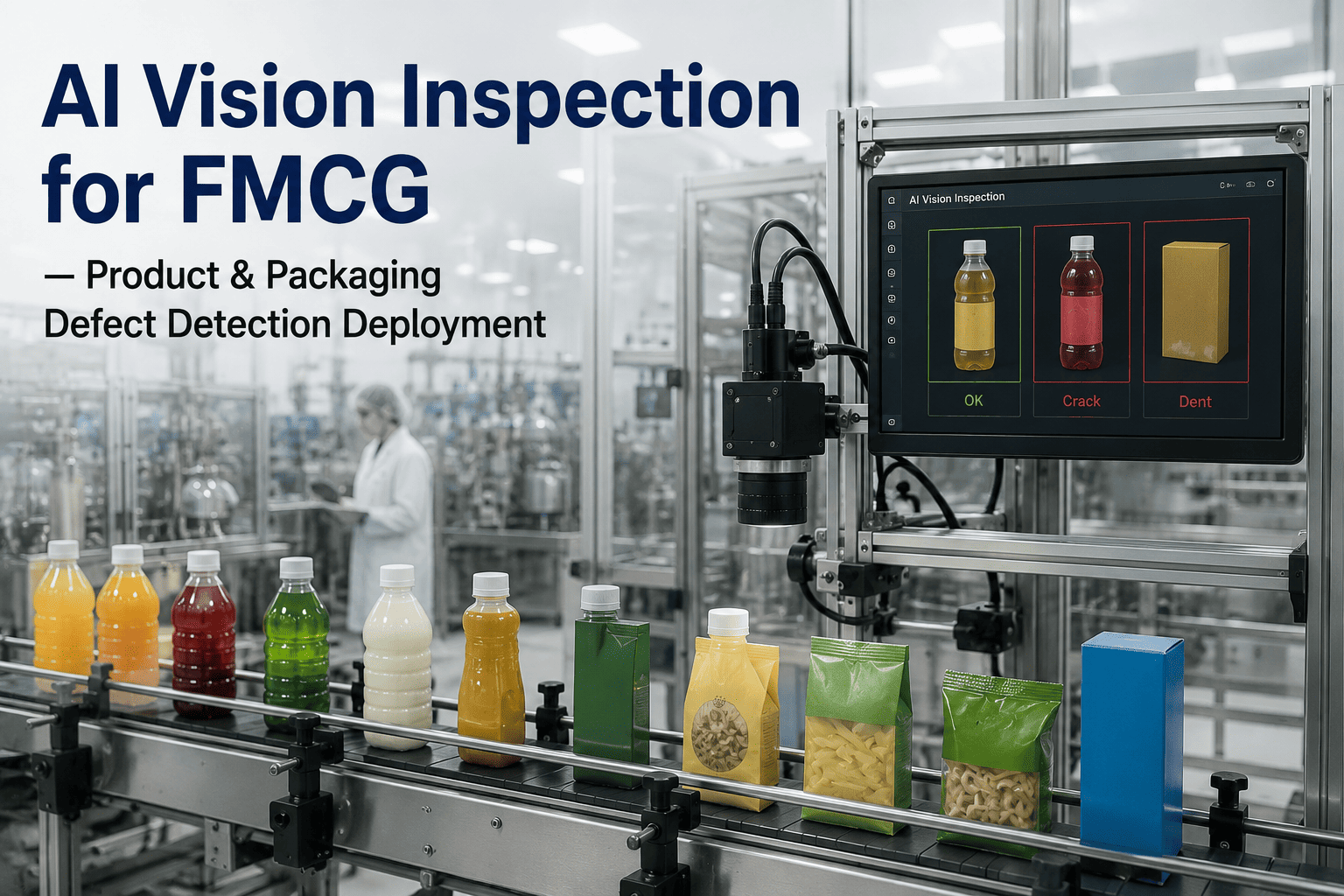
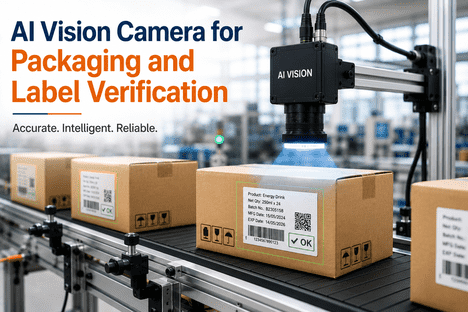
In Q1 2025 alone, 21 of 45 FDA food recalls were caused by allergens not declared on labels. In Q3 2025, more than half of all food and beverage recalls were packaging-related. Over 50% of pharmaceutical product recalls trace back to labeling or packaging errors. These are not rare events — they are systemic failures that cost manufacturers an average of $10 million per incident, destroy consumer trust, and in the worst cases, endanger lives. AI vision for packaging inspection eliminates the root cause: human error on high-speed lines where eyes simply cannot keep up. Every label verified. Every seal checked. Every barcode graded. Every unit — at line speed. Book a demo to see AI packaging inspection on your product type.
The 7 Packaging Failures AI Vision Catches Before Your Customers Do
Packaging defects fall into distinct categories, each requiring a specific inspection technique. AI vision systems address all seven simultaneously, at line speed, with the consistency that human inspectors cannot sustain across an 8-hour shift. Here is every failure mode, the risk it carries, and how AI detects it.
Product filled into packaging labeled for a different SKU — sugar-free labels on sugary beverages, vodka seltzer in energy-drink cans, wrong allergen declarations. OCR and OCV cross-reference printed label content against master product databases in real time. AI verifies formulation-to-label match on every single unit.
The leading cause of food recalls — milk, nuts, eggs, sesame, wheat not declared on labels. AI reads and validates complete ingredient lists, allergen declarations, and "Contains" statements against product specifications. Catches human errors in label selection during SKU changeovers.
Smeared, voided, or misaligned barcodes that fail at point-of-sale or break supply chain traceability. AI grades every barcode and QR code against GS1/ANSI/ISO standards in real time — verifying readability, quiet zones, and data accuracy before the product leaves the line.
Wrong expiry dates, missing lot codes, illegible batch numbers. OCR validates every printed code against production schedule data. Critical for pharmaceutical serialization compliance (DSCSA) and food traceability requirements.
Incomplete heat seals, improperly torqued caps, missing tamper-evident bands, broken induction seals. High-resolution imaging detects unsealed edges, partial closures, and cap tilt — preventing contamination, leakage, and shelf-life failures.
Underfills that violate weight regulations and customer expectations. Overfills that waste product and erode margins. 3D sensors measure fill levels within 1mm tolerance across transparent and opaque containers at full production speed.
Skewed labels, wrinkled application, smeared print, color deviations, missing regulatory symbols. AI detects misalignment within 0.5mm tolerance and verifies print quality consistency — maintaining brand presentation and regulatory compliance across every unit.
Which packaging failures are costing you the most? Book a free packaging audit — we will map your highest-risk inspection points and calculate the cost of escape for each failure mode.
How AI Packaging Inspection Works at Line Speed
AI packaging inspection is not a quality gate that slows your line. It runs inline, inspecting every unit at full production speed without adding cycle time. The system combines high-resolution cameras, precision lighting, edge AI inference, and direct PLC integration to make pass/fail decisions in milliseconds.
Area-scan and line-scan cameras capture every label surface, seal, cap, and code. Up to 24 cameras per station for 360-degree coverage on cylindrical containers. Strobed lighting eliminates glare and shadow variation.
Deep learning detects visual defects and anomalies. OCR/OCV reads and validates text. Barcode grading scores readability. Dimensional measurement checks placement. All running simultaneously on edge GPU in under 50ms.
Confidence-scored decisions trigger reject mechanisms, route borderline units to manual review, and log every result with timestamped images for full regulatory traceability and audit readiness.
Every inspection feeds the data pipeline. Defect trends surface process drift. Model accuracy improves over time. The system alerts operators to upstream issues before they become recalls.
Industry-Specific Packaging Inspection
Packaging requirements vary dramatically by industry — from FDA serialization mandates in pharmaceuticals to allergen declarations in food to traceability codes in electronics. AI vision adapts to each sector's unique inspection requirements, regulatory frameworks, and production speeds.
One Missed Label Error = One $10M Recall. AI Catches Every One.
iFactory deploys AI vision packaging inspection that verifies labels, seals, codes, and fill levels on every unit — at line speed, with full traceability.
The ROI of Preventing One Recall
The economics of AI packaging inspection are asymmetric — the cost of the system is a fraction of the cost of a single prevented recall. Here is how the numbers break down for a typical mid-size manufacturer.
How iFactory Deploys Packaging Inspection
iFactory integrates AI packaging inspection into your complete factory data architecture — connected to your MES, ERP, CMMS, and Unified Namespace. Every inspection result feeds quality dashboards, triggers corrective actions, and builds the traceability trail that regulators require.
Audit your packaging lines, document failure modes, map regulatory requirements, and calculate cost-of-escape per defect type.
Camera placement, lighting engineering, OCR/barcode grading configuration, and edge compute sizing — tailored to your packaging format and line speed.
Models trained on your actual product images, label variants, and defect types. Transfer learning enables rapid training with minimal labeled data.
PLC integration, reject mechanism setup, MES connectivity, UNS data publishing, and operator training. Full production deployment.
Accuracy dashboards, defect trend analytics, model retraining, and new SKU onboarding. The system improves continuously.
Ready to protect your brand from the next packaging recall? Book a free packaging line audit — we will identify every failure mode and show you the AI inspection solution for each one.
Frequently Asked Questions
The Label Your Customer Reads Should Be the Label You Intended.
AI vision verifies every label, every seal, every code, on every unit — at line speed, with full traceability. No escapes. No recalls. No surprises.