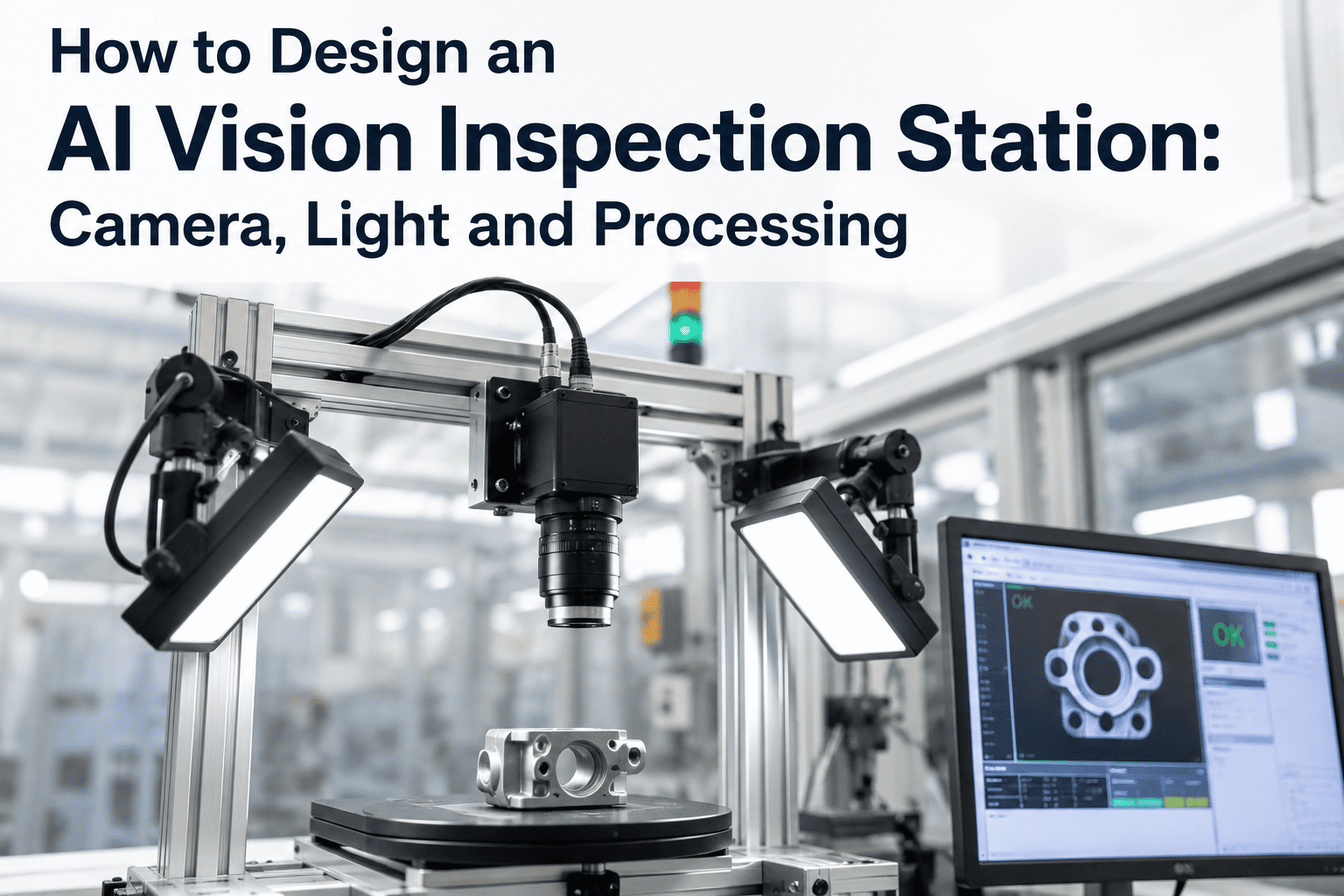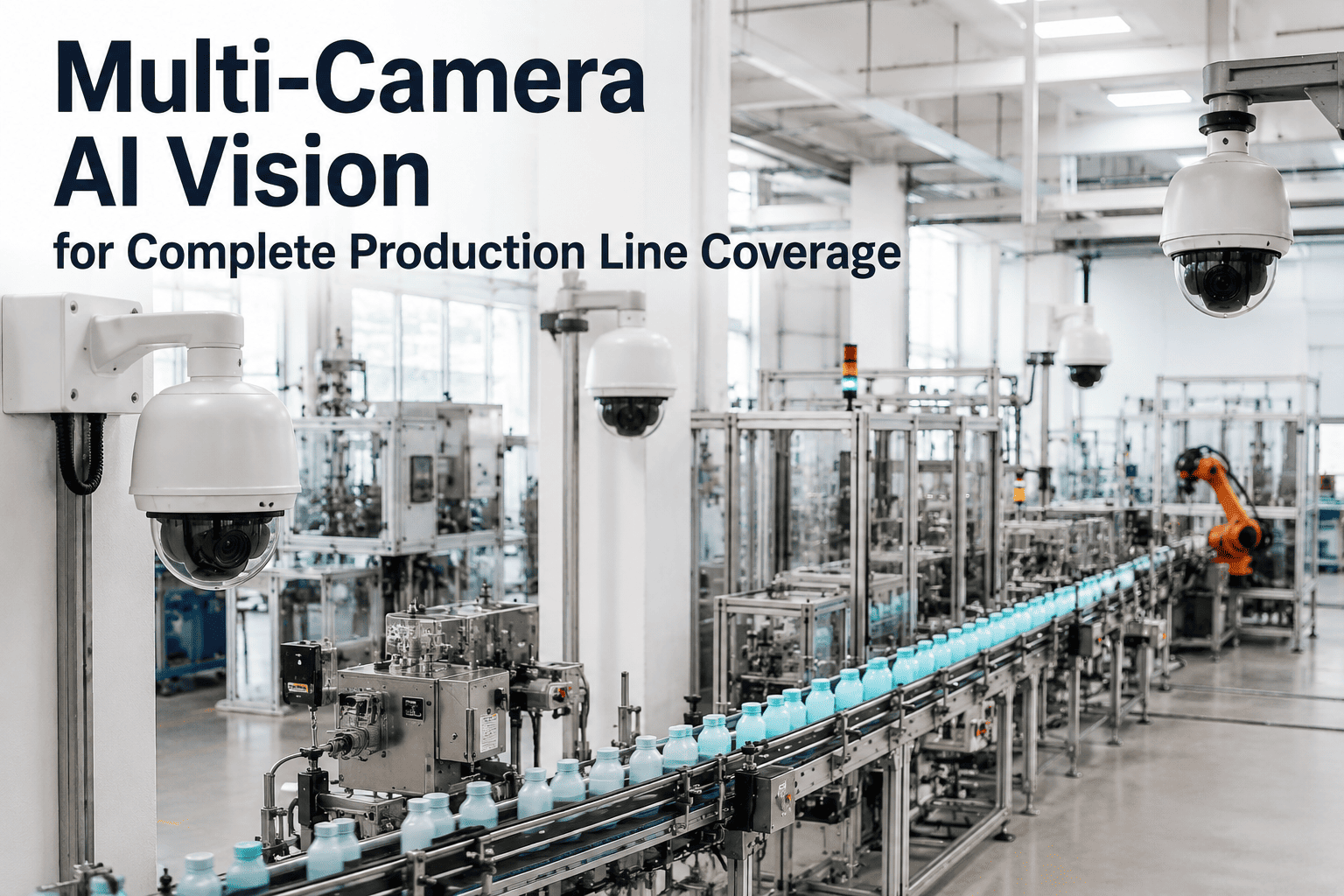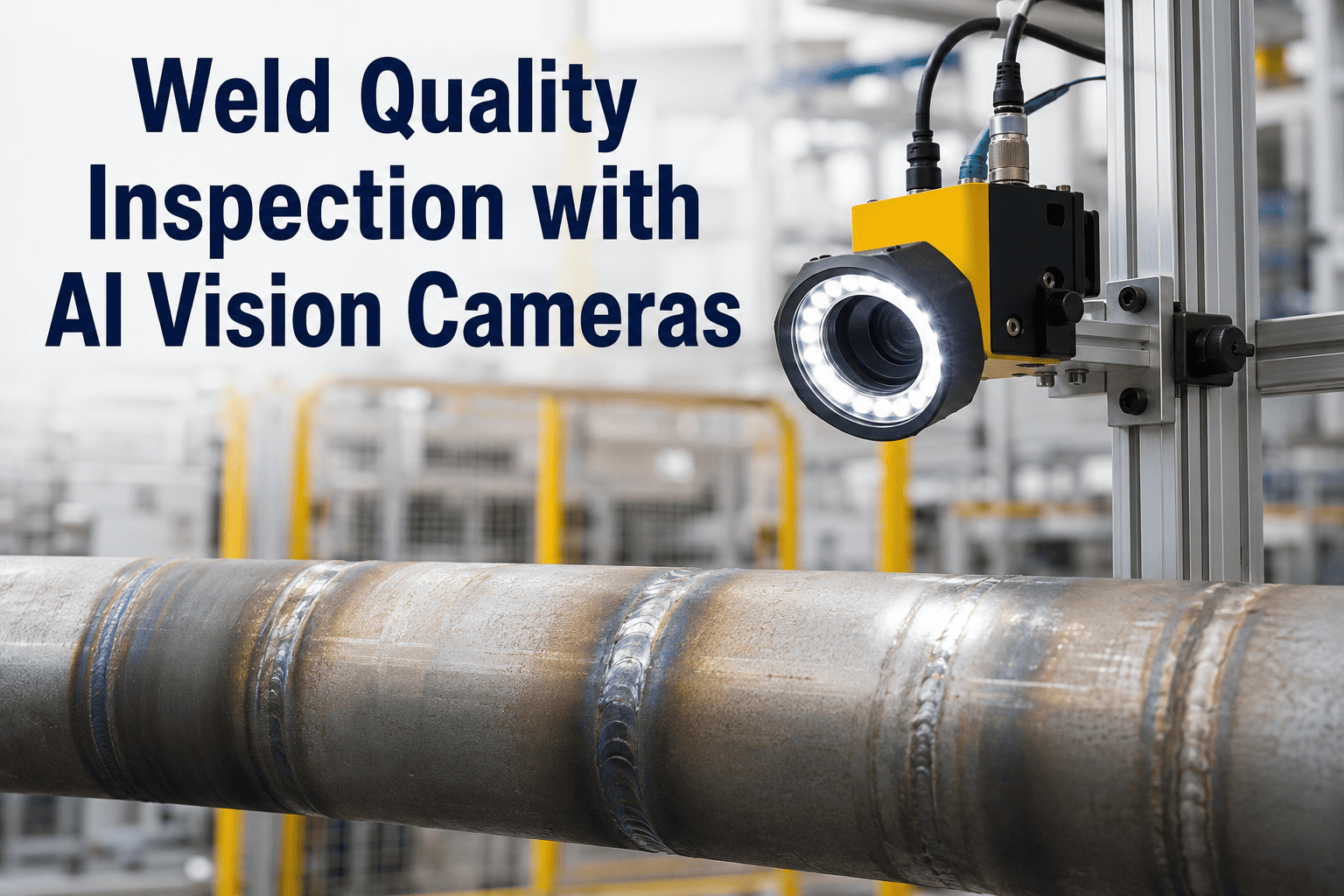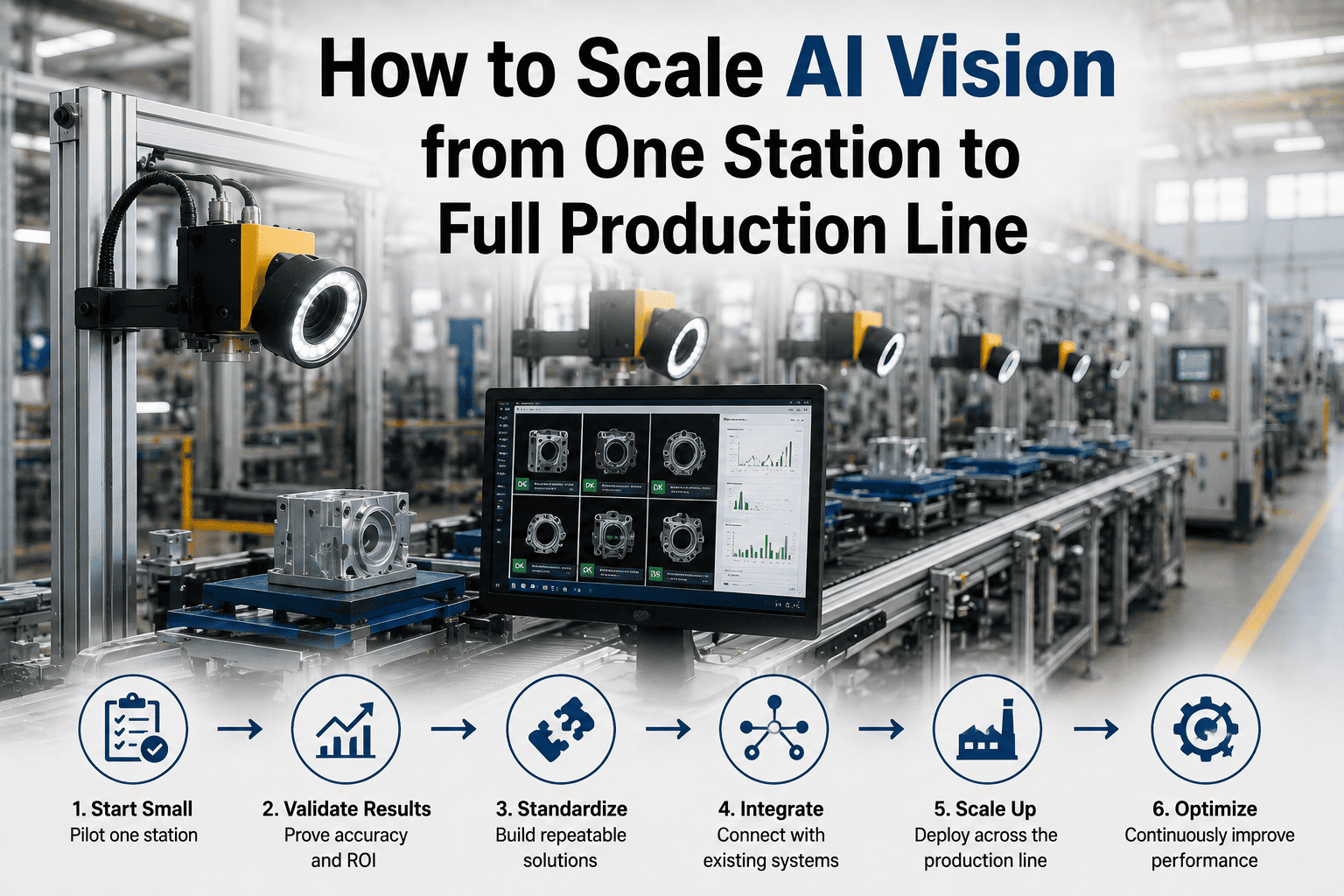
The pilot worked — one AI vision camera on one inspection station proved the defect reduction, delivered the labor savings, and generated the performance data that validated the business case. Now the question shifts from whether AI vision inspection works to how you replicate that result across every high-value inspection point on every production line without recreating the pilot engineering effort at each station. This is where most AI vision programmes stall — 77% of manufacturing AI pilots never make it past prototype stage, not because the technology failed but because the scaling methodology was never defined. Moving from one station to full production line coverage requires standardizing camera specifications, building reusable model libraries, automating deployment pipelines, and establishing quality management governance that maintains accuracy across dozens of stations operating simultaneously. iFactory's deployment architecture is built for this exact transition — from validated pilot to plant-wide production coverage. Operations leaders ready to plan their scaling roadmap can Book a Demo to map the expansion path with iFactory's deployment team.
Why 77% of AI Vision Pilots Never Scale — and How to Be in the 23%
The failure pattern is consistent: a pilot is funded as a technology experiment, deployed on a single station by a data science team or external integrator, and produces impressive accuracy metrics in a controlled environment. But the pilot was never designed for replication — it used a one-off camera setup, custom lighting rigged for that specific station, a model trained exclusively on that product variant, and manual configuration that would need to be repeated from scratch at every subsequent station. When the business case is approved and the mandate to scale arrives, the team discovers that the pilot architecture cannot be replicated without equivalent engineering effort at each station — and the programme stalls because nobody budgeted for twenty pilots.
Non-Standardized Camera Hardware
Each station uses a different camera model, resolution, or lens configuration — making model performance unpredictable when deployed on new hardware. Standardizing camera specifications across all stations ensures that models trained on one camera produce identical results on every other camera in the fleet.
One-Off Model Training
The pilot model was trained on images from a single station under specific lighting conditions. When deployed to a different station with different lighting, backgrounds, or part presentation angles, accuracy drops below production thresholds and requires a complete retraining cycle.
Manual Configuration at Every Station
Detection thresholds, region-of-interest boundaries, alert routing rules, and CMMS integration parameters were manually configured for the pilot station. Scaling means repeating this configuration work at every new station — consuming engineering time that should be spent on optimization, not replication.
No Governance for Multi-Station Accuracy
With one station, monitoring accuracy is simple. With twenty stations, accuracy must be tracked per-station, per-model, per-shift — and degradation on one station must trigger an alert before defects escape. Without centralized governance, performance drift on individual stations goes undetected until a quality event surfaces.
The Five-Layer Scaling Framework
Scaling AI vision from pilot to production line coverage follows a five-layer framework that addresses hardware standardization, model management, deployment automation, integration consistency, and performance governance. Each layer builds on the one below it — skipping a layer creates the scaling bottlenecks that stall programmes at 3 to 5 stations rather than reaching plant-wide coverage.
Centralized dashboard tracks accuracy, false positive rate, escape rate, and inference latency per station. Automated alerts fire when any station drops below defined accuracy thresholds. Model retraining triggered by data drift detection.
Standardized CMMS connector templates ensure every station writes work orders using identical field mappings, priority rules, and image attachment formats. New stations inherit integration configuration from the template library rather than being configured individually.
Model deployment to new stations follows an automated pipeline: select model from library, configure station-specific ROI boundaries, push to edge compute, validate inference speed and accuracy against test images, enable production detection. New station deployment reduced from weeks to days.
Models trained on specific defect types and part categories are versioned, cataloged, and stored in a central model registry. When a new station inspects a part type already in the library, the existing model is deployed directly — no retraining required. New defect types extend the library rather than creating standalone models.
Define a camera hardware standard — resolution, sensor type, lens focal length, mounting position, and lighting configuration — that applies across all stations. Models trained under standardized imaging conditions transfer between stations without performance degradation. iFactory specifies camera and lighting during Phase 1 assessment to ensure consistency from the first deployment.
Scaling Roadmap: Pilot to Plant-Wide in Four Phases
The scaling roadmap moves from validated pilot through standardization, line-level expansion, and plant-wide deployment — with each phase building infrastructure that accelerates subsequent phases. Automation engineers planning their scaling timeline can Book a Demo to map this roadmap to their specific production environment.
Pilot Validation and Standard Definition
Confirm pilot station performance metrics: detection accuracy, false positive rate, cycle time impact, and ROI versus baseline. Document the camera specification, lighting configuration, model architecture, and integration setup as the standard that all subsequent stations will replicate. Produce the scaling specification document that defines hardware, software, and governance requirements for multi-station deployment.
Line-Level Expansion — 3 to 5 Stations
Deploy standardized camera hardware at the next 3 to 5 highest-impact stations on the same production line. Push models from the central library to each station via the automated deployment pipeline. Validate that models trained under standardized conditions maintain accuracy targets across all stations. Establish the centralized performance dashboard tracking all stations simultaneously.
Multi-Line Deployment — Full Facility Coverage
Expand to additional production lines using the validated standard. Each new line inherits camera specifications, model library, integration templates, and governance rules from the established infrastructure. Model library expands as new part types and defect categories are added. Edge compute scales horizontally — shared GPU hardware serves multiple cameras per production line, reducing marginal cost per station.
Continuous Optimization and Multi-Site Replication
Establish the ongoing model update cadence — retraining triggered by drift detection, seasonal product changes, or new defect type identification. Replicate the validated deployment architecture to additional facilities using the same camera standards, model library, and governance framework. Plant-to-plant model sharing accelerates deployment at new sites from months to weeks.
Edge Compute Scaling: Why Shared GPU Architecture Reduces Marginal Cost
The economics of scaling AI vision improve dramatically when cameras share edge compute hardware rather than requiring dedicated GPU hardware per station. iFactory deploys NVIDIA Jetson or L4 GPU edge servers that process inference from multiple cameras simultaneously — a single edge server can handle 4 to 8 camera streams depending on model complexity and cycle time requirements. This shared architecture means the cost of adding a second, third, or fourth camera to a production line is primarily the camera and lighting hardware — the compute infrastructure is already deployed and paid for. Turnkey deployment on NVIDIA edge hardware is standard across all iFactory installations, with systems live in 6 to 12 weeks following the three-phase deployment roadmap validated across 1,000+ client installations at 99.9% system uptime.
Model Library Architecture: Train Once, Deploy Everywhere
The model library is the single most important infrastructure component for scaling — it determines whether adding a new station requires weeks of model training or hours of deployment configuration. A well-structured model library catalogs trained models by part type, defect category, and camera specification — enabling instant deployment when a new station inspects a part type already in the catalog and systematic extension when new defect types are identified.
| Model Library Component | Pilot Stage | Scaled Deployment | Impact on Scaling Speed |
|---|---|---|---|
| Part type models | 1–2 models, manually trained | 20–50+ models, version-controlled | New station live in hours vs weeks |
| Defect category catalog | 3–5 defect classes per model | 15–30+ classes across library | Comprehensive coverage without retraining |
| Training data repository | 500–2,000 images per model | 50,000+ images across all models | New models train faster from existing data |
| Model version control | Ad hoc versioning | Automated registry with rollback | Safe updates without production disruption |
| Performance benchmarks | Manual accuracy checks | Automated per-model per-station tracking | Drift detected before quality events occur |
Quality Governance at Scale: Maintaining Accuracy Across Every Station
With 20+ stations operating simultaneously, accuracy must be tracked centrally — not station by station through manual spot checks. iFactory's governance layer provides a centralized performance dashboard that monitors detection accuracy, false positive rate, inference latency, and model version across every active station. When accuracy on any station drops below the defined threshold — due to lighting changes, part surface variation, or model drift — an automated alert fires and the retraining pipeline is triggered before defects escape.
Per-Station Accuracy Tracking
Precision, recall, and F1-score tracked per station per shift. Historical trend analysis identifies stations showing gradual performance degradation before they cross the alert threshold — enabling proactive model updates rather than reactive firefighting after a quality escape.
Automated Drift Detection
Statistical comparison between incoming production image distributions and the training data distribution identifies concept drift and data drift automatically. When drift exceeds defined limits for three consecutive measurement windows, the retraining pipeline collects new labeled data and produces an updated model for validation.
Model Version Management
Every model deployed to every station is version-tracked in a central registry. New model versions are validated against the previous version using a champion-challenger approach — the new model must match or exceed the incumbent's accuracy before replacing it in production. Rollback is instantaneous if a deployed update underperforms.
Cross-Station Consistency Reporting
Automated reports compare detection rates, false positive rates, and defect classification distributions across all stations — identifying stations that diverge from the fleet average and flagging inconsistencies that indicate configuration drift, lighting degradation, or camera misalignment requiring maintenance attention.
Frequently Asked Questions: Scaling AI Vision Inspection
How long does it take to add a new inspection station once the first is validated?
With standardized camera specifications and a populated model library, adding a new station that inspects a part type already in the catalog takes 2 to 5 business days — camera installation, model deployment from the library, region-of-interest configuration, and accuracy validation against test images. Stations requiring new model training for previously uncataloged part types add 2 to 4 weeks for data collection and model training. The automated deployment pipeline reduces hands-on engineering time per station by 60 to 70% compared to the manual configuration effort required during the pilot. Teams planning multi-station expansion can Book a Demo to scope the deployment timeline for their specific station count.
Can models trained at one facility be deployed at another facility?
Yes — when both facilities use standardized camera specifications and equivalent lighting configurations, models transfer directly from the central library. This is the primary reason camera standardization is Layer 1 of the scaling framework. Facilities with different camera hardware or significantly different ambient lighting conditions may require a transfer learning step — fine-tuning the existing model on a small set of images captured at the new facility — which typically takes 2 to 3 days rather than the full training cycle. Contact iFactory Support for multi-site deployment planning.
What happens when a new defect type appears that the current model does not recognize?
New defect types are added to the model through incremental training — collecting 200 to 500 images of the new defect class, adding them to the existing training dataset, and retraining the model to recognize the expanded defect catalog without losing accuracy on previously learned defect types. iFactory's active learning pipeline prioritizes the highest-uncertainty images for labeling, minimizing the manual annotation effort required. The updated model is validated against the previous version using champion-challenger testing before production deployment, ensuring that the new capability does not degrade existing performance.
How does edge compute scale when we add 20+ cameras?
iFactory's NVIDIA edge servers process 4 to 8 camera streams simultaneously depending on model complexity and frame rate requirements. A 20-camera deployment typically requires 3 to 5 edge servers distributed across the production floor — each server processing the cameras in its local cluster. Edge servers share a common model registry and configuration management system, so model updates deploy to all servers simultaneously through the automated pipeline. The distributed architecture also provides resilience — if one edge server requires maintenance, only its local camera cluster is affected while all other stations continue operating independently.
What is the ROI difference between a single-station deployment and a scaled deployment?
Scaled deployments deliver disproportionately higher ROI because the shared infrastructure — edge compute, model library, integration templates, governance dashboard — amortizes across many stations while each station contributes its full defect reduction and labor savings independently. A single station generating $300K in annual savings on a $120K investment delivers 150% first-year ROI. Ten stations using shared infrastructure generate $3M in annual savings on a $600K total investment — delivering 400% first-year ROI because incremental stations cost 40 to 60% less than the first. The ROI case for scaling is almost always stronger than the ROI case for the pilot.