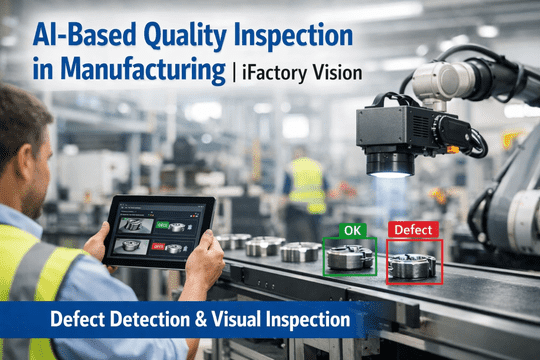
A scratch you can barely see with the naked eye. A hairline crack on a ceramic component. A solder joint 0.3mm out of alignment on a PCB. These are the defects your human inspectors — however skilled — will miss after the third hour of a 12-hour shift. AI vision cameras do not get tired. They do not have bad days. They inspect every single unit at full production speed, every time, with 99%+ accuracy. Manual inspection caps at 85% on a good day. The gap between those two numbers is where recalls happen, where customers leave, and where millions in quality costs accumulate quietly — until they don't.
Manual Inspection vs. AI Vision Cameras: The Performance Gap
Human inspectors fatigue, lose focus, and apply subjective criteria. Even expert inspectors working under optimal conditions miss up to 15–20% of real defects — causing downstream failures, rework, and costly customer returns.
AI vision systems apply the same detection criteria on every unit at every speed, with no fatigue, no subjective variation. Deep learning models detect micron-level defects — scratches, cracks, misalignments — invisible to the human eye.
Human review takes 5–60 seconds per unit depending on complexity. One automotive manufacturer measured 60 seconds per seat inspection — a fundamental bottleneck that limits throughput across the entire line.
Edge AI cameras make inspection decisions in under 100 milliseconds — the same automotive manufacturer reduced seat inspection from 60 seconds to just 2 seconds. Production throughput increases 25–30% without sacrificing accuracy.
Manual inspection can only practically cover a fraction of production volume. Statistically sampling 5–10% of output means defects in the remaining 90–95% go undetected until they reach the customer or cause downstream failures.
AI vision cameras inspect 100% of units at full line speed. Every product on every shift is evaluated against identical quality criteria. A medical equipment manufacturer reduced false rejections from 12,000 per week to just 246.
Labor costs escalate with production volume, overtime, and turnover. Every quality failure downstream multiplies the cost: rework, scrap, recalls, and customer returns compound into the "Cost of Quality" — averaging 20% of total revenue.
AI vision inspection converts variable labor costs into a fixed capital investment that depreciates while increasing in efficiency. Annual labor savings of $100,000–$300,000 are typical, with full ROI in 6–12 months.
Running manual inspection or rule-based vision systems that keep generating false positives? Book a demo to see how iFactory's AI vision inspection deploys in days and reaches 99%+ accuracy on your specific defect types.
6 Ways AI Vision Cameras Transform Manufacturing Quality Control
Micron-Level Defect Detection at Line Speed
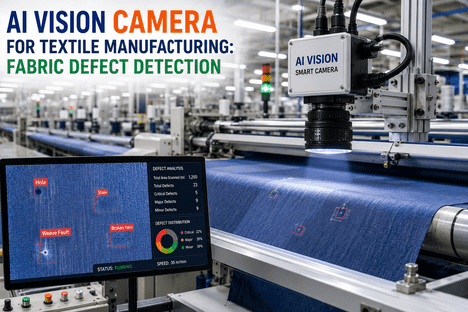
37% Fewer DefectsDeep learning models trained on your specific defect library detect surface cracks, porosity, misalignments, scratches, and color inconsistencies at the micron level — defects traditional vision systems and human inspectors consistently miss. Intel's AI inspection system catches whole-wafer delamination triggers invisible to manual review, saving $2 million annually in scrap avoidance alone. Automotive facilities using AI inspection report 37% fewer defects and a 22% increase in OEE across production lines within two years of deployment.
100% Inline Coverage — No Sampling Gaps
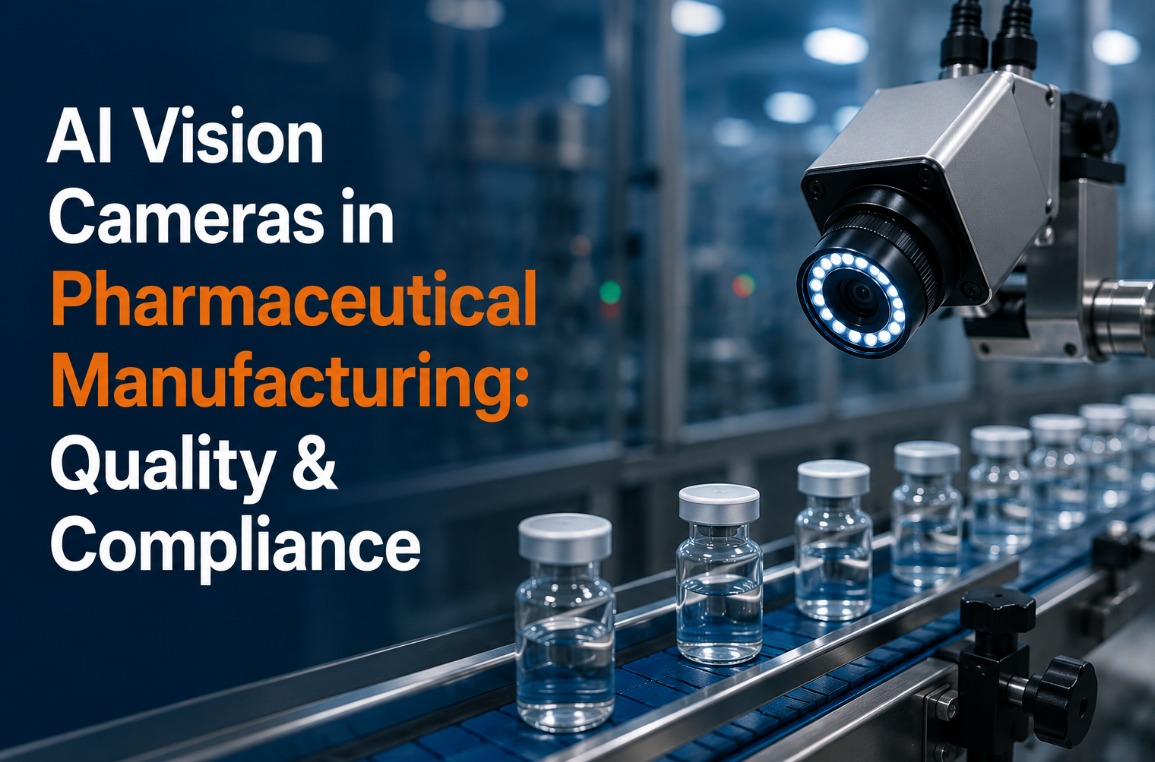
Full CoverageStatistical sampling — inspecting 5–10% of production — is the industry's most expensive gamble. When defects slip through, they reach customers, trigger recalls, and destroy brand trust. AI vision cameras inspect 100% of units at full line speed without a single gap. In pharmaceutical manufacturing, AI inspection systems now check hundreds of capsules per minute, detecting particles, cracks, and fill inconsistencies in transparent containers. For medical device manufacturers, this 100% coverage delivered $18 million in annual savings through eliminated recalls and rework.
Real-Time Feedback Loops to Stop Defect Cascades
25% Faster CyclesWhen a defect pattern emerges in production, every second of delay multiplies the damage. AI vision systems create tight feedback loops between inspection and production control — automatically adjusting upstream equipment, triggering operator alerts, or halting the line the moment quality metrics breach thresholds. Early implementations of predictive AI inspection have demonstrated the ability to forecast defects 1–2 hours before they would typically appear, allowing preemptive adjustments. The minor machine drift that would have produced hundreds of defective units gets caught after just a handful.
Consistent Quality Across All Shifts and Lines
41% Less VariabilityHuman inspection quality degrades predictably across a shift — fatigue sets in, focus drifts, and judgment becomes inconsistent. Night shift inspectors apply different criteria than day shift. One inspector flags what another passes. AI vision cameras apply identical quality standards to every unit on every shift with zero variance. Manufacturing quality managers report a 41% reduction in quality variability after deploying AI inspection. The system that rejects a defective part at 6 AM applies precisely the same standard at 3 AM on the following night shift.
Deep Learning That Improves With Every Inspection
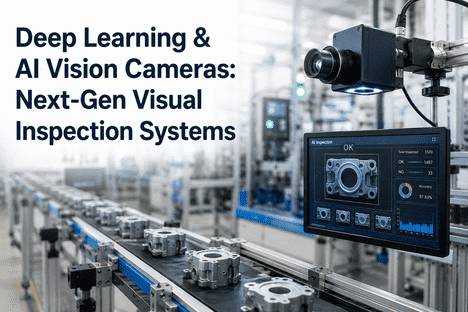
Self-Learning ModelsUnlike rule-based machine vision systems that require manual reprogramming for every new defect type, AI vision systems continuously improve through active learning. Modern edge AI cameras can be trained on new defect types in hours with as few as five example images. As your production processes evolve and new defect patterns emerge, the AI adapts — maintaining accuracy without requiring specialized computer vision engineers or weeks of reconfiguration. The system gets smarter with every production run, building a permanent quality intelligence layer for your facility.
Complete Traceability and Compliance Documentation
Audit-Ready DataAI vision inspection records every decision — every unit inspected, every defect flagged, every rejection made — with timestamps, images, and confidence scores. This complete audit trail satisfies FDA, ISO, and automotive OEM quality standards without manual documentation. A 2025 survey found that 81% of quality assurance managers now consider AI explainability a critical requirement for new inspection systems. When a regulator or customer audit requires inspection records for a production batch from 90 days ago, the answer is seconds away — not a warehouse search.
See How AI Vision Inspection Performs on Your Defect Types
iFactory's AI vision system deploys at the edge with no cloud dependency, trains on your specific defects in hours, and reaches 99%+ accuracy — with a full audit trail integrated directly into your CMMS and MES workflows.
Real-World Results: What AI Vision Inspection Delivers
Specific defect types you need to solve — surface cracks, misalignment, contamination, weld integrity? Book a demo for a use-case walkthrough specific to your production line.
What Industry Experts Say About AI Vision in Manufacturing
"AI-driven quality control uses a combination of computer vision and machine learning to detect microscopic defects with 95–99% accuracy at full production speed, transforming the inspection process from reactive sorting to proactive prevention. Real-world implementations across automotive, electronics, and food industries have demonstrated a 40% reduction in waste and inspection cycles that are 25% faster. Every average manufacturing company has a Cost of Quality at about 20% of total sales — AI vision inspection is the most direct lever to reduce it. The question is not whether to implement AI vision inspection, but how quickly you can get started."
5 Steps to Deploying AI Vision Cameras in Your Facility
Identify Your Highest-Cost Inspection Points
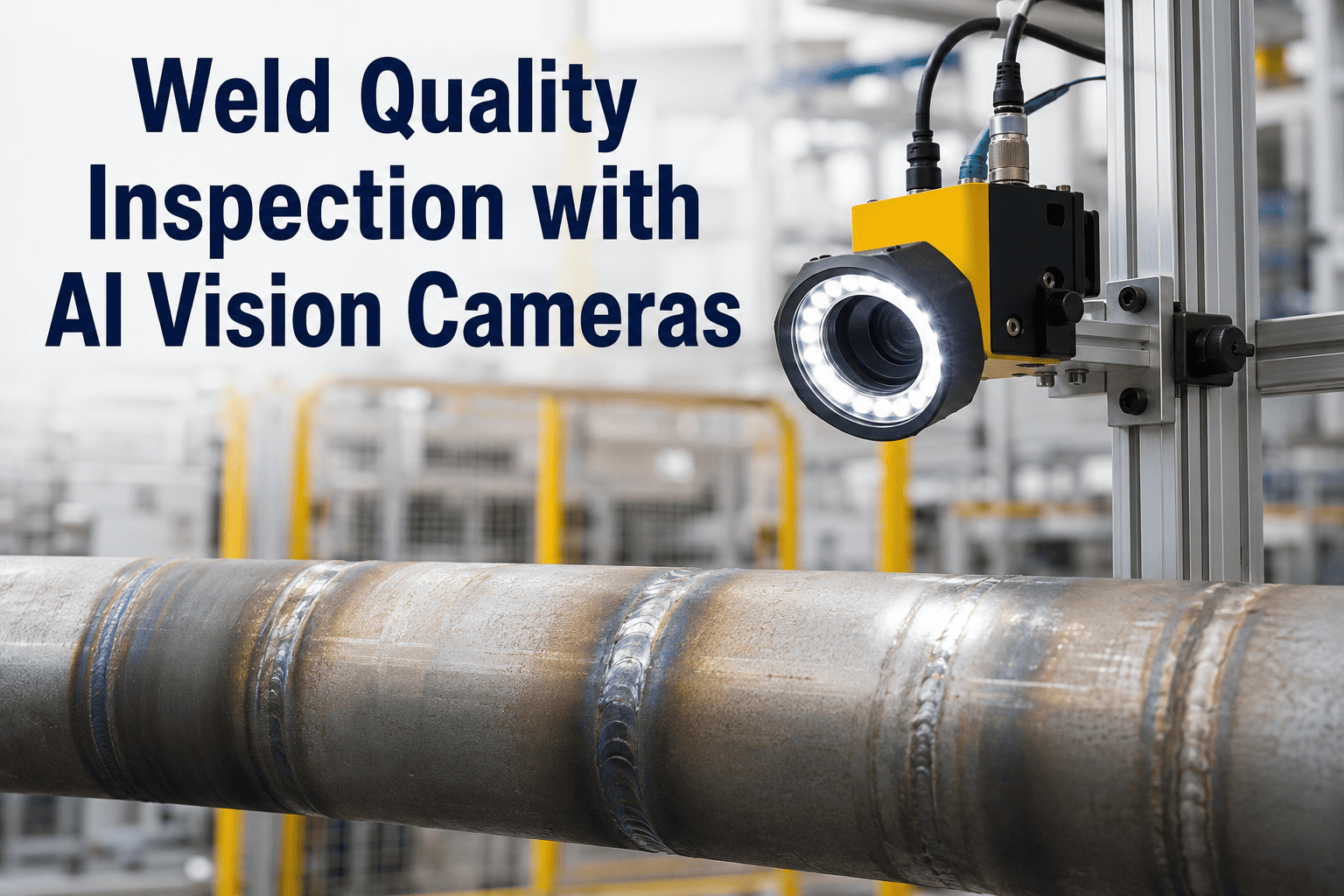
Before deploying cameras, map where defects are most expensive — not just most frequent. A defect caught at the component stage costs pennies; the same defect caught at final assembly costs hundreds; the same defect caught by the customer costs thousands in warranty, returns, and brand damage. Focus your first AI vision deployment on the inspection point where escapes cause the most downstream cost. This single decision drives 80% of your ROI in the first 6 months.
Build Your Defect Library and Training Dataset
AI vision models are only as good as their training data. Collect high-quality images of your specific defect types — scratches, cracks, porosity, misalignments, contamination, labeling errors — covering all variations in lighting, orientation, and product configuration. Modern edge AI systems can train production-ready models in hours with as few as 5 example images per defect class. A balanced dataset that includes both defective and conforming examples is essential for minimizing false positives. Your defect library becomes a permanent quality intelligence asset.
Deploy Edge AI Cameras With On-Premise Processing
Install cameras at your identified inspection points with integrated lighting systems designed for consistent image conditions. Prioritize edge AI systems — cameras with embedded GPUs that process images locally without cloud dependency — for sub-100ms response times, complete data security, and uninterrupted operation independent of network connectivity. Modern plug-and-play AI vision systems deploy in days and require zero software installations. Browser-based configuration interfaces allow manufacturing engineers to configure and tune systems without computer vision specialists.
Integrate With MES, SCADA, and CMMS Workflows
A standalone AI camera that only rejects parts captures only a fraction of its value. Connect inspection decisions to your production ecosystem: rejection data triggers work orders in the CMMS, defect patterns alert quality engineers via SCADA, and inspection records write automatically into your MES for traceability. According to the 2025 Digital Factory Report, manufacturers integrating inspection data with their broader digital ecosystems achieve 34% greater overall productivity improvements than those using the technology in isolation.
Activate Trend Analytics and Continuous Learning
Once live inspection data accumulates, activate trend analysis to surface recurring defect patterns, correlate defects to process parameters, and enable predictive quality — flagging process drifts before defects appear. Enable active learning to continuously improve the model with new examples from production. GE achieved a 25% reduction in inspection time and 30% reduction in manufacturing costs after activating the analytics layer. Organizations following a structured deployment approach achieve full ROI 40% faster than improvised approaches.
Want a deployment plan tailored to your facility, defect types, and production line? Contact our support team for a personalized AI vision inspection assessment.
AI Vision Inspection Market: Growth and Adoption Trends 2025–2033
The AI vision inspection market triples by 2033. Early adopters are already measuring $2M–$18M in annual savings. Book a demo to see iFactory's AI vision system in action on your defect types.
Stop Letting Defects Reach Your Customers
iFactory's AI vision inspection system deploys in days, trains on your specific defect library in hours, delivers 99%+ detection accuracy at full line speed, and integrates with your CMMS, MES, and SCADA workflows — with complete audit traceability from every inspection decision.