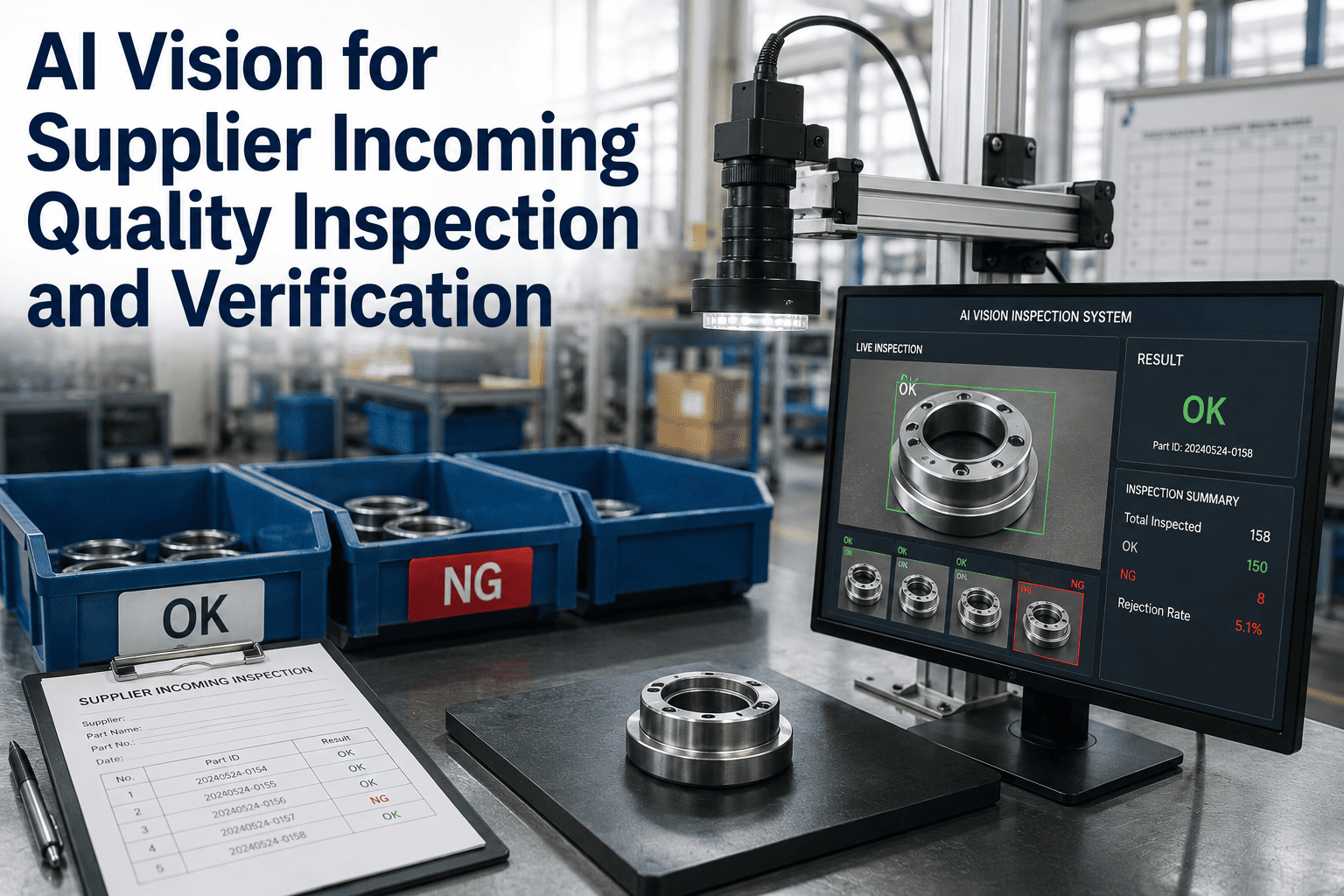
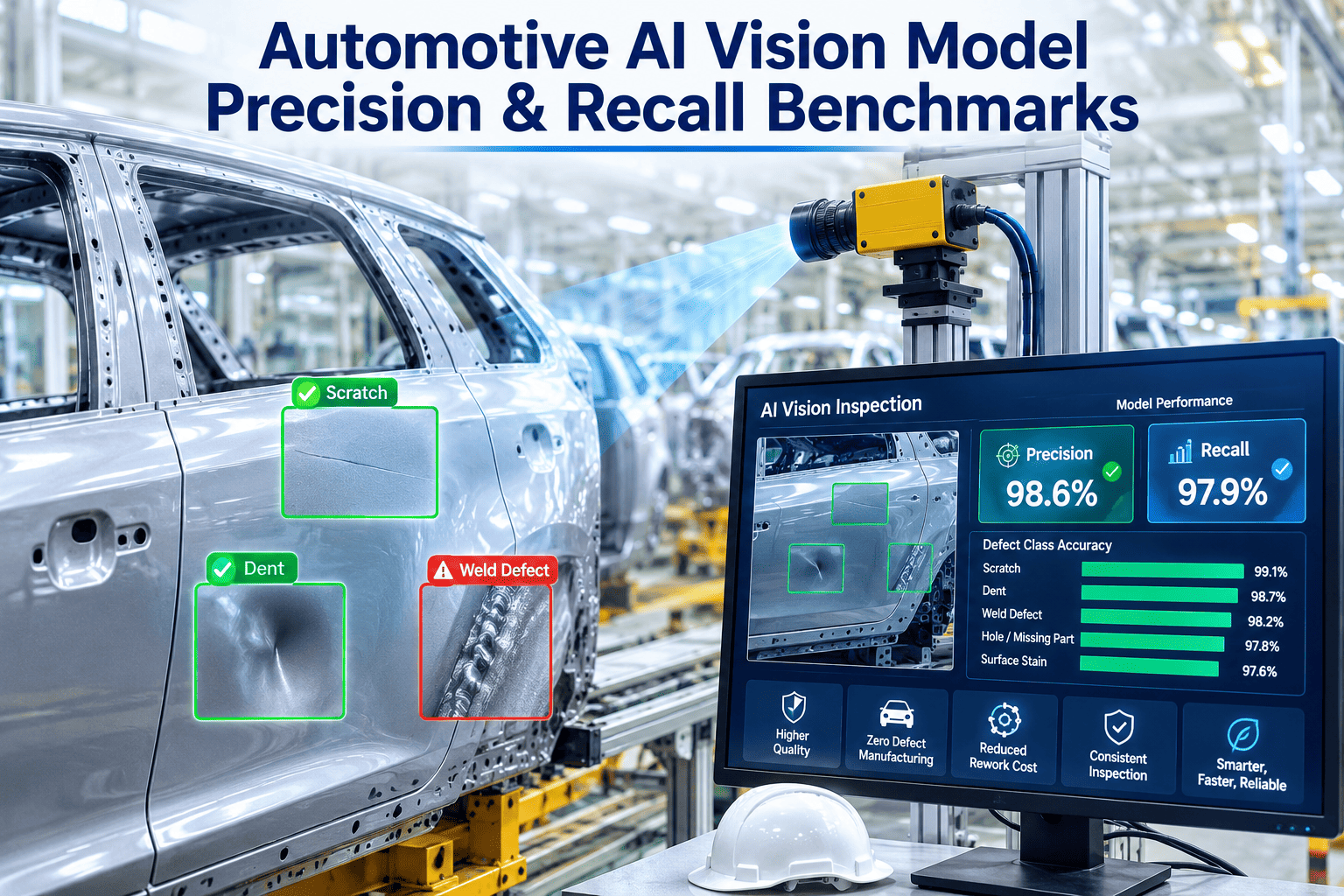
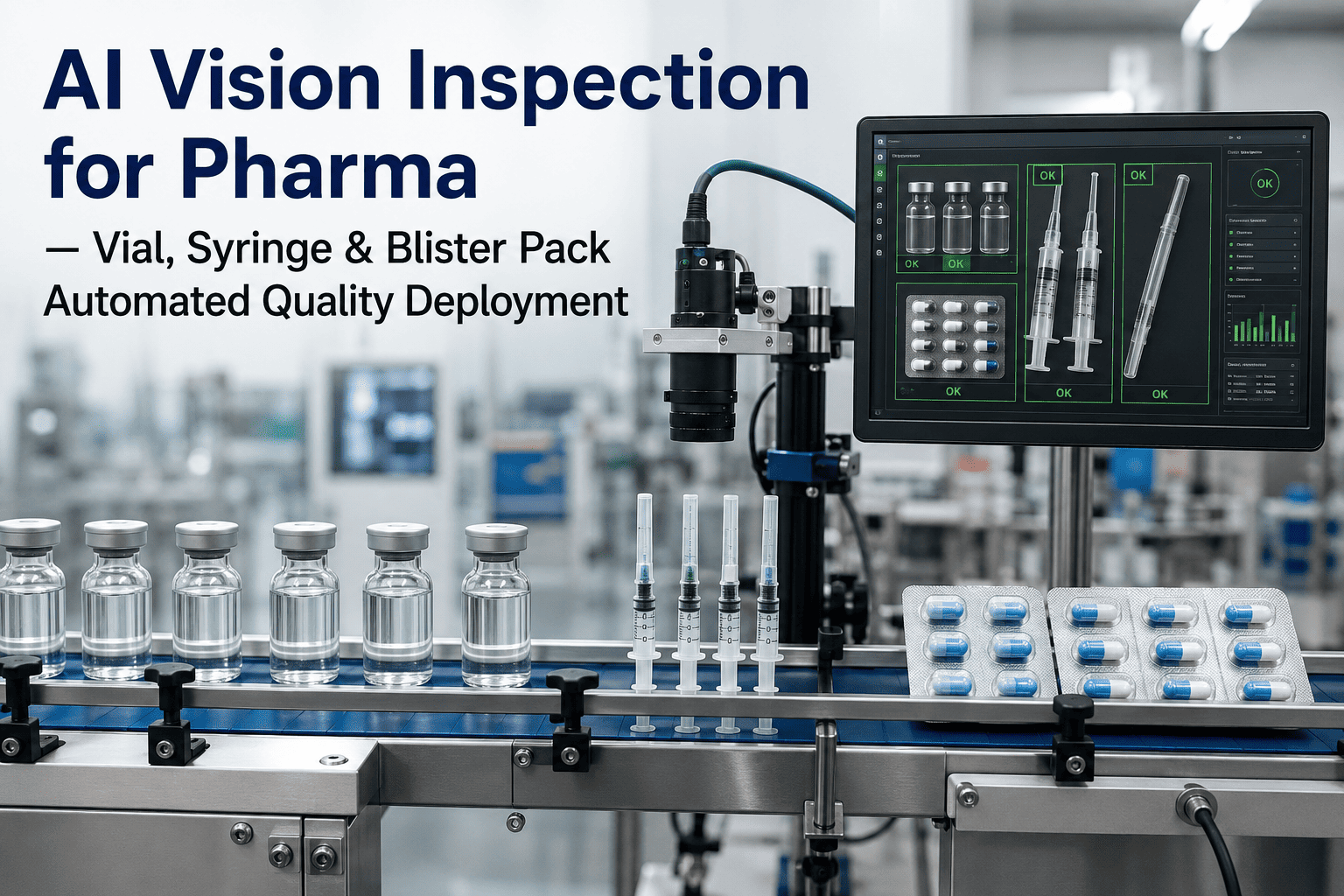
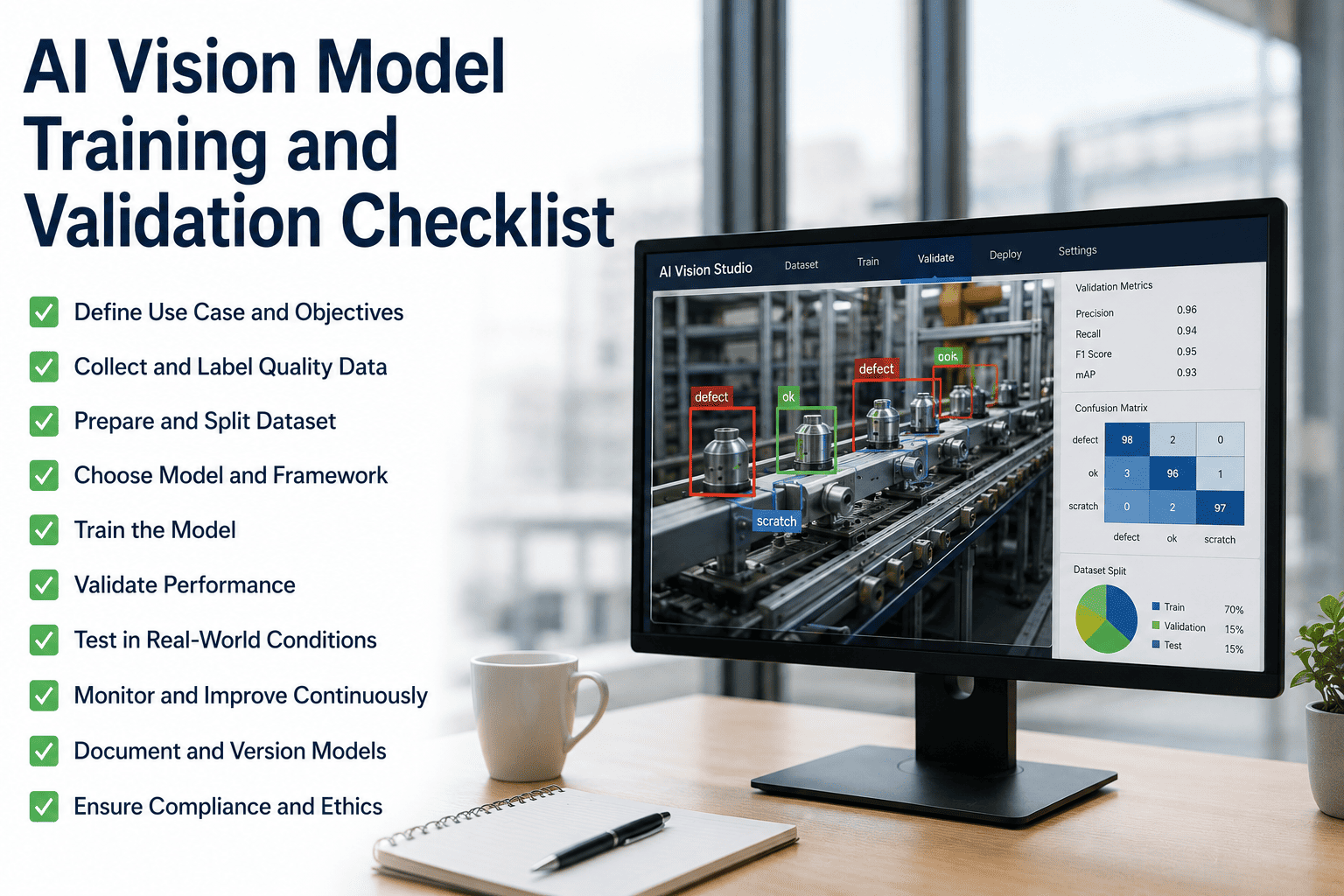
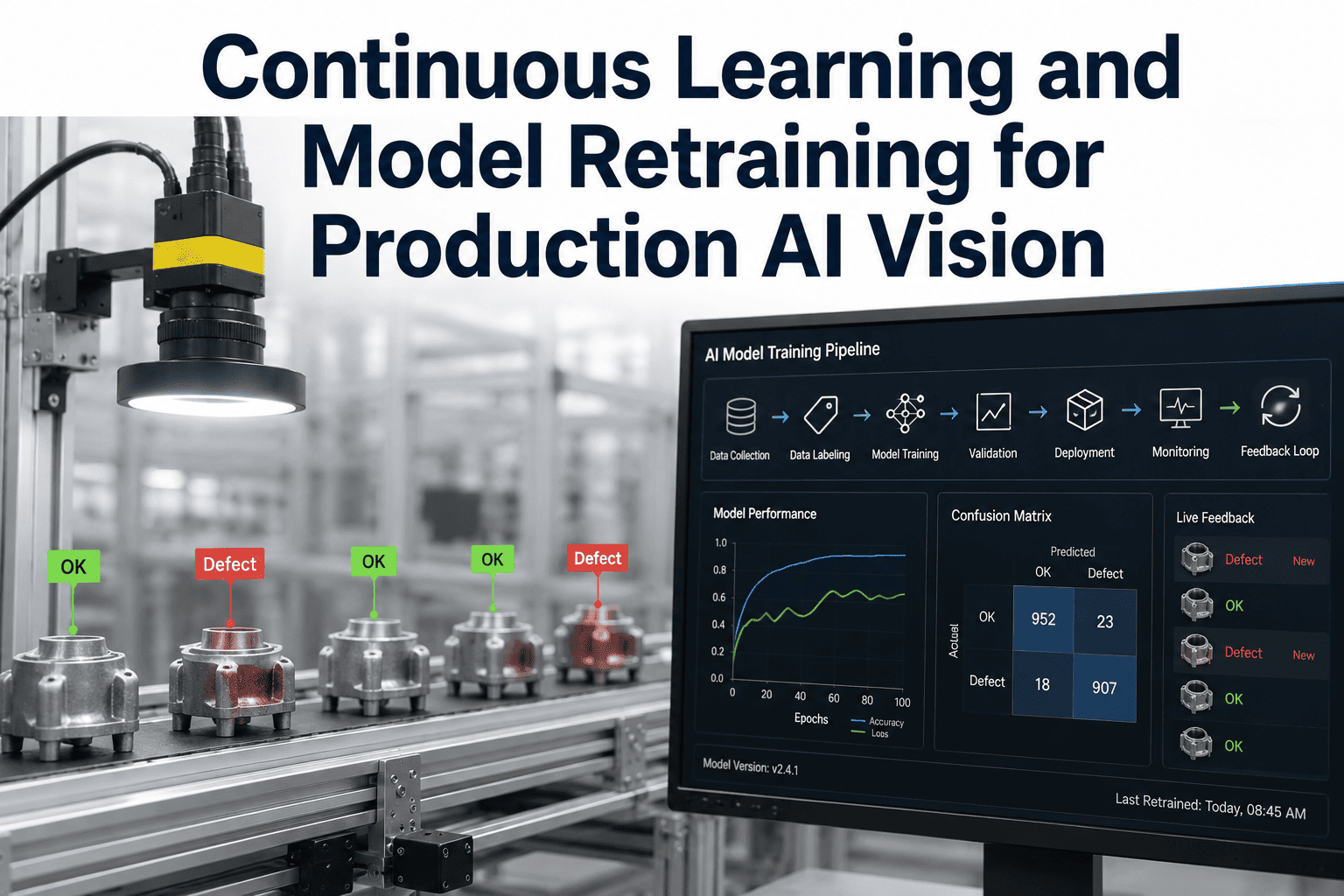
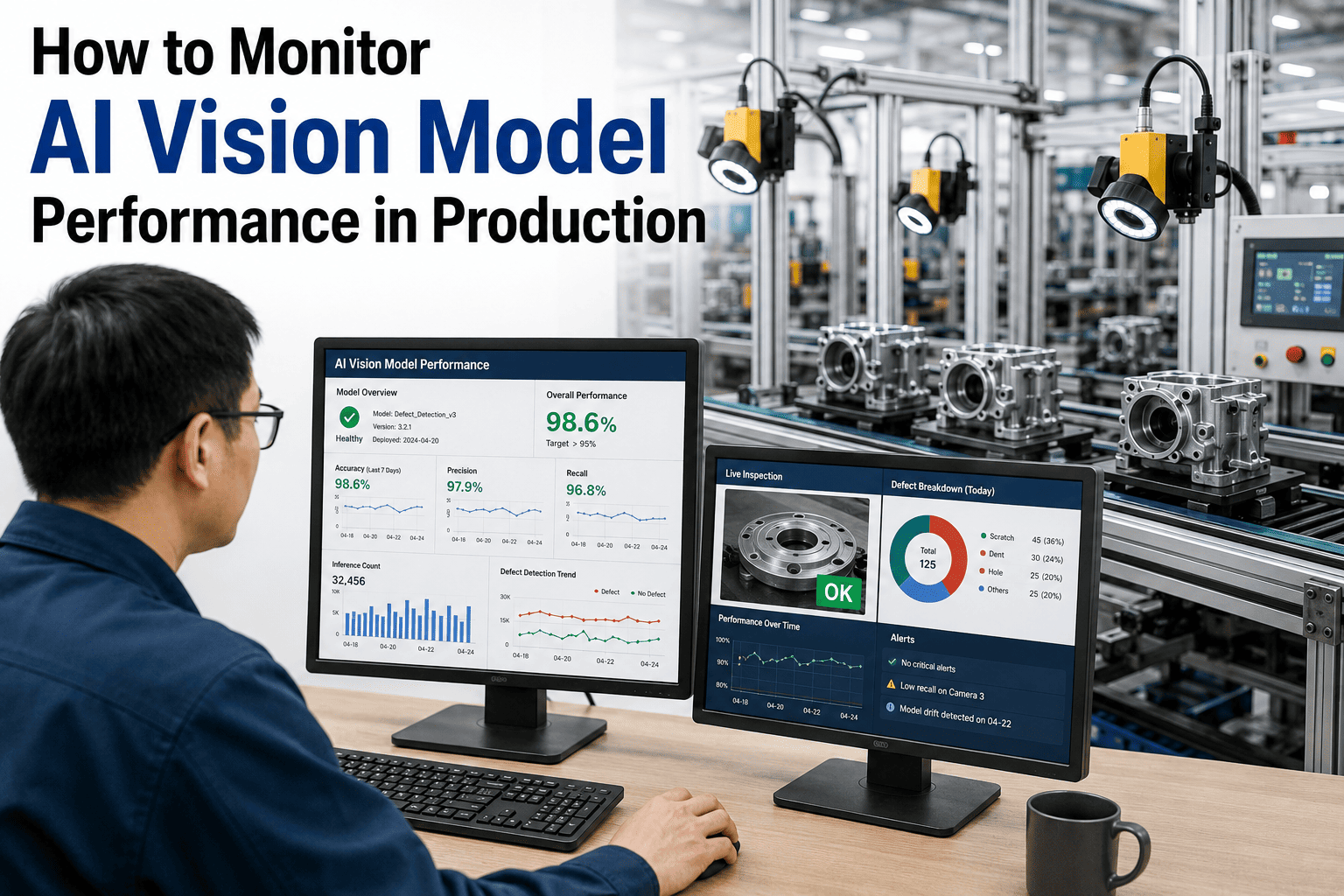
AI vision models that perform flawlessly in a lab environment can fail on the production line because the validation process was rushed, incomplete, or measured against the wrong criteria. A model trained on 500 carefully lit catalog images might miss defects that appear under real plant lighting, at line speed, on parts carrying oil residue or dust from upstream processes. The gap between training performance and production performance is where defective products escape and good parts get scrapped, destroying the trust your quality team needs before handing over pass-fail control to an algorithm. A structured validation protocol closes that gap before the model ever influences a real production decision, and you can book a demo to see iFactory's validation workflow applied to your inspection data.
VALIDATION PROTOCOL · AI VISION · QUALITY ASSURANCE · DEPLOYMENT READINESS
An Unvalidated AI Model Is a Liability — Here Is the Protocol That Proves It Is Ready
iFactory's validation framework runs every trained model through five sequential phases before it is allowed to control a single production decision, from golden sample testing through a full one-week shadow run on the live line.
1
Golden Sample Test
Known good and bad parts
2
Confusion Matrix
Precision and recall scoring
3
Edge Case Review
Boundary condition testing
4
Line Speed Test
Full throughput validation
5
Shadow Run
One-week parallel deployment
THE RISK OF SKIPPING VALIDATION
What Happens When AI Vision Models Go Live Without a Structured Validation Process
These outcomes are documented across manufacturing facilities that deployed AI inspection models based solely on training-set accuracy without independent validation against production-representative data. Each one represents a real cost event that proper validation would have prevented.
3.2x
Higher False Reject Rate at Production vs Lab
Models validated only on clean training data show false reject rates more than three times higher when exposed to real production variation including dust, oil, and lighting drift.
11%
Defect Escape Rate on Unvalidated Deployments
Without edge case validation, models miss approximately one in nine defects that fall outside the training distribution, including novel defect patterns and unusual defect locations.
6 Weeks
Average Time to Discover Validation Gaps Post-Launch
Production teams typically discover that a model was under-validated within six weeks of go-live, when a defect type or condition that was absent from training finally appears on the line.
$340K
Average Cost of a Single Defect Escape Event
When an unvalidated model misses a critical defect that reaches a customer, the combined cost of recalls, warranty claims, and lost accounts averages across automotive and electronics sectors.
THE FIVE-PHASE PROTOCOL
Every Model Passes Through Five Sequential Gates Before It Controls a Production Decision
iFactory's validation protocol is sequential, meaning a model that fails phase two does not advance to phase three. This prevents wasted effort on shadow runs for models that have not yet demonstrated basic accuracy on controlled test data.
Objective
Verify the model correctly classifies a curated set of known-good and known-bad parts that have been physically verified by a quality engineer.
Pass Criteria
100 percent accuracy on the golden sample set with no misclassifications on any confirmed defect or confirmed good part.
Deliverable
Signed golden sample test report with part IDs, model predictions, and engineer confirmation for each sample.
Objective
Quantify precision, recall, and F1 score against a statistically significant holdout test set that was not used during training.
Pass Criteria
Precision and recall both meet or exceed the application-specific thresholds defined during project scoping, typically 95 percent or higher.
Deliverable
Full confusion matrix with per-defect-class metrics, confidence distribution analysis, and threshold recommendation.
Objective
Expose the model to deliberately challenging conditions including marginal defects, lighting variations, and part positioning extremes.
Pass Criteria
No critical misclassifications on edge cases, and all known failure modes documented with severity ratings and mitigation plans.
Deliverable
Edge case test log with images, predictions, expected results, and a classified list of acceptable vs unacceptable failures.
Objective
Confirm the model processes images at full production line speed with consistent results across consecutive batches without degradation.
Pass Criteria
Inference time remains under the line cycle time with zero dropped frames across a minimum 500-part continuous run at production speed.
Deliverable
Throughput test report with per-image timing, frame drop count, and consistency analysis across the full run duration.
Objective
Run the model in parallel with the existing inspection system on live production data without controlling any line decisions for a full production week.
Pass Criteria
Model matches or outperforms the existing system across all shifts with no unexplained discrepancies remaining unresolved at the end of the week.
Deliverable
Shadow run comparison report with shift-by-shift agreement rates, discrepancy analysis, and formal sign-off from quality leadership.
GOLDEN SAMPLE FRAMEWORK
Building a Golden Sample Set That Actually Represents Production Reality
A golden sample set is only as valuable as its representativeness. The table below defines the four sample categories that every validation set must include, along with minimum counts and sourcing guidelines that prevent the most common validation failure mode of testing against data that looks nothing like production.
CONFUSION MATRIX
How to Read a Confusion Matrix and Extract the Metrics That Matter for Production
The confusion matrix is the single most important validation artifact because it shows exactly where the model succeeds and fails in a format that quality engineers can interpret without any machine learning background. The visual below maps each cell to its production consequence.
PREDICTED: DEFECT
PREDICTED: GOOD
ACTUAL: DEFECT
True Positive
Model says defect, part is defective
Correct reject, part removed from production
False Negative
Model says good, part is defective
CRITICAL: Defect escapes to customer
ACTUAL: GOOD
False Positive
Model says defect, part is good
Good part scrapped, yield loss
True Negative
Model says good, part is good
Correct pass, part continues downstream
Precision
TP / (TP + FP)
Of all parts the model rejected, what percentage were actually defective. Low precision means high scrap rate.
Recall
TP / (TP + FN)
Of all defective parts, what percentage did the model correctly catch. Low recall means defect escapes.
F1 Score
2 x (Precision x Recall) / (Precision + Recall)
Harmonic mean of precision and recall. Use this when you need a single number to compare model versions.
Do Not Hand Over Pass-Fail Control Until You Have a Signed Confusion Matrix in Hand
iFactory's validation workflow automatically generates confusion matrices, precision-recall curves, and per-defect-class accuracy reports for every trained model, with a structured sign-off process that your quality team can trust. Book a demo to see the validation dashboard running against your inspection data.
SHADOW RUN PROTOCOL
The Seven-Day Shadow Run That Proves the Model Handles Real Production Conditions
A shadow run is the final validation gate where the model processes live production images in parallel with the existing inspection system without controlling any line decisions. The seven-day structure below ensures all production shifts, changeovers, and environmental variations are captured before sign-off.
D1
Parallel Logging Starts
Model begins processing every image and logging predictions alongside the existing system output. No analysis, just data collection across all shifts.
D2
Full Shift Coverage Confirmed
Verify that data was captured across all shifts including night shift. Confirm no gaps in image ingestion due to trigger timing or network issues.
D3
Initial Discrepancy Analysis
Compare model predictions against existing system results. Classify each disagreement as model error, existing system error, or borderline case requiring engineer review.
D4
Discrepancy Root Cause Deep Dive
Every discrepancy from day three is investigated with the actual images. Pattern analysis determines whether failures are random or systematic across a condition.
D5
Model Adjustment If Required
If systematic failure patterns are identified, the training set is augmented with the gap cases and the model is retrained and re-validated before resuming shadow mode.
D6
Post-Adjustment Verification
If adjustments were made on day five, this day confirms the fixes resolved the discrepancies without introducing new failure modes on previously correct cases.
D7
Final Report and Sign-Off
Complete shadow run report with agreement rates, resolved and unresolved discrepancies, and formal sign-off from the quality engineer and plant quality manager.
PRECISION VS RECALL
Which Metric to Prioritize Depends on What Your Defect Escape Costs
Precision and recall sit on opposite sides of a trade-off that is determined by your business context, not by a universal formula. The two panels below map each metric to the production scenario where it is the primary concern.
PRIORITIZE PRECISION WHEN
High-Value Parts With Expensive Scrap Cost
When each false reject costs tens or hundreds of dollars in material waste, precision becomes the controlling metric. A precision-focused model may let a few more marginal defects through, but it prevents the scrap hemorrhage that destroys line yield and erodes margin on every shift.
Typical Applications:
Aerospace machined components
Medical device subassemblies
Semiconductor wafer inspection
Precision automotive castings
PRIORITIZE RECALL WHEN
Safety-Critical or Liability-Heavy Products
When a single defect escape can trigger a recall, a lawsuit, or a safety incident, recall becomes the non-negotiable metric. A recall-focused model may reject more good parts than necessary, but it ensures that no defective product reaches a downstream process or an end customer under any condition.
Typical Applications:
Food and pharmaceutical inspection
Automotive safety component welds
Consumer electronics battery cells
Child product and toy safety checks
VALIDATION MISTAKES
Seven Validation Errors That Cause AI Inspection Models to Fail After Go-Live
These mistakes are not theoretical. Each one has been observed in real manufacturing deployments and each one leads to a predictable failure mode that structured validation is specifically designed to prevent.
Testing Only on Clean Lab Images
Validation images are captured under controlled lab lighting with clean parts, producing accuracy numbers that collapse when the model sees oil, dust, and variable ambient light on the production floor.
Collect at least 30 percent of validation images directly from the production line under normal operating conditions including all shifts.
Using Training Data as Validation Data
Running validation against images the model has already seen during training produces inflated accuracy that does not predict how the model will perform on genuinely unseen production images.
Maintain a strictly separated holdout test set that is never exposed to the model during any phase of training or hyperparameter tuning.
Ignoring Per-Class Metrics
A high overall accuracy number can hide catastrophic failure on a rare but critical defect class that is underrepresented in the test set, creating a false sense of readiness.
Require precision and recall thresholds for every individual defect class, not just an aggregate number across all classes combined.
Skipping the Shadow Run
Moving directly from lab validation to production control misses timing issues, trigger synchronization problems, and environmental conditions that only appear during sustained live operation.
Mandate a minimum one-week shadow run with full shift coverage before the model is allowed to influence any production decision.
No Sign-Off Process
Models go live based on a single engineer's verbal approval without documented evidence, creating accountability gaps when a failure occurs and no audit trail for regulatory review.
Require a formal signed validation report from both the vision engineer and the plant quality manager before any production handover.
Not Testing at Line Speed
Models validated on individual images at their own pace may drop frames, introduce latency, or produce inconsistent results when forced to process at actual production throughput rates.
Include a continuous line-speed test of at least 500 consecutive parts with frame timing analysis as a mandatory validation phase.
Treating Validation as a One-Time Event
Validating once at deployment and never re-validating means the model's performance drifts undetected as product specifications change, new defect types emerge, and lighting conditions evolve.
Schedule periodic re-validation at defined intervals and trigger immediate re-validation whenever product specifications, materials, or line conditions change.
DEPLOYMENT CHECKLIST
Pre-Deployment Validation Checklist for AI Vision Inspection Models
Every item below must be confirmed and documented before an iFactory AI model is authorized to control pass-fail decisions on a production line. This checklist serves as the final gate in the validation protocol and becomes part of the permanent deployment record.
VERIFIED
Golden sample set includes confirmed defects, good parts, edge cases, and production variation samples with minimum counts met
VERIFIED
Confusion matrix generated on holdout test set with precision and recall meeting application-specific thresholds for every defect class
VERIFIED
Edge case testing completed with all critical failure modes documented and either resolved or accepted with explicit risk sign-off
VERIFIED
Line speed test passed with zero dropped frames across a minimum 500-part continuous run at full production throughput
VERIFIED
Seven-day shadow run completed with all shifts covered, all discrepancies investigated, and agreement rate documented
VERIFIED
Validation images include minimum 30 percent captured from live production under normal operating conditions across all shifts
VERIFIED
Formal sign-off obtained from both the vision engineer and plant quality manager with printed names and dates on the validation report
VERIFIED
Periodic re-validation schedule established and trigger conditions defined for immediate re-validation when specifications or conditions change
FREQUENTLY ASKED QUESTIONS
Questions From Quality Engineers About AI Vision Model Validation
How many images do we need in our validation set to get reliable precision and recall numbers?
The minimum depends on the number of defect classes and the rarity of each class, but a reliable validation set typically contains 1,000 to 2,000 images total with at least 200 examples per defect class. For rare defects where 200 examples are impractical, iFactory uses stratified sampling and confidence interval analysis to ensure the precision and recall estimates are statistically meaningful despite the smaller sample size.
Book a demo to discuss validation set sizing for your specific defect distribution.
What happens if the model fails one of the five validation phases — do we start over from scratch?
Failure at any phase triggers a targeted investigation rather than a full restart. A golden sample failure usually means the training set needs augmentation with the specific cases the model missed. A confusion matrix failure may require threshold adjustment, additional training data, or architecture changes depending on which metric fell short. The sequential structure means you never waste time on a shadow run for a model that has not yet proven basic accuracy on controlled data.
Contact our support team for guidance on resolving specific validation failures.
Can we shorten the shadow run if the model performs perfectly in the first two or three days?
The seven-day minimum exists because production conditions vary across a full week in ways that shorter windows cannot capture, including weekend shift patterns, Monday startup transients, and changeover sequences that may only occur once per week. Even if the first three days show perfect agreement, day four or five may reveal a condition that was not present earlier. The cost of extending the shadow run by a few days is trivial compared to the cost of a defect escape caused by incomplete validation.
Book a demo to see how shadow run data is analyzed in real time.
How do we validate a model for a new product variant without delaying the production launch?
iFactory supports incremental validation where a new product variant is tested against a reduced validation protocol focusing on the variant-specific differences rather than repeating the full five-phase process from scratch. If the new variant shares defect classes with existing validated products, only the variant-specific golden samples and a shortened three-day shadow run are required. For entirely new defect types, the full protocol applies but can run in parallel with production using the existing inspection system as the control.
Contact our support team to plan your variant validation timeline.
Who should own the validation process — the vision engineer, the quality manager, or someone else?
iFactory recommends a shared ownership model where the vision engineer is responsible for executing the technical validation phases and generating the reports, while the plant quality manager is responsible for defining the acceptance criteria, reviewing the results, and providing the final sign-off. This separation ensures that the person building and tuning the model is not the same person approving it for production use, which is a governance requirement in most regulated manufacturing environments.
Book a demo to see how iFactory's validation workflow enforces this separation of roles.
The Cost of Validating an AI Model Is Measured in Days — The Cost of Not Validating Is Measured in Recalls
iFactory's five-phase validation protocol gives your quality team the documented evidence they need to sign off on AI inspection with confidence, from golden sample testing through a full one-week shadow run on your live production line. Book a demo to see the complete validation workflow applied to your inspection data.