Your stamping press is cycling at 60 strokes a minute, parts are flying off the exit conveyor, and the operator at the end-of-line gauge is catching maybe one part in twenty if you're lucky. Somewhere between the die and the shipping container, burrs, porosity, and missing operations are slipping through — and you won't know until a customer returns a pallet, or worse, a field failure traces back to your lot. That's the reality most auto parts plants under NAICS 3363 live with every day, and it's exactly the gap that AI vision three-way routing is built to close. Instead of sampling, the system inspects 100% of parts in motion, makes a pass, rework, or scrap decision at line speed, and routes each part down the correct physical chute via your existing PLC — before it ever reaches the packing station.
Pass · Rework · Scrap — Decided at Line Speed, Not at End of Shift
Every part inspected in motion on your existing stamping press exit or machining cell. Every defect classified. Every routing decision executed through your Level 2 PLC before the part reaches the operator.
In-Motion Capture
High-speed cameras image every part on the conveyor at full press cycle rate — no line slowdown, no manual handling.
GPU Inference
On-prem NVIDIA GPU runs deep-learning models trained on your actual defect images — burrs, porosity, missing holes, dimensional drift.
3-Way Decision
Model classifies pass, rework, or scrap in under 50ms and writes the routing tag to your Level 2 PLC or DCS.
Physical Routing
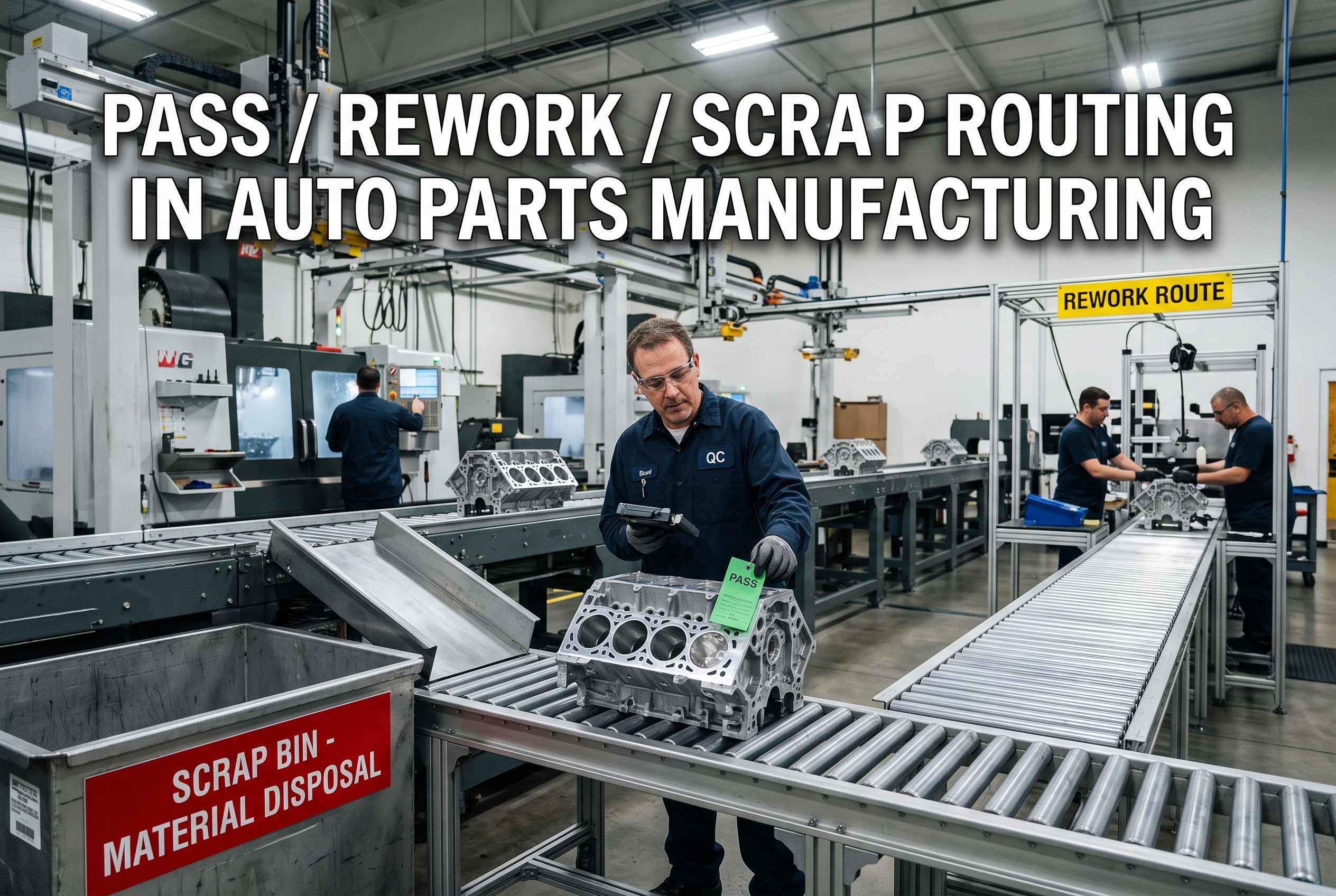
Diverter, flip gate, or robotic arm sends each part to pack-out, rework station, or scrap bin — zero operator judgment required.
Why Sampling Inspection Breaks Down at 60 Strokes per Minute
If you're running a stamping line at 60 strokes a minute — 3,600 parts an hour — a first-piece check and an hourly sample catch roughly 0.3% of your output. The other 99.7% of parts ship on faith. For a Tier 1 or Tier 2 auto parts supplier shipping 500,000 parts a week, that faith gets tested every customer audit cycle. The math is simple and brutal: even at a respectable 250 PPM defect rate, you're shipping 125 defective parts a week to a customer who specified zero. Book a line assessment to see what 100% inspection would catch on your highest-volume press.
of output typically inspected by manual sampling on a 60-SPM stamping line — the other 99.7% ships unchecked
end-to-end inference and routing decision time — fast enough for press cycles up to 120 SPM
reduction in customer-reported PPM after 100% vision inspection with automated three-way routing
fixed-price pilot timeline — one line, one defect family, measurable PPM and scrap-cost impact
What the System Catches on a Stamping Press Exit
The defects that cause auto parts recalls and customer chargebacks aren't random — they fall into predictable categories that deep-learning vision models trained on your actual line images learn to detect with high precision. Here's what gets flagged, what gets routed, and what it means for your defect cost.
Not sure which defect family is driving your PPM? Talk to a vision specialist about running a 48-hour defect baseline on your line.
Before vs After: What Changes on Your Floor
The shift from sampling to 100% inspection with automated routing isn't just a quality improvement — it changes how the line runs, how operators spend their time, and how fast you can respond to process drift. Here's the side-by-side.
Before: Sampling & Manual Sort
- Inspection Rate 1 part per 200 — 0.5% sample
- Routing Decision Operator judgment at end of line
- Defect Detection Lag Hours — discovered at next sample or customer
- Rework Recovery Mixed with scrap, often not attempted
- RCA Data Paper logs, manual data entry, guesswork
- Die Wear Visibility Discovered at scheduled tool change — too late
After: 100% Vision + Auto-Routing
- Inspection Rate 100% — every part, every cycle
- Routing Decision PLC-executed pass/rework/scrap in <50ms
- Defect Detection Lag Zero — caught at the press exit, same cycle
- Rework Recovery Salvageable parts auto-routed to rework cell
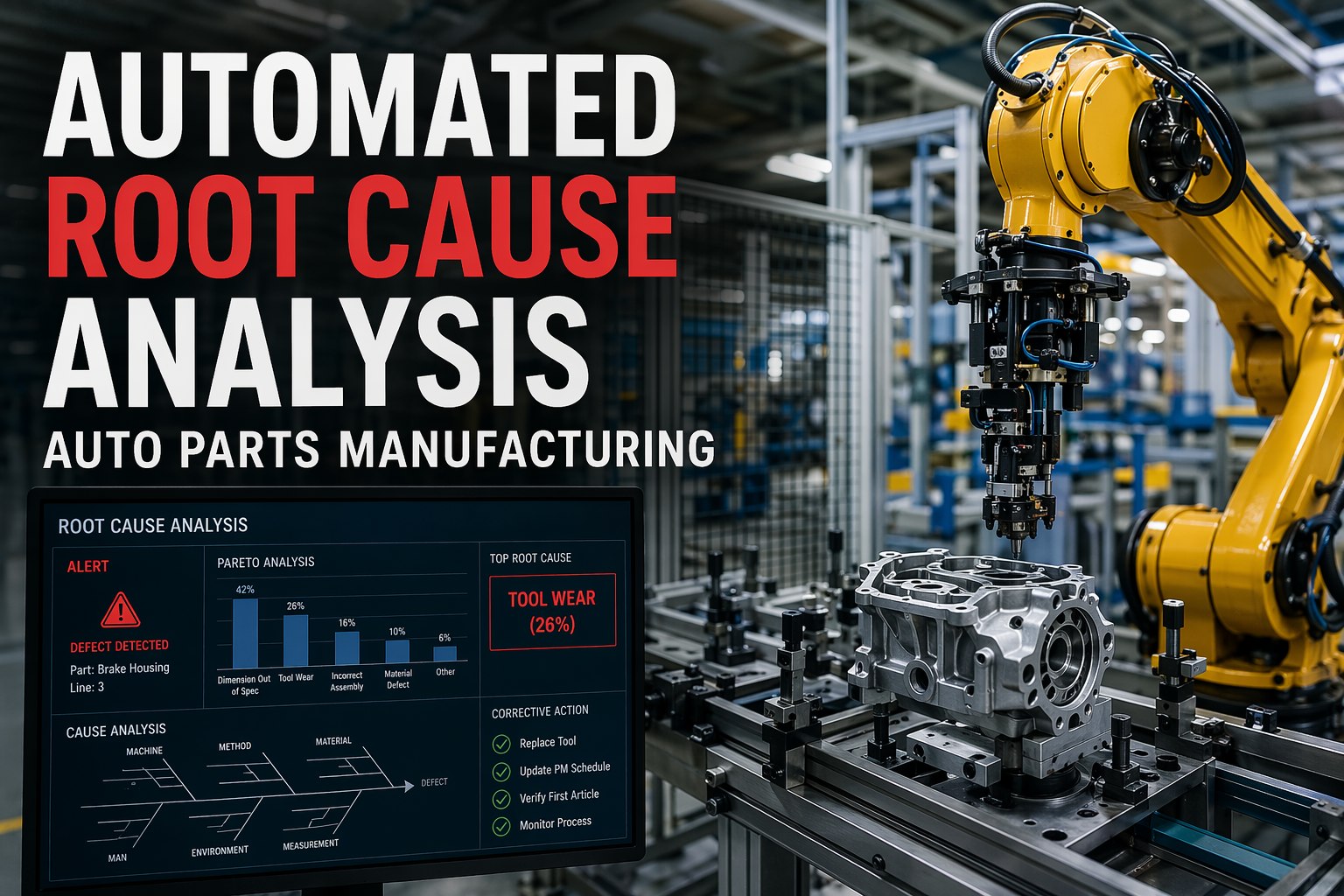
- RCA Data Every defect tagged with image, timestamp, PLC params
- Die Wear Visibility Trended in real time — tool change predicted, not reactive
How It Connects: PLC Tags, MES Identity, and ERP Genealogy
Three-way routing only delivers value if the decision reaches your physical line and your digital records at the same time. iFactory's architecture handles both — the routing tag writes to your Level 2 PLC for immediate physical diversion, and the same decision writes to your MES and ERP for full lot genealogy. No double entry, no data gaps, no "the vision system said pass but the operator scrapped it" discrepancies.
Physical Layer — Line & PLC
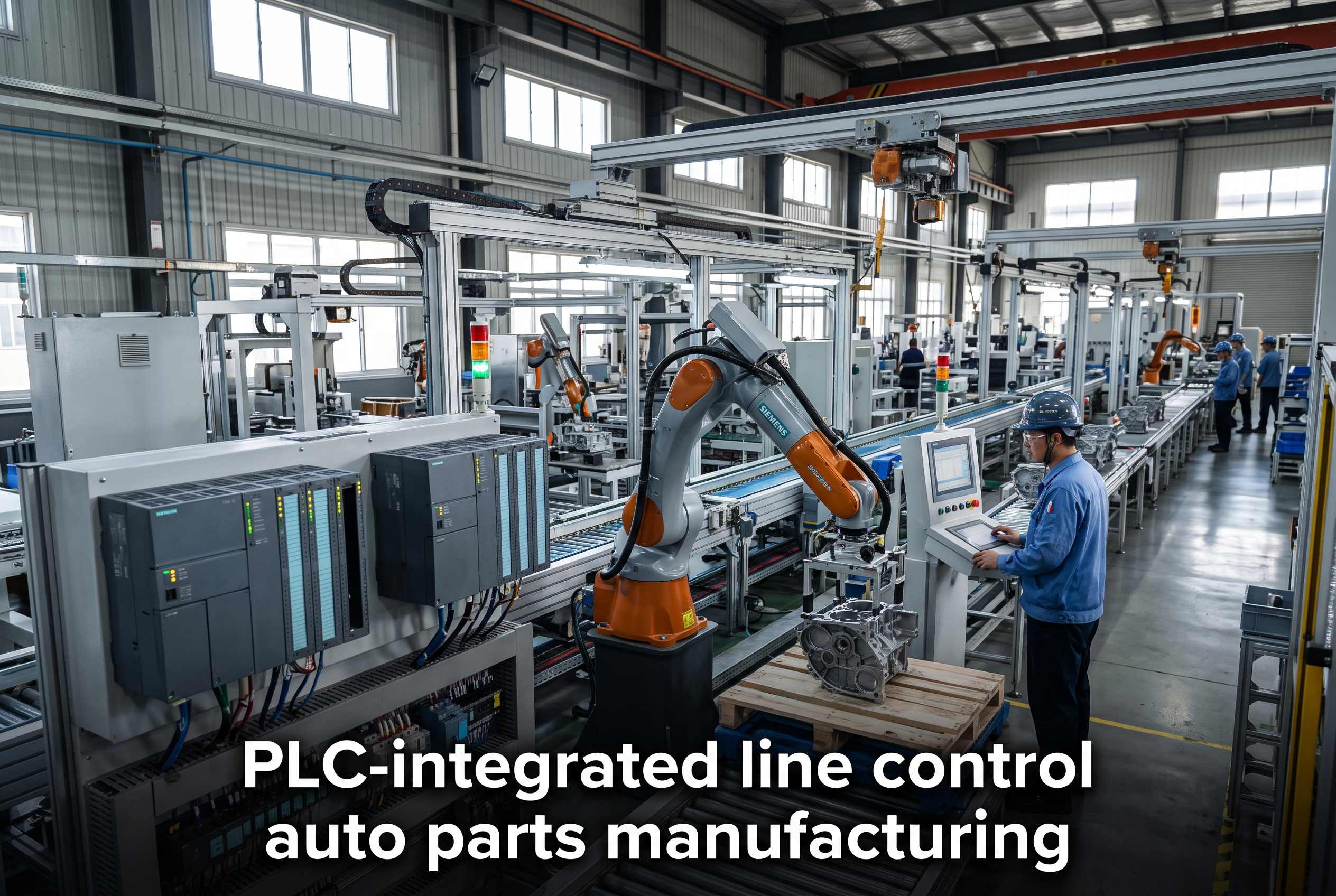
Cameras mounted at press exit or machining cell outfeed. GPU inference appliance (on-prem NVIDIA) housed in electrical cabinet. Routing decision writes directly to Level 2 PLC tags — diverter gate, flip chute, or pick-and-place receives the command. Press auto-stop triggered on catastrophic defect patterns. No new operator screens required; routing is transparent to line crew.
Data Layer — MES & QMS
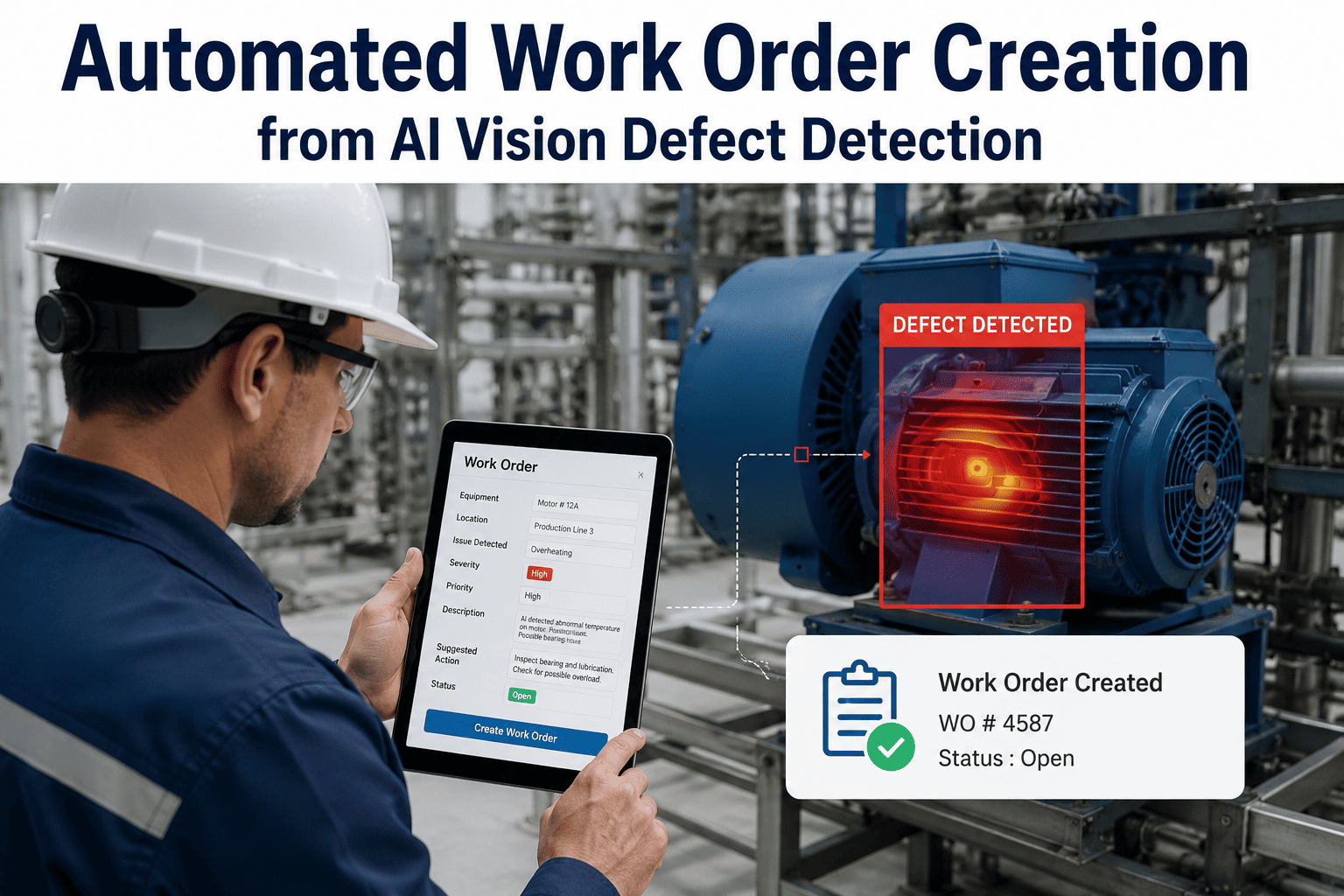
Every inspection result — pass, rework, scrap, defect type, confidence score, image capture — writes to your MES via REST API or OPC-UA. Each part or batch inherits a quality status. Reworked parts carry forward their original identity with a rework-event tag. Scrap parts are written off in real time, not at end-of-shift inventory reconciliation. QMS gets automated nonconformance reports with attached images — no manual NCR creation.
Business Layer — ERP & RCA
ERP receives real-time scrap and rework counts against work orders, enabling live cost-of-quality tracking per part number. Automated root-cause analysis correlates defect spikes with PLC-captured process parameters — tonnage, lubrication flow, die temperature, feed position. When burr defects spike at 2:14 PM, you see that tonnage dropped 3% at 2:12 PM. That's RCA in minutes, not days.
Need to map this architecture against your specific PLC, MES, and ERP stack? Book an integration mapping session with iFactory's auto parts team.
Run a Fixed-Price 8-Week Pilot on Your Toughest Line
One line. One defect family. Measurable PPM reduction and scrap-cost savings. iFactory delivers on-prem NVIDIA GPU inference, PLC tag integration, and MES/ERP connectivity — all in eight weeks, at a fixed price, with an ROI worksheet built from your actual part volumes and defect costs.
The ROI Math: What 100% Inspection Actually Saves
The business case for three-way routing isn't abstract — it's arithmetic. Take a single stamping line producing 3,600 parts per hour across two shifts (57,600 parts/day), running 250 days a year. At a current defect rate of 250 PPM, you're producing 14.4 defective parts per day. Here's what happens when vision routing catches them at the press instead of at the customer.
Annual savings from catching catastrophic defects before they consume downstream machining and assembly labor. A part scrapped at the press costs $0.40 in material; the same part scrapped after machining costs $4.50; after plating, $8.00.
Parts with salvageable defects (burrs, missing operations) auto-routed to rework instead of mixed into scrap bins. Typically 40-60% of flagged defects are reworkable — revenue that was previously thrown away.
A single escaped-defect lot returning from a Tier 1 customer can cost $50,000–$200,000 in sorting, containment, expedited freight, and penalty clauses. Preventing two such events per year pays for the system.
Real-time dimensional drift detection triggers tool changes before catastrophic die failure. A broken punch or cracked die insert costs $15,000–$40,000 in repair plus 4-8 hours of unplanned downtime.
Want this ROI worksheet populated with your part volumes, material costs, and current PPM? Book a 30-minute ROI session and we'll build it live.
The 8-Week Pilot: From Line Walk to Measured PPM Impact
You don't commit to a plant-wide rollout on faith. iFactory's fixed-price pilot proves the technology, the integration, and the ROI on one line — one defect family — in eight weeks. Here's the week-by-week.
Line Walk & Defect Baseline
Engineering team walks the line, maps PLC tags, captures 48 hours of baseline defect data using temporary cameras. Defect family selected. ROI worksheet locked with your actual numbers.
Camera & Lighting Install
Permanent camera mounts, LED strobe lighting, and GPU inference appliance installed during a scheduled changeover. No line downtime required. PLC tag mapping confirmed with controls team.
Model Training & Tuning
Deep-learning model trained on 5,000+ captured images of your actual parts — good and defective. Confidence thresholds tuned against your quality team's golden samples. False reject rate driven below 2%.
PLC Integration & Shadow Mode
Three-way routing tag writes to PLC. System runs in shadow mode — inspecting and classifying but not yet diverting. Quality team validates every classification against manual inspection. Discrepancies fed back into model.
Live Routing Activation
Diverter gates go live. Pass/rework/scrap routing executes automatically. Operators trained on exception handling only. MES and ERP integration confirmed — every part carries its quality status end-to-end.
Impact Report & Rollout Plan
PPM before vs after. Scrap cost before vs after. Rework recovery rate. Die-failure events prevented. Full ROI delivered against the Week 1 worksheet. Multi-line rollout plan scoped if numbers hit — and they usually do.
Expert Perspective
We were running first-piece inspection and an hourly sample on our transfer press line, and honestly we thought 280 PPM was as good as it gets. The first week after the vision system went live, it caught a burr defect pattern we didn't even know we had — punch wear on station four that was producing a 0.15mm flash on every part. We'd been shipping that to the customer for three weeks. Within a month our PPM dropped to under 80, and the scrap bin got noticeably lighter because reworkable parts were getting routed to the deburr station instead of thrown in with the catastrophic failures. The thing that sold me was the PLC tie-in — when the system flags a catastrophic die event, it stops the press before we make 200 bad parts. That alone paid for the pilot.
— Marco Velasquez, Plant Manager, Tier 1 automotive stamping facility (NAICS 336350), Ohio
PPM defect rate reduction in first 30 days of live routing on a transfer press line
of flagged defects were reworkable — previously lost to scrap bin mixing
catastrophic die events auto-stopped before producing more than 15 bad parts each
Stop Sampling. Start Inspecting 100%.
Your stamping press is producing parts right now that you'll never inspect. iFactory's AI vision three-way routing inspects every part in motion, classifies pass/rework/scrap at line speed, and executes the routing through your existing PLC — with full MES, ERP, and QMS integration for automated root-cause analysis. Fixed-price 8-week pilot. Measurable PPM impact. ROI worksheet built from your numbers.
Frequently Asked Questions
Can AI vision inspection keep up with a high-speed stamping press running 60-120 strokes per minute?
Yes. The system uses high-speed industrial cameras with LED strobe illumination synchronized to the press cycle, and on-prem NVIDIA GPU inference delivers classification in under 50ms per part. This supports press speeds up to 120 SPM with full image capture, defect classification, and PLC routing tag write — all within a single cycle. No line slowdown is required. The GPU appliance is specified based on your maximum cycle rate and part size.
How does the three-way routing physically work on my existing line?
The routing decision writes to your Level 2 PLC or DCS as a tag value — typically an integer (0=pass, 1=rework, 2=scrap). Your existing diverter gate, flip chute, or robotic pick-and-place reads that tag and routes the part accordingly. In most retrofits, the mechanical diverter is the only new hardware on the line; the cameras, lighting, and GPU appliance mount to existing frames or guarding. iFactory's controls team works directly with your PLC programmer to map tags during Week 2 of the pilot.
What happens if the vision system flags a good part as defective?
False reject rate is tuned during Weeks 3-4 of the pilot using your quality team's golden samples, and is typically driven below 2%. Any part flagged as rework or scrap is imaged and logged, so your quality team can audit decisions in real time. Rework-routed parts are reviewed by an operator at the rework station before processing. For scrap-routed parts, a daily review of captured images catches systematic false-positive patterns, which are fed back into model retraining. The system also runs in shadow mode for two weeks before live routing activates, so discrepancies are resolved before any part is physically diverted.
Does the system integrate with our existing MES, ERP, and QMS, or is it a standalone box?
It is not standalone. Every inspection result writes to your MES via REST API or OPC-UA, carrying part identity, defect classification, confidence score, and image reference. Scrap and rework counts flow to your ERP against active work orders in real time. Nonconformance reports are auto-generated in your QMS with attached defect images — no manual NCR creation. iFactory has integrated with major MES platforms including SAP DMC, Plex, IQMS, and Tulip, and with ERP systems including SAP, Oracle, Epicor, and Infor. Talk to a specialist about your specific stack.
What does the fixed-price 8-week pilot actually include, and what does it cost?
The pilot covers one production line and one defect family. It includes camera and lighting hardware, on-prem NVIDIA GPU inference appliance, PLC tag integration, MES/ERP API integration, model training on your actual defect images, shadow-mode validation, live routing activation, operator training, and a final impact report with measured PPM and scrap-cost reduction. The price is fixed — quoted after the Week 1 line walk based on your line complexity — with no change orders for scope creep. If the numbers don't hit the ROI worksheet targets, you keep the hardware and the trained model. Book a pilot scoping call to get a quote for your specific line.