In a food plant, the conveyors are the circulatory system — when they stop, everything stops. And they stop in ways that are almost insultingly predictable. A belt that tracks ten millimeters off-center becomes a belt that tears in 48 hours. A bearing running twelve degrees above its baseline becomes a seized bearing in a week. A drive gearbox running on food-grade lubricant throws a temperature spike, and unless someone is watching, that spike becomes an unplanned stop that idles the entire line behind it. The maddening part is that none of these failures arrive without warning — they announce themselves in vibration, heat, and current days or weeks ahead. The only question is whether anyone is listening. A conveyor condition monitoring system is how a maintenance team hears the warning while there is still time to act.
iFactory Reliability Intelligence
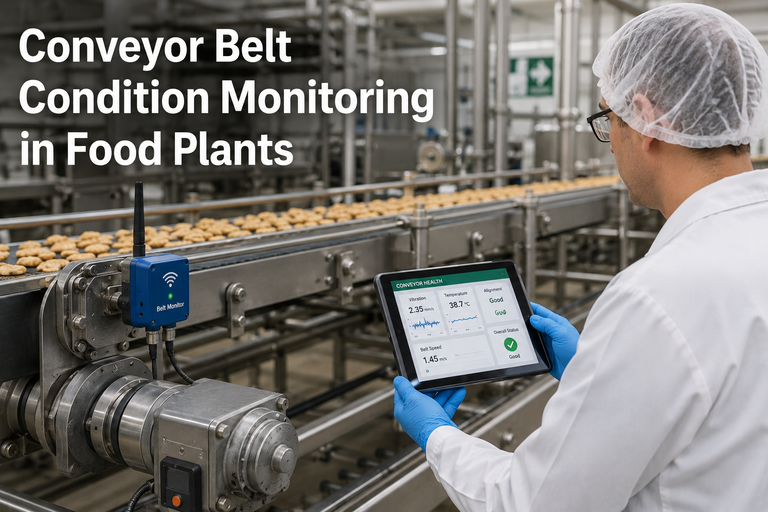
Conveyor Belt Condition Monitoring in Food Plants
Catch belt slip, misalignment, and bearing failure before they stop the line — vibration, temperature, and current sensors that turn predictable conveyor failures into scheduled, in-window repairs.
The reason conveyor reliability matters more in food than almost anywhere is the topology of the line. A conveyor is rarely a standalone asset — it feeds and connects every other operation. When a jammed or failed conveyor stops in a continuous production line, it does not just cost the time to clear it; it costs the entire line's throughput from the moment it stops. One mid-line belt failure can idle dozens of downstream stations, and in food production it can also strand temperature-sensitive product mid-process. The conveyor is cheap. The stoppage is not.
Inspection-Only
Find It After It's Failing
Walk-around checks catch problems only at the moment of inspection, not between them
Early bearing and lubrication faults are nearly impossible to see by eye
A fault that develops the day after a check runs unseen until it breaks
Inspectors must enter running, sometimes hazardous, conveyor zones
Condition Monitoring
Hear It Before It Fails
Continuous sensing catches deterioration the moment it begins, around the clock
Vibration spectrum reveals bearing faults weeks before they're visible
Alarms fire on trend deviation, so the repair is scheduled, not scrambled
People stay out of running zones — sensors do the watching
The Four Failure Modes — and Where to Sense Them
Conveyors fail in predictable patterns, and each pattern has a sensor that catches it early. The art is putting the right sensor at the right point on the line. Here is the anatomy of a monitored conveyor and what each watch point is listening for.
Sensor Watch Points on a Food Conveyor
Drive / gearmotor — current signature + temperature for winding and gearbox faults
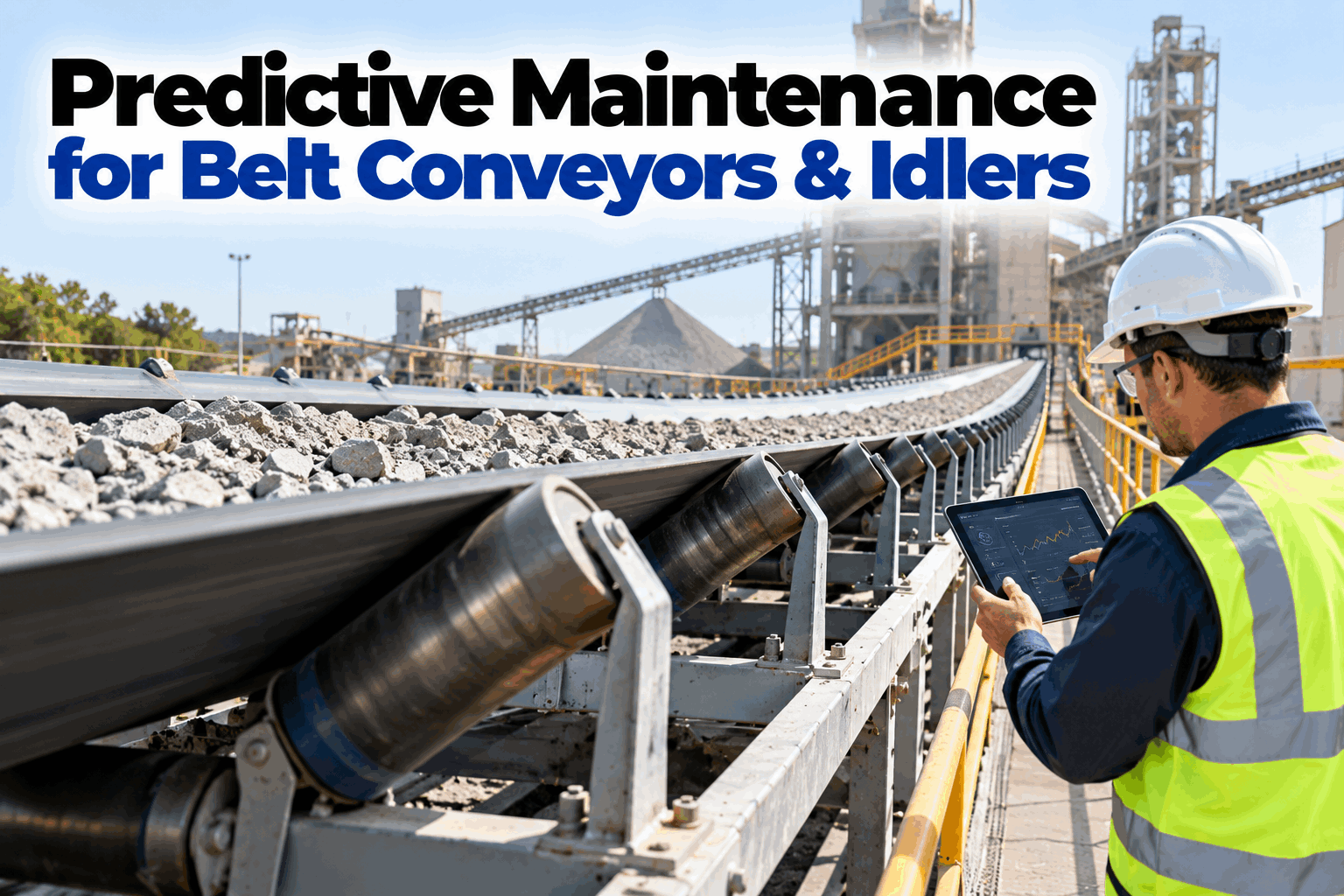
Bearings / idlers — vibration spectrum for race and roller defects
Pulleys / belt — speed and tracking for slip and misalignment
Misalignment
An off-track belt rubs the side structure, driving up the vibration signature, and tears within 48 hours. Tracking and vibration sensors flag the drift long before edge damage or a full tear.
Bearing Failure
Bearings can go from healthy to failure in two weeks to a month. Frequency-domain vibration spots inner-race, outer-race, and roller defects in the earliest stage; temperature confirms it.
Belt Slip
Slip wastes energy, burns the belt, and drops throughput. Speed monitoring against drive set-point catches slippage as it begins, before scorching or a stall.
Gearmotor / Drive
Food-grade lubricants are more sensitive to operating-condition changes. Excess gearbox heat or motor current is the warning — current and temperature trending catch it early.
Want to see which of your conveyors is closest to a failure right now? Book a 30-minute reliability walkthrough and we'll map sensors to your line's critical conveyors.
How a Real Catch Happens
The value of condition monitoring is clearest in a real save. In one food-and-beverage deployment, a conveyor drive's vibration signature looked healthy and in line with production cycles — nothing alarming there. The alert fired on temperature: after two months of a stable trend, the reading spiked 34% above its healthy range. That spike pointed to bearing wear from friction. The team acted on the alert and found rotating looseness in the bearing before it seized. A two-minute response prevented hours of line downtime.
From Sensor Signal to Saved Shift
1
Sense
Multi-Signal
Vibration, temperature, current, and speed streamed continuously per asset
2
Baseline
Learn Normal
Models learn each conveyor's healthy signature across production cycles
3
Alert
Flag Deviation
A trend break — like a 34% temperature spike — fires an alert with the likely cause
4
Act
Auto Work Order
A scheduled work order routes to the right tech, fixed in planned downtime
The Food-Plant Wrinkle
Generic conveyor monitoring is not enough in a food plant, because the environment fights you. Washdown, hygiene zones, food-grade lubricants, and temperature extremes all change how sensors must be specified and where they can go. A monitoring program that ignores these realities ends up with dead sensors and false alarms.
Washdown & IP Rating
High-pressure, high-temperature washdown demands sealed, environmentally protected sensors — anything less drowns in the first sanitation cycle.
Food-Grade Lubricants
Food-safe lubes behave differently and are more sensitive to operating-condition shifts, so baselines and thresholds must be tuned to them, not generic grease.
Hygienic Sensor Placement
Sensors can't create harbourage points or contamination risk near product-contact zones — wireless, externally mounted units keep monitoring out of the food path.
Wireless & Long Battery
Cabling across a wet, moving line is impractical; wireless sensors with multi-year battery life and solid transmission range make retrofit realistic.
What Monitoring Delivers
Conveyor condition monitoring converts directly into avoided downtime, longer belt life, and safer operations. These figures come from conveyor predictive-maintenance field data across food, beverage, and manufacturing.
Weeks
Earlier fault detection
vibration signatures flag wear well before failure thresholds
70→90%
Better refurb decisions
objective sensor data vs subjective visual inspection
3 mo
ROI in a large fleet
one operator monitoring 10,000+ machines including conveyors
6-12 mo
Typical payback
with quick wins from catching imminent failures
Every save starts by putting the right sensor on the right watch point. Want the monitoring plan built for your conveyor fleet? Talk to our reliability engineers.
Frequently Asked Questions
Which sensors actually matter for a food conveyor?
Three signals carry most of the value: vibration for bearings and idlers (frequency-domain analysis catches race and roller defects early), temperature for bearing-block and drive overheating, and current signature for motor and gearbox faults. Speed and tracking sensors add belt slip and misalignment detection. Combined vibration-temperature-current sensors cover the major failure modes in one unit.
Can we monitor bearings if they fail so fast?
Yes — that speed is exactly why continuous monitoring matters. Conveyor bearings can go from healthy to failure in two weeks to a month, far faster than a typical inspection interval. Frequency-domain vibration analysis detects the irregularities at the earliest stage, when the bearing has not been significantly damaged, giving you a real window to schedule the fix.
Will sensors survive washdown in our plant?
Only if they're specified for it. High-pressure, high-temperature washdown will destroy unsealed instrumentation, so food-plant monitoring requires environmentally protected, properly IP-rated sensors mounted to avoid harbourage points and product-contact zones. Wireless units with multi-year batteries make hygienic placement and retrofit practical without running cable across a wet line.
Is vibration alone enough, or do we need temperature too?
Use both — they catch different things and confirm each other. In one real food-and-beverage case the vibration signature looked healthy while temperature spiked 34% above baseline, and the temperature alert is what caught the bearing's rotating looseness. Multi-signal monitoring avoids the blind spots that any single sensor type leaves.
How fast does conveyor monitoring pay for itself?
Most facilities see measurable savings within 30 to 90 days, with full payback typically in 6 to 12 months. The economics are strong because a single prevented mid-line conveyor failure saves the whole line's throughput for the duration of the stop — one large operator monitoring over 10,000 machines including conveyors reported ROI within three months.
Hear the Failure Before It Stops the Line.
See Conveyor Monitoring Running on Your Line — in 30 Minutes
Bring the conveyor that keeps stopping production. We'll show how vibration, temperature, and current sensors learn its healthy baseline, fire alerts on trend deviation, and auto-generate a scheduled work order — washdown-ready, hygienically placed, on a path from one belt to your whole fleet.