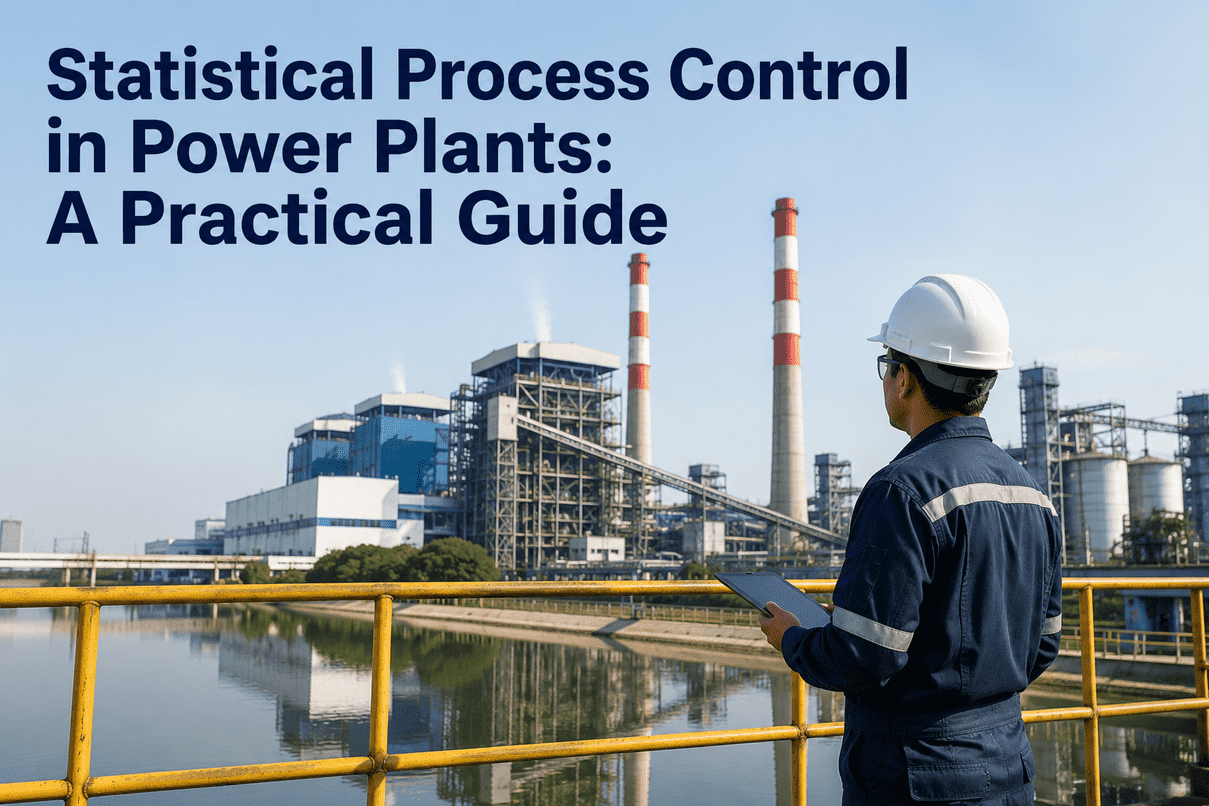
For power plant operations professionals managing utility and industrial boilers, the gap between real-time process visibility and compliance confidence is where costly incidents live. Steam temperature drift, drum level instability, and stack emissions Cpk below threshold are not independent problems — they compound, and when any one variable escapes statistical control, the consequences range from turbine life reduction to regulatory enforcement. iFactory AI's power plant boiler connector brings live SPC to steam temperature, drum level, and emissions simultaneously, integrating directly with your SCADA layer to deliver AI-driven anomaly detection, cross-plant capability comparison, and a compliance audit pack that satisfies NERC, EPA, and internal quality standards. Book a Demo to see how iFactory AI connects to your boiler control infrastructure and turns live process data into actionable SPC intelligence.
Why Statistical Process Control Is Critical for Power Generation Boilers
A boiler is the most thermodynamically demanding asset in a power generation facility. Steam temperature, drum level, and stack emissions are not independent process variables — they are coupled outputs of fuel chemistry, combustion air balance, feedwater quality, and heat transfer surface condition. When any one parameter drifts outside its statistical control window, it creates a cascade: steam temperature variation stresses superheater tubes and reduces turbine efficiency, drum level instability threatens carryover and drum damage, and emissions exceedances trigger regulatory exposure that can cost millions in fines and permit jeopardy.
Traditional power plant operations rely on alarm-based response — operators react after a limit has been crossed. Statistical Process Control applied continuously to live boiler data fundamentally changes this model. By establishing statistical baselines and computing Cpk in real time against each parameter's operational specification, iFactory AI surfaces process deterioration days or hours before it reaches an alarm state. The result is a shift from reactive response to predictive intervention — protecting equipment, ensuring compliance, and reducing forced outage risk across your entire boiler fleet. Book a Demo to see live boiler SPC in action on your parameter set.
Three Boiler Parameters That Define Operational and Compliance Performance
Every power plant boiler has three variables that collectively determine plant efficiency, equipment longevity, and regulatory standing. iFactory AI monitors all three with live SCADA-aware control charts, real-time Cpk tracking, and AI-driven anomaly detection tuned to your boiler's specific design parameters and permit requirements.
SCADA-Aware Boiler SPC: How iFactory AI Connects to Power Plant Control Infrastructure
Power generation facilities operate some of the most diverse and long-lived control system environments in industrial manufacturing — from modern ABB System 800xA and Emerson Ovation DCS installations to legacy Siemens SPPA-T3000 and GE Mark VI turbine controls running alongside third-party CEMS hardware. iFactory AI's boiler connector is built for this heterogeneous reality. Book a Demo to map your specific control system inventory to iFactory AI's integration architecture.
iFactory AI connects to boiler DCS platforms via OPC UA, OPC DA, Modbus TCP, DNP3, and PI historian interfaces — covering ABB, Emerson, Siemens, GE, Honeywell, and legacy Bailey systems. All live process tags — steam temperature, drum level, feedwater flow, combustion air ratio, and flue gas O₂ — are ingested continuously without polling impact on the control layer.
Stack emissions data from your EPA-certified CEMS — NOx, SO₂, CO, opacity, and flow — are ingested in parallel through dedicated CEMS data acquisition interfaces or PI/OSIsoft historian feeds. iFactory AI aligns CEMS timestamps with boiler operating mode data to ensure SPC context is accurate across load changes, startup sequences, and maintenance exceedance periods.
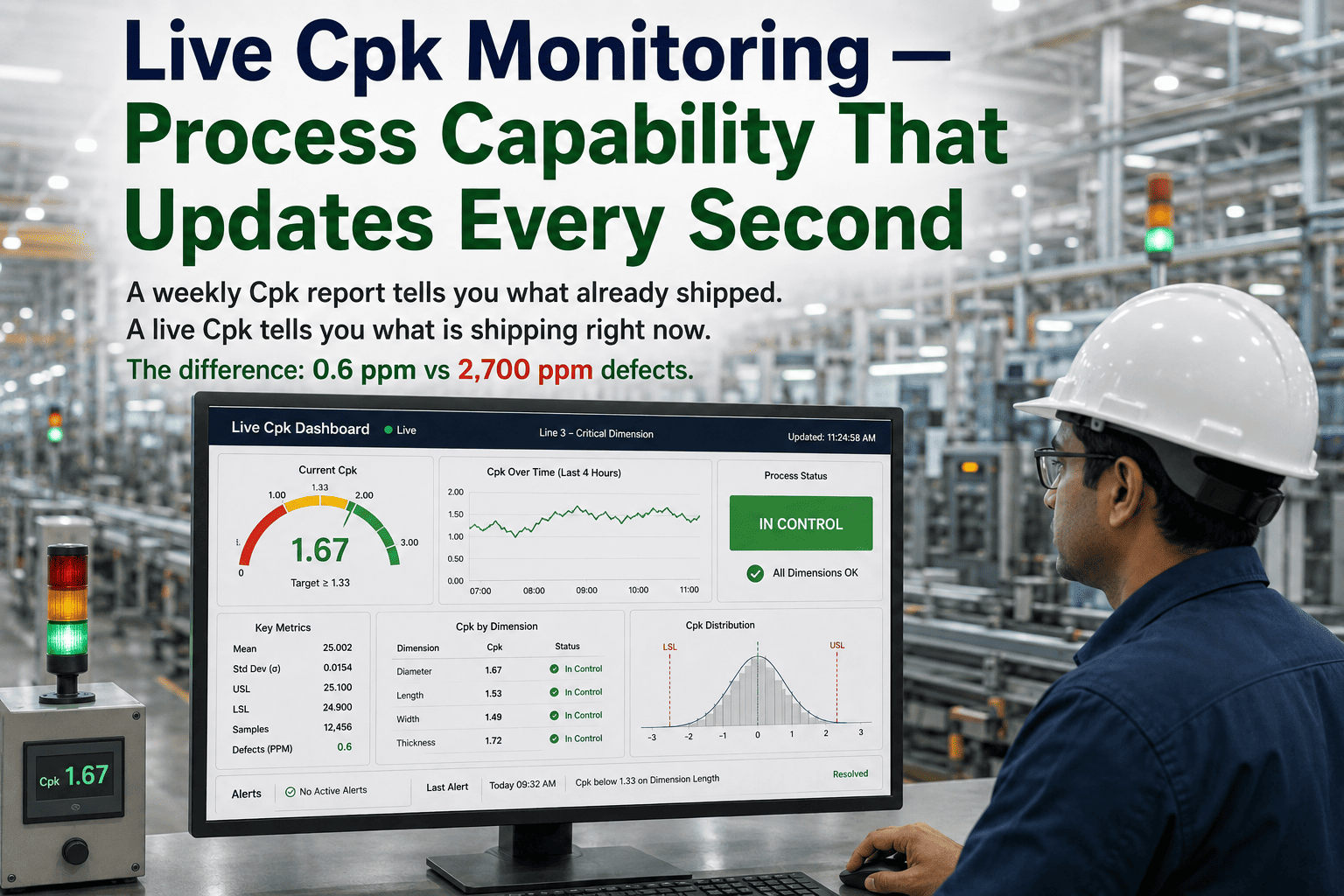
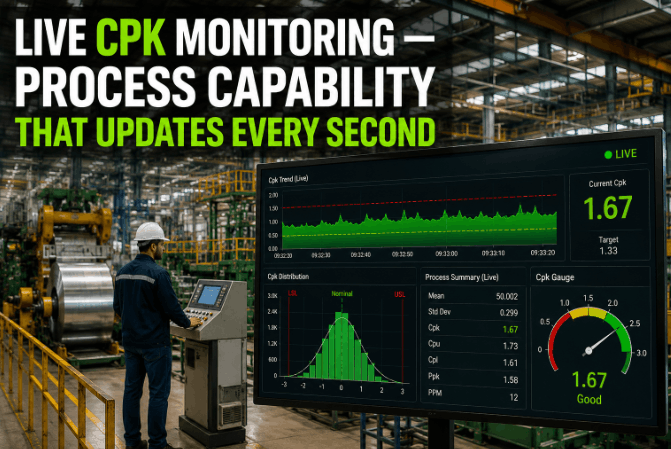
Control charts update in real time as boiler data streams in. Cpk, Cp, Ppk, and I-MR values are computed for each monitored parameter. The AI anomaly engine establishes baseline process signatures per boiler unit and operating mode, then flags statistically significant deviations — distinguishing normal load-change variation from actual process drift requiring operator attention.
Multi-unit and multi-site installations gain a fleet-level view: Cpk rankings across all boiler units for each parameter, normalized for fuel type and load rating. Operations leadership can identify which units are trending toward compliance risk and prioritize corrective action before emissions violations or equipment events occur.
Every monitoring period produces a digitally complete compliance evidence package — SPC chart exports, Cpk trend history, emissions averaging period data, operating limit deviations with timestamps, and operator response records — formatted for EPA Title V, state agency, and internal quality audit requirements. Available on demand for any historical date range.
Measurable Outcomes: What Live Boiler SPC Delivers to Power Plant Operations
The operational and compliance case for boiler SPC is quantifiable. A single NOx exceedance event under EPA Title V can trigger notice of violation penalties starting at $37,500 per day. A superheater tube failure on a large utility boiler carries $500,000–$2 million in repair and replacement generation costs. The comparison below reflects typical impact across iFactory AI power generation deployments.
| Operational Challenge | Without Live SPC | With iFactory AI | Typical Benefit |
|---|---|---|---|
| Steam Temperature Deviation Detection | Alarm response after limit breach | SPC trend alert hours before alarm | Turbine & tube protection |
| Drum Level Instability Root Cause | Operator experience; no data correlation | AI correlation to feedwater & load rate | Eliminates carryover events |
| Emissions Exceedance Prevention | CEMS alarm after permit limit approached | CUSUM detects NOx drift days in advance | Zero permit exceedances reported |
| EPA Compliance Audit Preparation | Days of manual CEMS data compilation | Auto-generated audit pack on demand | 85% reduction in reporting labor |
| Cross-Unit Cpk Benchmarking | No systematic comparison across units | Live fleet-level capability dashboard | Prioritized maintenance decisions |
| Combustion Drift Detection | Discovered at next tuning outage | Continuous O₂ & CO SPC trending | Fuel efficiency recovery |
Expert Review: What U.S. Power Plant Operations Leaders Should Prioritize in 2026
Reviewed by power generation engineers and plant reliability specialists with experience deploying SPC and digital monitoring systems across coal, gas, and combined-cycle generating facilities operating under EPA Title V, MATS, and CSAPR compliance frameworks. The following reflects current best practice across North American power generation operations.
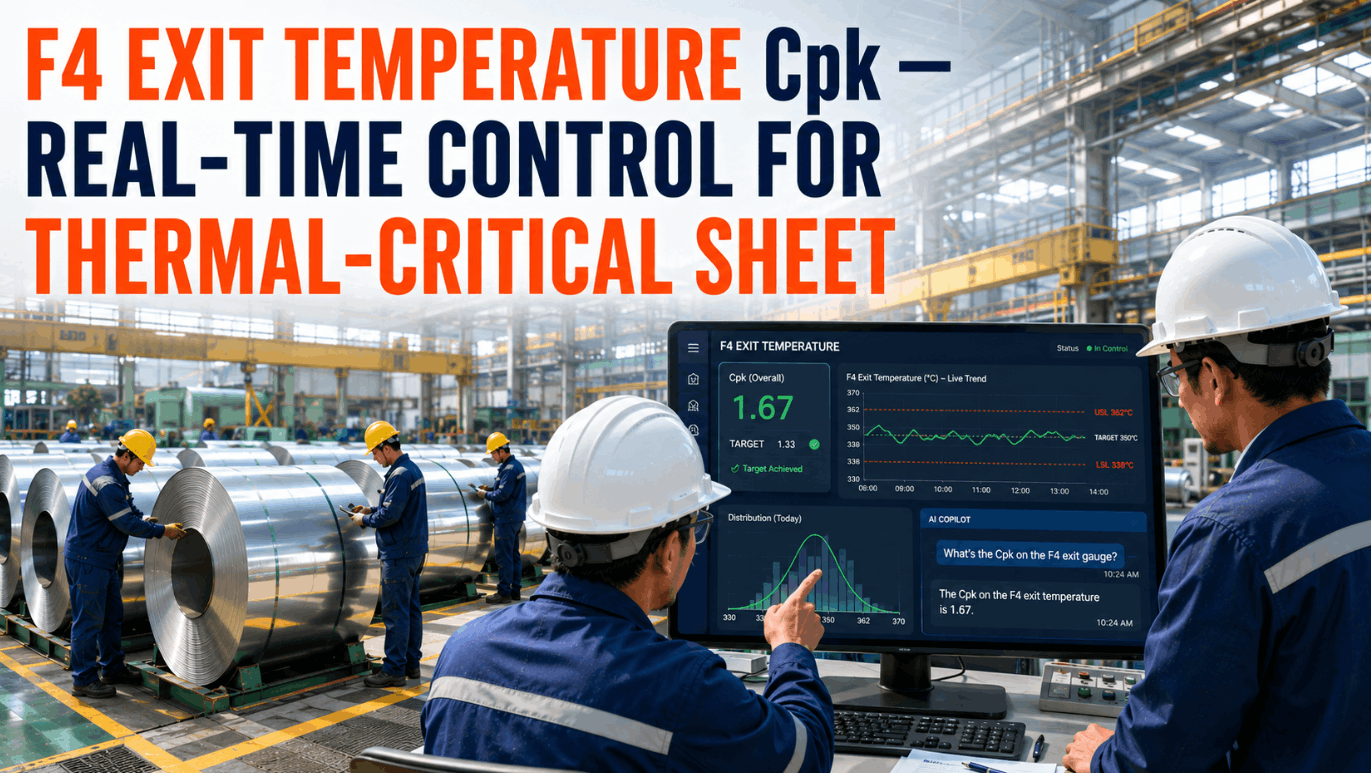
The first operational priority is treating steam temperature SPC as a turbine protection tool, not just a process quality metric. Superheater outlet temperature variation — particularly in cycling plants that ramp load multiple times per day — creates thermal fatigue cycles that dramatically reduce tube and header life. Continuous SPC on main steam and reheat temperature, correlated with attemperator spray flow and burner tilt position, allows operations teams to identify combustion imbalances that drive temperature variation before they accumulate damage. iFactory AI's SCADA-aware control charts adjust statistical baselines automatically for load-level changes, so operators see true process drift rather than false signals driven by normal operating transitions.
The second priority is using emissions SPC proactively rather than defensively. Many plant operations teams treat CEMS data as a compliance record rather than a process control signal. This is a missed opportunity: NOx and CO trends in CEMS data are early indicators of burner register wear, overfire air port blockage, and SCR catalyst degradation. CUSUM charts applied to hourly emissions averages detect these trends three to five days before they approach permit limits — providing an actionable maintenance window rather than an emergency response. Book a Demo to review how iFactory AI maps CEMS data to your specific permit structure and operating conditions.
The third priority is multi-unit Cpk benchmarking at the fleet level. Most power companies operate multiple units at a single site or across a region, yet process capability is almost never compared systematically across units. Fleet-level Cpk comparison for steam temperature, drum level, and emissions reveals which units are operating in the tightest control band and which are trending toward risk — enabling targeted maintenance budgeting and demonstrating continuous improvement to regulators and corporate leadership simultaneously.
Conclusion: Live Boiler SPC Is the Operational and Compliance Standard for Modern Power Generation
Power plant operations professionals managing boiler performance in 2026 face a demanding convergence of equipment reliability expectations, emissions compliance requirements, and grid flexibility demands that make alarm-based process management insufficient. Live SPC on steam temperature, drum level, and stack emissions — integrated directly with SCADA and CEMS infrastructure and supported by AI anomaly detection — is what allows a plant to operate at the edge of its performance envelope without crossing into equipment damage or compliance exposure territory.
iFactory AI's power plant boiler connector delivers this capability with native integration for the DCS and CEMS platforms your plant already operates, a compliance audit pack that satisfies EPA and internal quality requirements without manual compilation, and a cross-plant capability dashboard that gives operations leadership the fleet-level visibility needed to allocate maintenance resources with precision. Whether you operate a single generating unit or a multi-site fleet, iFactory AI scales to your infrastructure and meets your control systems where they are today.