The factories leading the manufacturing industry in 2026 share one defining characteristic: they've made artificial intelligence central to how they operate. While competitors struggle with unexpected downtime, quality escapes, and supply chain disruptions, AI-driven factories achieve 50% less unplanned downtime, 97% defect detection accuracy, and 25% lower inventory costs. The AI in manufacturing market has surged to $5.94 billion and is racing toward $115 billion by 2030—a 46% annual growth rate that signals a fundamental transformation in how factories compete and win.
This isn't about futuristic robots or science fiction automation. It's about practical AI applications that deliver measurable competitive advantages today: predictive maintenance systems that prevent failures before they happen, computer vision that catches defects human inspectors miss, and intelligent algorithms that optimize production schedules in real-time. Manufacturers deploying AI report ROI ranging from 3.7x to 10.3x on their investments. The question is no longer whether AI creates competitive advantage—it's whether your factory can afford to compete without it.
How AI-Driven Factories Gain a Competitive Edge in 2026
The AI Manufacturing Advantage in 2026
The State of AI Adoption in Manufacturing
AI is no longer an experimental technology in manufacturing—it's becoming essential infrastructure for competitive operations. According to US Census Bureau data, 52% of U.S. manufacturers have adopted AI at some level, with 63% using AI specifically for quality control. The adoption acceleration is driven by proven results: 86% of manufacturing executives believe intelligent factory technologies will drive competitiveness in the next five years, and 97% of senior business leaders investing in AI report positive returns.
Yet a significant gap exists between adoption and optimization. While 89% of manufacturers plan to integrate AI into their production networks, only 16% have met their AI goals. This gap represents both a challenge and an opportunity—manufacturers who successfully scale AI implementations gain sustainable competitive advantages over those still experimenting or struggling with deployment.
ADOPTION RATES BOXAI Adoption in Manufacturing 2025
The Five Competitive Advantages of AI-Driven Factories
AI-driven factories don't just operate more efficiently—they compete on fundamentally different terms than traditional operations. They prevent problems instead of reacting to them, optimize continuously instead of periodically, and make data-driven decisions in real-time instead of relying on historical assumptions. These capabilities compound into five distinct competitive advantages that separate industry leaders from laggards.
FIVE ADVANTAGES BOXFive Competitive Advantages of AI-Driven Factories
Predictive Operations
AI predicts equipment failures, quality issues, and supply disruptions before they impact production. Shift from reactive firefighting to proactive prevention.
Superior Quality
Computer vision and ML achieve defect detection accuracy impossible for human inspectors. 100% inspection at production speed with consistent precision.
Operational Agility
AI-driven scheduling adapts to demand fluctuations, equipment availability, and supply changes in real-time. Faster response to market shifts.
Supply Chain Resilience
Predictive analytics enhance demand forecasting, optimize inventory, and identify risks before disruption. Build supply chains that bend without breaking.
Sustainable Efficiency
AI optimizes energy consumption, reduces waste, and supports environmental goals while cutting costs. Sustainability becomes competitive advantage.
Advantage #1: Predictive Maintenance Revolution
Unplanned downtime remains the most expensive problem in manufacturing. The largest 500 companies globally lose 11% of annual revenue to unanticipated downtime—and costs have increased 150% in just five years. AI-powered predictive maintenance transforms this equation by analyzing sensor data to predict failures before they occur, enabling proactive intervention instead of reactive repair.
The results are transformative. Predictive maintenance reduces unplanned downtime by up to 50% and cuts maintenance costs by 10-40%. Equipment lifespan extends 20-40% as AI identifies and addresses wear patterns before they cause damage. One global manufacturer monitoring 10,000+ machines—including robots, conveyors, pumps, and motors—reported ROI within three months of deployment. Shell processes 20 billion data rows weekly from 3 million sensors, generating 15 million predictive insights daily across their entire value chain.
PREDICTIVE MAINTENANCE BOXPredictive Maintenance: The AI Advantage
Traditional Maintenance
- Reactive: Fix after failure
- Scheduled: Fixed intervals regardless of condition
- Costly emergency repairs
- Unnecessary preventive work
- Unpredictable production disruptions
- Parts replaced too early or too late
AI Predictive Maintenance
- Proactive: Prevent before failure
- Condition-based: Maintain when needed
- Planned interventions during non-peak
- Optimized maintenance resources
- Controlled, scheduled downtime
- Maximum equipment lifespan
Real-World Results
20B data rows/week from 3M sensors, 15M daily predictive insights
10,000+ machines monitored, ROI in 3 months
25% less unexpected downtime, 15% lower maintenance costs
20% operational efficiency improvement, reduced unplanned outages
Advantage #2: AI-Powered Quality Control
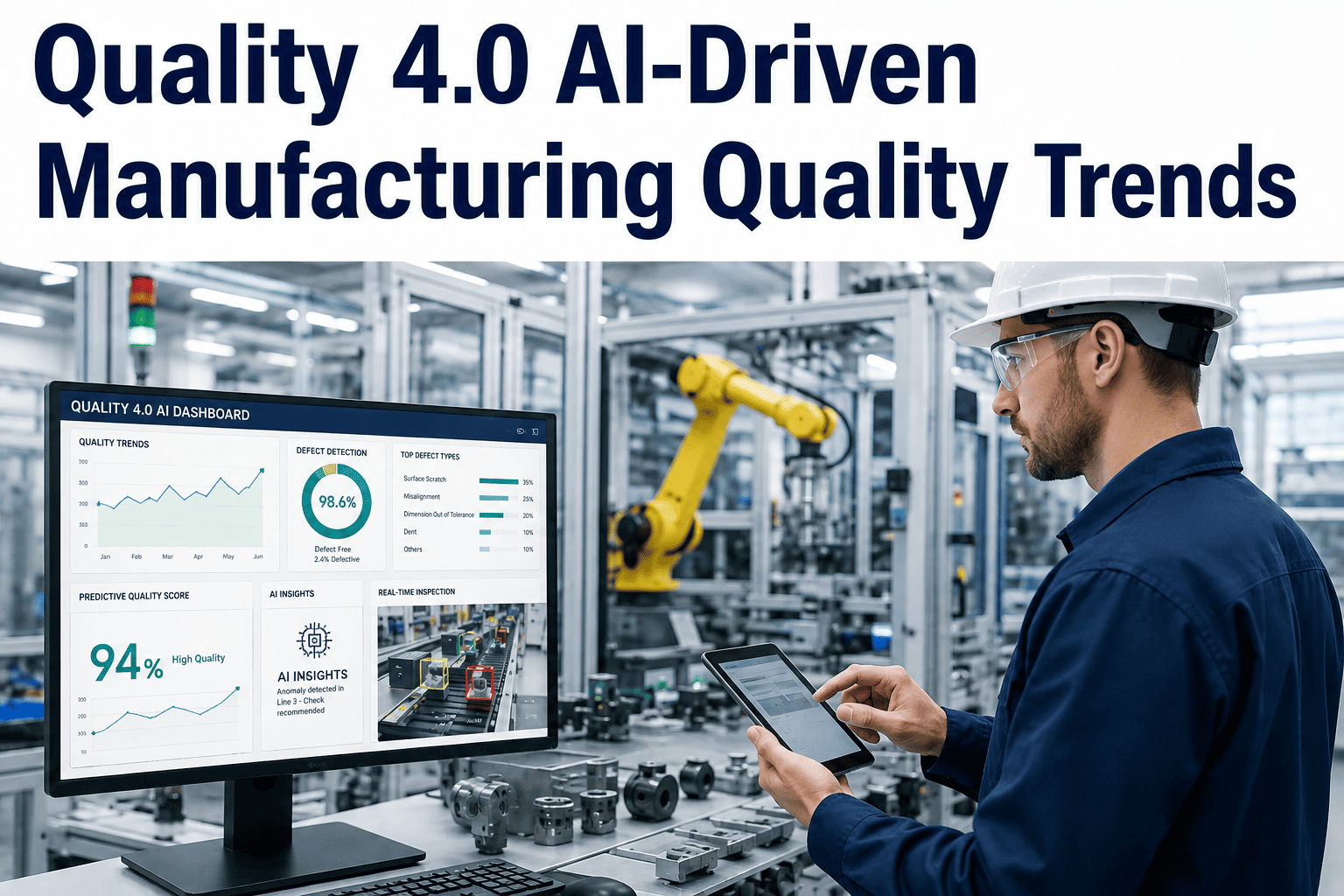
Traditional visual inspection misses up to 20-30% of defects—a gap that translates directly into warranty claims, customer complaints, and brand damage. AI-powered quality control systems using computer vision and deep learning achieve detection accuracy above 97%, inspecting 100% of products at production speed rather than relying on statistical sampling. These systems detect defects as small as 0.1mm that human inspectors simply cannot see.
The business impact extends beyond defect detection. BMW implemented AI vision systems across production facilities and reduced defect rates by 30% within one year, with customers reporting 15% higher satisfaction. Siemens achieved 99.7% defect detection accuracy in electronics manufacturing, reducing warranty claims by 40%. One electronics plant using AI-based inspection cut rework by 22% and scrap by 18% in just three months, with payback in under eight months.
QUALITY CONTROL BOXAI Quality Control vs. Traditional Inspection
Defect Detection Accuracy
Inspection Coverage
Operational Consistency
Detection Resolution
Transform Your Factory with AI-Driven Operations
iFactory's integrated CMMS and MES platform provides the digital foundation for AI-powered manufacturing. Our solution connects sensors across your equipment, enables predictive maintenance analytics, and delivers real-time quality visibility—helping manufacturers achieve the 50% downtime reduction and quality improvements that define competitive advantage in 2026.
Advantage #3: Supply Chain Intelligence
Supply chain disruptions have become the norm rather than the exception, and traditional forecasting methods can't keep pace. AI-powered supply chain optimization delivers dramatically better results: Amazon Pharmacy achieved 50% better forecast accuracy than industry standard using AWS AI solutions. Mars reduced 80% of its annual workload by using generative AI to analyze weather and shipment data. Amazon reduced inventory holding costs by 25% while maintaining service levels through AI-driven demand forecasting.
The AI in supply chain market is expected to reach $58.55 billion by 2031, growing at 40.4% annually as manufacturers recognize that intelligent supply chains provide resilience and cost advantages impossible to achieve with traditional methods. Beyond forecasting, AI enables real-time inventory tracking, supplier risk assessment, and logistics optimization that reduce costs while improving responsiveness.
SUPPLY CHAIN BOXAI Supply Chain Intelligence Results
Demand Forecasting
- 50% better accuracy (Amazon Pharmacy)
- 85%+ enhanced forecast precision
- 90% cost reduction in demand forecasting (chemical company)
Inventory Optimization
- 25% lower holding costs (Amazon)
- 18% reduction in inventory value
- 30% less excess inventory costs
Logistics Efficiency
- 29% logistics path optimization (Midea)
- 44% reduction in rush freight fees
- 10-15% lower transportation costs
Risk Management
- 55% fewer parts out-of-stock incidents
- 40% reduction in emergency orders (hospital)
- Real-time disruption detection
Advantage #4: Generative AI Accelerates Innovation
Generative AI represents the next frontier in manufacturing competitiveness. McKinsey estimates that in manufacturing and supply chain alone, generative AI could reduce expenses by up to half a trillion dollars. With 79% of global executives familiar with generative AI and 22% using it regularly, the technology is rapidly moving from experimentation to operational deployment.
The applications span the entire manufacturing value chain. Generative design creates multiple product designs rapidly, reducing time-to-market by up to 50% and prototype costs by 30-50%. AstraZeneca uses generative AI to reduce development lead times by 50% and active pharmaceutical ingredient usage in experiments by 75%. In production planning, generative AI optimizes schedules, simulates scenarios, and identifies process improvements that human planners would never discover.
GENERATIVE AI BOXGenerative AI in Manufacturing
Generative Design
AI algorithms create multiple product designs rapidly, exploring possibilities beyond human imagination.
Process Optimization
AI-powered digital twins simulate production scenarios, identifying improvements and preventing issues.
Development Acceleration
Reduce development cycles and material usage through AI-driven experimentation and validation.
Production Planning
Generative AI creates optimized schedules, stress-tests decisions, and suggests real-time adjustments.
The ROI of AI-Driven Manufacturing
The financial case for AI in manufacturing is compelling and well-documented. EY research reveals that 97% of senior business leaders investing in AI report positive returns. Average ROI for generative AI investments reaches 3.7x, with top performers achieving 10.3x returns on their initial investment. Predictive maintenance alone delivers up to 300% ROI, with many manufacturers seeing payback within 3-8 months of deployment.
The cost savings span every dimension of manufacturing operations. AI saves manufacturing workers an average of 62 minutes per day through automation and intelligent assistance. Quality improvements reduce warranty claims, rework, and scrap. Supply chain optimization cuts inventory costs while improving service levels. Energy management reduces consumption by 20% or more. Combined, these improvements translate into millions of dollars in annual savings for manufacturing operations of any significant scale.
ROI BOXROI of AI in Manufacturing
Where AI Delivers Value
AI in Manufacturing Market Growth
Building Your AI-Driven Factory Roadmap
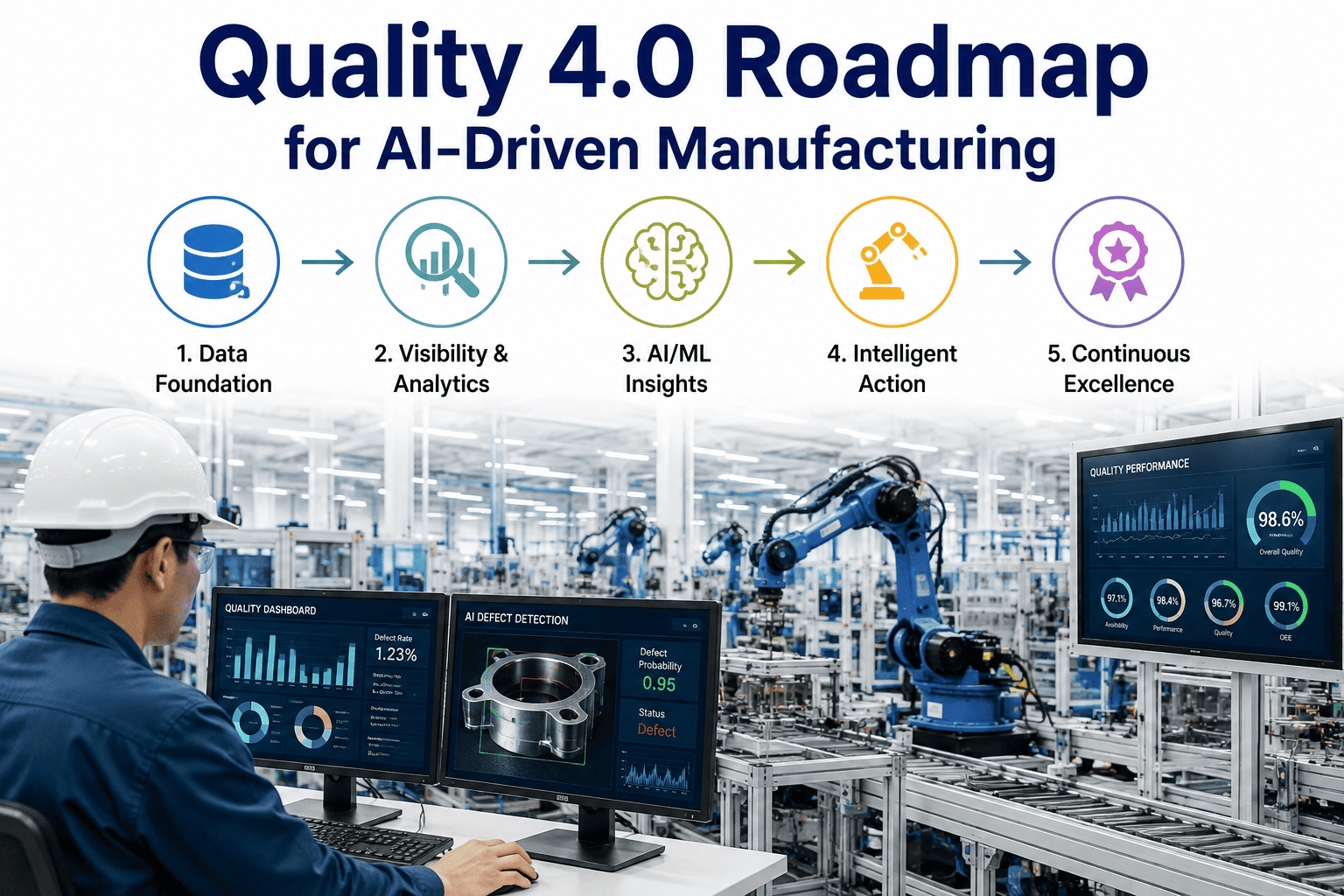
Successful AI implementation requires more than technology—it demands organizational readiness, data infrastructure, and a strategic approach to scaling. The manufacturers who achieve the highest returns follow a structured path from pilot projects to enterprise-wide deployment, building capabilities progressively while delivering value at each stage.
ROADMAP BOXAI Implementation Roadmap for Manufacturing
Build Data Infrastructure
- Deploy IoT sensors on critical equipment
- Establish data collection and storage platform
- Integrate CMMS/MES systems for unified data
- Conduct cybersecurity assessment (68% have done)
Launch High-Impact Use Cases
- Start with predictive maintenance on critical assets
- Deploy AI quality inspection on key production lines
- Establish baseline metrics and ROI tracking
- Build internal AI skills and change management
Expand Enterprise-Wide
- Deploy AI across all production assets
- Integrate supply chain optimization
- Implement generative AI for design/planning
- Build AI Center of Excellence
Start Your AI Factory Transformation
iFactory provides the integrated digital platform that enables AI-driven manufacturing—combining CMMS, MES, IoT connectivity, and analytics in a single solution. Our implementation team helps manufacturers build the data foundation, deploy predictive maintenance and quality AI, and scale to enterprise-wide intelligent operations. Join the manufacturers achieving 50% downtime reduction and 10x ROI.
Frequently Asked Questions
What is an AI-driven factory?
An AI-driven factory integrates artificial intelligence technologies across manufacturing operations to automate decision-making, predict equipment failures, optimize production schedules, and improve quality control. These factories use machine learning algorithms, computer vision, IoT sensors, and predictive analytics to analyze real-time data and make autonomous or semi-autonomous decisions. Unlike traditional automation which follows fixed rules, AI-driven factories learn from data patterns and continuously improve their performance. Key capabilities include predictive maintenance (reducing downtime by 50%), AI-powered quality inspection (achieving 97%+ defect detection accuracy), intelligent production scheduling, and supply chain optimization.
How much does AI save manufacturers?
AI delivers substantial cost savings across manufacturing operations: Predictive maintenance reduces maintenance costs by 10-40% and unplanned downtime by up to 50%; AI-powered quality control achieves 90%+ defect detection accuracy, reducing warranty claims by up to 40%; Supply chain optimization with AI can reduce inventory holding costs by 25% (Amazon example) and cut rush freight fees by 44%; Energy optimization through AI reduces consumption by 20% (Volkswagen example). Overall, McKinsey estimates AI in manufacturing and supply chain could reduce expenses by up to half a trillion dollars. Companies report ROI ranging from 3.7x to 10.3x on AI investments, with many seeing returns within 3-8 months of deployment.
What percentage of manufacturers are using AI in 2025?
AI adoption in manufacturing has reached significant levels: 52% of U.S. manufacturers have adopted AI at some level (US Census Bureau data); 35% of manufacturing firms utilize AI technologies for applications like predictive maintenance and quality control; 63% of manufacturing companies use AI for quality control specifically; 80% of manufacturers are either using or planning to adopt generative AI; 41% leverage AI to manage supply chain data; 29% are deploying AI/ML at facility level; 60% of major U.S. manufacturers use AI for predictive maintenance and production optimization. The global AI in manufacturing market reached $5.94 billion in 2024 and is projected to grow at a 35-46% CAGR, reaching $62-230 billion by 2030-2034.
What are the top AI use cases in manufacturing?
The top AI applications in manufacturing include: (1) Predictive Maintenance—AI analyzes sensor data to predict equipment failures before they occur, reducing downtime by 50% and maintenance costs by 10-40%; (2) Quality Control—Computer vision systems achieve 97%+ defect detection accuracy vs 60-70% for manual inspection, inspecting 100% of products in real-time; (3) Production Planning—AI optimizes scheduling, reduces development cycles by 25%, and improves production efficiency; (4) Supply Chain Optimization—AI enhances demand forecasting accuracy by 50%, reduces inventory costs by 25%, and cuts logistics path optimization by 29%; (5) Energy Management—AI-driven analytics reduce energy consumption by 20% and support sustainability goals; (6) Generative Design—AI creates multiple product designs rapidly, reducing time-to-market by up to 50% and prototype costs by 30-50%.
What is the ROI of AI in manufacturing?
AI investments in manufacturing deliver strong returns: Average ROI for generative AI companies is 3.7x; Top performers report 10.3x returns on initial investment; Predictive maintenance investments achieve up to 300% ROI; BMW reduced defect rates 30% within one year, with 15% increase in customer satisfaction; One global manufacturer saw ROI within 3 months monitoring 10,000+ machines; Samsung achieved significant improvements through early defect identification in semiconductor manufacturing; Shell processes 20 billion data rows weekly from 3 million sensors, generating 15 million predictive insights daily. 97% of senior business leaders investing in AI report positive returns (EY research). Many manufacturers report payback periods of 6-8 months for AI quality inspection systems.
What challenges do manufacturers face implementing AI?
Key challenges for AI implementation in manufacturing include: Skills Gap—Only 16% of manufacturers have met their AI goals despite 89% planning integration; 50% of businesses lack skilled AI professionals; Data Quality—AI models require high-quality, well-labeled training data; legacy systems often have poor data integration; Legacy Systems—67% cite aging equipment as top challenge; integration complexity with existing workflows; Cybersecurity—91% experienced cyber breaches last year; connected systems create new security risks; High Initial Investment—AI requires significant upfront capital, especially challenging for SMEs; Cultural Resistance—Organizational adoption and change management remain significant hurdles; Security Concerns—Nearly half say data protection concerns impact AI adoption decisions. Success requires addressing technology, skills, and organizational change simultaneously.
The Competitive Imperative Is Clear
AI-driven factories don't just operate more efficiently—they compete on fundamentally different terms. While traditional manufacturers react to equipment failures, quality escapes, and supply disruptions, AI-driven factories prevent them. While competitors make decisions based on historical data and human intuition, AI-driven factories optimize in real-time with predictive intelligence. The manufacturers achieving 50% less downtime, 97% defect detection, and 10x ROI aren't using magic—they're using AI strategically.
The market signals are unmistakable: 97% of manufacturers plan AI investment, the market is growing 35-46% annually, and leaders across every industry are scaling AI deployment. The manufacturers who build AI capabilities now will define industry leadership for the next decade. Those who delay risk not just missing opportunities—they risk being unable to compete with AI-driven competitors who operate faster, better, and more efficiently on every dimension that matters.