Every hour your production line runs on manual parameter settings, you are leaving money on the floor. Across temperature drift, speed mismatches, and pressure variance, manufacturers operating without AI process optimization lose an average of 4–8% of total output to avoidable scrap — costs that compound silently across every shift, every line, every quarter. The question is not whether self-tuning AI can outperform your current process control. It already does, at your competitors' facilities, right now.
The Hidden Cost of Static Process Control
Traditional process control relies on fixed recipes — parameter sets defined during commissioning and revisited only when something goes wrong. In practice, this means your lines run on settings calibrated for last quarter's raw material batches, ambient temperatures from a different season, and equipment wear profiles that no longer reflect today's reality. The result is chronic drift: quality that wanders, energy consumed without purpose, and engineers reactive rather than strategic.
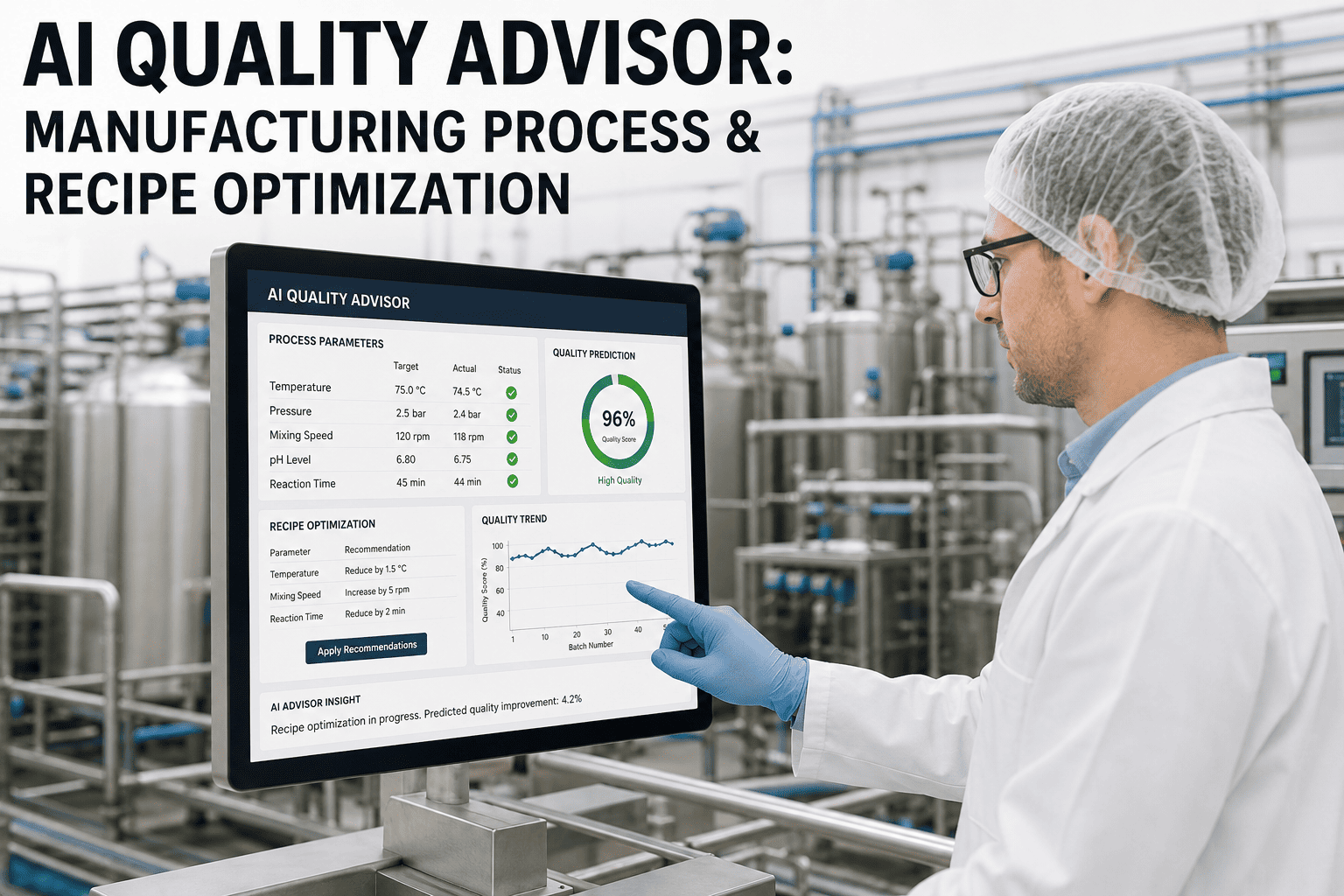
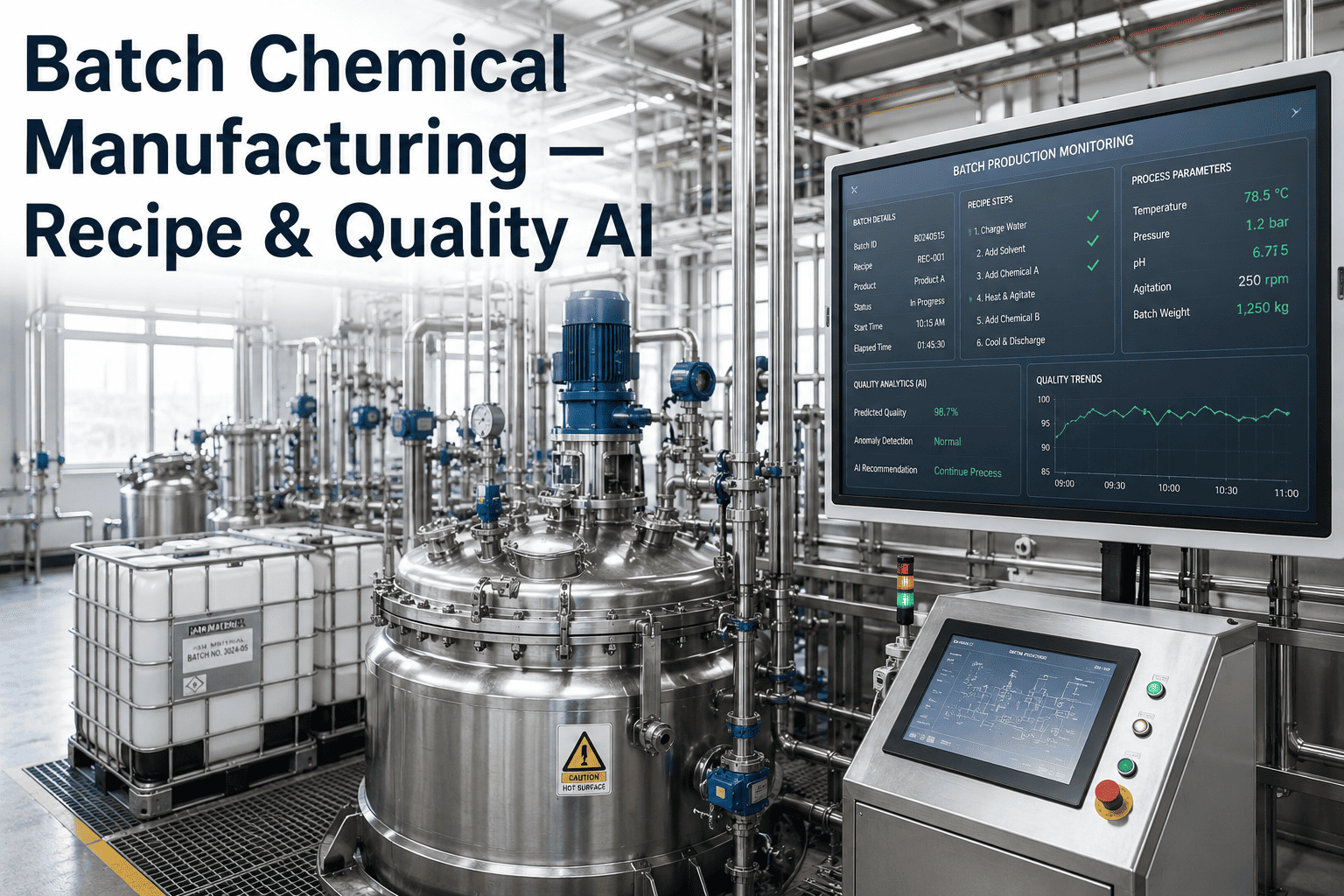
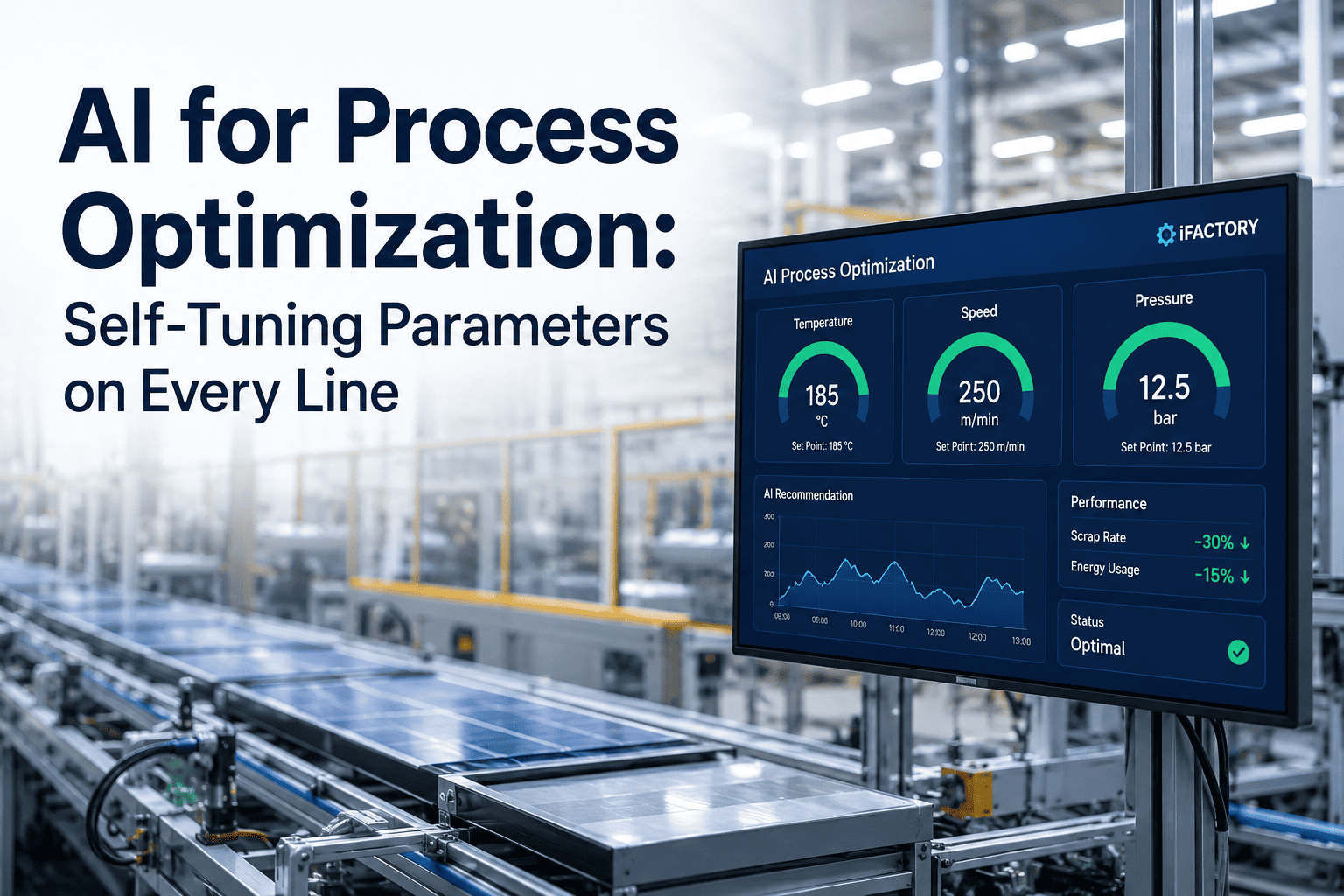
AI process optimization for manufacturing replaces this static model with a continuously learning system. Self-tuning AI models ingest live sensor data — temperature, pressure, speed, torque, humidity — and adjust process parameters in real time to maintain the optimal operating envelope regardless of what changes upstream. This is AI recipe optimization that learns, adapts, and improves with every production cycle.
How Self-Tuning Process AI Works
The iFactory AI Analytics Platform deploys machine learning models trained on your historical process data and validated against your quality outcomes. Once live, the system operates in a continuous closed loop across four stages:
Legacy Friction vs. Optimised Excellence
The operational gap between static process control and AI-driven parameter tuning is structural — and it widens every year as AI-enabled competitors accelerate their learning curves while traditional lines stand still.
| Process Area | Legacy Friction (Old Way) | Optimised Excellence (New Way) |
|---|---|---|
| Parameter Setting | Fixed recipes set at commissioning, updated manually by engineers after quality escapes | AI continuously recalculates optimal setpoints in real time based on live process conditions |
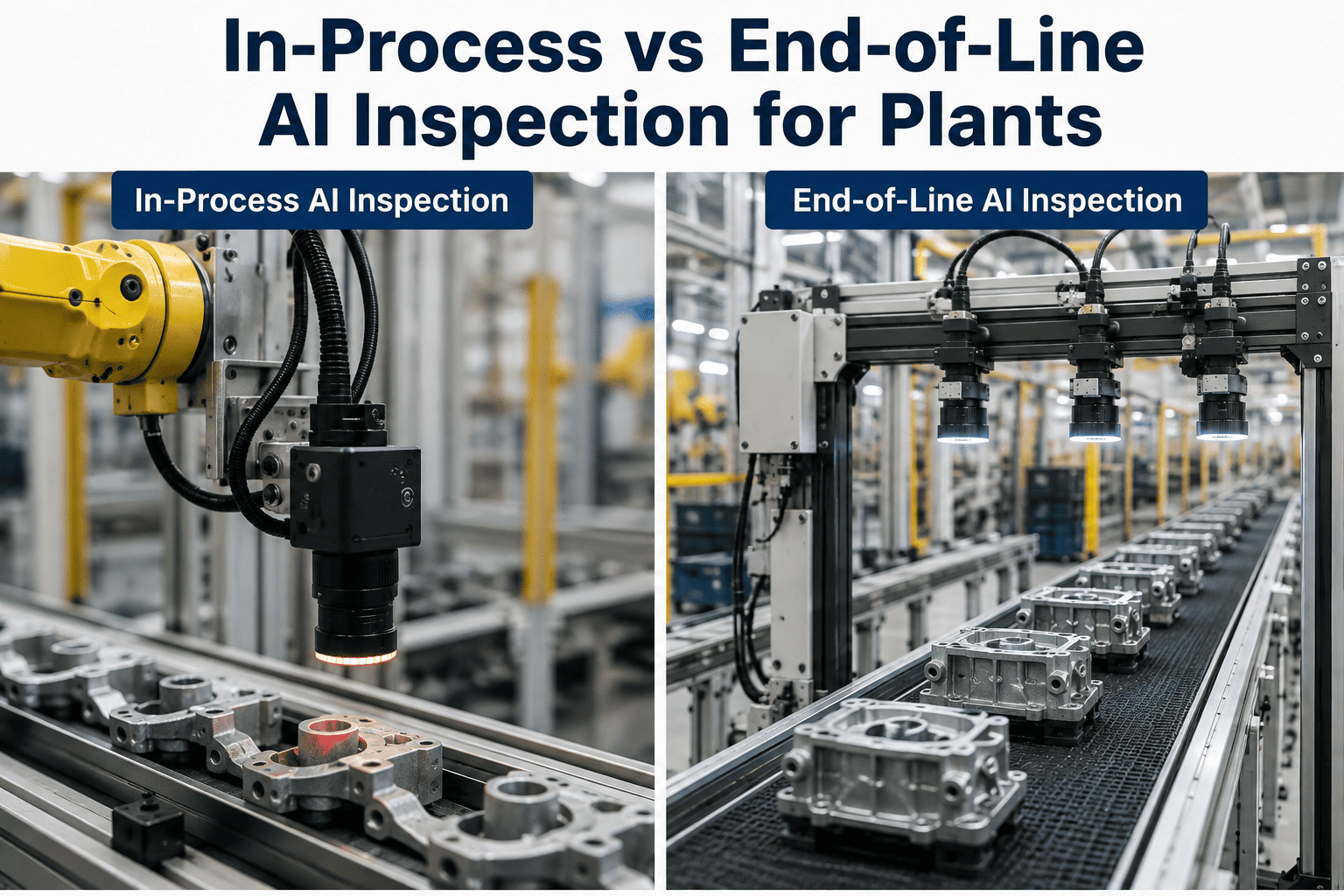
| Defect Response | Detected at end-of-line inspection after product is already scrapped or reworked | Variance corrected mid-process before defect is formed — zero-escape model |
| Energy Management | Equipment runs at nameplate settings regardless of actual load or thermal state | Drive speeds and heating elements modulated to minimum effective energy for output demanded |
| Material Variation | Incoming raw material variance causes quality drift until an engineer notices and intervenes | AI detects material property changes from sensor signatures and adjusts recipe automatically |
| Process Knowledge | Held by experienced operators — lost to retirements, turnover, and shift changes | Encoded in AI models — permanently available, continuously refined, shift-independent |
| Changeover Speed | New product changeover requires manual recipe lookup and operator trial-and-error | AI predicts optimal starting parameters for new configurations, cutting changeover time 25–40% |
Business Impact Across the Production Enterprise
- Eliminates manual parameter review cycles
- Reduces engineer intervention by 60–70%
- Changeover time cut 25–40% per run
- Operators freed for value-added tasks
- Shift handover accuracy improved
- Scrap and rework costs down up to 30%
- Energy consumption reduced 15% per unit
- Raw material waste minimised per cycle
- Quality inspection load decreases
- Warranty and recall risk substantially lower
- OEE improvements of 8–14 percentage points
- Throughput increased without capital spend
- AI knowledge scales to every new line
- New product introduction time reduced
- Competitive differentiation through consistency
Where Self-Tuning AI Delivers the Highest ROI
AI parameter tuning generates the fastest returns in manufacturing environments where process variance is frequent, quality tolerances are tight, or energy costs constitute a significant share of unit cost. The following production contexts consistently produce the strongest business case:
Integration Without Disruption
A common objection to AI process optimization is integration complexity. The iFactory AI Analytics Platform integrates via OPC-UA, MQTT, Modbus, and REST APIs to your existing SCADA, historians, ERP, and MES systems with no requirement to replace existing control infrastructure. The AI layer runs alongside what you have, adding intelligence without removing control from your engineers. Deployment follows a non-disruptive phased model — pilot assets go live in weeks, operating in advisory mode first. Full autonomous AI recipe optimization on pilot assets is typically achieved within 8–12 weeks of first data connection.