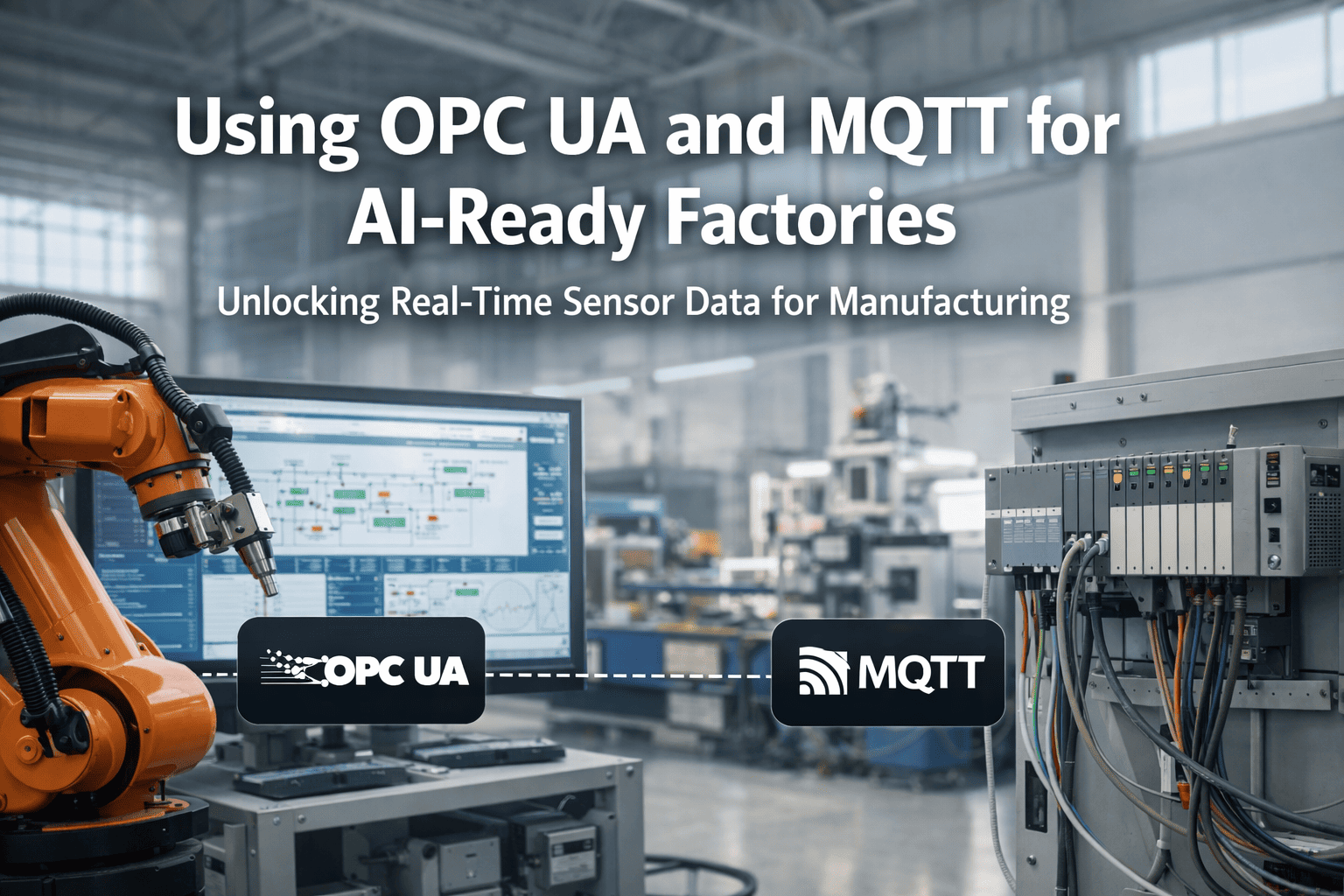
Every hour your plant floor speaks a language your data infrastructure cannot understand, you are haemorrhaging throughput, delaying decisions, and handing competitors a head start they will not return. Choosing the wrong industrial communication protocol is not a neutral decision — it compounds into latency spikes, security audit failures, failed cloud migrations, and production data that arrives too late to act on. OPC UA and MQTT are the two dominant protocols in modern IIoT deployments. Selecting between them — or knowing when to combine them — is a strategic decision that now belongs in the boardroom, not only the control room.
OPC UA vs MQTT: Choosing the Right Protocol for Your Plant Floor
What Is OPC UA — and Where It Dominates
OPC Unified Architecture is a platform-independent communication framework that maps machine data into structured, semantically meaningful objects — not raw tag values. Every data point arrives with engineering units, quality codes, timestamps, and hierarchical relationships. Certificate-based authentication, message signing, and encryption are built into the specification, satisfying IEC 62443 and ISO 27001 natively. OPC UA supports both client-server and publish-subscribe patterns, including OPC UA PubSub over MQTT transport, giving architects flexibility without abandoning a shared information model across vendors.
Ready to audit your current SCADA integration layer? Book a free 30-minute session with an iFactory integration engineer.
What Is MQTT — and Where It Excels
Message Queuing Telemetry Transport uses a lightweight publish-subscribe model brokered through a central server. A full MQTT message header can be as small as 2 bytes, making it ideal for constrained devices, wireless sensors, and cellular connections where bandwidth is metered. A single broker serves thousands of simultaneous publishers and subscribers with sub-millisecond delivery — and AWS IoT Core, Azure IoT Hub, and Google Cloud IoT are all natively MQTT-compatible. The Sparkplug B specification adds birth/death certificates, data type definitions, and state management on top of MQTT, narrowing the semantic gap with OPC UA for factory-floor deployments at scale.
Head-to-Head: OPC UA vs MQTT Protocol Comparison
The table below distills the architectural differences that determine which protocol belongs in your integration stack — with direct downstream consequences for security audits, cloud costs, and long-term maintenance overhead.
| Dimension | Legacy Friction (Wrong Choice) | Optimised Excellence (Right Choice) |
|---|---|---|
| Security Model | MQTT with no TLS: credentials in plaintext, no certificate chain, fails ISO 27001 audit on first review without remediation effort | OPC UA with certificate-based auth and signed messages — passes IEC 62443 without additional security tooling or middleware overhead |
| Payload Semantics | Raw MQTT topic strings with JSON blobs — no engineering units, no quality codes, manual mapping required at every consuming system | OPC UA information model delivers self-describing nodes with type, unit, timestamp, and quality automatically in every single message |
| Bandwidth and Scale | OPC UA client-server polling at scale — connection overhead multiplies with node count, unsuitable for 10,000-plus sensor deployments | MQTT publish-subscribe with Sparkplug B — 2-byte headers, broker-managed fan-out, linear scaling to millions of endpoints globally |
| Cloud Integration | OPC UA over WAN requires VPN tunnels, firewall exceptions, and custom gateway software for every cloud target environment | MQTT natively supported by AWS IoT Core, Azure IoT Hub, and Google Cloud IoT — one broker, zero custom gateway development required |
| Compliance | MQTT-only stacks require custom middleware to generate audit trails and quality codes for FDA 21 CFR Part 11 or GMP regulated environments | OPC UA audit events and historical access nodes generate compliance-ready data trails natively, reducing validation effort by up to 60% |
The Architecture Decision Framework
The Unified Namespace: Why Leading Manufacturers Use Both
The most sophisticated IIoT architectures combine OPC UA and MQTT into a Unified Namespace. OPC UA servers run on PLCs and edge controllers, collecting semantically rich data. An OPC UA-to-MQTT gateway publishes that structured data to a central broker, which fans it out to cloud analytics, digital twin platforms, MES systems, and operator dashboards simultaneously — eliminating point-to-point integration spaghetti and data model translation at every destination system.
iFactory PLC/SCADA Integration: Protocol-Agnostic by Design
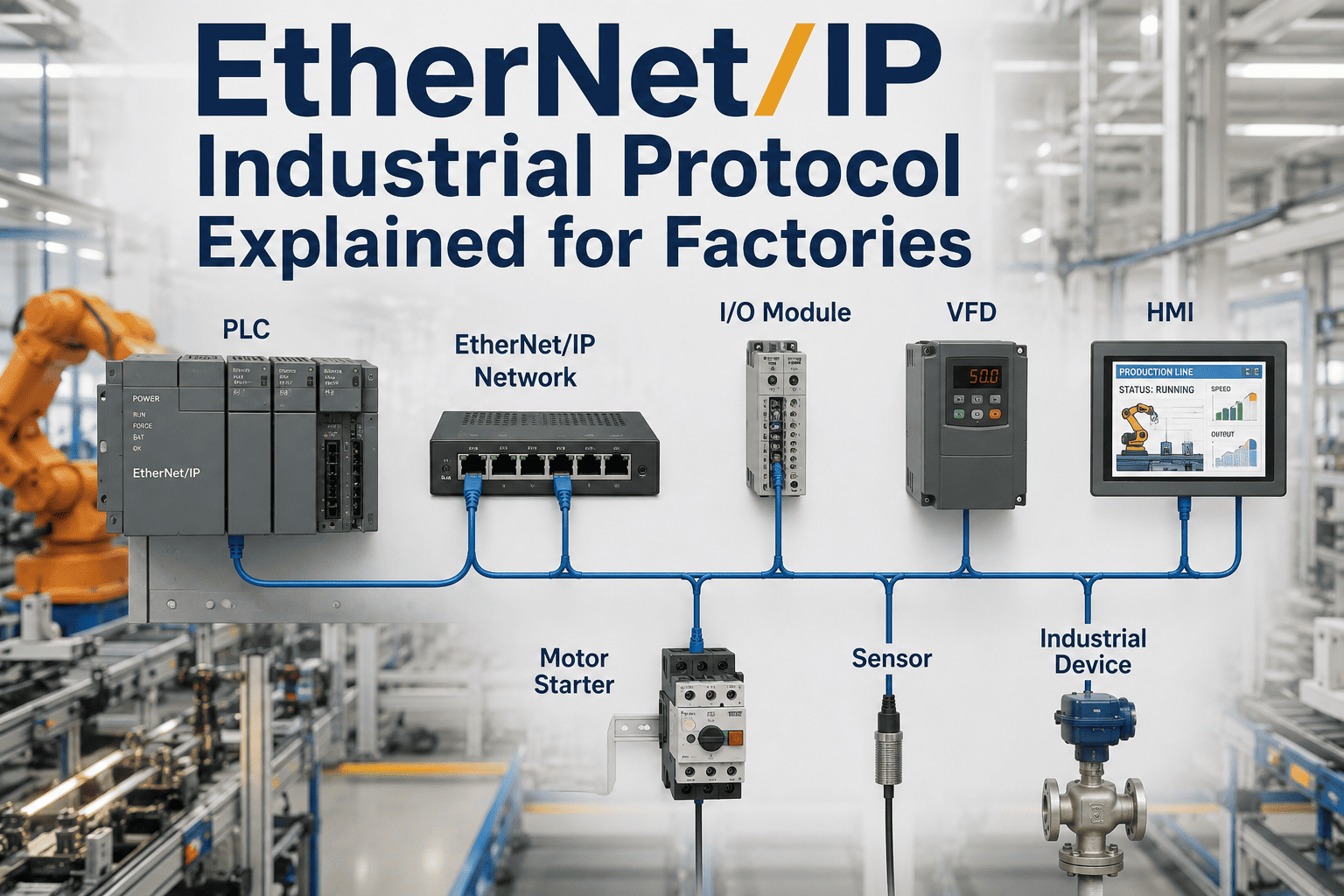
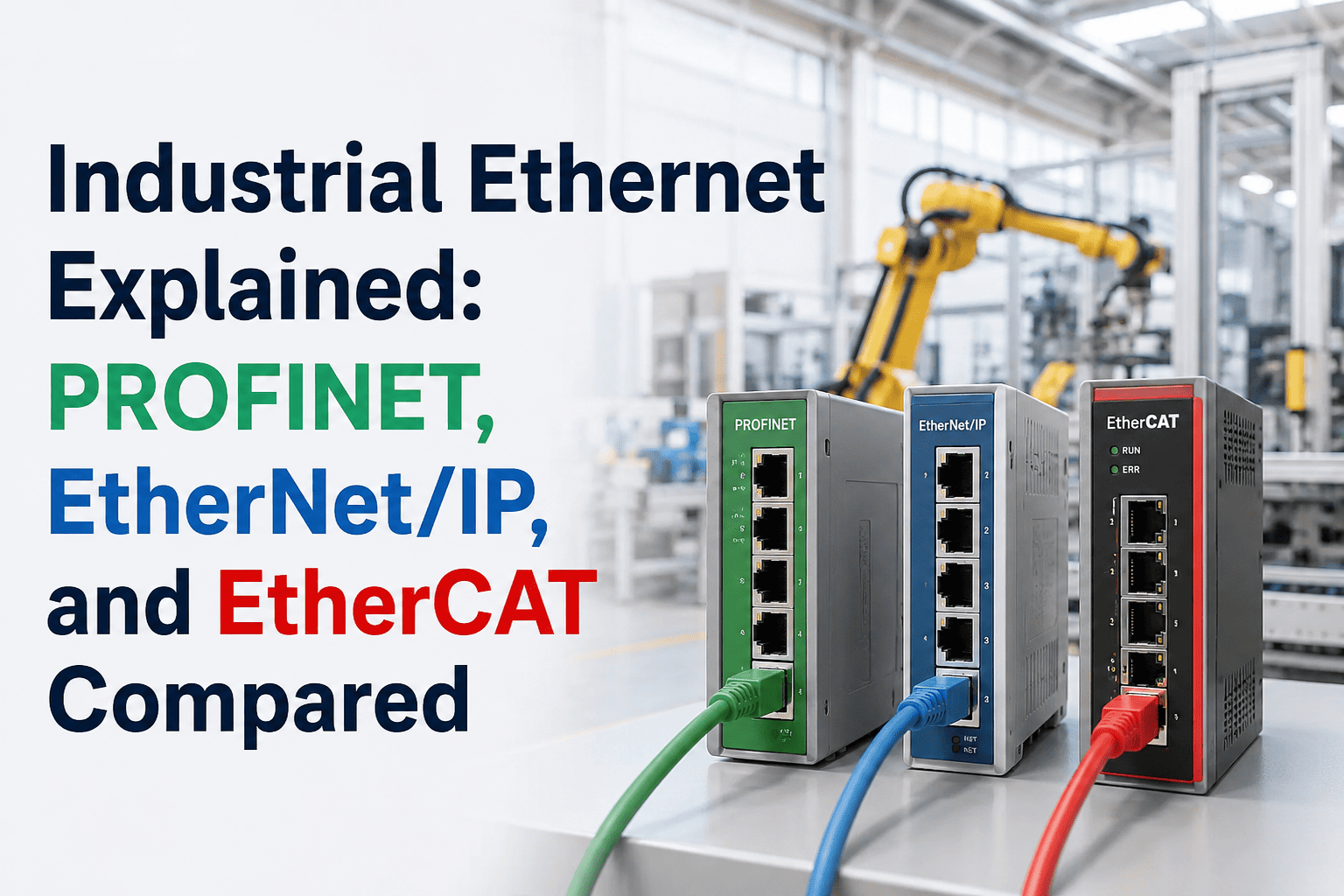
iFactory's integration layer speaks OPC UA, MQTT, MQTT Sparkplug B, Modbus TCP, EtherNet/IP, and PROFINET simultaneously — connecting to your existing infrastructure without protocol lock-in. The platform normalises all incoming data into a unified asset model, feeding real-time dashboards, predictive maintenance engines, and digital twin simulations regardless of source protocol. Whether your floor runs on legacy Modbus RTU or a fully OPC UA-compliant Beckhoff network, iFactory ingests, contextualises, and acts on your data within 48 hours of first deployment with zero disruption to production.