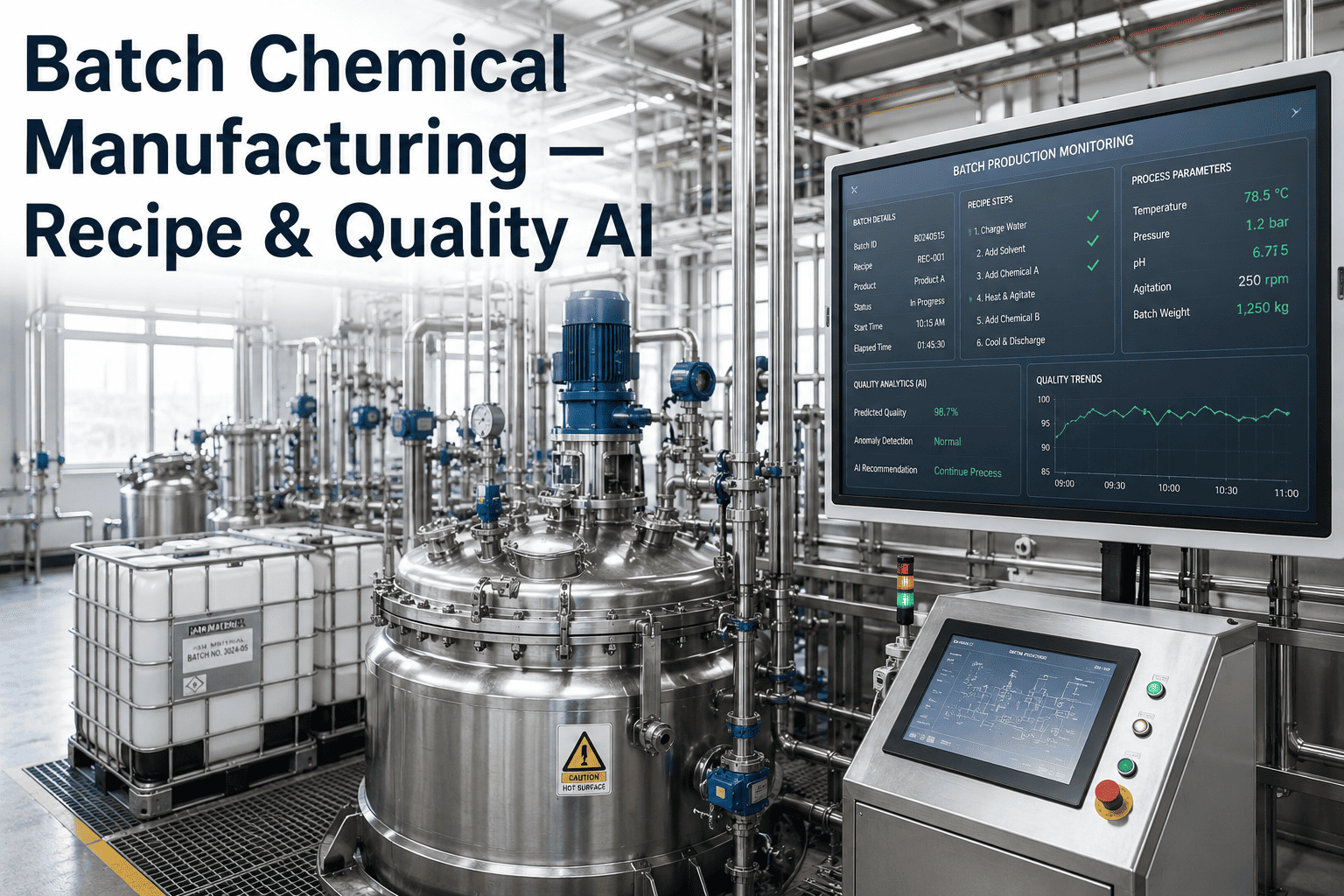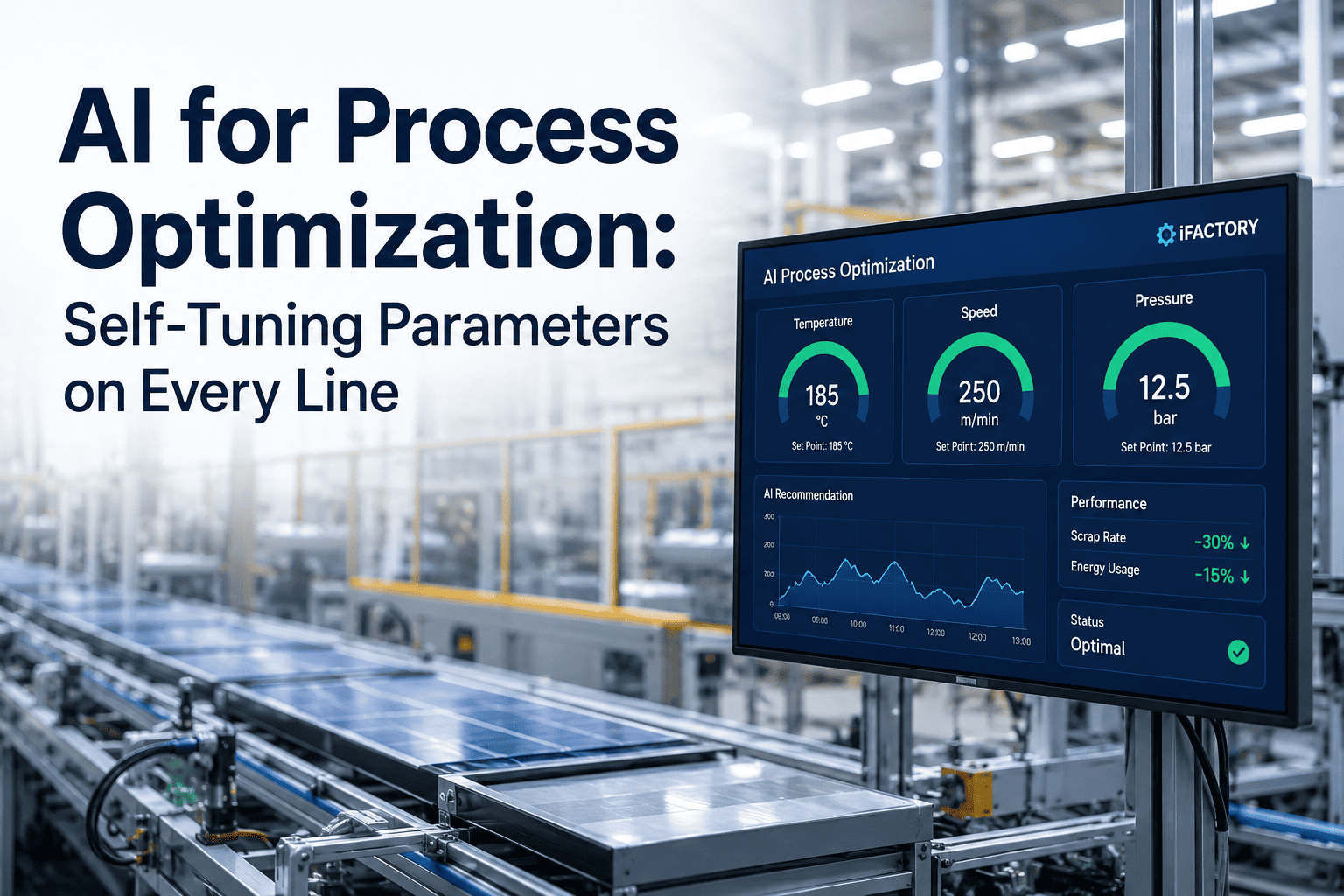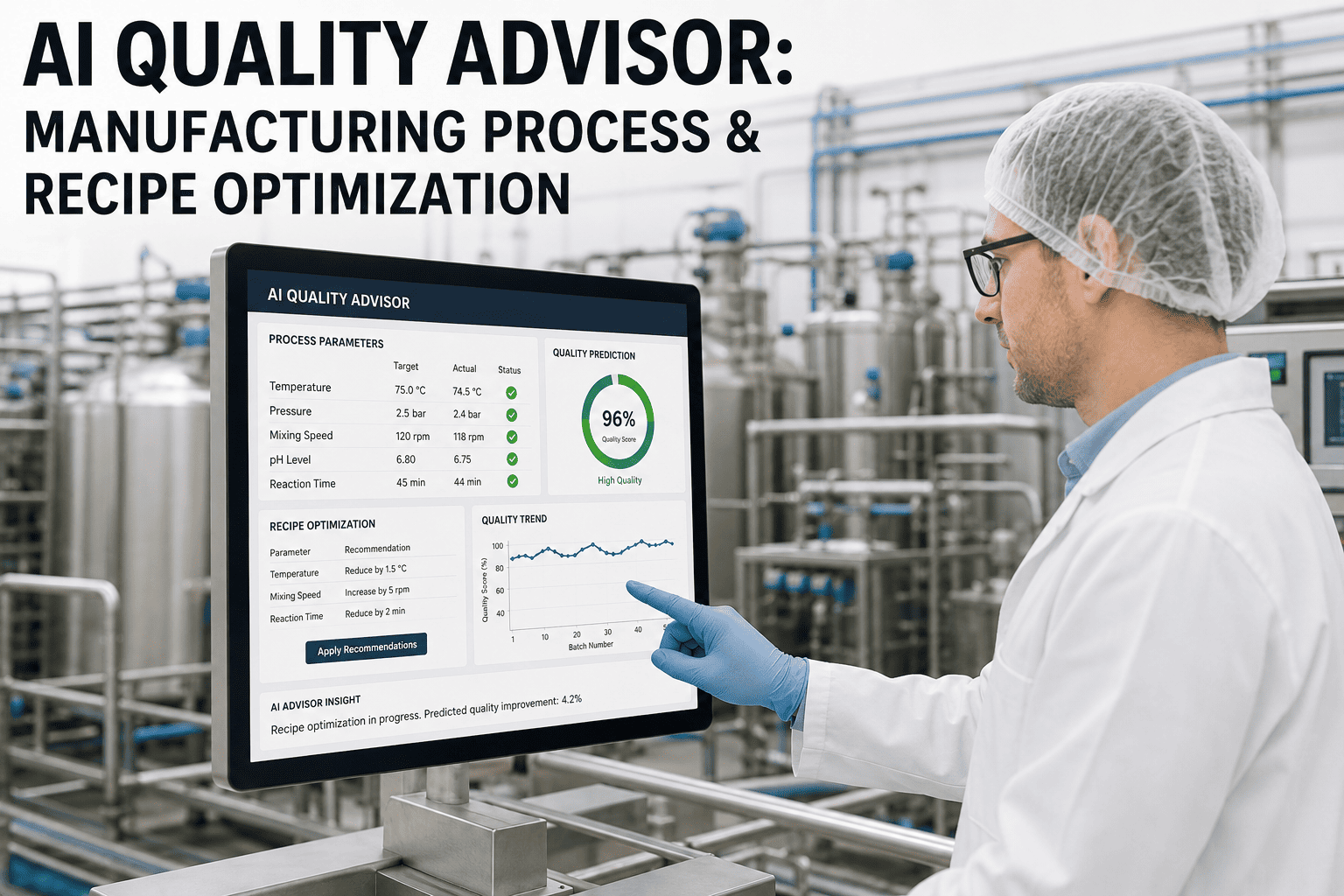
A seasoned process engineer can look at a drifting quality trend and know, from years of accumulated instinct, roughly which parameter to adjust — but that instinct lives in one person's head, doesn't transfer easily to a new hire, and can't watch every recipe on every line simultaneously. An AI quality advisor is built to do what that instinct does, at a scale no single engineer can match: continuously compare live process parameters against historical outcomes, flag the specific adjustment likely to correct a quality drift, and surface that recommendation before a full batch is affected rather than after a customer complaint arrives. This isn't automation replacing the engineer — it's a standing second opinion that gets sharper the more data it sees. If you'd like to see one running against your own process history, book a demo with iFactory.
The Process Instinct Your Best Engineer Has — Available on Every Line
An AI quality advisor watches live parameters against historical outcomes and recommends the specific adjustment before a quality drift becomes a full batch problem.
Why Recipe Adjustment Usually Happens Too Late
Most quality drift correction today follows the same pattern: a batch finishes, quality inspection flags a problem, an engineer investigates, and a recipe change is made for the next run. By the time the correction lands, the affected batch is already scrapped or reworked, and the root cause may have already shifted again. An advisor that watches parameters continuously, rather than reviewing outcomes after the fact, closes that gap.
How the Advisor Reads a Process in Real Time
The advisor's recommendation engine runs continuously against live sensor and quality data, following a consistent cycle from raw parameter to actionable suggestion.
Ingest live parameters
Temperature, pressure, speed, and other process variables streamed continuously from the line's control system.
Compare against the model
Current parameter combination scored against a model trained on historical runs and their resulting quality outcomes.
Predict quality trajectory
The model estimates whether the current parameter path is trending toward an in-spec or out-of-spec outcome.
Recommend an adjustment
If drift is predicted, the advisor surfaces the specific parameter and direction of adjustment most likely to correct it.
See What the Advisor Would Have Caught Last Month
iFactory can run this model against your recent process history to show what quality drift it would have flagged before it happened.
Advisory, Not Autonomous — By Design
An AI quality advisor is deliberately built to recommend rather than act unilaterally on most process changes, keeping an experienced engineer in the decision loop while still catching drift far earlier than a manual review cycle would.
Recommend and confirm
The default mode for most parameters — the advisor surfaces a suggested change and the engineer approves it before it's applied to the live process.
Alert only
For parameters where the plant prefers a human-first review, the advisor flags the drift and trend without proposing a specific numeric adjustment.
Auto-adjust within bounds
For well-validated, low-risk parameters with tight tolerances, some plants enable automatic micro-adjustments within pre-approved safe limits only.
Where Recipe Advisory Pays Off Fastest
Certain process types see the clearest, fastest value from a quality advisor, largely because they involve enough parameter interaction that instinct alone struggles to keep up.
Multi-variable thermal processes
Curing, molding, and heat-treat operations where temperature, time, and pressure interact in ways too complex for a simple lookup table to capture reliably.
Material-lot-sensitive processes
Operations where incoming raw material variation requires small recipe compensations that a static, one-size-fits-all recipe cannot account for.
High-mix production with frequent changeovers
Lines running many product variants, where an advisor's model-based recommendation compensates for less changeover-specific tuning time available per SKU.
Frequently Asked Questions
Does an AI quality advisor replace the need for an experienced process engineer?
No — the advisor is designed to extend an engineer's reach across more lines and more parameters than they could watch manually, not to replace their judgment. The recommendation engine surfaces a suggested adjustment based on historical pattern matching, but the engineer retains the context about upcoming schedule changes, known equipment quirks, and customer-specific requirements that the model doesn't have visibility into, which is exactly why most plants run in a recommend-and-confirm mode rather than full automation.
How much historical data does the advisor need before its recommendations become reliable?
This varies by process complexity, but most plants see the model's recommendations become genuinely useful after several months of process data covering a reasonable range of normal operating variation, including both in-spec and out-of-spec outcomes. A process with very stable, narrow historical variation actually needs more calibration time than one with naturally wider variation, since the model needs to see enough range in the data to learn which parameter combinations actually drive quality outcomes.
What happens if the advisor's recommendation turns out to be wrong?
Because most deployments run in recommend-and-confirm mode, an incorrect recommendation is caught by the reviewing engineer before it's applied, and that outcome feeds back into refining the model rather than causing a live process disruption. Over time, tracking how often recommendations are accepted versus overridden is itself a useful quality signal that helps calibrate how much autonomy to grant the advisor on a given parameter.
Can the advisor work across multiple product lines with different recipes simultaneously?
Yes, the advisor typically maintains separate models per product or recipe family, since the parameter-to-quality relationship differs meaningfully between products even on the same equipment. This is actually one of the strongest arguments for an AI-based approach over a static rule set, since maintaining accurate manual rules across dozens of product variants becomes impractical well before an AI model reaches the same scaling limit.
How do we get started evaluating this for our own process?
The most informative starting point is usually running the model retrospectively against a few months of your existing process and quality history to see what it would have flagged, before any live deployment decision is made. Book a demo to scope that retrospective analysis against your specific process data.
Give Every Line the Instinct of Your Best Engineer
Book a 30-minute demo and see how iFactory's quality advisor reads live process data and recommends recipe adjustments before quality drifts out of spec.