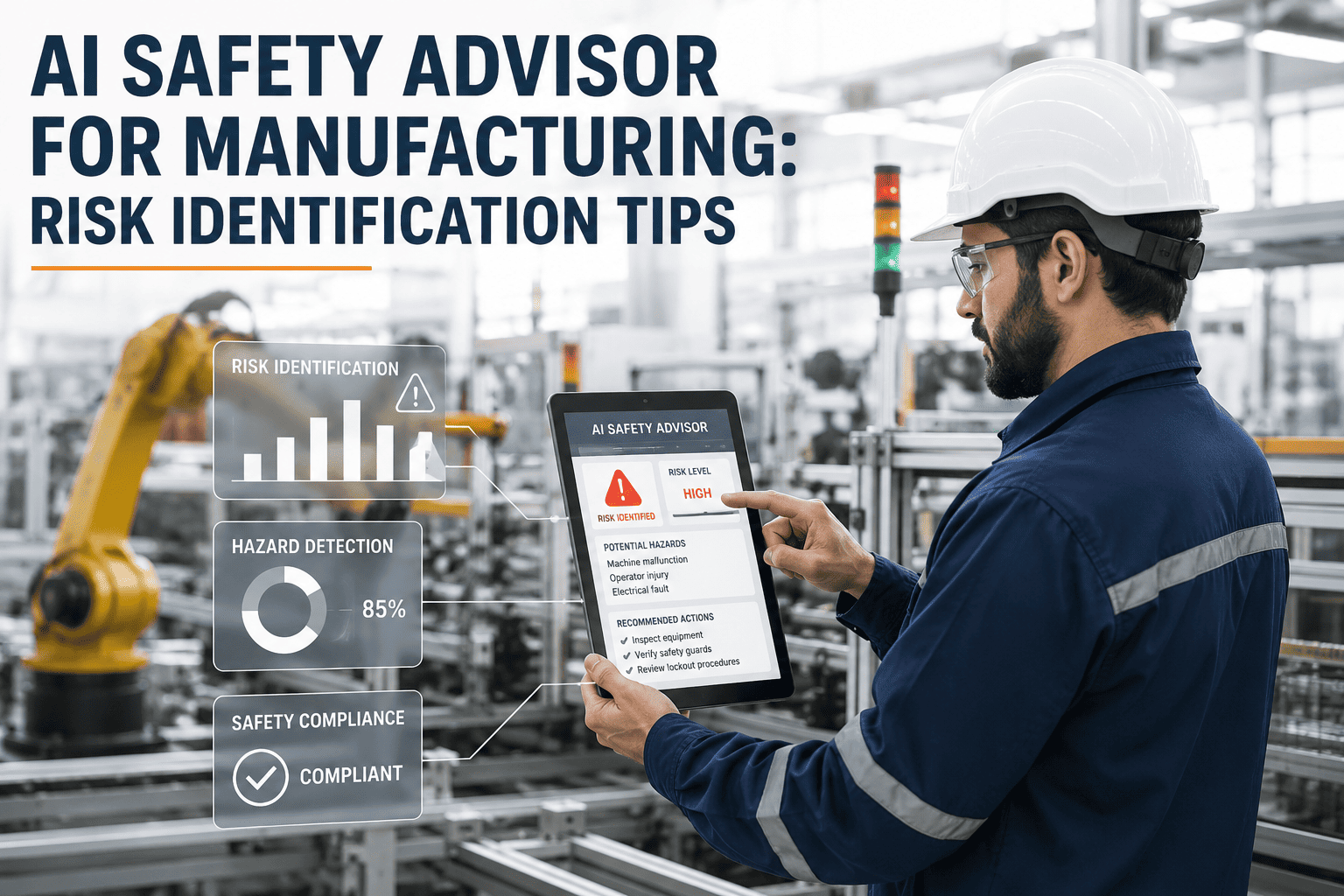
Most plant safety programs are built to respond well after an incident happens — investigate, document, correct, repeat. What almost no plant does consistently is look across near-misses, equipment alarms, and minor incident reports together, at the pattern level, to catch the warning signs that precede a serious event. Those warning signs are almost always there in the data before something happens: a specific machine throwing more faults than usual, a particular shift logging more near-misses on the same task, an alarm pattern that historically preceded a more serious incident. An AI safety advisor's job is to surface those patterns before they become statistics, giving safety teams a genuine early-warning capability rather than a purely retrospective one. If you'd like to see what pattern analysis surfaces in your own incident and alarm history, book a demo with iFactory.
The Warning Signs Are Already in Your Data
An AI safety advisor connects near-misses, equipment alarms, and incident patterns to flag emerging risk before it becomes a recordable event.
The Safety Pyramid Most Plants Only See From the Top
Safety science has long recognized that serious incidents sit atop a much larger base of near-misses and minor events sharing the same root causes. Most plant reporting systems capture the top of that pyramid reliably and the base inconsistently — which is exactly where the earliest warning signal lives.
Rare, well documented, always investigated — but the latest possible point to catch a pattern
More frequent, usually logged, often reviewed individually rather than pattern-matched
Frequent, inconsistently reported, and the richest source of early pattern signal when captured
Very frequent, rarely connected to safety outcomes despite often preceding them directly
Three Data Sources, Correlated Together
The advisor's value comes specifically from connecting data sources that usually sit in separate systems, reviewed by separate teams, on separate schedules.
Incident and near-miss reports
Text and structured data from safety reporting systems, including location, task, shift, and contributing factors.
Equipment alarm history
Machine fault and alarm logs, correlated by time and location against incident and near-miss reports.
Schedule and staffing context
Shift patterns, overtime hours, and task assignment data that often correlates with elevated incident risk.
See What Patterns Exist in Your Own Safety Data
iFactory can run a retrospective pattern analysis against your existing incident and alarm history to show what an advisor would have flagged.
Example Patterns an Advisor Is Built to Catch
These are the kinds of correlations that are individually easy to overlook, but consistently show up once historical incident and operational data are analyzed together at scale.
From Flagged Pattern to Safety Action
A flagged pattern only has value if it reaches the right person with enough context to act on it quickly, rather than sitting in a dashboard nobody checks.
Pattern detected
The advisor identifies a statistically meaningful correlation across incident, alarm, or staffing data crossing a defined risk threshold.
Alert routed to safety lead
The specific pattern, affected area, and contributing data points are surfaced to the responsible safety manager, not a generic broadcast.
Targeted intervention
A focused response — equipment inspection, task observation, or a shift-specific safety talk — addresses the identified risk directly.
Outcome tracked
Whether the intervention reduced the flagged pattern feeds back into the model, refining future pattern detection accuracy.
Frequently Asked Questions
Does an AI safety advisor replace formal incident investigation?
No — formal incident investigation remains the process for understanding and documenting what happened after a specific event, and that process doesn't change. The advisor operates upstream of investigation, at the pattern level across many events and data sources, to flag emerging risk before an investigatable incident occurs, functioning as an early-warning layer rather than a replacement for existing safety processes and compliance requirements.
How does the system handle near-miss data that's inconsistently reported today?
Inconsistent near-miss reporting is a genuine limitation on pattern accuracy, since the advisor can only analyze the data it has access to. Many plants pair an AI safety advisor rollout with a parallel push to improve near-miss reporting consistency, since better input data directly improves the quality of pattern detection — the two initiatives reinforce each other rather than competing for attention.
Can this correlate data across different plant systems that weren't designed to talk to each other?
Yes, this is one of the core capabilities the advisor provides — connecting safety reporting systems, equipment alarm historians, and workforce scheduling data that typically live in separate platforms with no existing integration. The integration approach pulls from each system's existing export or API capability rather than requiring any of them to be replaced.
Will flagging shift or staffing patterns create friction with workforce or union relationships?
This is a legitimate consideration, and the framing matters significantly — the advisor is designed to surface patterns pointing toward systemic risk factors like fatigue or equipment reliability, not to attribute blame to individual workers. Plants that deploy this successfully typically involve safety committees and workforce representatives early in defining how flagged patterns get used, which helps ensure the tool is understood as a protective measure rather than a surveillance one.
What's the best way to evaluate this before committing to a full deployment?
A retrospective analysis against several months to a year of existing incident, near-miss, and alarm history is the most informative starting point, since it shows concretely what patterns the model would have flagged without requiring any live process changes first. Book a demo to scope that retrospective review against your own plant's safety data.
Catch the Pattern Before It Becomes a Statistic
Book a 30-minute demo and see how iFactory correlates incident, alarm, and staffing data to surface emerging safety risk early.