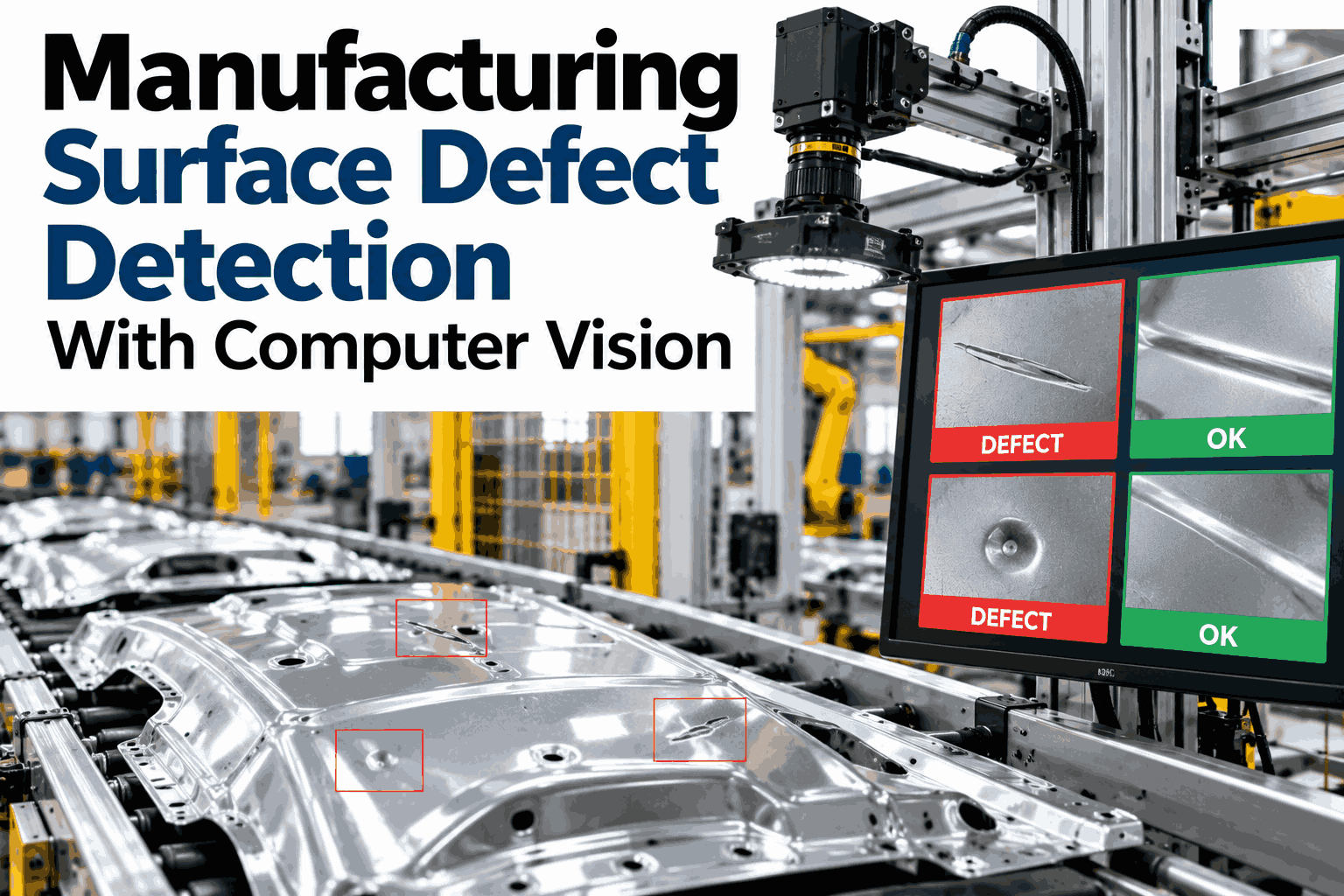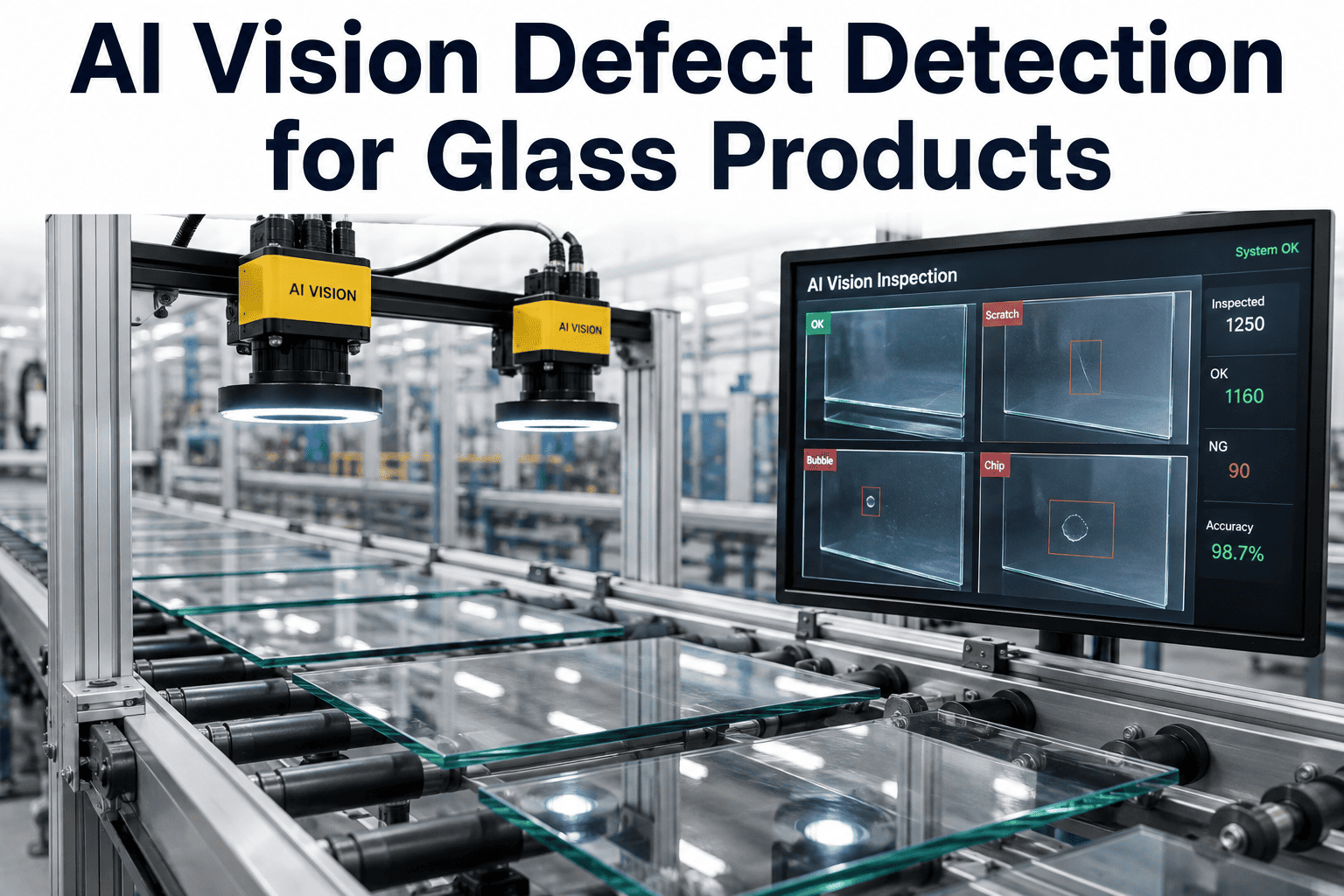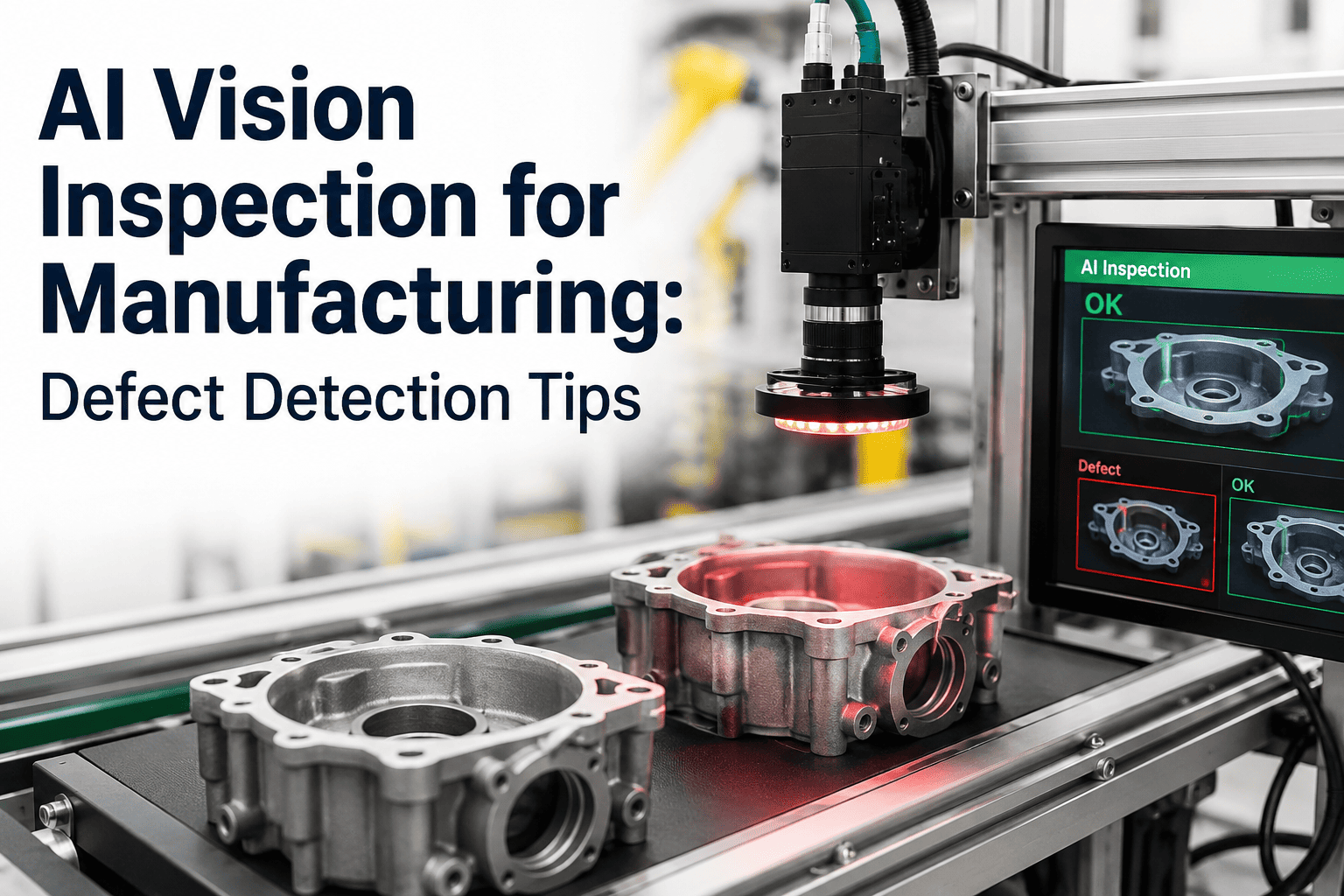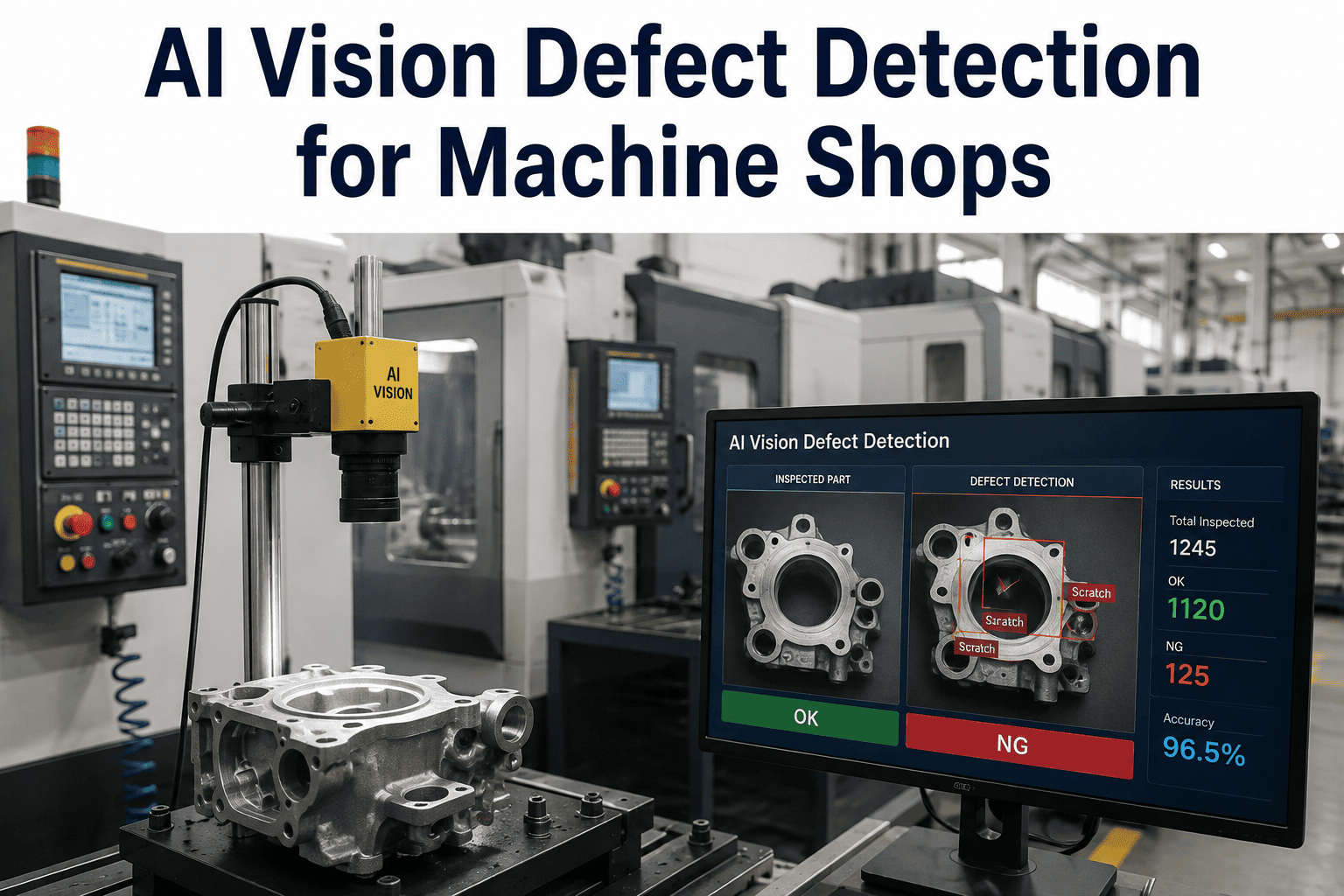
Manual visual inspection on a packaging or assembly line depends on fatigue-prone eyes catching a scratch, a missing component, or a misaligned label in under a second, shift after shift. As production speeds climb and tolerances tighten, that single human checkpoint becomes the weakest link between a good part and a customer complaint. Manufacturers running multiple SKUs with varying defect signatures find that inspector accuracy drifts across a long shift, and rework costs climb quietly in the background. AI vision defect detection closes that gap by watching every unit at line speed and flagging deviations a tired eye would miss. Teams planning a rollout can map their inspection points with the iFactory AI team before choosing cameras or lighting.
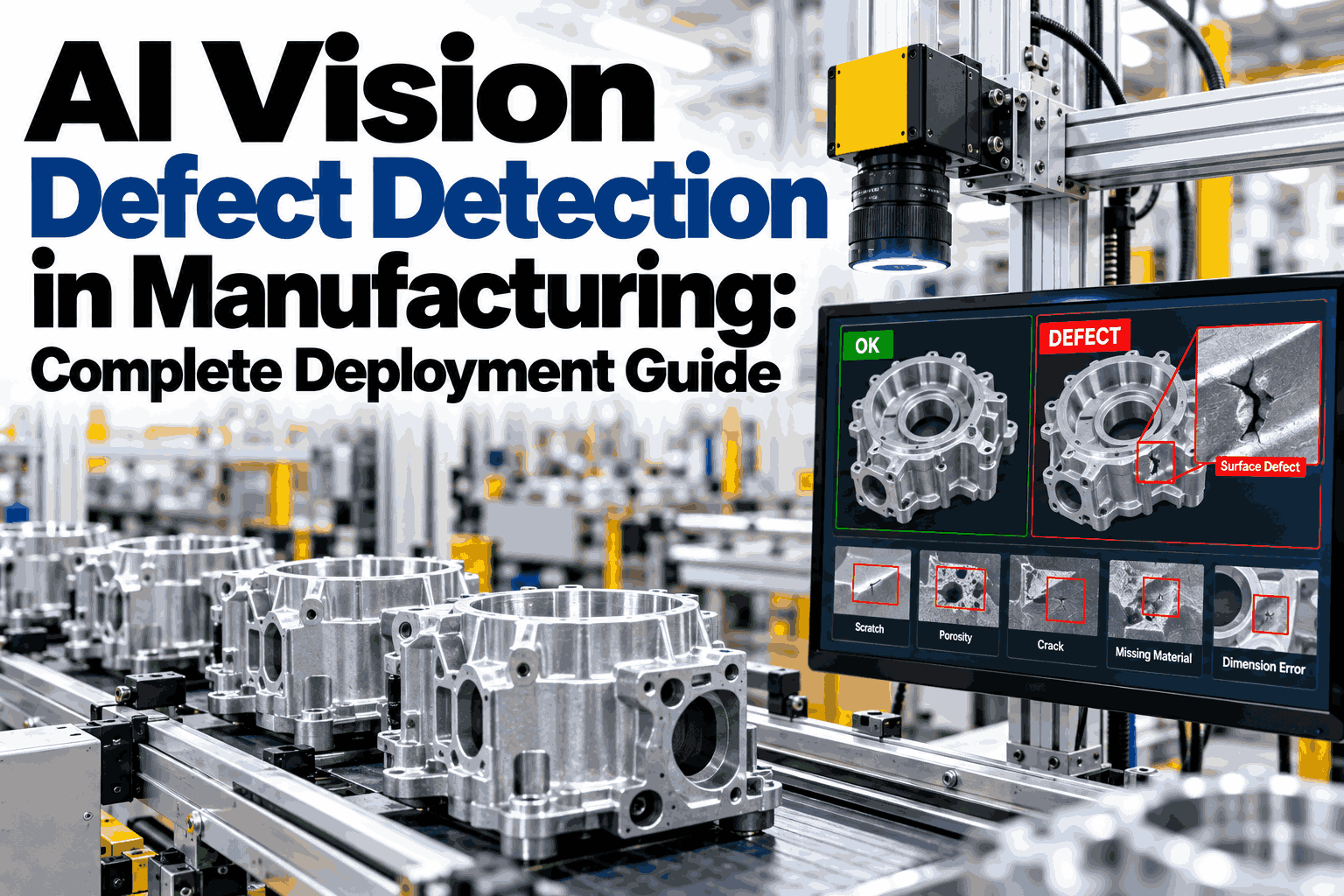
AI Vision Defect Detection in Manufacturing: Complete Deployment Guide
iFactory AI pairs industrial cameras with trained vision models to catch surface, dimensional, and assembly defects at full line speed, with every reject tied to an auditable record.
Why Manual Inspection Breaks Down at Scale
A trained inspector is genuinely good at catching defects for the first hour of a shift. The problem is the next seven hours, and the next line that runs a different product with a different defect profile.
Fatigue Changes the Threshold
Detection accuracy for repetitive visual tasks drops measurably after extended focus, so the same defect gets caught in the morning and missed by evening on the same line.
Sampling Leaves Gaps
When every unit cannot be checked by hand, plants fall back to spot checks, and a defect that appears between samples ships before anyone sees it.
Standards Drift Between Shifts
Two inspectors rarely apply an identical threshold for what counts as a reject, so the same part can pass on one shift and fail on another.
A camera does not get tired, does not change its threshold at 3am, and applies the same rule to the one-millionth unit as the first.
Defect Categories Vision Systems Are Trained to Catch
Different industries chase different defects, and a deployment plan should start by naming exactly which ones matter on each line before any camera is mounted.
| Defect Type | Typical Industry | Detection Approach | Line Impact |
|---|---|---|---|
| Surface Scratches and Dents | Automotive, appliances | High-resolution surface imaging | Cosmetic reject before final pack |
| Missing or Misaligned Components | Electronics assembly | Reference-image comparison | Line stop before downstream work is wasted |
| Dimensional Variance | Machined parts, molding | Edge detection and measurement | Early signal of tooling wear |
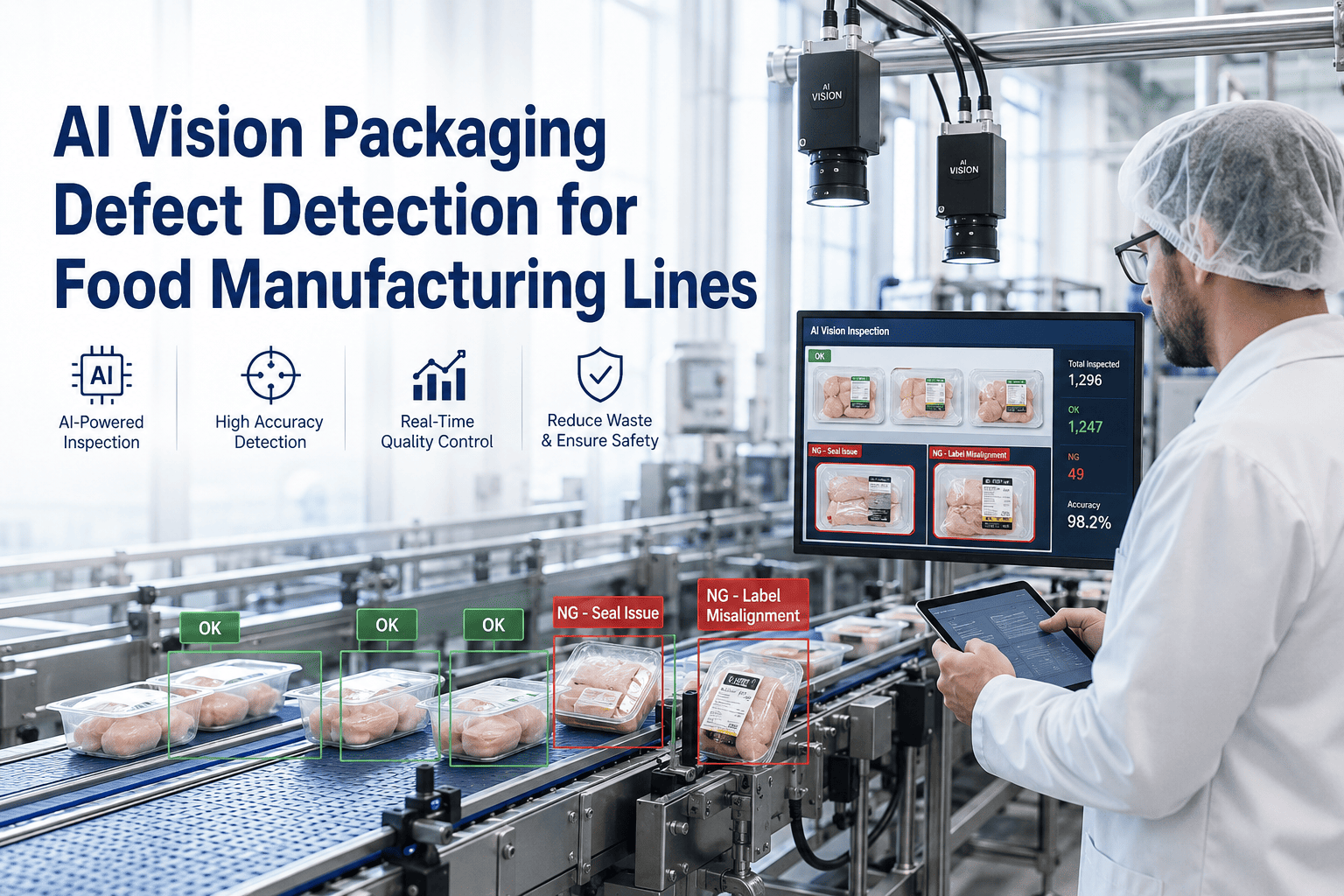
| Label and Print Defects | Food, pharma, CPG | Optical character verification | Prevents compliance and recall risk |
| Fill Level and Seal Integrity | Food and beverage | Contour and level analysis | Stops leakers before casing |
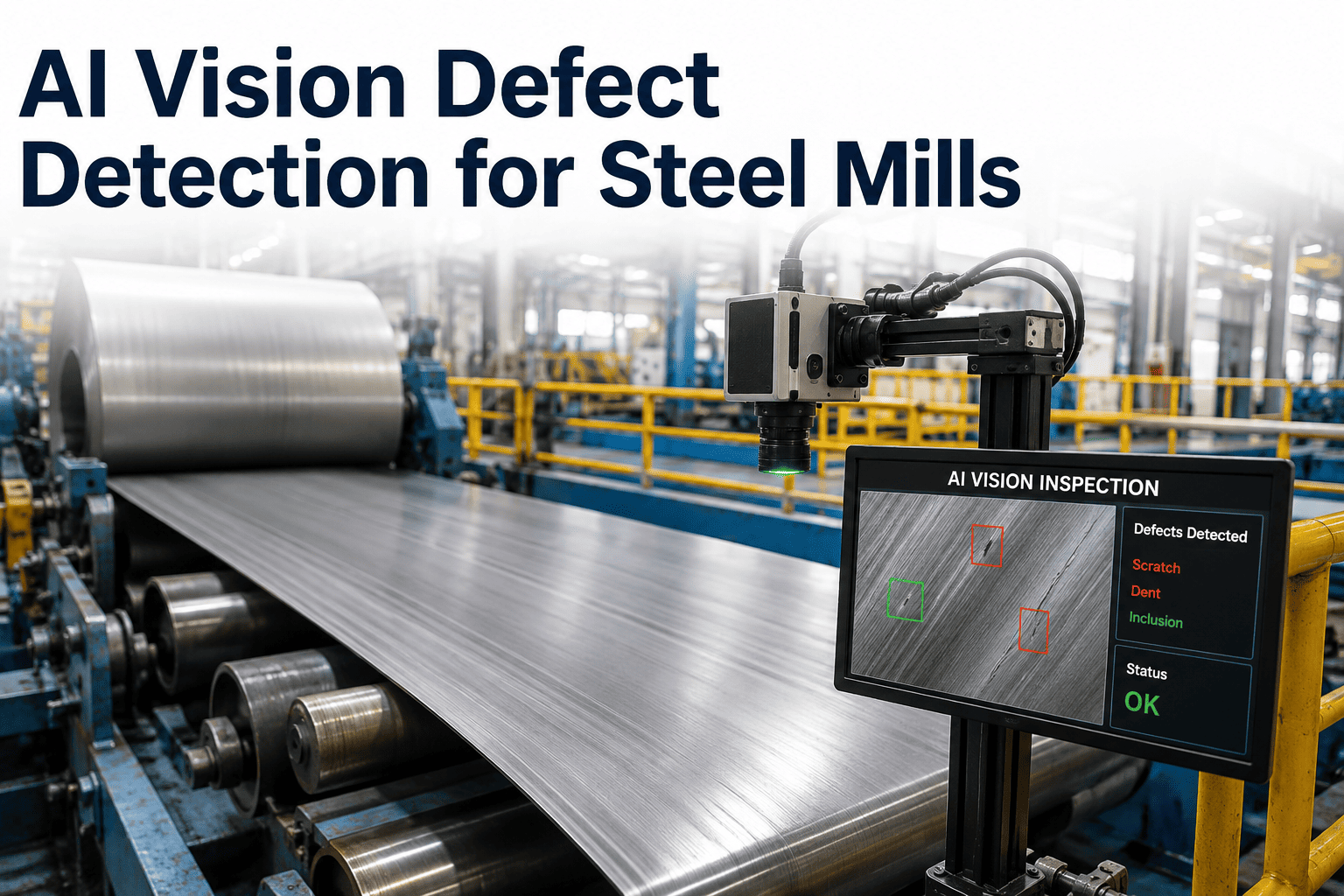
| Weld and Joint Quality | Metal fabrication | Thermal and surface pattern analysis | Flags structural risk pre-shipment |
The right camera, lens, and lighting combination depends on the defect, the material, and the line speed, which is why a site walkthrough comes before any hardware order.
The Deployment Path From Pilot to Full Line Coverage
A vision system earns trust in stages. Rushing straight to full automatic rejection on day one is the most common reason a pilot gets shelved.
Define the Defect Library
Quality and production agree on which defects matter, what severity each one carries, and which ones can wait for a later phase.
Capture and Label Images
Good and defective units are photographed under production lighting, then labeled so the model learns the real variation on the floor.
Run in Shadow Mode
The model scores every unit alongside the existing process without making line decisions, so accuracy can be measured against real outcomes.
Tune the Decision Threshold
False rejects and missed defects are reviewed together, and the threshold is adjusted until both sit inside an agreed tolerance.
Automate the Reject Action
The system moves from flagging to acting, routing a failed unit to a reject lane or holding the line, with every decision logged.
Expand to the Next Line
A proven configuration moves to the next product or line, reusing the defect library and retraining only where the product differs.
Skipping shadow mode is the fastest way to lose operator trust, because the first false reject on a live line gets remembered longer than a hundred correct catches.
Watch a Vision Model Score Your Own Parts
Book a 30-minute session and bring sample images from your line. iFactory AI will show how the defect library and threshold tuning work before any hardware is ordered.
Manual Inspection vs AI Vision Inspection
The comparison is rarely about replacing people. It is about giving inspectors a consistent first pass so their judgment goes toward the cases that actually need it.
Manual Inspection
AI Vision Inspection
The strongest programs keep a trained inspector in the loop to review flagged units and retrain the model as new defect patterns appear.
Hardware and Environment Checklist Before Go-Live
Most accuracy problems trace back to the physical setup rather than the model. These checkpoints catch the common ones early.
Lighting Consistency
Ambient light from windows or overhead fixtures shifts through the day. Controlled lighting keeps every image comparable.
Camera Placement
Angle and distance are fixed and documented per line, so a camera bumped during maintenance is caught before it skews results.
Edge Compute Capacity
Processing at line speed without lag means edge hardware is sized to the frame rate and resolution the line actually runs.
A Composite Scenario: Three Lines, One Reject Rate Problem
An electronics assembler ran three lines with inspectors sampling one in five units. The figures below are an illustrative composite, shown as a relative index with the starting point set at 100.
Moving from one-in-five sampling to full coverage did not just catch more defects, it shortened every downstream investigation because each reject carried an image and a timestamp.
What iFactory AI Adds to Vision Inspection
iFactory AI is smart manufacturing and industrial software that connects vision inspection to the rest of the plant, so a reject is never an isolated event.
iFactory AI arrives pre-configured on an NVIDIA server that ships racked and ready with software pre-loaded. Rack it, connect power and Ethernet, and camera feeds start scoring. Scope covers cabling, network, ERP and MES integration, team training, and 24x7 remote monitoring.
Deployment Self-Check
Use these checks to see how ready a line is for a vision inspection pilot before hardware gets ordered.
Each unchecked box is a place where a pilot is likely to stall before it reaches full line coverage.
Frequently Asked Questions
How many sample images are needed before a model is usable?
It depends on the defect and how much normal variation the product has, but most pilots start with a few hundred labeled examples per defect type. The library grows as shadow mode runs, and accuracy improves with every reviewed case. Ask how image capture is scoped for your line.
Does vision inspection replace quality inspectors?
No. It removes the repetitive first pass so inspectors spend their time reviewing flagged units, investigating trends, and refining the defect library, which is where human judgment adds the most value. See how the review workflow fits your quality team.
What happens when a new product variant is introduced?
New variants usually need a smaller capture and labeling pass rather than a full rebuild, since much of the existing defect library still applies. The gap is reviewed before the variant goes live on the line. Talk through variant onboarding with the team.
Can one deployment cover multiple lines and products?
Yes. A proven camera and lighting configuration, along with the deployment process, carries over to the next line, with retraining focused only on the product differences rather than starting from zero.
How long until a pilot reaches full automatic rejection?
Most pilots move from image capture to a tuned, automated reject path within the 6 to 12 week turnkey window, though shadow mode duration depends on how much natural variation the product shows. Plan a pilot timeline for your own lines.
Put a Vision Model on Your Toughest Defect
iFactory AI builds the defect library, proves accuracy in shadow mode, and connects every reject to a searchable record. Book a walkthrough using your own sample images.