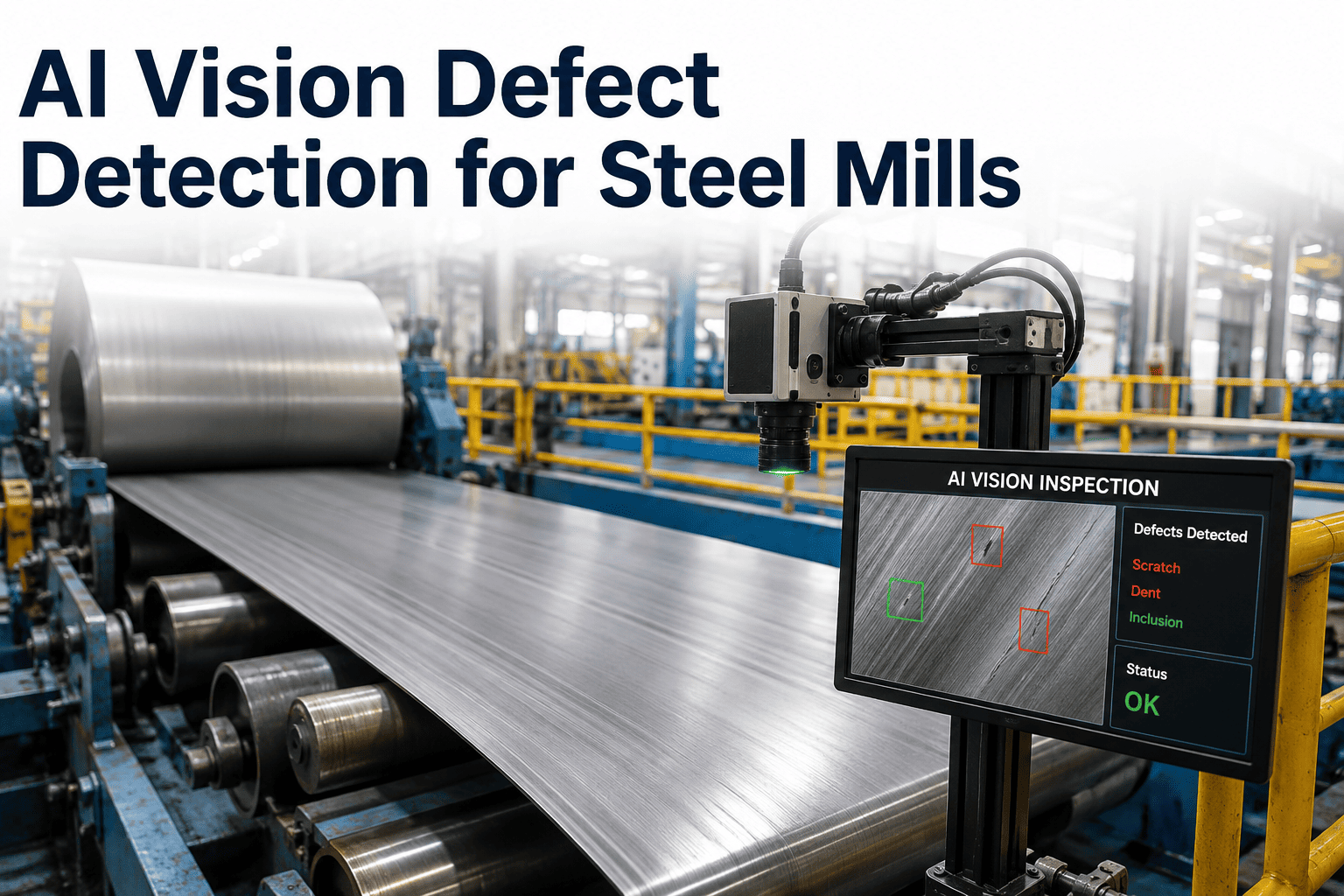
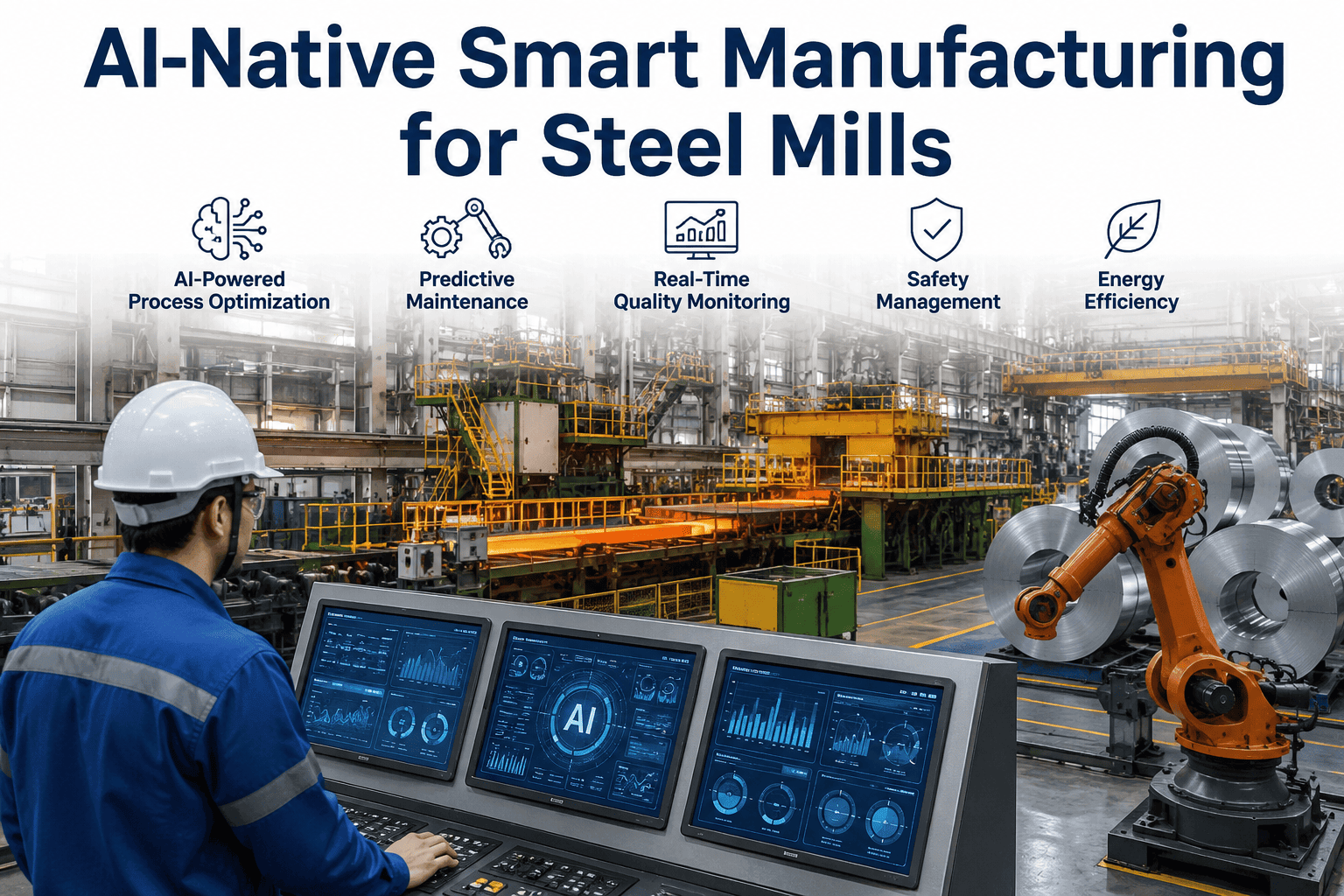
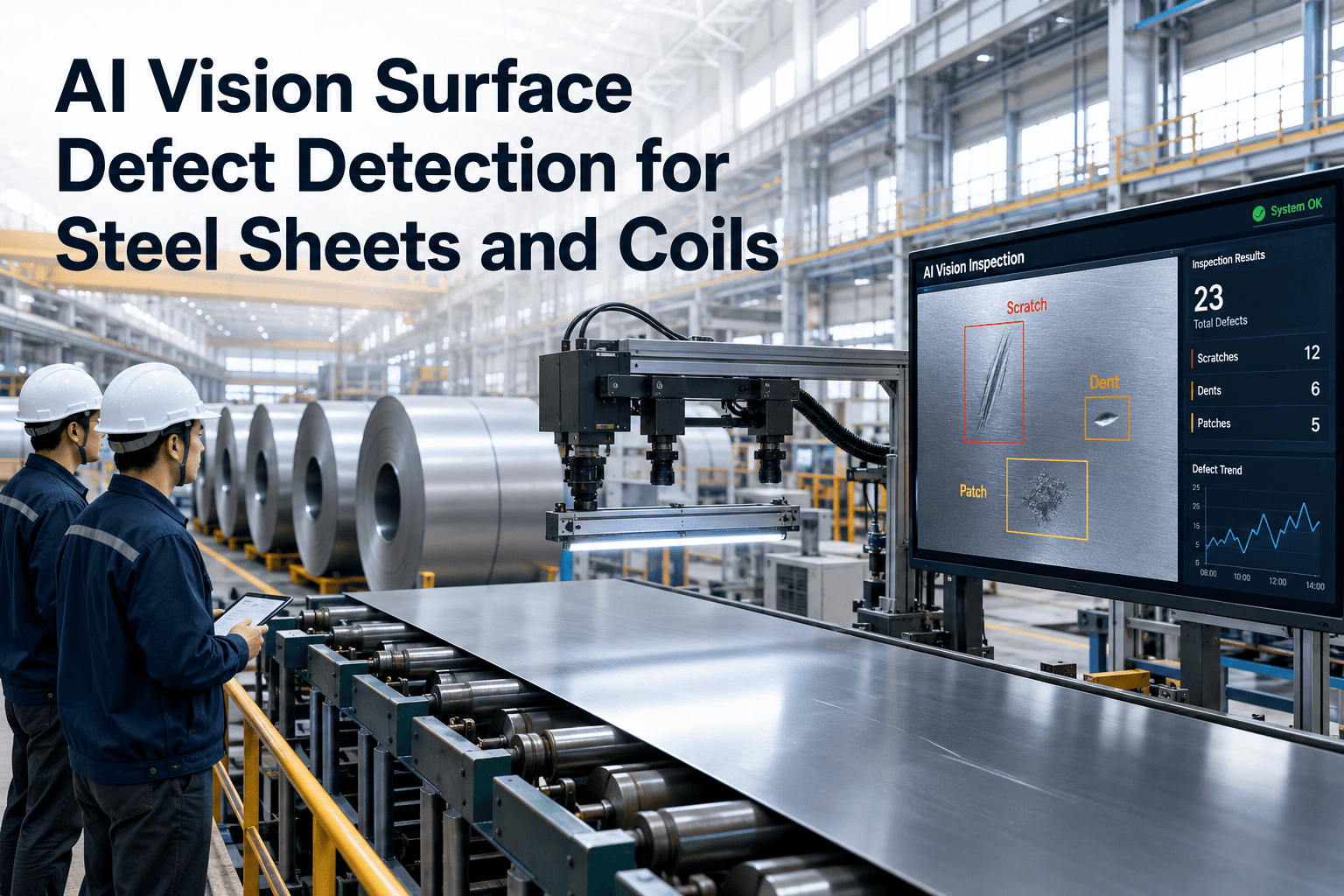
A slab moving through a caster at line speed passes an inspector's eye for a fraction of a second, and a hairline crack forming near the edge of a coil is often invisible under normal lighting until the coil has already been slit and shipped. Manual visual inspection on steel casting and rolling lines has always relied on trained eyes doing their best under difficult conditions — heat shimmer, glare, and speeds that leave no time for a second look — and even a skilled inspector catches only a fraction of what a camera watching continuously can catch. iFactory's AI vision system installs edge GPU cameras directly onto existing slab casters, billet lines, and coil lines to detect surface cracks, scale, and rolled-in defects at full line speed, tagging every flagged unit back to its exact heat number without slowing production. Mills that have relied on end-of-line sampling for years are finding that continuous vision coverage catches defects sampling was structurally unable to see, and iFactory support can scope a pilot camera install on a single stand within days.
AI Vision Inspection · Steel Mill Defect Detection
Catch Surface Cracks, Scale, and Rolled-In Defects at Full Line Speed — Before the Coil Ever Leaves the Mill
Edge GPU cameras retrofit onto existing casting and rolling lines inspect every slab, billet, and coil continuously, flagging defects in real time and linking each one back to its exact heat and stand.
What The System Watches For
Common Steel Defect Types Vision Inspection Is Trained to Catch
Every defect type has its own visual signature and its own typical root cause, which is why a single generic detector rarely performs well across an entire line. iFactory trains separate models for each defect class, tuned to the specific stand, material grade, and lighting conditions where it operates.
Surface Cracks
Longitudinal and transverse cracking near slab edges and corners, often linked to mold cooling rate or bulging during continuous casting.
Scale Formation
Oxide scale patterns on hot rolled surfaces that indicate descaling spray issues or reheating furnace temperature drift.
Rolled-In Defects
Foreign material or scale fragments pressed into the surface during rolling, typically traced back to roll condition or entry-side contamination.
Edge and Shape Defects
Camber, edge waviness, and profile deviation captured through geometric vision measurement alongside standard surface inspection.
Detection Pipeline
How a Flagged Defect Goes From Camera Frame to Operator Alert in Under a Second
1
Line-Speed Image Capture
High frame rate cameras positioned at key inspection points capture full surface coverage without requiring the line to slow down.
2
Edge GPU Inference
Defect classification runs on local edge GPU hardware, avoiding network latency that would make real-time flagging impossible.
3
Heat and Coil Tagging
Every flagged frame is linked automatically to the heat number, coil ID, and stand position it came from, pulled from MES data.
4
Operator and Quality Alert
Flagged units surface immediately on the operator screen and in the quality team's review queue, with the original image attached.
A Defect Caught After Shipment Costs Far More Than a Defect Caught on the Line.
Continuous AI vision inspection flags defects at the moment they form, while the coil is still on the line and still correctable.
Manual Inspection vs. AI Vision
Sampling-Based Inspection vs. iFactory Continuous Vision Coverage
Function
Manual / Sampling Inspection
iFactory AI Vision
Coverage
Inspects a sample of units per shift, missing defects between checks
Inspects every unit continuously at full line speed
Consistency
Detection quality varies with inspector fatigue, lighting, and experience
Applies the same trained model criteria to every unit, every shift
Traceability
Defect logs often recorded manually, with inconsistent detail on heat or stand
Every flagged defect automatically linked to heat number, coil ID, and stand
Escape Rate
Defects between samples can reach downstream processing or shipment
Continuous coverage substantially reduces the chance of an undetected defect
Root Cause Analysis
Difficult to correlate defect timing with upstream process changes after the fact
Defect timestamps correlated directly with process and equipment data
Measured Outcomes
What Quality Teams Report After Deploying Continuous Vision Inspection
100%
Units Inspected, Not Sampled
Every slab, billet, or coil passing the camera station is inspected rather than a periodic sample.
<1 sec
Detection to Alert Latency
Edge GPU inference means a flagged defect reaches the operator screen while the unit is still on the line.
20-35%
Reduction in Downstream Escapes
Plants moving from sampling to continuous vision report meaningfully fewer defects reaching later processing stages.
Heat-Level
Traceability on Every Flag
Each detected defect is automatically tied to the exact heat, coil, and stand it originated from.
7-10 Days
Typical Camera Retrofit Timeline
Time to install and calibrate cameras on a single existing stand without a line shutdown.
4
Defect Classes Modeled Separately
Cracks, scale, rolled-in material, and shape defects each get their own tuned detection model.
Field Case
Finding a Scale Defect Pattern That Sampling Had Missed for a Full Quarter
A hot strip mill relying on end-of-coil sampling had been shipping an intermittent scale defect that only surfaced in customer complaints roughly once a month, with no clear pattern visible from the sampled inspection records. After installing continuous vision cameras on the relevant stand, the system revealed that the defect was appearing consistently on the first three coils produced after every descaler nozzle cleaning cycle, a pattern invisible to periodic sampling because the affected coils were rarely the ones pulled for manual check. The descaling procedure was adjusted to include a short purge sequence after cleaning, and the defect pattern has not recurred in production since.
1 QuarterPattern undetected under sampling
3 CoilsConsistent post-cleaning window found
0Recurrences after procedure fix
Frequently Asked Questions
Steel Mill Quality Teams Ask These Questions First
Can the vision system run at our actual line speed without slowing production?
Yes, the camera and edge GPU hardware are specified based on the actual line speed of each installation, and inspection is designed to run without introducing any slowdown to casting or rolling operations. High frame rate capture combined with local edge inference means defect classification happens fast enough to flag a unit while it is still within reach on the line, rather than after it has already moved downstream.
Book a Demo to review the camera specification for your line speed.
How does the system avoid flagging normal surface texture as a defect?
Detection models are trained on labeled examples specific to each material grade and stand, which teaches the system to distinguish normal rolling texture, oxide color variation, and acceptable surface characteristics from genuine defects. Early in a deployment, flagged results are reviewed alongside quality engineers to tune sensitivity, and the model improves further as more confirmed examples are added, reducing false positives over time.
Does this replace our quality engineers, or work alongside them?
The system is built to work alongside quality teams rather than replace their judgment. It handles the continuous, repetitive task of watching every unit at line speed, something no human inspector can sustain indefinitely, and surfaces flagged units with images for a quality engineer to confirm and act on. This shifts the team's time from watching for defects to investigating and resolving the ones the system finds.
Can cameras be retrofit onto our existing line without a shutdown?
In most cases, camera installation is scheduled around an existing planned maintenance window rather than requiring a dedicated shutdown, since mounting points and lighting fixtures can typically be installed without disturbing line operation. Calibration and model tuning then happen while the line runs normally, comparing live results against manual inspection until confidence is established.
Contact support to plan an installation around your maintenance schedule.
How long before the system reaches production-ready accuracy on our line?
A pilot installation on a single stand typically reaches a usable accuracy baseline within the first one to two weeks of live data collection, with accuracy continuing to improve as confirmed defect examples accumulate. Most plants run the vision system alongside existing inspection for an initial period to validate performance before relying on it as the primary inspection method.
Book a Demo to discuss a pilot timeline for your stand.
Stop Relying on Sampling to Catch Defects Your Camera Could Catch Every Time.
Continuous AI vision inspection for casting and rolling lines, retrofit onto your existing stands, live in as little as a week.