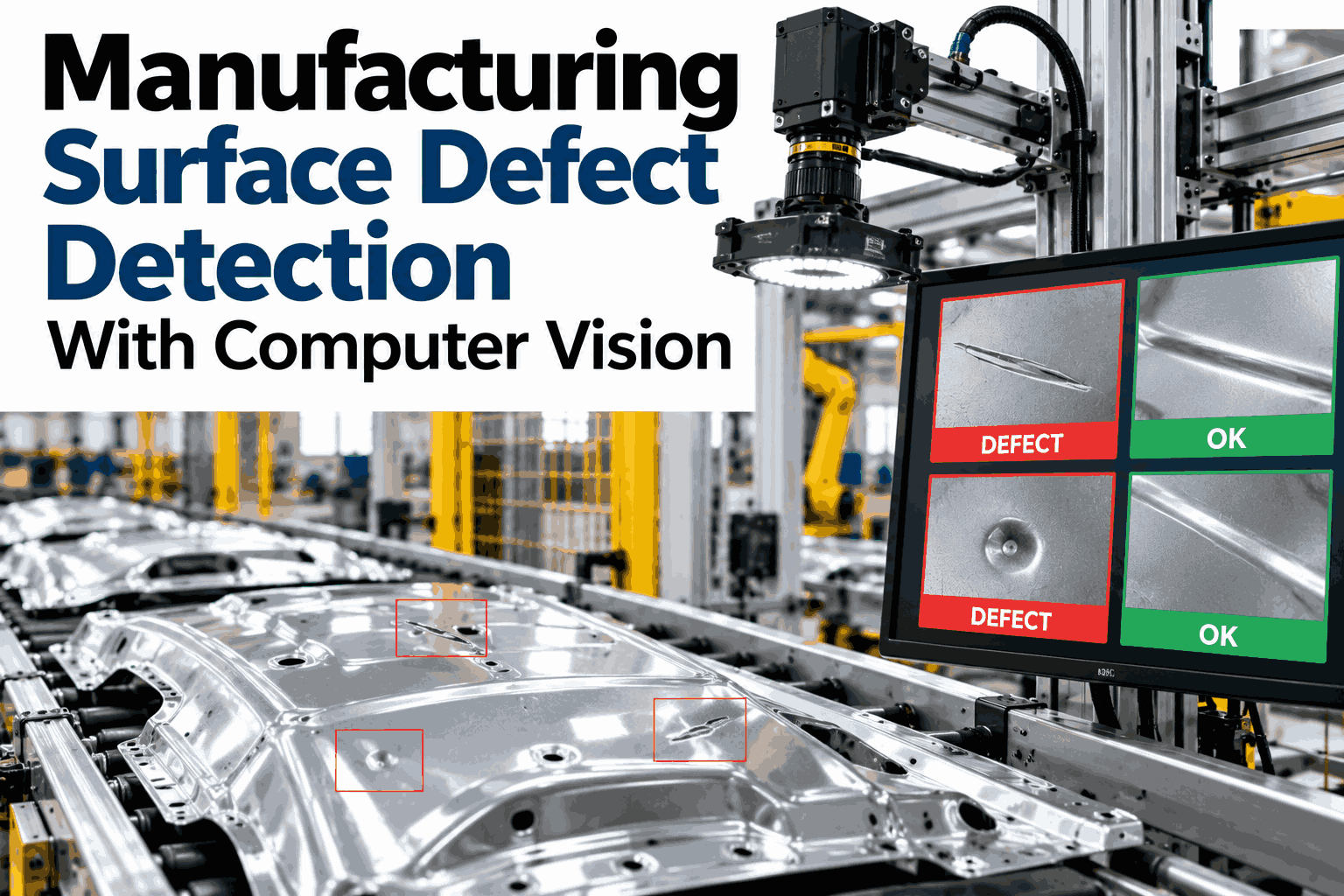
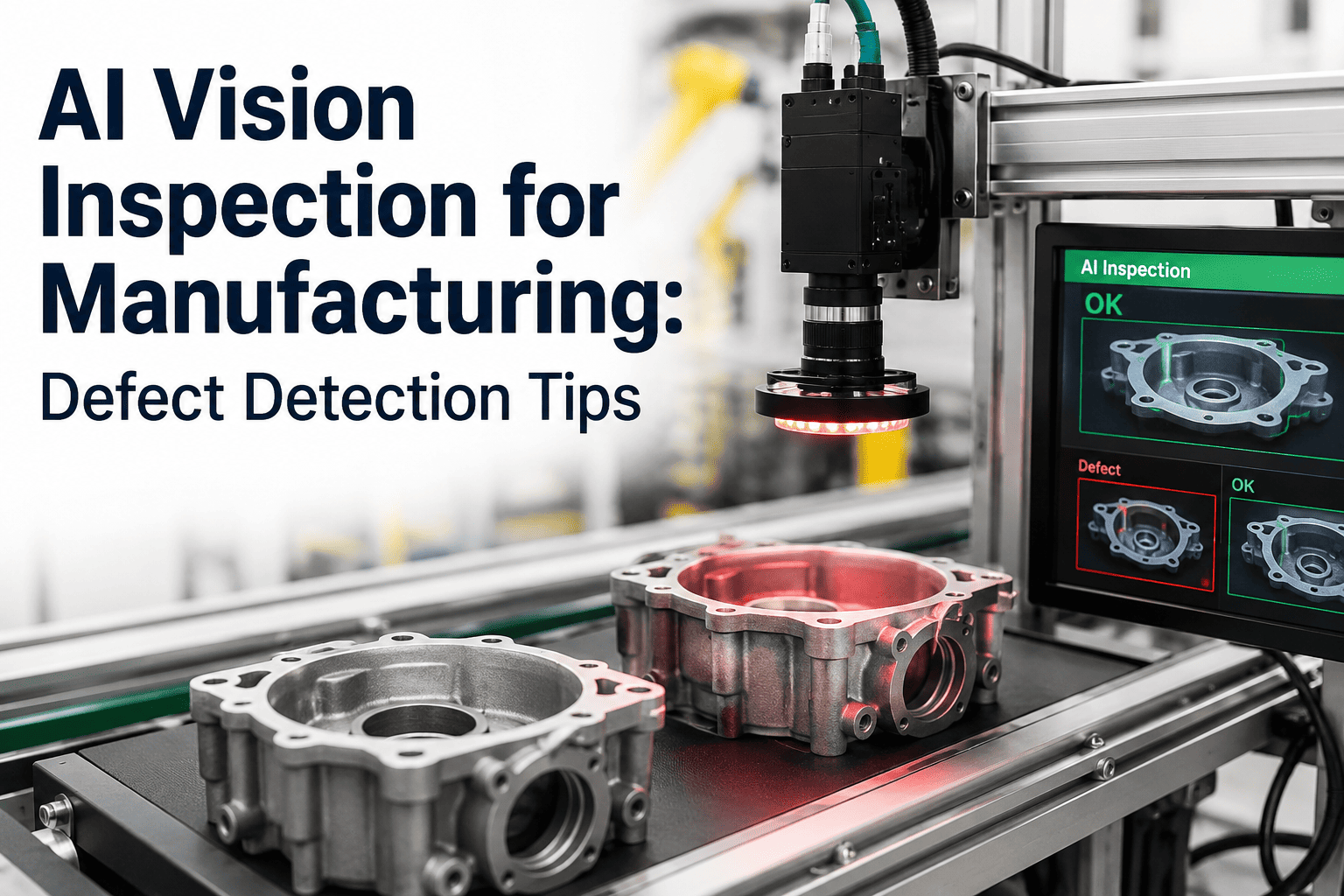
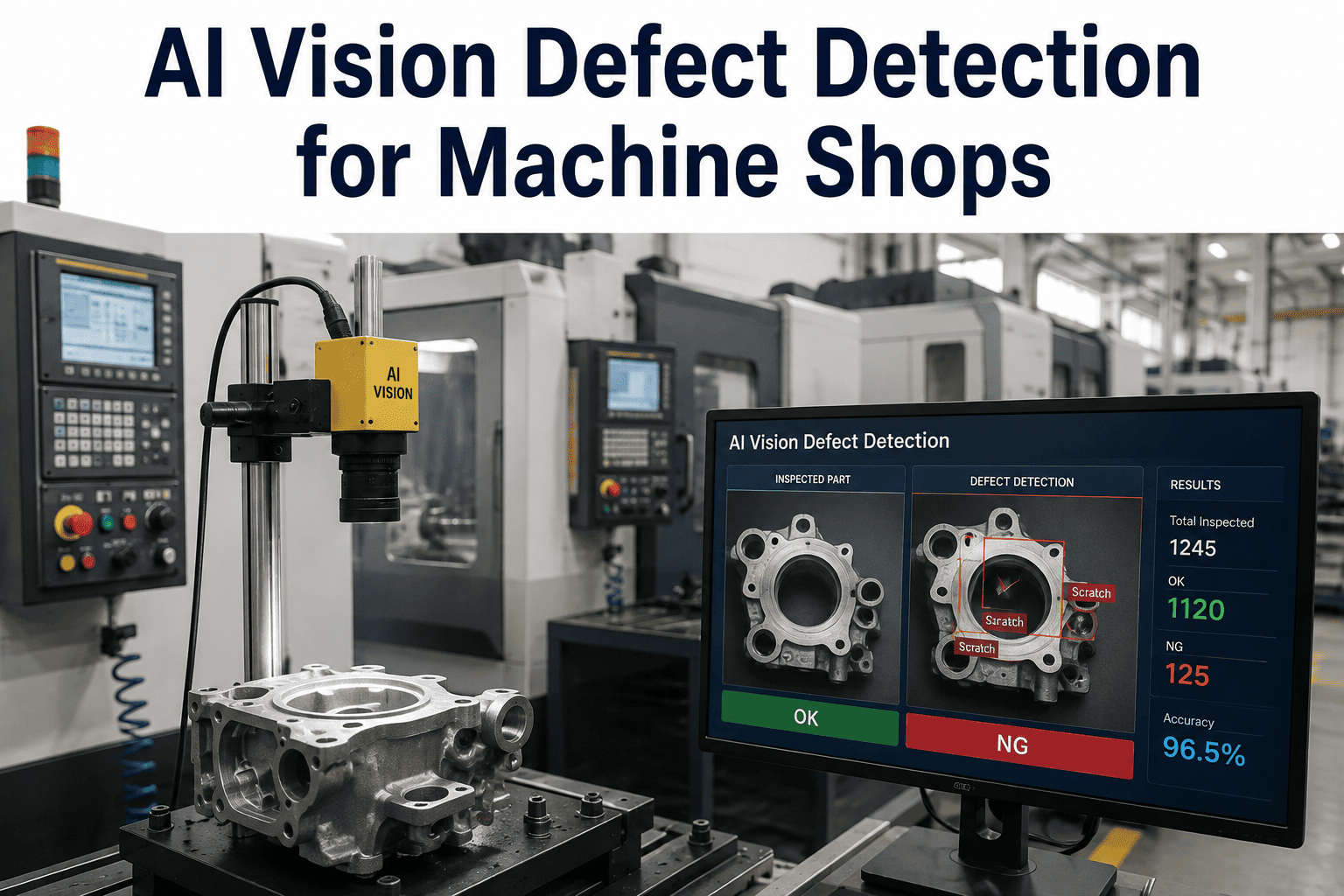
A plastics molding line running at 45 cycles a minute produces a rejectable part roughly every 90 seconds when flash, short shots, or sink marks slip past a visual station staffed for eight-hour shifts, not eight-second attention spans. Human inspectors catch an average of 70 to 80 percent of surface defects under good lighting, and that number drops sharply after hour four of a shift as fatigue sets in. Edge GPU vision systems trained on molded parts and extruded film hold detection accuracy above 98 percent at full line speed, without a lunch break, a shift change, or a bad day. Plant leaders evaluating this gap can book a demo and watch live defect classification running against their own part geometry.
MACHINE VISION · PLASTICS PRODUCTS · AI QUALITY
Catch Flash, Short Shots and Sink Marks Before They Ship
Edge GPU inference reads every molded part and every meter of extruded film at line speed, retrofitting onto existing conveyors and takeout robots without slowing the process.
The Real Cost of Manual Visual Inspection
70-80%
Defects a human inspector reliably catches during the first hours of a shift
98%+
Detection accuracy achievable with edge GPU vision at full line speed
4-6 hrs
Point in a shift where manual inspection accuracy begins measurably declining
<50ms
Typical inference latency per part on a properly sized edge GPU pipeline
Defect Categories Plastics Lines Need Vision Coverage For
Each defect family behaves differently under a camera, which is why a single generic model rarely performs well across an entire plastics catalog. A model trained specifically on your part geometry and resin color separates true defects from harmless cosmetic variation.
Flash
Excess material escaping the parting line, usually caused by worn tooling or excessive injection pressure, detected through edge-contour analysis.
Short Shots
Incomplete cavity fill leaving a part visibly undersized or missing a feature, flagged through geometric completeness checks against a golden model.
Sink Marks
Surface depressions from uneven cooling, identified using structured light or shadow-based depth estimation rather than plain 2D imaging.
Warping
Dimensional distortion from internal stress, caught through multi-angle capture that a single fixed camera would miss entirely.
Contamination
Foreign particles or discoloration embedded in the resin, distinguished from acceptable color variation using trained classification models.
Weld Lines
Visible seams where two melt fronts meet, evaluated against a severity threshold since minor weld lines are often cosmetically acceptable.
See Your Own Parts Run Through the Model
Bring sample parts or film rolls and watch classification accuracy live against your actual defect history, not a generic demo dataset.
How an Edge Vision Retrofit Actually Rolls Out
01
Camera and Lighting Placement
Cameras mount at the existing takeout point or end-of-line conveyor, with controlled lighting rigs eliminating the shadow and glare variance that confuses generic vision systems.
02
Golden Sample Training
A batch of known-good and known-defective parts trains the initial model, typically requiring 200 to 500 labeled samples per defect class to reach production accuracy.
03
Edge GPU Deployment
Inference runs locally on a plant-floor GPU rather than round-tripping to the cloud, keeping latency low enough to reject parts before they reach packaging.
04
Continuous Retraining
New defect types and resin lot variations feed back into the model on a scheduled cadence, keeping accuracy stable as materials and tooling wear change over time.
Manual Inspection vs Edge Vision: A Side-by-Side View
| Factor | Manual Visual Inspection | Edge GPU Vision |
|---|---|---|
| Detection Consistency | Declines with fatigue across a shift | Constant regardless of shift length |
| Inspection Speed | Limited to human reaction time | Sub-50ms per part at full line speed |
| Documentation | Sporadic, often paper-based | Every part logged with image and classification |
| Defect Traceability | Difficult to correlate to shift or mold | Automatically tagged to mold cavity and time |
| Scaling Across Lines | Requires proportional headcount | Model replicated across additional lines |
What Plants Report After Deployment
Scrap Reduction
Catching defects at the point of molding rather than downstream in packaging or at the customer prevents an entire batch from being scrapped after the fact.
Fewer Customer Returns
Consistent 98%+ detection means fewer defective parts leaving the plant, which directly reduces the volume and cost of quality-related returns.
Faster Root Cause Analysis
Logged images tied to specific mold cavities let quality engineers spot a failing cavity within hours instead of after a customer complaint arrives weeks later.
Common Questions From Plant Managers
Can this retrofit onto our existing conveyor without a line rebuild?
Yes, most deployments mount cameras and lighting directly onto the existing takeout point or end-of-line conveyor structure rather than requiring a redesign. The edge GPU unit sits in an enclosure near the line and connects over standard plant networking, so downtime for installation is typically limited to a single shift. Teams can confirm compatibility with their specific line layout through support before scheduling install.
How many sample parts do we need to train the model?
Most defect classes reach production-level accuracy with 200 to 500 labeled sample images, though highly subtle defects like faint sink marks can require more. The training process typically overlaps with normal production, since parts already being inspected manually can be photographed and labeled without disrupting the line. A full walkthrough of the data collection process is available by booking a demo.
What happens when we switch resin colors or run a new part number?
Color and part changeovers are handled through model versioning, where the system either applies a pre-trained profile for that part number or flags the change for a short recalibration pass. Plants running frequent changeovers typically maintain a library of trained profiles that load automatically based on the job ticket, minimizing manual reconfiguration between runs.
Does edge inference require a constant internet connection?
No, inference runs entirely on the local GPU hardware on the plant floor, which keeps the system operational even during network outages and avoids the latency penalty of sending images to a cloud service and waiting for a response. An internet connection is only needed periodically for model updates and centralized reporting, not for real-time part classification.
How does this compare to the machine vision systems we already use for basic presence checks?
Traditional presence-check vision systems typically rely on simple rule-based logic like edge counting or pixel thresholds, which struggle with the visual variability of flash, warping, or subtle surface defects. AI-trained models learn the actual visual signature of a defect from labeled examples, which allows them to generalize across lighting variation and minor cosmetic differences that would trigger false rejects in a rule-based system.
Stop Losing Good Parts to Inconsistent Inspection
Join plastics manufacturers already running edge vision at full line speed with detection accuracy above 98 percent.