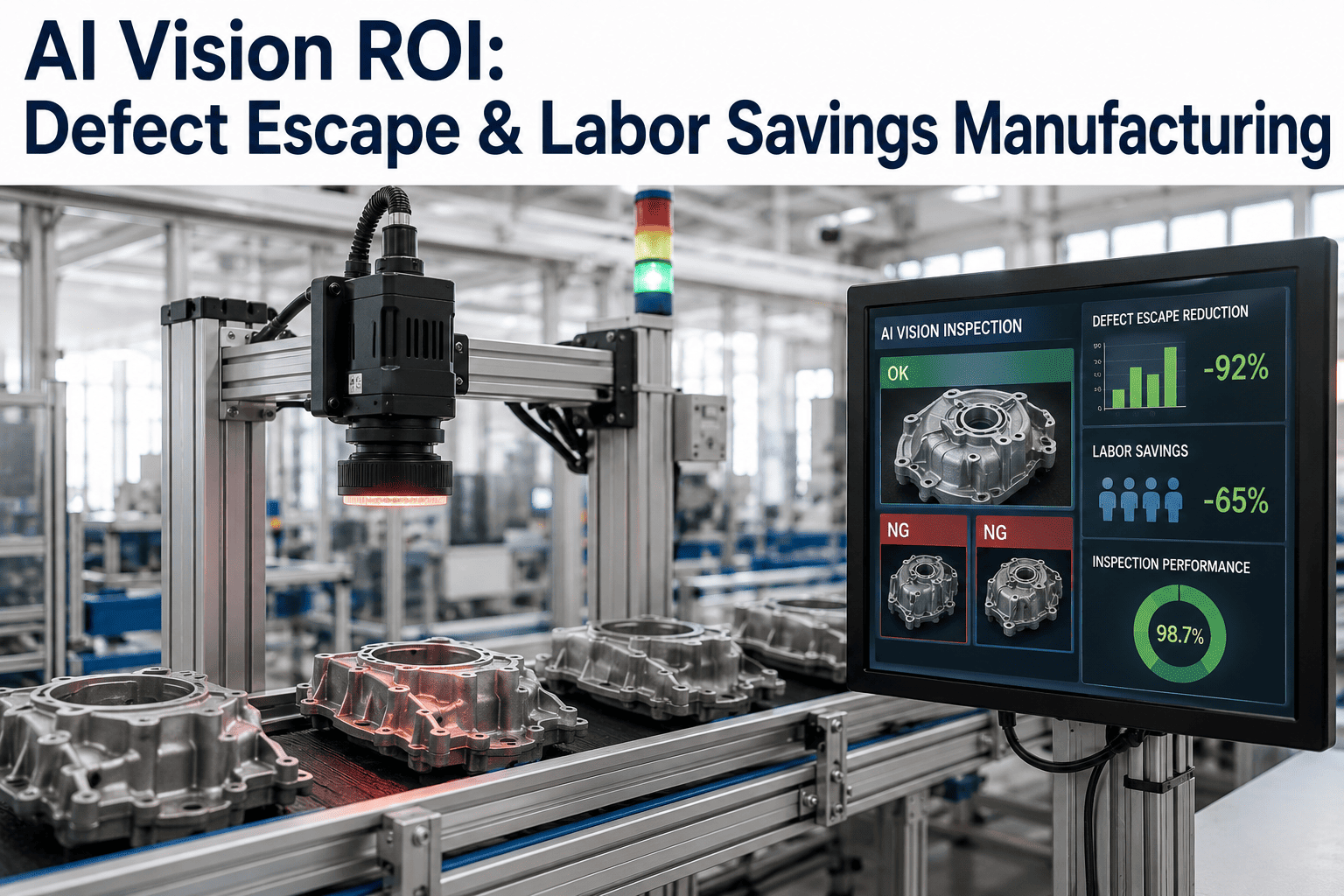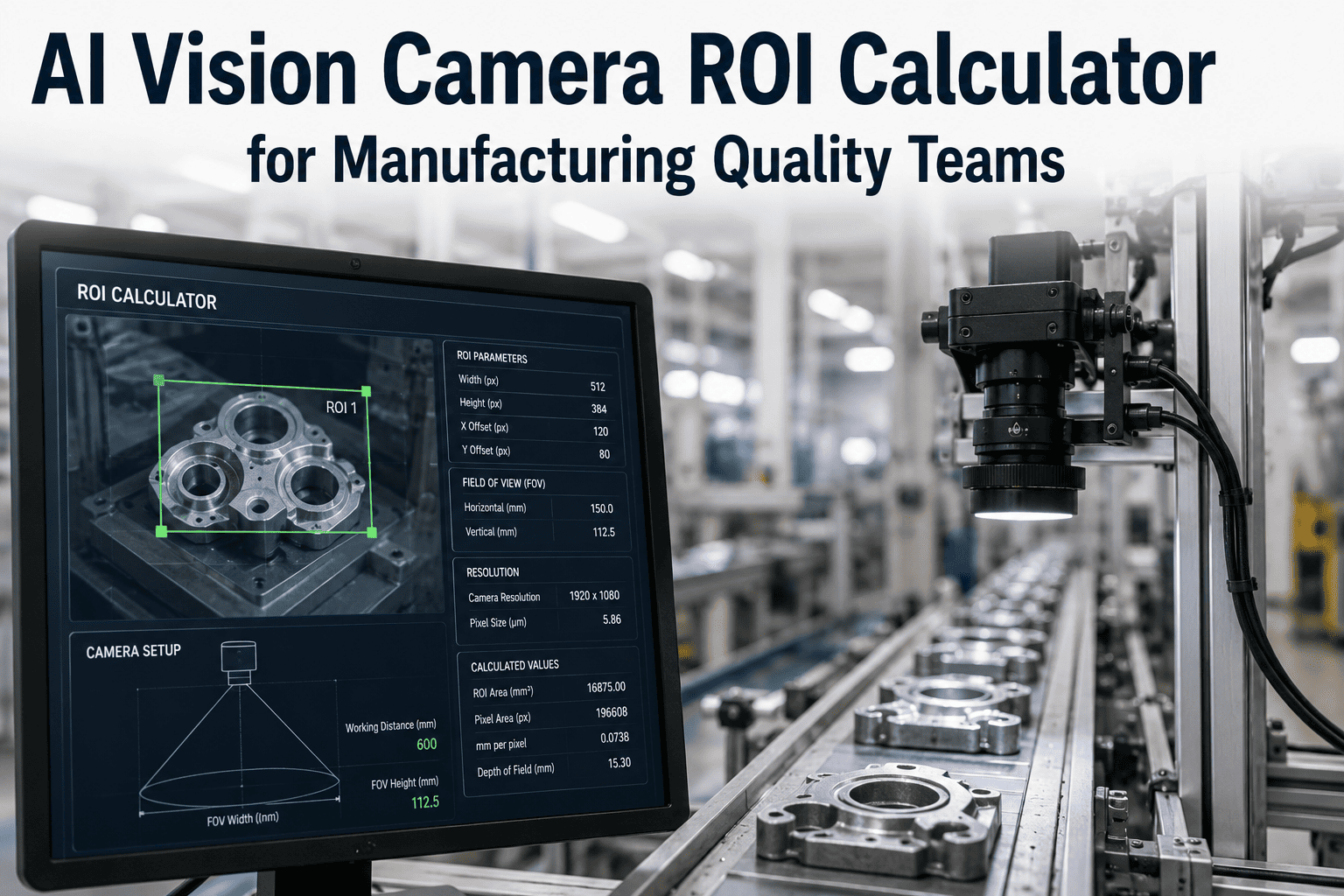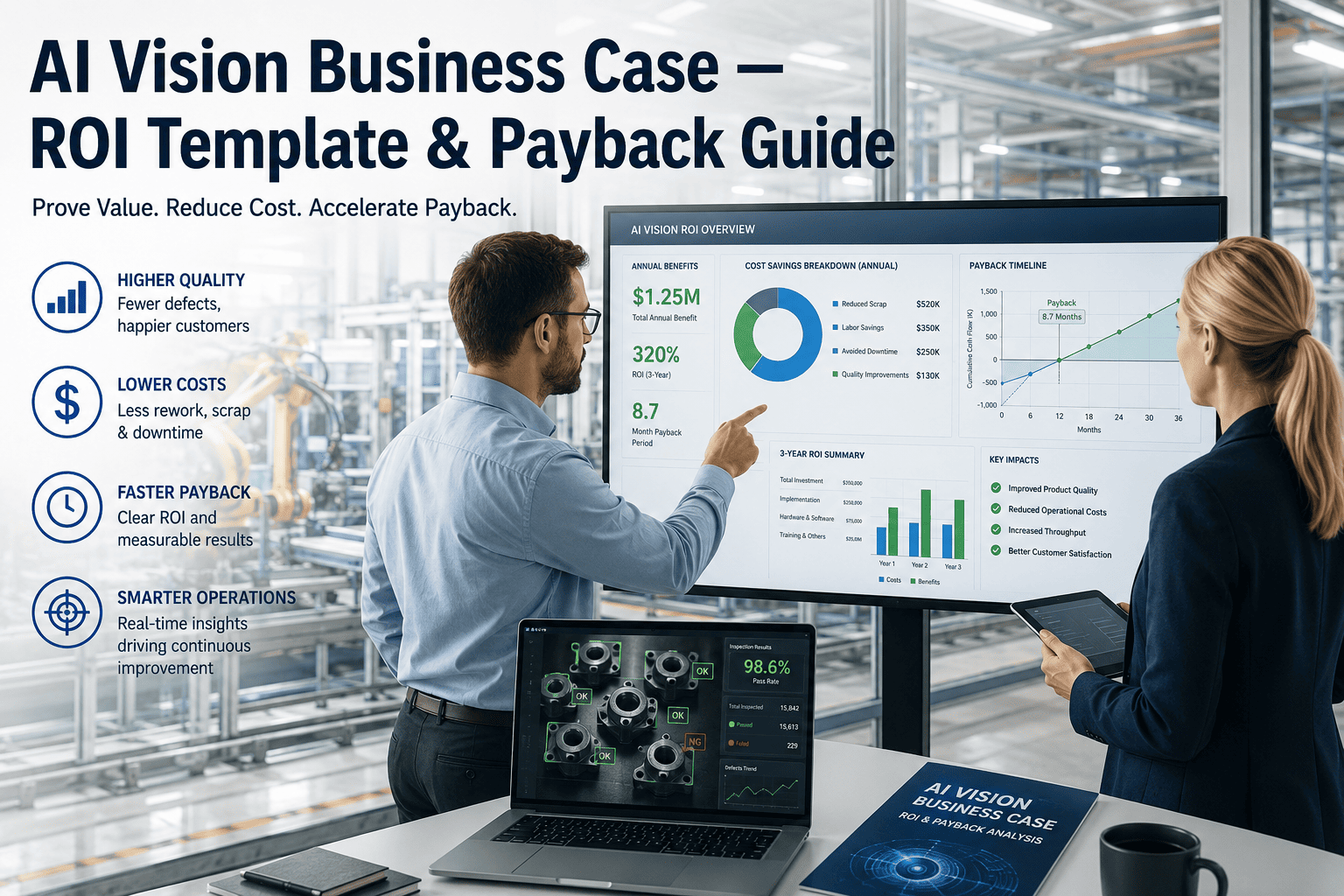
A plant manager who wants to bring an AI vision project to the CFO already knows the proposal needs more than "it will improve quality." Capital committees respond to numbers, and an AI vision business case has to translate defect reduction, labor reallocation, and scrap avoidance into a payback period that survives scrutiny from someone whose job is to be skeptical of vendor promises. The good news is that AI vision inspection projects tend to have some of the most straightforward ROI stories in manufacturing automation, because the cost of an escaped defect, in scrap, rework, warranty claims, or customer relationship damage, is usually already tracked somewhere in the organization. iFactory can help assemble a CFO-ready business case using your own defect and labor cost data, and you can book a demo to walk through a preliminary ROI model built around your specific numbers.
A CFO Doesn't Need to Believe in AI. They Need to See the Payback Period
iFactory helps build a CFO-ready AI vision business case using a defect cost calculator, labor savings model, and payback analysis, with an average payback of 7-8 months.
Quality Improvement Is Not a Line Item. Payback Period Is
Plant and quality managers frequently understand intuitively why AI vision inspection is worth investing in, but translating that intuition into a capital request that survives finance committee review requires a different kind of argument. A proposal built around "fewer defects" or "better quality" without a dollar figure attached rarely competes well against other capital requests that come with a clear payback calculation. The strongest business cases connect the investment directly to costs the organization already tracks, scrap rate, warranty claim frequency, rework labor hours, and inspection labor cost, and show specifically how AI vision reduces each one, rather than making a general quality argument that a finance team has no framework to evaluate.
Build the Model Around These Categories, Not a Generic Industry Average
Defect Cost Avoidance
Current scrap and rework cost per defect type, multiplied by expected reduction in escape rate.
Inspection Labor Savings
Hours currently spent on manual inspection that can be reallocated once AI vision handles routine detection.
Warranty & Claim Reduction
Historical warranty claim cost tied to defects that inline inspection would have caught earlier.
Throughput & Uptime Impact
Value of faster inspection cycle times and reduced line stoppages for manual quality holds.
Turn Your Quality Argument Into a Number a CFO Will Approve
iFactory helps translate defect and labor cost data into a payback calculation built for capital review, not a vague quality pitch.
How the Numbers Typically Come Together Over the First Year
| Cost Category | Before AI Vision | After AI Vision |
|---|---|---|
| Defect escape rate | Baseline scrap and rework cost | Reduced through earlier, more consistent detection |
| Manual inspection labor | Dedicated inspection headcount | Reallocated to higher-value quality tasks |
| Warranty claims | Historical claim frequency and cost | Lower, tied to defects caught before shipment |
| Total payback period | Not applicable | Typically 7-8 months |
The Strongest Business Cases Start With a Pilot, Not a Full Rollout Ask
Rather than asking a capital committee to approve plant-wide AI vision deployment based on a projected model, the strongest proposals typically start with a single line or product pilot, sized specifically to generate real before-and-after data within a few months. This pilot data then becomes the foundation for a much stronger follow-on business case for wider deployment, since it replaces a projected estimate with actual measured results from your own facility. This staged approach also tends to move faster through capital approval, since a smaller initial ask carries less perceived risk than a full-scale commitment based purely on vendor projections.
Measured Outcomes From Data-Backed AI Vision Proposals
Questions Plant Managers Ask About Building an AI Vision Business Case
Build the Business Case Your CFO Will Actually Approve
iFactory helps translate your defect and labor cost data into a payback model with an average payback of 7-8 months.