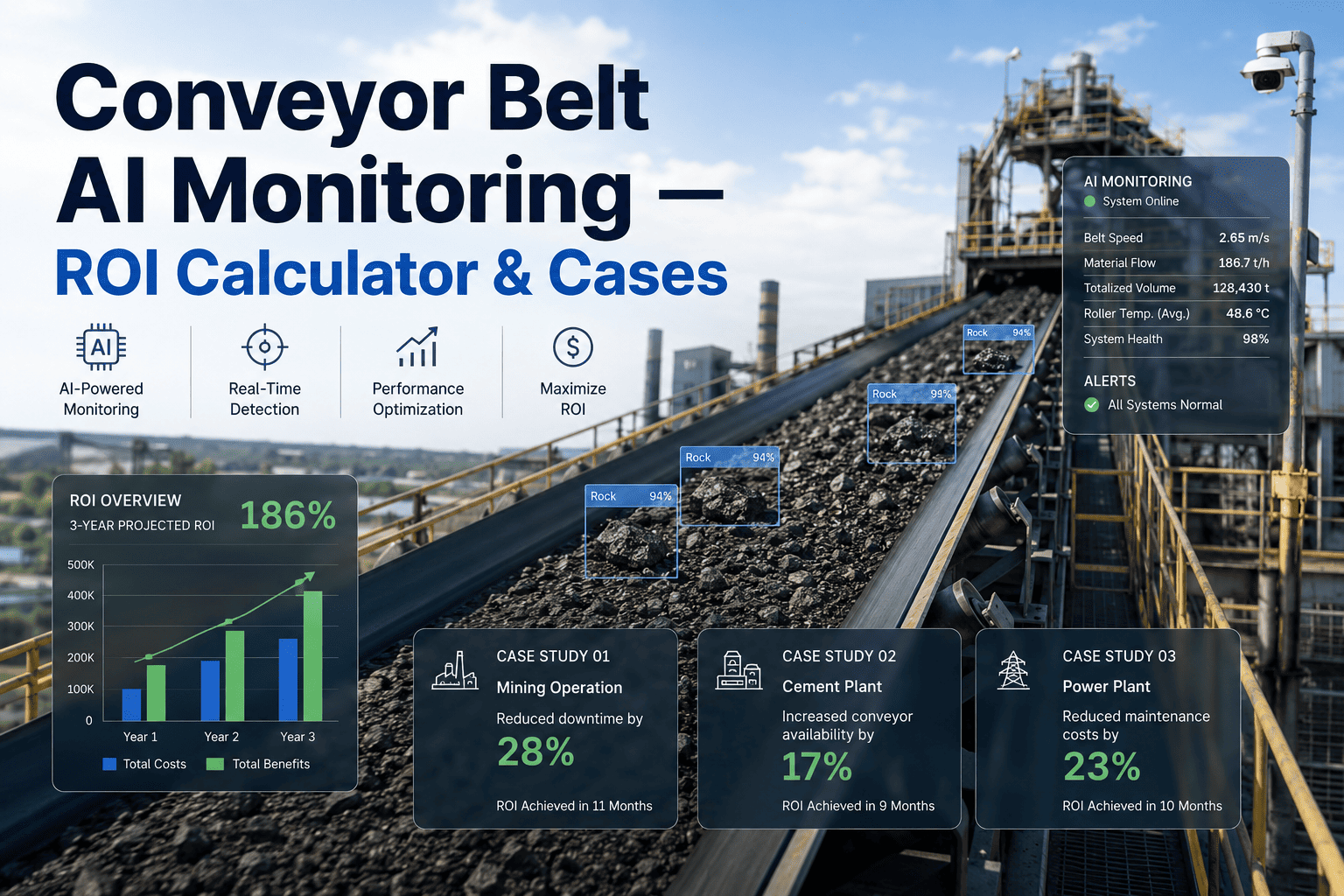
A maintenance director evaluating a conveyor AI monitoring proposal is usually staring at two numbers that are hard to reconcile: the upfront cost of the camera system, and the vague promise of "reduced downtime" that vendors love to cite without showing the math. Conveyor belt failures are among the most expensive unplanned events in mining, aggregate, and bulk material operations, since a single tear or misalignment can halt an entire line feeding downstream processes for hours. Building a credible ROI case means connecting specific failure modes, tear propagation, splice degradation, misalignment, and material spillage, to their actual cost per incident, not a generic industry average. iFactory's AI vision conveyor monitoring is built around exactly that kind of case-by-case ROI modeling, and you can book a demo to build a preliminary ROI estimate using your own conveyor and incident data.
The Real Cost of a Conveyor Failure Is Never Just the Belt
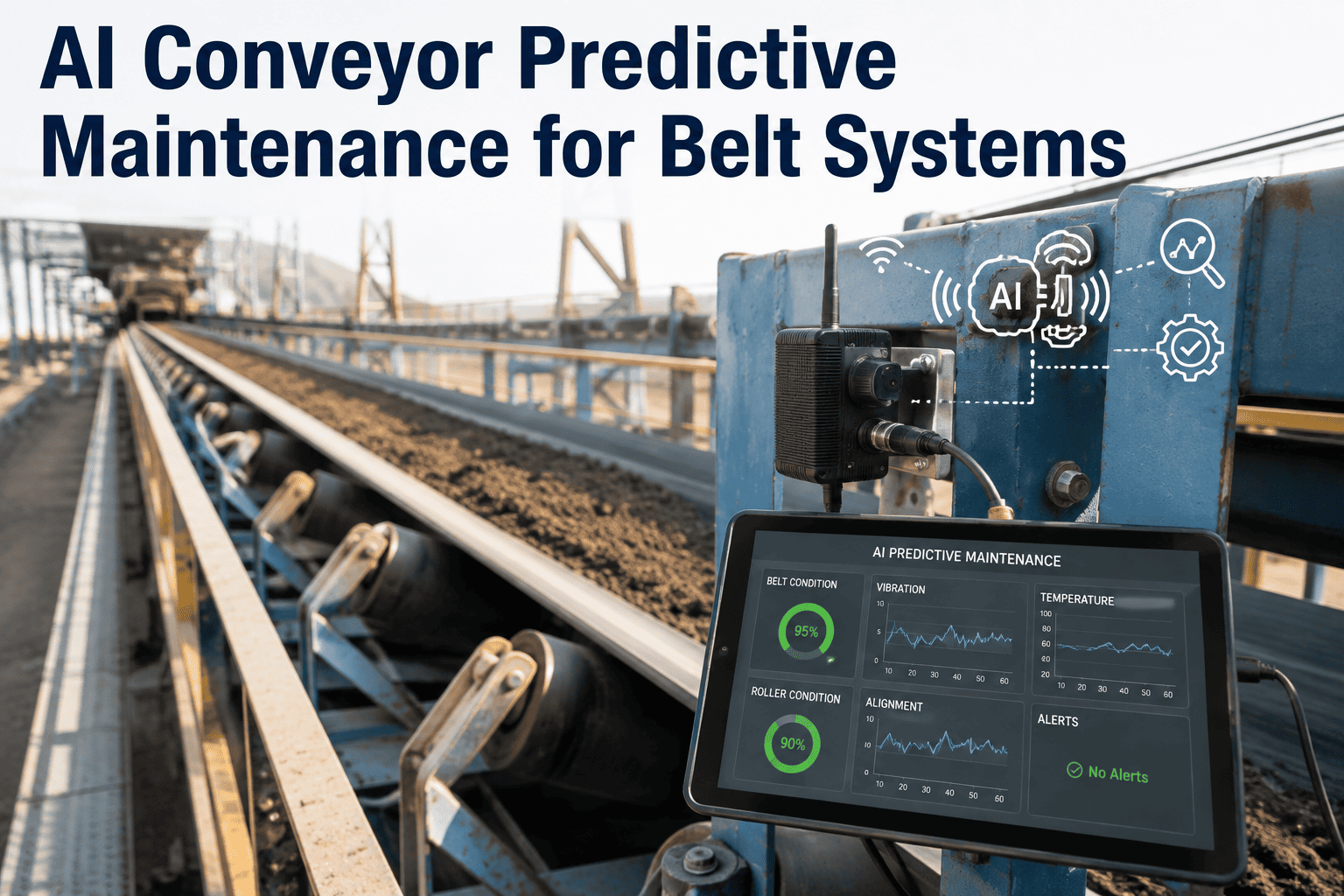
iFactory's AI vision monitoring catches belt tears, misalignment, splice wear, and spillage early, and this page walks through how to model the actual ROI for your specific operation.
Downtime Cost Is Only Half the Real Number
Most conveyor monitoring business cases start and end with a single figure: the estimated cost of unplanned downtime per hour. That number matters, but it misses several cost categories that are often just as significant, replacement belt and splice material, the labor cost of emergency repair crews working outside a planned maintenance window, safety incident risk during hurried repairs, and the downstream cost when a conveyor failure halts a connected process rather than just the belt itself. A credible ROI model has to account for all of these together, weighted by how frequently each failure mode has actually occurred on your specific conveyors, rather than applying an industry-average failure rate that may not reflect your operation's actual history.
Four Failure Categories, Each With a Different Cost Profile
Belt Tears & Damage
Fewer belt failures typically reported once tear propagation is caught at an early stage rather than after it has spread.
Splice Degradation
Splice condition monitored continuously so a failing splice is scheduled for repair before it fails mid-run.
Tracking & Misalignment
Belt tracking deviation flagged before it causes edge damage or material spillage along the conveyor run.
Material Spillage
Spillage points identified and quantified, reducing cleanup labor and the housekeeping risk it creates.
See What Each Failure Mode Is Actually Costing Your Operation
iFactory helps model ROI against your specific conveyor incident history, not an industry-average failure rate.
What a Typical Annual Savings Breakdown Looks Like
| Cost Category | Before AI Monitoring | After AI Monitoring |
|---|---|---|
| Unplanned downtime hours | Reactive, discovered at failure | Reduced via early tear and splice detection |
| Emergency repair labor | Frequent off-hours callouts | Shifted to planned maintenance windows |
| Belt and splice replacement | Full replacement after failure | Targeted repair before full failure |
| Spillage cleanup labor | Ongoing, often underreported | Reduced through early misalignment alerts |
The Inputs That Actually Determine Your Payback Period
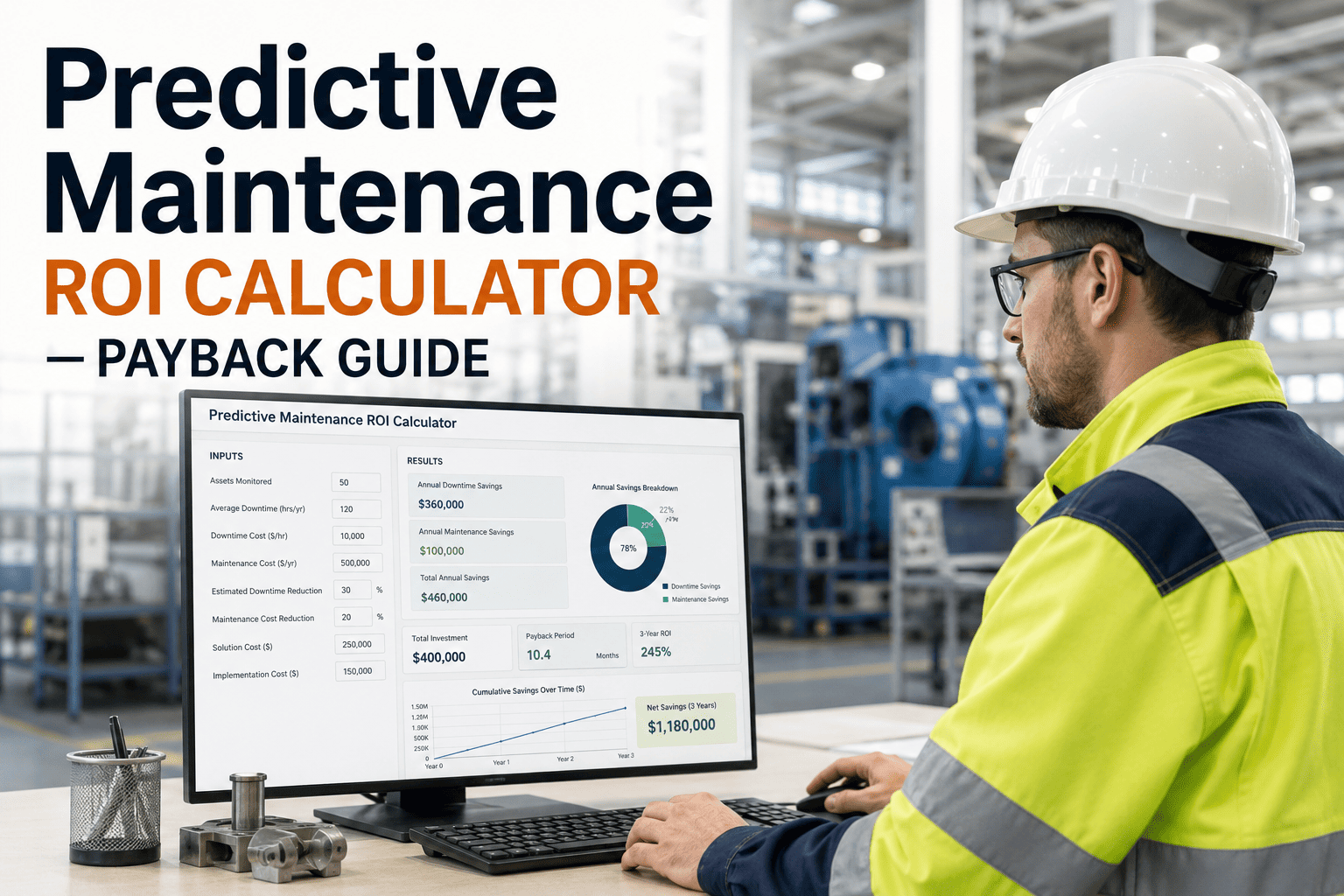
A defensible ROI estimate needs a handful of inputs specific to your operation: the number of unplanned conveyor stoppages over the past year, the average cost per hour of downtime for the process the conveyor feeds, the frequency and cost of belt and splice replacements, and the labor hours currently spent on spillage cleanup and manual inspection rounds. Case studies across mining and bulk material operations have shown annual savings exceeding $250,000 per monitored system once these categories are combined, but the actual figure for your operation depends entirely on your current failure frequency and cost structure, which is exactly what a proper ROI model should be built around rather than a generic industry figure.
Measured Outcomes From AI Vision Conveyor Monitoring
Questions Operations Teams Ask About Conveyor Monitoring ROI
Build a Real ROI Number Before You Commit to a System
iFactory helps model conveyor monitoring ROI against your own incident history, not an industry-wide average.