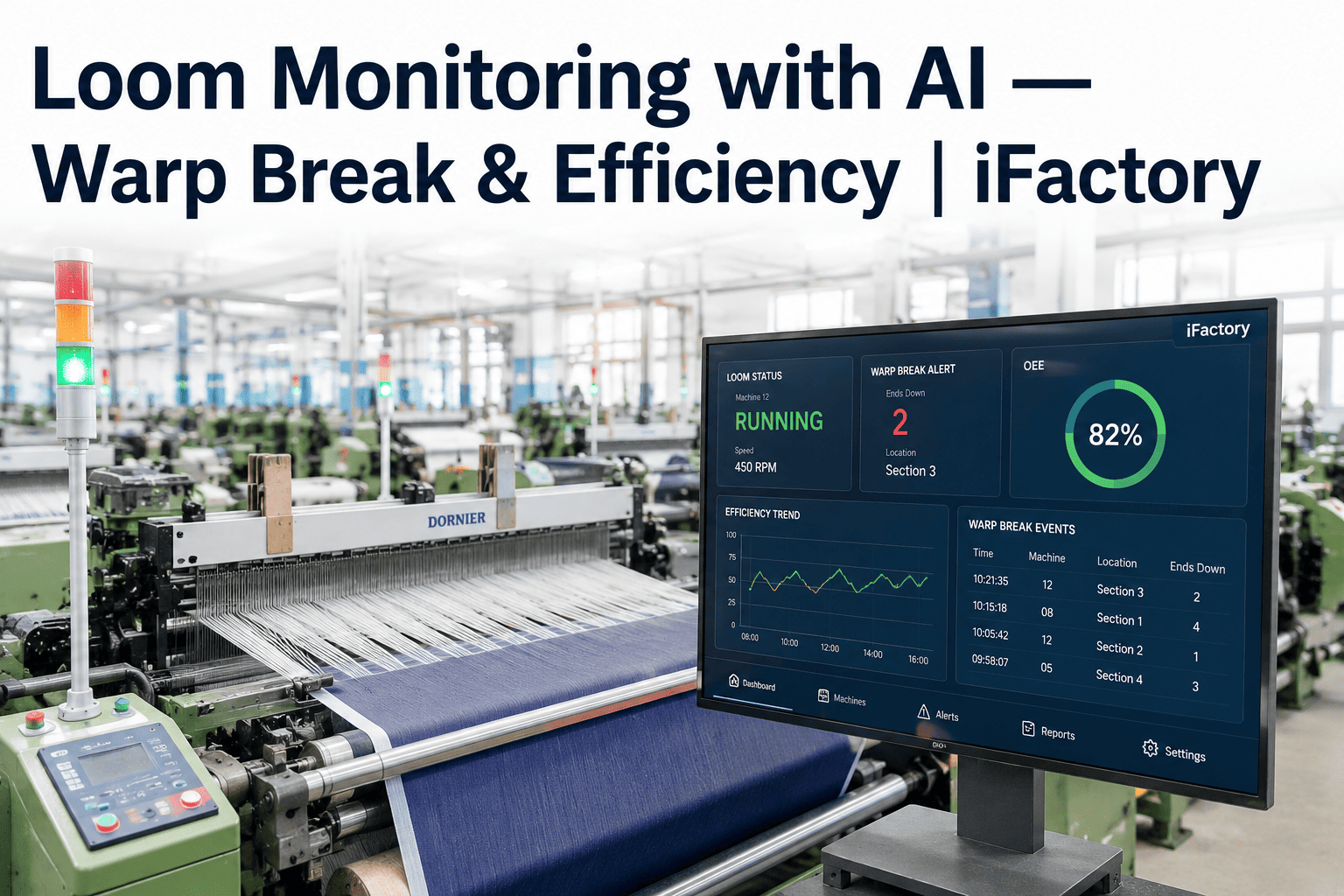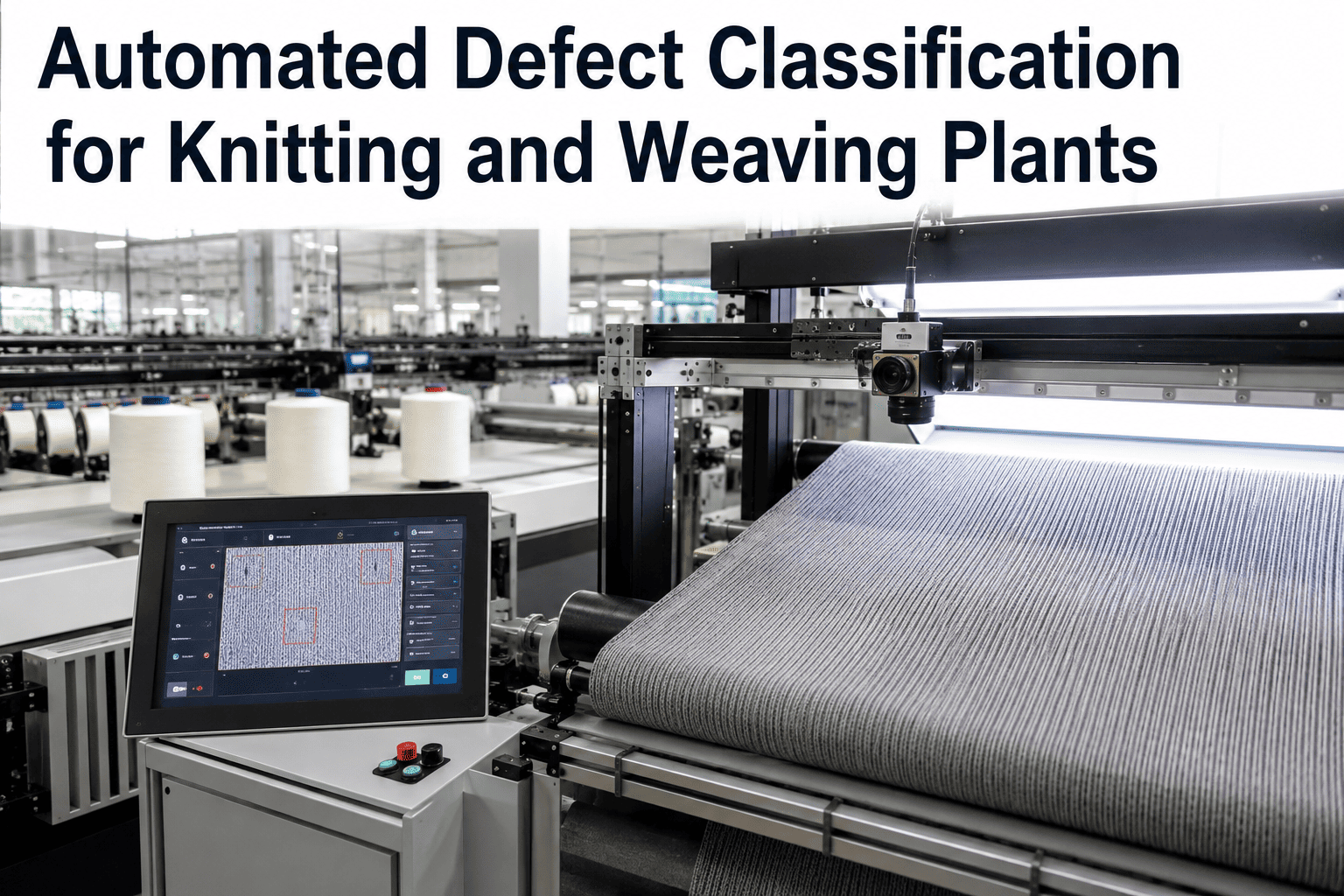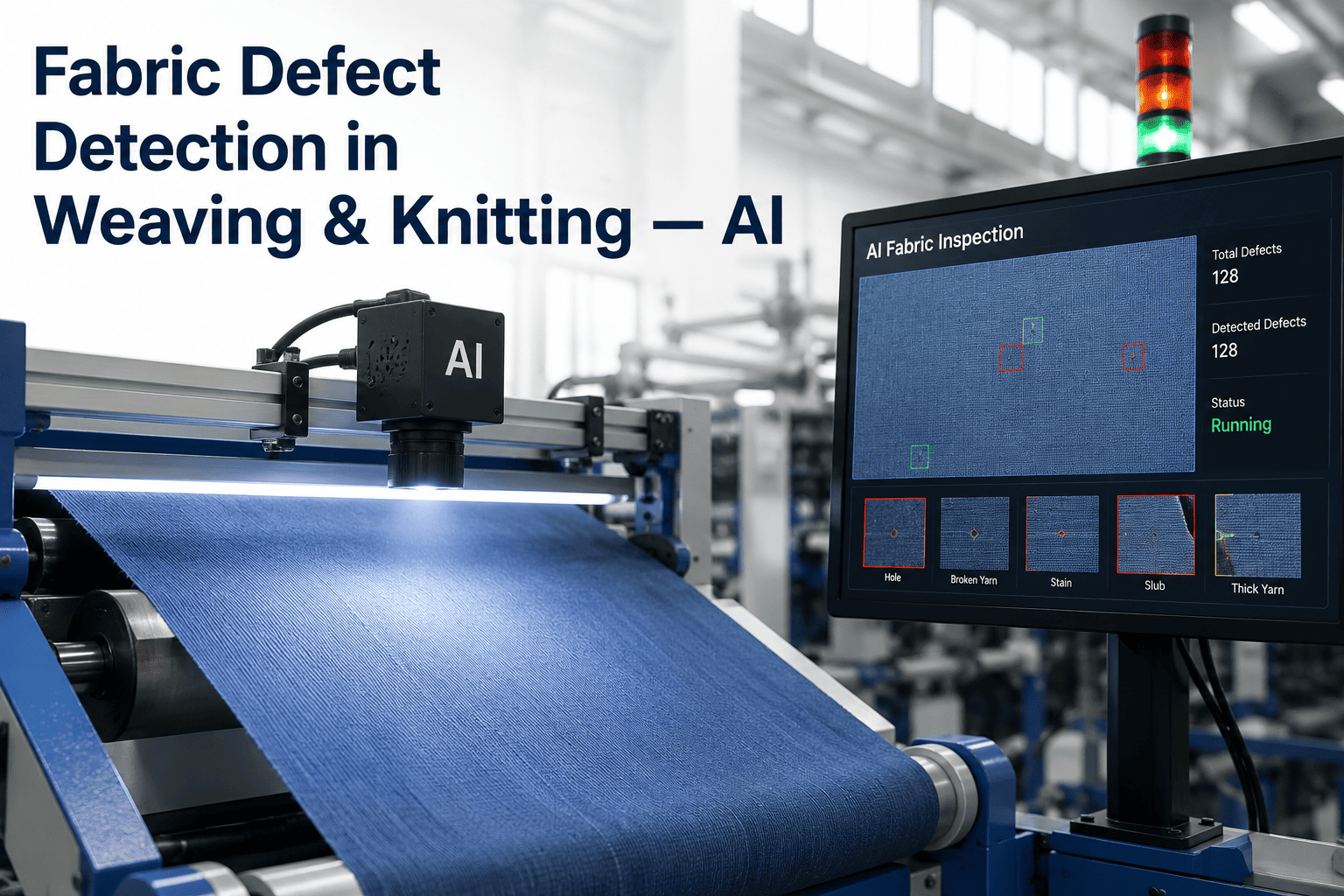
A textile production manager standing next to a running loom at 120 meters per minute knows that a warp break mark, a weft bar, or a small hole can pass an inspection point and keep going for meters before a human inspector doing a periodic walk-by even has a chance to notice it. Traditional fabric inspection relies heavily on trained inspectors doing four-point grading at set intervals, which is a genuinely skilled process but one that inherently samples the fabric rather than reviewing every meter continuously. Weaving faults, knitting defects, pilling, and shade variation are exactly the kind of flaws that a busy inspector under standard lighting can miss, particularly during a long shift. iFactory's AI vision inspection watches the fabric continuously at full production speed, and you can book a demo to see it classify defects against your own fabric type and loom speed.
A Warp Break Mark Doesn't Wait for the Inspector to Walk By
iFactory's AI vision system inspects weaving and knitting fabric continuously at 120 meters per minute, achieving a 97% defect capture rate across pilling, shade variation, and structural faults.
Four-Point Grading Is a Skilled Process. It's Also Fundamentally a Sample, Not a Full Inspection
The four-point inspection system used across most weaving and knitting operations is a well-established, genuinely useful standard, but it depends on a human inspector reviewing fabric under set lighting at a pace that inherently cannot cover every meter with equal attention across a full shift. Fatigue, lighting angle, and simple attention drift all affect how consistently even an experienced inspector catches subtle defects like pilling, small shade variation, or a starting mark left by a brief loom stoppage. The defects that slip through a manual inspection are rarely the obvious ones; they are the borderline cases that depend heavily on exactly how carefully that specific meter of fabric happened to be reviewed.
What AI Vision Actually Watches For Across Weaving and Knitting
Weaving Faults
Warp breaks, missing ends, reed marks, and selvedge defects identified continuously as fabric moves through the loom.
Knitting Defects
Dropped stitches, needle lines, and structural irregularities specific to knit construction flagged in real time.
Pilling
Surface fiber pilling detected and graded consistently, removing the subjectivity of a visual pilling assessment.
Shade Variation
Color consistency tracked across the full roll width and length, catching drift a spot check would miss.
Inspect Every Meter, Not Just the Meters an Inspector Happened to Walk Past
iFactory runs continuously alongside your loom or knitting machine, catching defects as they occur instead of during a periodic check.
What Changes When Fabric Inspection Runs Continuously at Full Loom Speed
| Inspection Element | Manual Four-Point Grading | iFactory Continuous AI Inspection |
|---|---|---|
| Coverage | Sampled review by trained inspector | Every meter inspected continuously |
| Defect capture rate | Varies with fatigue and lighting | 97% consistent capture rate |
| Grading consistency | Depends on individual inspector judgment | Applied uniformly across every shift |
| Defect location logging | Manually marked on the roll | Automatically logged with precise position |
Grading and Defect Location Happen Together, in Real Time
As defects are detected, the system logs their type and precise position along the roll, which supports both automated four-point-equivalent grading and downstream decisions about where to cut around a defect during finishing. This location precision matters particularly for denim and other applications where a specific defect type in a specific location may be acceptable for one end use but not another. Because grading happens continuously as fabric is produced rather than during a separate manual review step afterward, quality data is available immediately, letting a production team catch a developing loom or knitting machine issue, such as a recurring starting mark pattern, while the run is still in progress rather than after the full roll is complete.
Measured Outcomes From Continuous AI Fabric Inspection
Questions Production Teams Ask About AI Fabric Defect Detection
Catch Weaving and Knitting Defects at Full Production Speed
iFactory inspects every meter continuously, achieving a 97% defect capture rate across pilling, shade, and structural faults.