Every hour your factory runs blind to energy waste, you are not breaking even — you are haemorrhaging capital. Industrial manufacturers lose an average of 20–30% of total energy spend to inefficiency that is entirely preventable with modern AI-driven monitoring. The question is no longer whether you can afford to invest in energy intelligence. It is whether you can afford to keep operating without it.
iFactory Energy Intelligence
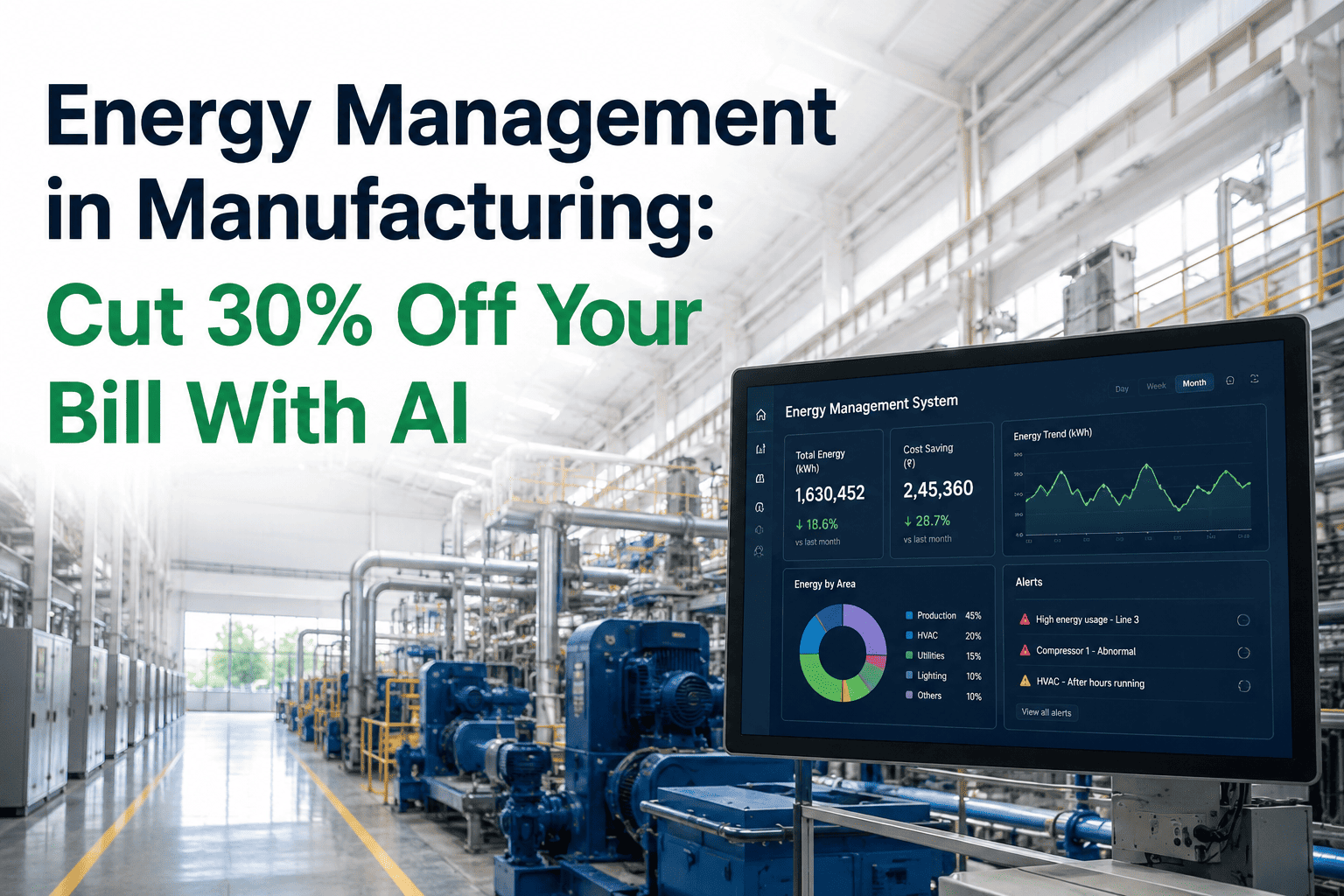
AI-Driven Energy Management for Manufacturing: Cut Up to 30% Off Your Energy Bill
Sub-metering, real-time anomaly detection, and ISO 50001-ready audit trails — all unified in one platform built for the factory floor.
30%
Average energy cost reduction with AI monitoring
6–9mo
Typical ROI payback period
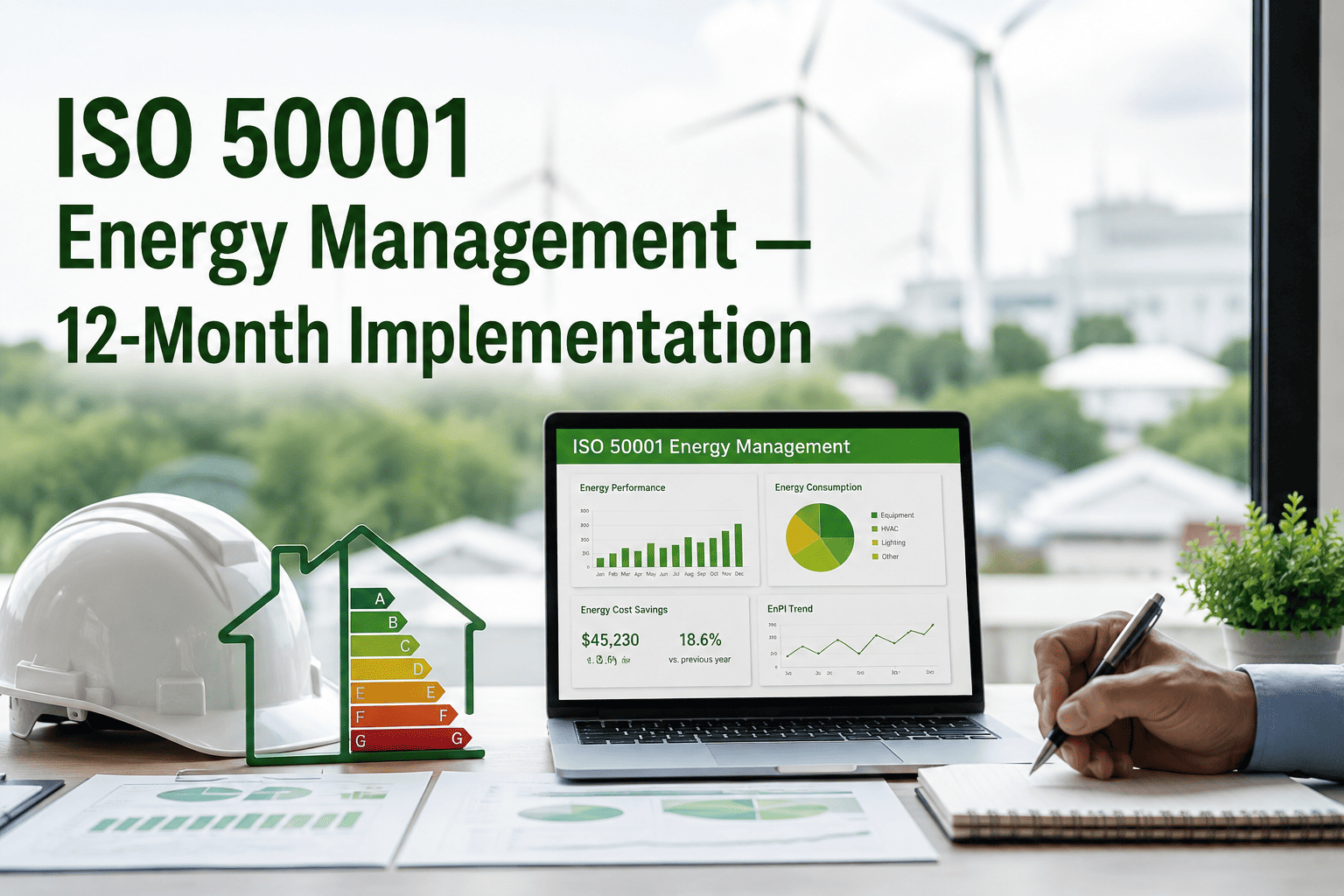
ISO 50001
Compliance-ready audit trail, automated
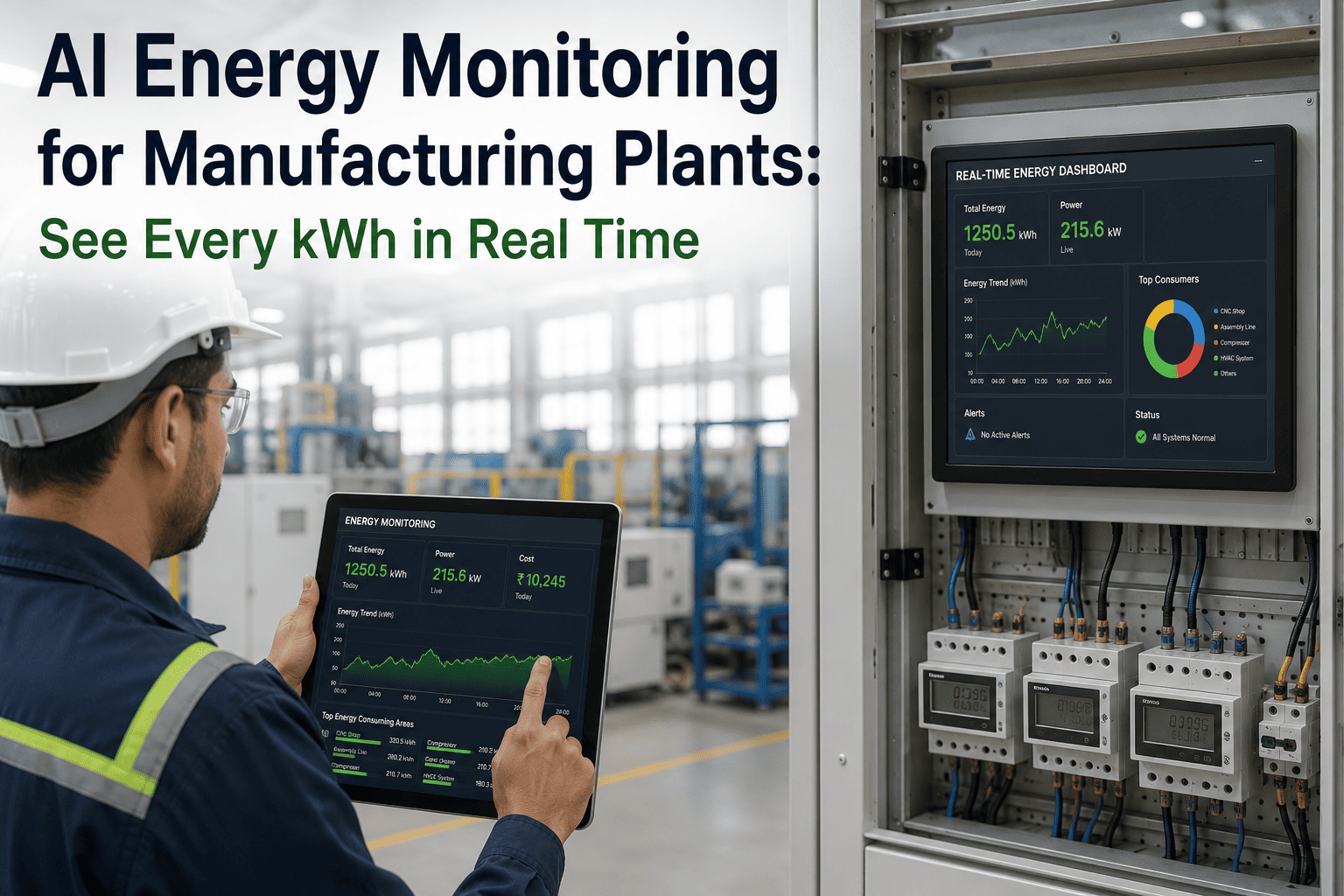
Real-Time
Anomaly detection across every asset and line
The Hidden Cost of Energy Blindness in Manufacturing
Most manufacturers track energy at the utility meter level — one number, once a month, on a bill. That is the equivalent of managing your entire production line by reading the front door thermometer. Without granular, asset-level sub-metering, you cannot see which compressor is drawing 40% more current than its twin. You cannot detect the HVAC unit cycling at 3 AM for no load reason. You cannot correlate a 12% energy spike with a specific product changeover. You only see the total — and pay it.
AI-driven energy management changes the fundamental economics of factory operation. By deploying intelligent sub-metering across every significant load point and applying machine learning to consumption patterns, manufacturers gain the visibility to act — not just observe. The result is not marginal efficiency gains. It is structural cost reduction that compounds every month the system runs.
⚡
Undetected Idle Draw
Equipment left running during shift changes, breaks, and non-production windows accounts for 8–15% of total energy spend in most facilities. Without sub-metering, this waste is invisible.
?
Demand Charge Spikes
A single 15-minute peak can inflate your demand charge for the entire billing month. Without real-time monitoring and alerts, these spikes happen without warning and without recourse.
?
Degrading Equipment Efficiency
Motors, compressors, and HVAC systems draw progressively more power as they age and degrade. Without AI baselines, this gradual increase goes unnoticed until failure — or an audit.
Legacy Energy Management vs. AI-Powered Intelligence: The Gap Is Widening
The competitive divide between manufacturers who have modernised their energy management and those still relying on manual tracking is measurable in margin points. The table below shows the operational reality of each approach.
| Capability |
Legacy Friction — Old Way |
Optimised Excellence — New Way |
| Energy Visibility |
Monthly utility bill, facility-wide total only |
Real-time sub-metering at asset, line, and zone level |
| Anomaly Detection |
Manual review if someone notices an unusual bill |
AI flags deviations within minutes, with root-cause context |
| Demand Management |
No visibility into 15-minute demand windows |
Predictive alerts before demand peaks; automated load shifting |
| ISO 50001 Compliance |
Manual spreadsheets; weeks of preparation per audit |
Continuous automated audit trail; compliance reports in minutes |
| ESG Reporting |
Estimated figures, inconsistent methodology |
Asset-level carbon intensity; Scope 1 & 2 data automated |
| Maintenance Integration |
Energy and maintenance tracked in separate silos |
Energy anomalies trigger maintenance workflows automatically |
| ROI Measurement |
Impossible to attribute savings to specific actions |
Before/after baselines with financial savings calculated per asset |
See the gap in action — live, on your facility data.
Book a Demo
How AI Energy Monitoring Works: From Sensor to Savings
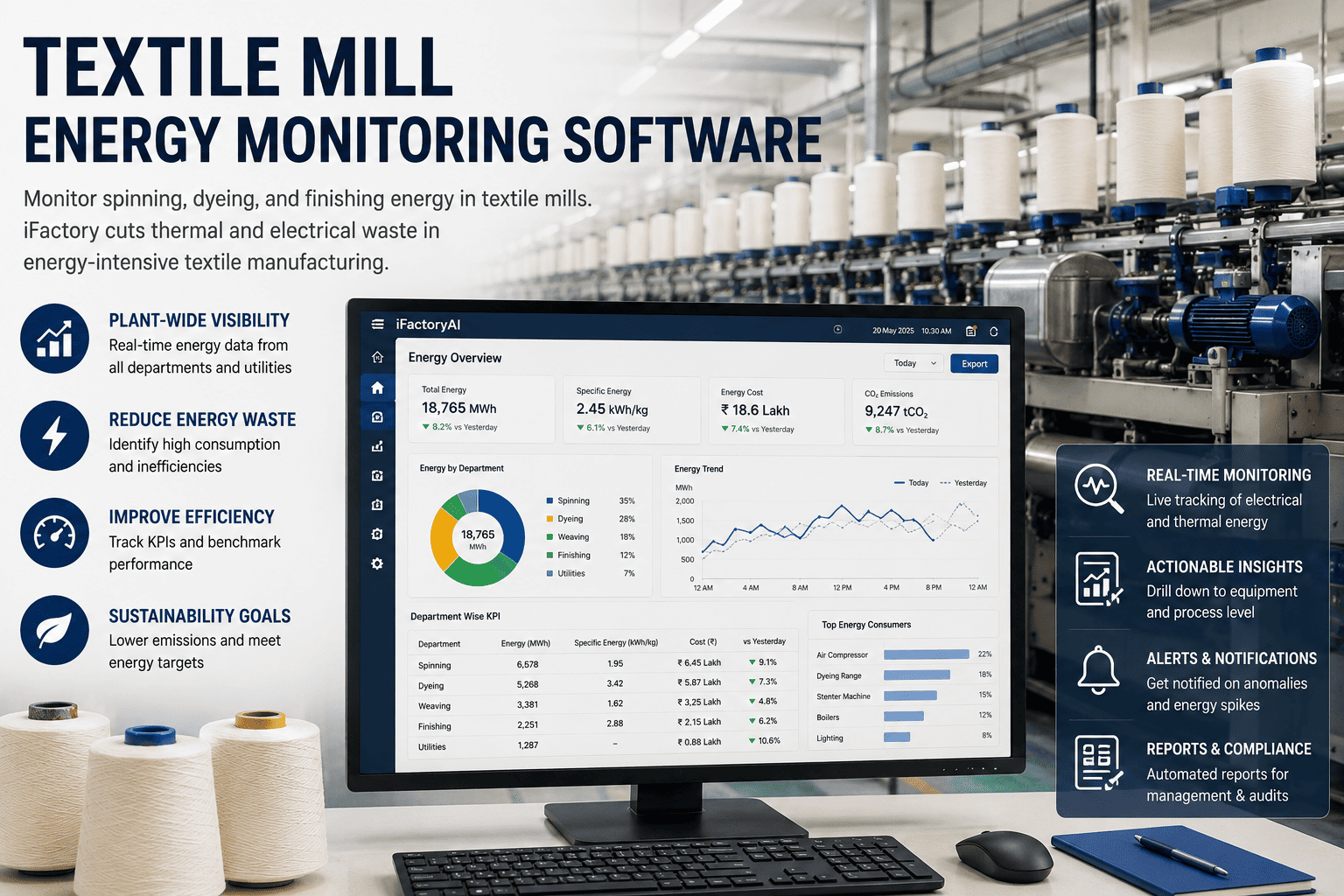
iFactory's energy monitoring capability is not a dashboard bolted onto your existing systems. It is an intelligence layer that ingests data from sub-meters, smart sensors and existing SCADA historians — then applies machine learning to surface patterns, anomalies, and optimisation opportunities that human analysts would never find in the noise.
01
Sub-Meter Deployment
Low-cost smart meters deployed at circuit breaker level, production line level, or individual asset level. Wireless installation minimises downtime. Existing meters and SCADA data ingested via OPC-UA and MQTT.
02
Baseline Learning
AI models establish normal consumption profiles for each asset and zone — by shift, by product, by ambient temperature, by load condition. This contextual baseline is what makes anomaly detection meaningful rather than noisy.
03
Real-Time Anomaly Detection
Deviations from baseline trigger immediate alerts with severity scoring, affected asset identification, and probable cause. Operators receive actionable notifications — not raw data dumps.
04
Demand Peak Prevention
Predictive models forecast 15-minute demand peaks before they occur, enabling automatic or operator-initiated load shifting. A single prevented demand spike can justify months of platform subscription.
05
Compliance & Reporting
ISO 50001 audit trails generated automatically. Energy-per-unit-of-output KPIs tracked continuously. ESG and Scope emissions reports produced on demand — with methodology documentation included.
Business Impact: Three Dimensions of Energy ROI
Manufacturers who evaluate energy management platforms on feature lists miss the point. The right question is: what does this change about our cost structure, our risk exposure, and our competitive position? Here is how iFactory's energy intelligence delivers across all three.
?
Cost Structure Reduction
- 15–30% reduction in total energy spend within 12 months
- Demand charge elimination through predictive peak management
- Idle load identification typically saves 8–12% immediately
- Compressed air and HVAC optimisation: 10–20% additional savings
- Energy cost per unit of output tracked and continuously improved
?️
Risk & Compliance Mitigation
- ISO 50001 audit preparation reduced from weeks to hours
- Automated ESG reporting eliminates estimation risk
- Equipment degradation caught before failure — not after
- Carbon intensity data for customer and investor disclosure
- Regulatory change readiness built into continuous monitoring
?
Competitive & Strategic Advantage
- Energy cost visibility enables accurate product costing
- Sustainability credentials support premium customer positioning
- Cross-facility benchmarking identifies best-practice sites
- CAPEX decisions informed by asset-level consumption data
- New product introduction modelled for energy impact before launch
Frequently Asked Questions
How quickly will we see energy savings after deployment?
Most facilities identify their first actionable savings within 2–4 weeks of sub-meter activation — typically idle load waste or a piece of degrading equipment drawing excessive current. Demand peak management savings appear on the first post-deployment utility bill. Full optimisation, including AI-driven scheduling recommendations, typically matures by month 3–4.
Do we need to replace our existing meters or SCADA infrastructure?
No. iFactory ingests data from existing SCADA systems, historians, and utility meters via standard protocols including OPC-UA, MQTT, and Modbus. New sub-meters are added incrementally where granular visibility is needed, starting at the highest-cost load points. There is no rip-and-replace — the platform adds intelligence on top of infrastructure you have already paid for.
Can this platform support ISO 50001 certification?
Yes. The platform maintains a continuous, tamper-evident audit trail of energy consumption, baseline comparisons, corrective actions, and performance improvements — the core evidence requirements for ISO 50001 certification and surveillance audits. Compliance reports are generated automatically, reducing audit preparation from weeks of manual spreadsheet work to a single export.
How does energy monitoring integrate with predictive maintenance?
Energy consumption is one of the most reliable early indicators of mechanical degradation. A motor drawing 15% more current than its baseline is often 3–6 weeks from failure. iFactory correlates energy anomalies with vibration, temperature, and runtime data to produce unified asset health scores — so an energy alert can automatically trigger a maintenance inspection work order before any performance impact occurs.
Stop Paying for Energy You Cannot See
Request Your Free Manufacturing Energy Performance Audit
Our engineers will map your highest-cost energy waste points, model your savings potential, and show you exactly what iFactory's AI monitoring would deliver — at your facility, with your numbers.
30%
Energy cost reduction potential
6–9mo
Typical full ROI payback
Week 2
First savings identified
Zero
Disruption to current operations