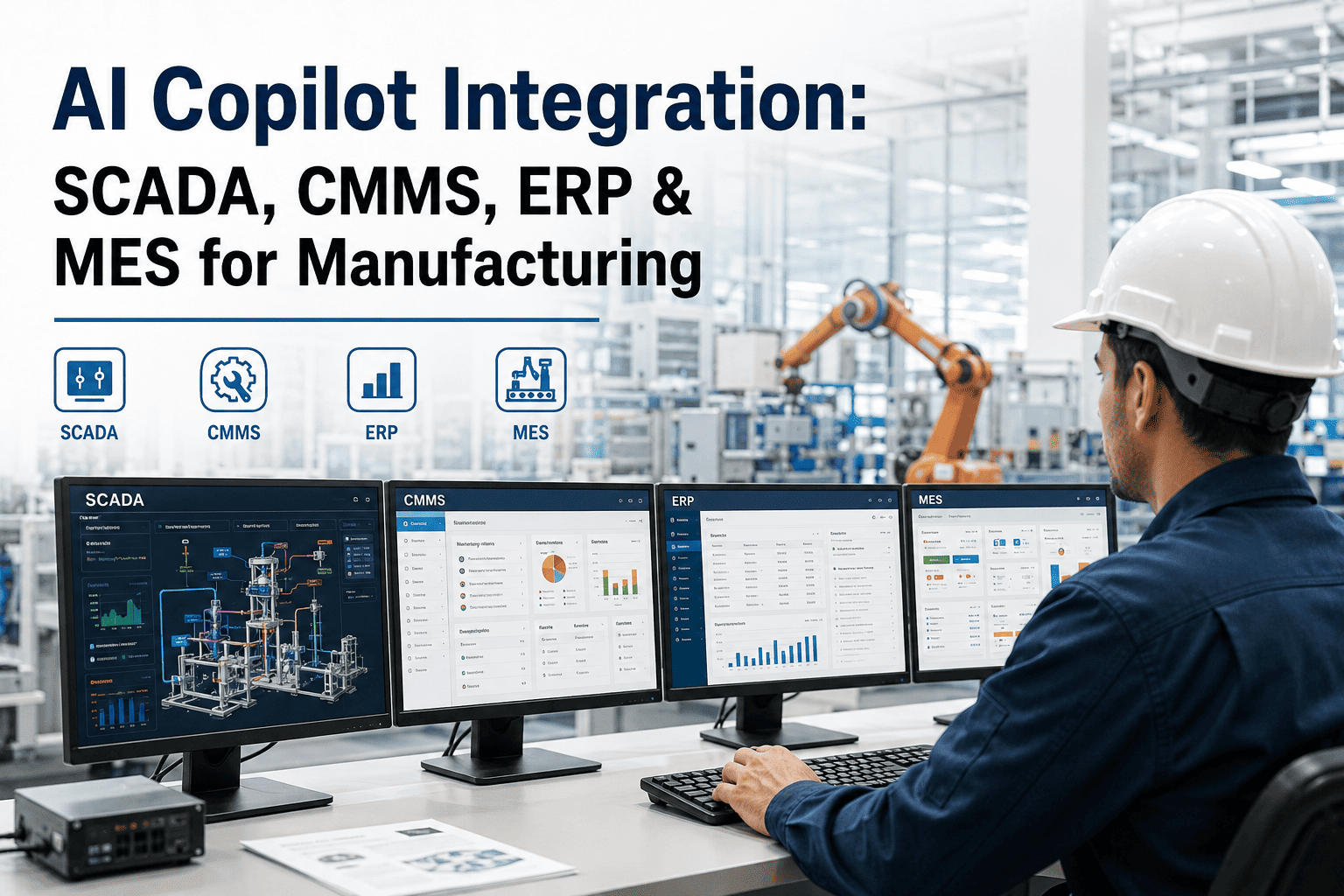
Every day a manufacturer runs three disconnected systems — a SCADA platform capturing process data, an ERP generating purchase orders, and a MES somewhere in between — they are losing money they cannot see, to decisions made on data that does not align. The cost is not hypothetical. Misaligned systems create production gaps averaging 8–14% of total throughput, inventory distortions worth millions in carrying cost and compliance gaps that surface only during audits. If your digital stack was assembled layer by layer over a decade, it was probably never designed to work together — and the gap between what your systems know and what your operators decide is exactly where competitive advantage erodes.
MES vs ERP vs SCADA: Where Each System Fits in Your Manufacturing Stack
Why This Question Matters More Than Ever
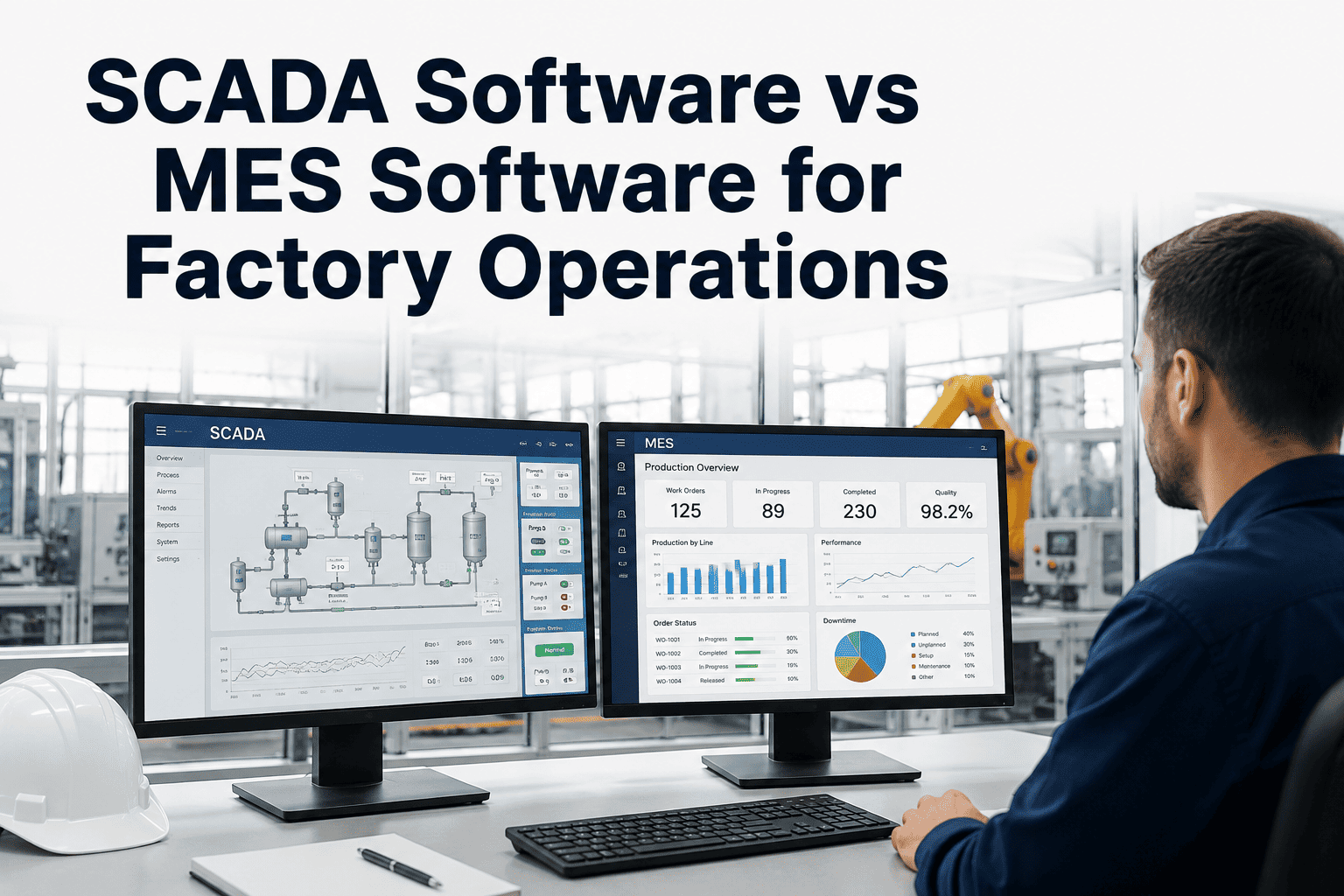
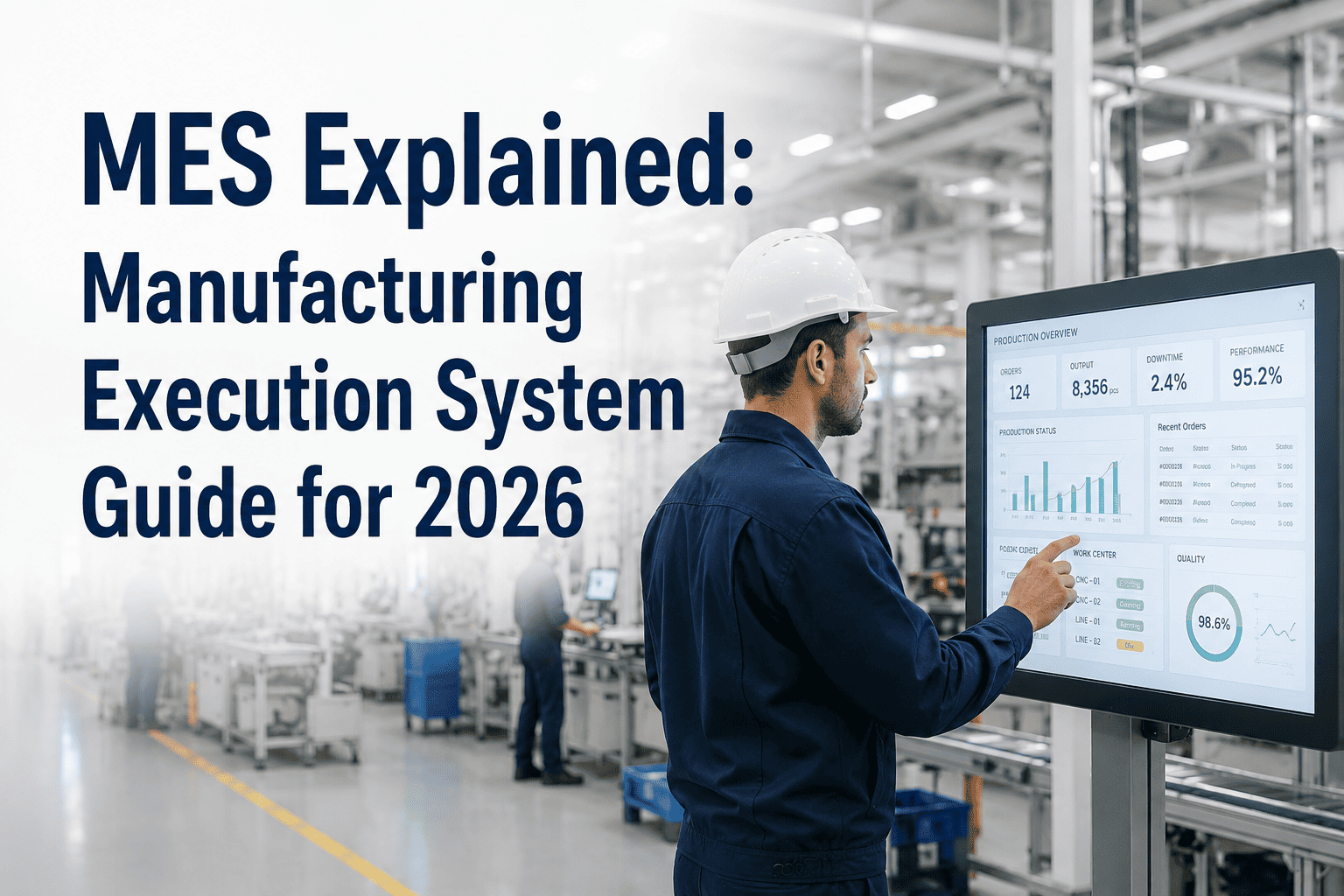
Manufacturing IT stacks are under pressure from two directions simultaneously. On the plant floor, operational technology is generating more data than ever — vibration signals, thermal readings, batch parameters, OEE telemetry. At the business layer, ERPs are absorbing demand signals, supplier lead times, and financial constraints in real time. Between them, most manufacturers have a MES that was configured years ago, integrates poorly with both sides, and has become the silent bottleneck in what should be a continuous data loop.
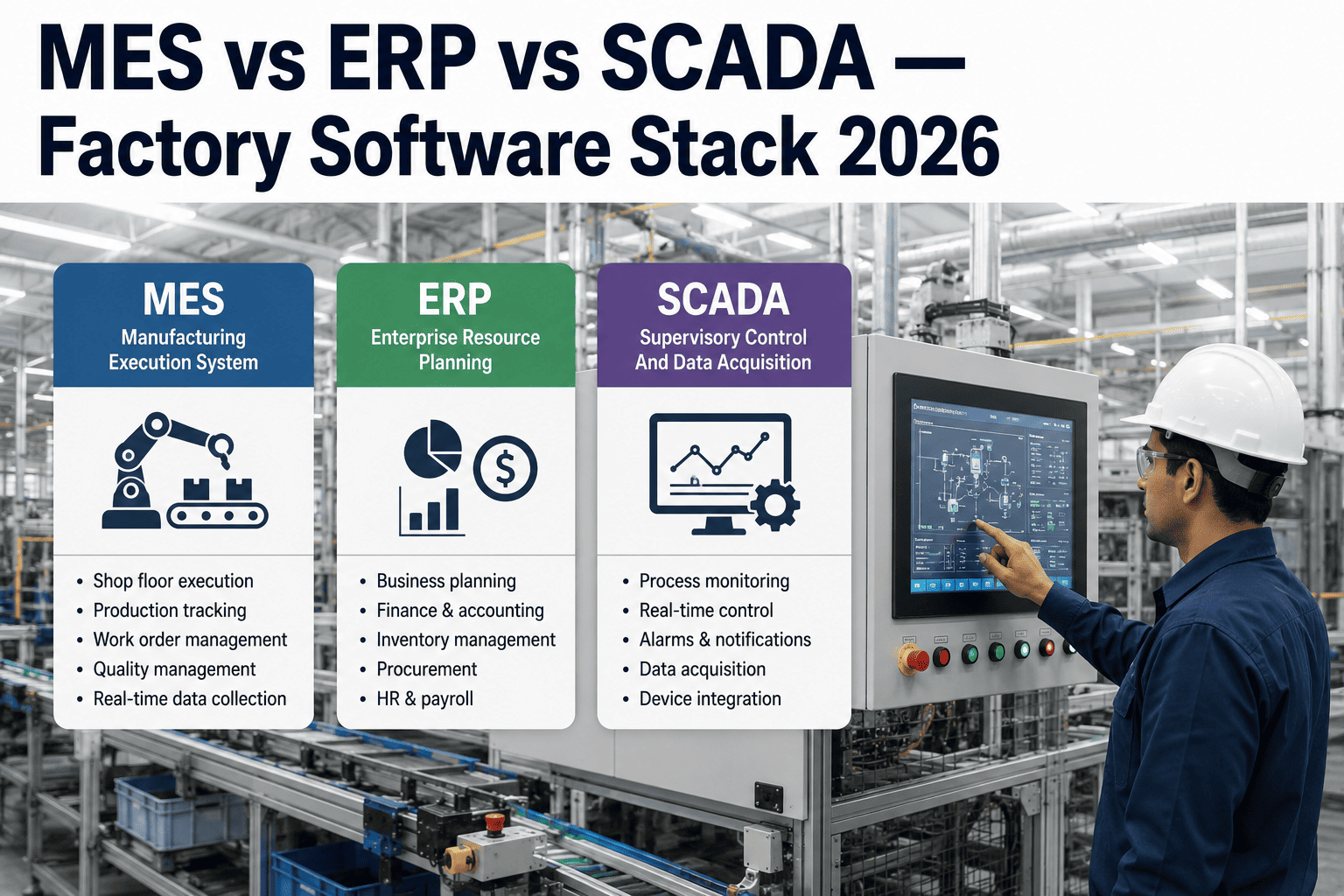
Understanding where SCADA ends, where MES begins, and where ERP takes over is not an academic exercise. It is the foundational decision that determines whether your digital transformation investment compounds into competitive advantage or fragments into expensive silos. The ISA-95 standard provides the framework. This article translates it into actionable architecture guidance.
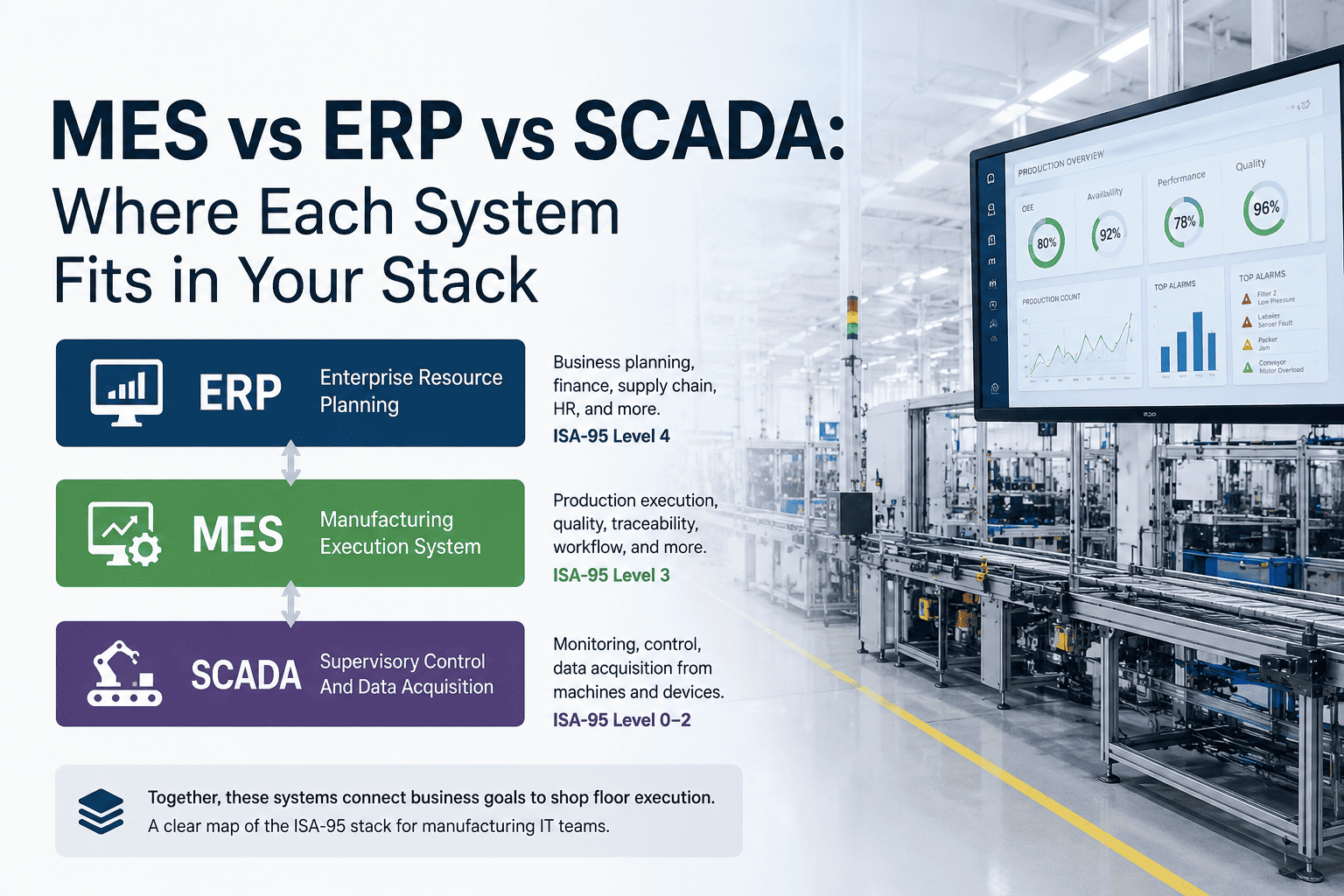
The ISA-95 Stack: Three Layers, Three Missions
The ISA-95 standard (also known as IEC 62264) defines a functional hierarchy for manufacturing enterprise integration. It separates operational concerns into levels that correspond to the speed, granularity, and purpose of the data each layer handles. SCADA, MES, and ERP each occupy a distinct level — and confusion about their boundaries is the root cause of most integration failures.
The Most Dangerous Misconception: Overlap Is Normal
The single most expensive mistake manufacturing IT teams make is allowing SCADA, MES, and ERP to overlap in function without integration in data. When SCADA historians are queried directly by ERP because MES is not contextualising the data, raw signals enter financial systems without business meaning. When ERP schedules production without a MES translating orders into executable sequences, operators work from spreadsheets. When MES systems are not connected to SCADA in real time, OEE calculations are based on estimates rather than actuals.
Each overlap creates a reconciliation burden — manual data entry, shift-end summaries, monthly corrections — that quietly consumes engineering and management bandwidth while degrading the accuracy of every business decision made downstream.
Legacy Friction vs Optimised Excellence: The Integration Gap
The table below maps the most common friction points in disconnected three-layer architectures against the measurable outcomes of a properly integrated ISA-95 stack.
| Dimension | Legacy Friction — Disconnected Stack | Optimised Excellence — Integrated Stack |
|---|---|---|
| Production Data Flow | Manual shift reports reconciled daily; 12–24 hour lag between floor event and ERP update | MES pushes actuals to ERP in real time; zero manual reconciliation; decisions based on current data |
| OEE Calculation | Estimated from operator logs; accuracy typically 60–75%; gaming common under incentive pressure | Calculated automatically from SCADA signal aggregation in MES; 98%+ accuracy; tamper-resistant |
| Quality Traceability | Paper batch records; non-conformance investigations take days; recall scope determination is manual | Digital genealogy from raw material to finished good; non-conformance root cause in minutes; recall scope in seconds |
| Work Order Execution | ERP prints work orders; operators interpret; SCADA runs independently; no closed-loop confirmation | ERP sends orders to MES; MES sequences execution; SCADA confirms completion; ERP receives actuals automatically |
| Energy Visibility | Utility bills only; no per-unit or per-batch energy attribution; no actionable reduction targets | SCADA energy signals contextualised by MES into cost-per-unit; ESG reporting automated |
| Scheduling Agility | ERP schedules based on standard hours; actual capacity unknown until after shift; reactive rescheduling | MES provides real-time capacity actuals to ERP; dynamic rescheduling in response to equipment status changes |
| Compliance Reporting | Manually compiled from three systems; error-prone; audit preparation takes weeks per cycle | Automated from integrated stack; ISO 9001, FDA 21 CFR Part 11, and ESG reports generated on demand |
How iFactory Closes the Gap: The MES Workflow Advantage
iFactory's MES Workflow layer is purpose-built as the integration intelligence between SCADA's real-time process data and ERP's business planning horizon. Rather than requiring a full rip-and-replace of existing infrastructure, iFactory connects to your existing SCADA historians via OPC-UA and MQTT, consumes data from your ERP via standard REST APIs, and contextualises plant-floor signals into the operational KPIs that business decisions require.