
Walk into a factory designed for the future and you'll notice something different immediately. The floor layout shifts monthly as modular workstations reconfigure for new product lines. Autonomous mobile robots navigate dynamically around human workers, their paths optimized in real-time by AI. Digital twins simulate production changes before a single machine moves. Sensors embedded in everything from conveyor belts to HVAC systems feed continuous data streams into edge computing nodes that process information locally and send only actionable insights to the cloud. This isn't science fiction—it's the reality emerging in facilities from Siemens' Amberg to Tesla's Gigafactories, where design principles that seemed revolutionary five years ago are now baseline requirements.
Where Layout Meets Intelligence
Modern factory design converges physical flexibility, data infrastructure, and automation into unified systems that adapt continuously to market demands.
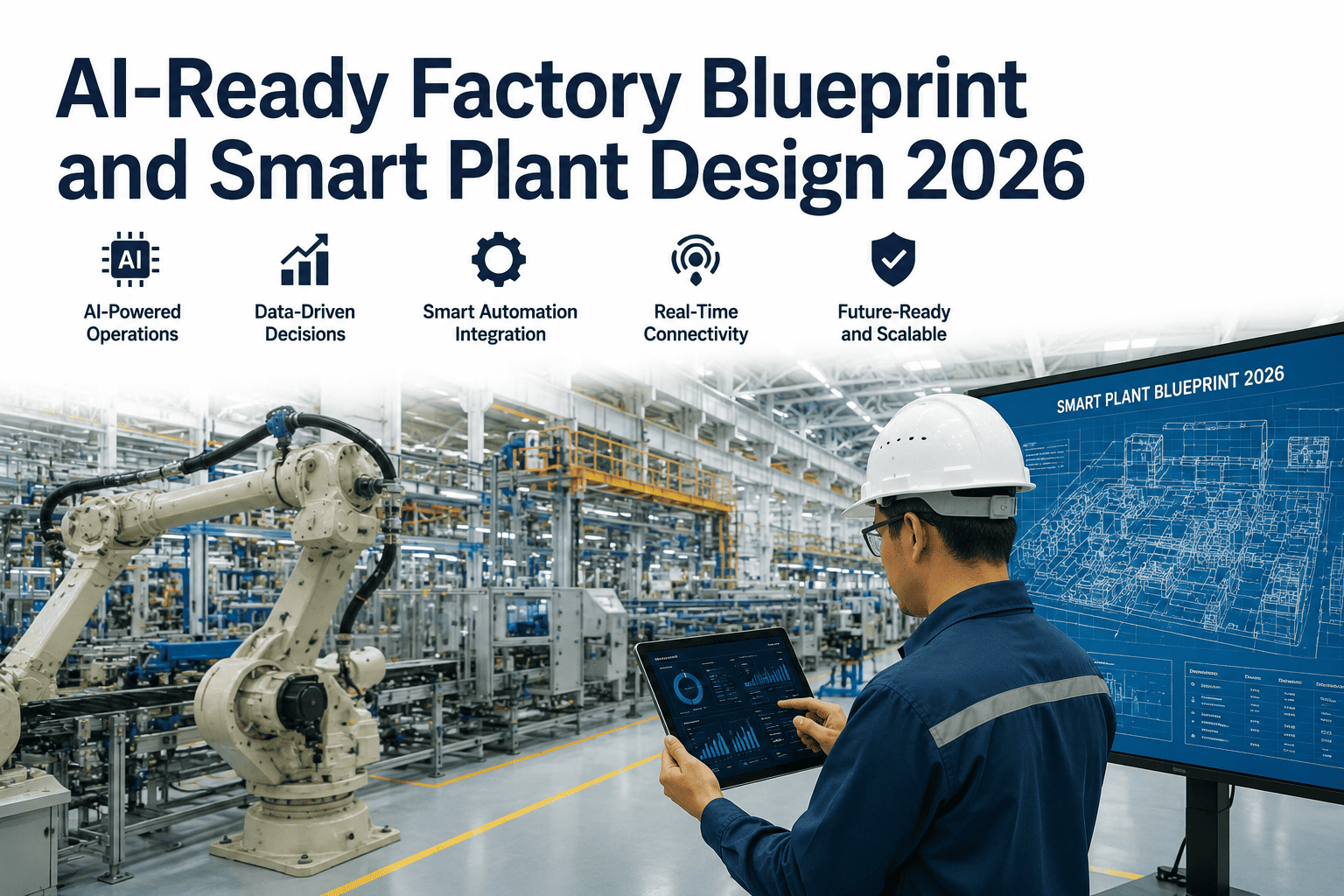
Designing the Factory of the Future: Where Layout, Data, and Automation Converge
The factory of the future isn't just about installing robots or connecting sensors to the cloud. It's about fundamentally reimagining how physical space, digital infrastructure, and automated systems work together as an integrated whole. According to Deloitte's 2025 Smart Manufacturing Survey, 57% of manufacturers now use cloud computing and data analytics at the facility level, while 46% have deployed Industrial IoT solutions. Yet the factories achieving transformational results—those 201 sites in the World Economic Forum's Global Lighthouse Network—go far beyond technology adoption. They design their facilities from the ground up with flexibility, data flow, and human-machine collaboration as core architectural principles.
Six Design Principles for Future-Ready Factories
The transition from traditional manufacturing facilities to intelligent, adaptive production environments requires adherence to design principles that balance standardization with flexibility, and technology investment with human-centric considerations. These principles guide decisions from initial facility planning through ongoing operational optimization.
Modular & Reconfigurable
Equipment and workstations designed as interchangeable modules that can be rearranged without facility-wide shutdowns. Modular production lines reduce layout change time by up to 80% compared to fixed installations.
Data-First Infrastructure
Network architecture and sensor placement planned before production equipment. Edge computing nodes process 75% of factory data locally, enabling real-time decisions while reducing cloud bandwidth costs.
Human-Centric Design
Collaborative zones designed for safe human-robot interaction. According to Deloitte, 81% of manufacturing tasks will still be performed by humans—the factory design must optimize both automation and worker effectiveness.
Digital Twin Integration
Every physical asset has a virtual counterpart for simulation and optimization. Digital twin implementations reduce development time by 50% and deliver 15% cost reduction within the first year of deployment.
Scalable by Design
Architecture that grows without major overhauls. Scalable systems accommodate 2-3x capacity increases through modular expansion rather than complete facility redesigns.
Sustainability Embedded
Energy efficiency and circular principles built into facility DNA. Green factory design reduces operational costs by 20-30% while meeting ESG requirements that 80% of environmental impact is determined at design stage.
Ready to Design Your Factory of the Future?
iFactoryApp's digital platform helps manufacturers plan, simulate, and optimize factory layouts with integrated data infrastructure and automation coordination.
Factory Layout Types for Modern Manufacturing
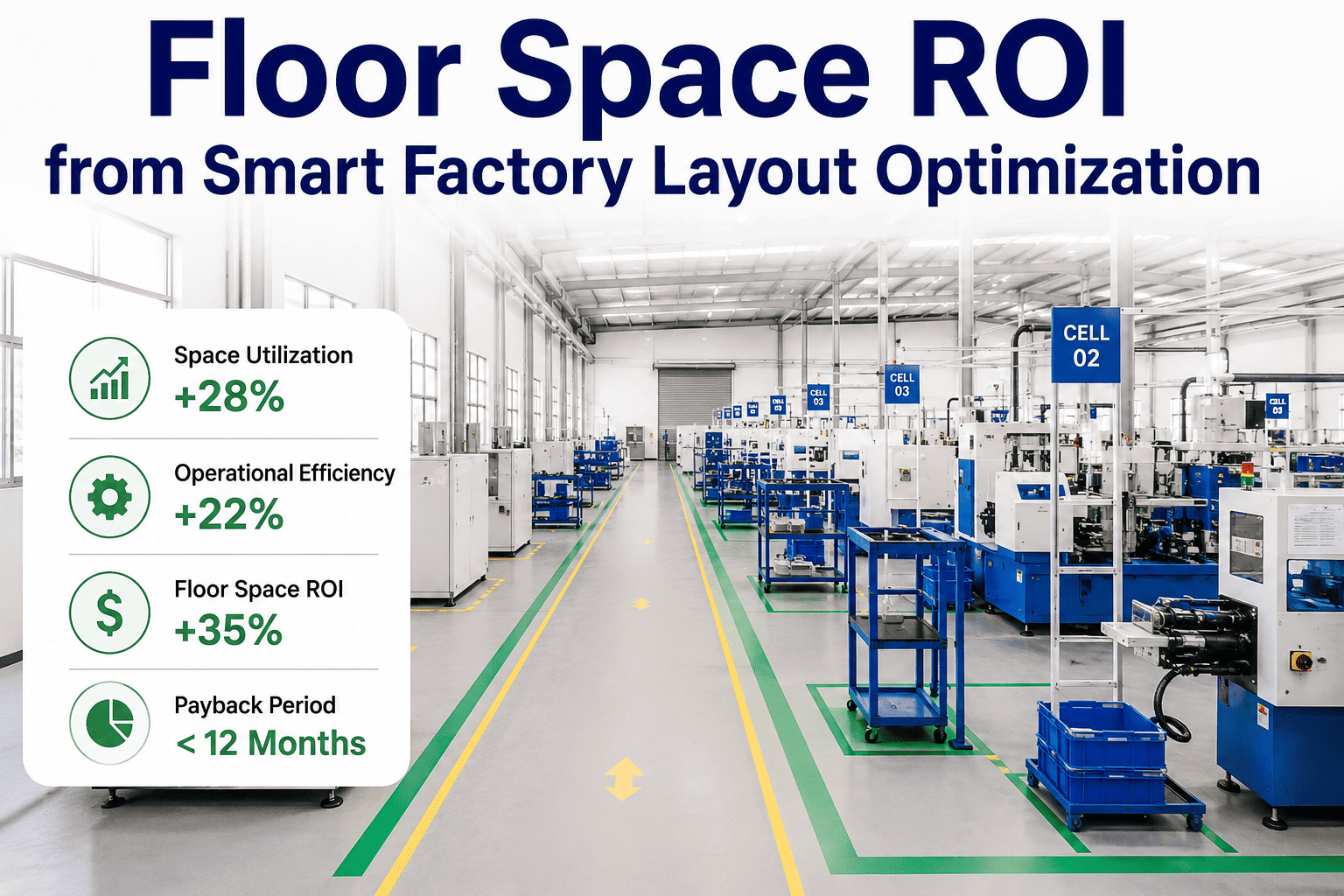
The physical arrangement of equipment, workstations, and material flow paths fundamentally shapes a factory's efficiency, flexibility, and scalability. Modern manufacturing has evolved beyond the four traditional layout types to embrace hybrid approaches that combine elements based on specific production requirements. Understanding these options is essential for designing facilities that can adapt to changing product mixes and market demands.
Strategic facility layout planning can improve process efficiency by 25-30% according to industry consultants. The choice of layout type depends on production volume, product variety, and operational flexibility requirements.
Product Layout
Sequential arrangement following production flow. Ideal for high-volume, standardized products with minimal variation. Automotive assembly lines exemplify this approach.
Process Layout
Similar operations grouped together by function. Offers flexibility for varied product types but increases material handling distances. Common in job shops and batch manufacturing.
Cellular Layout
Workstations clustered into self-contained cells for product families. Balances efficiency with flexibility, reducing work-in-progress inventory by 50-90%.
Fixed-Position Layout
Product remains stationary while workers and equipment move to it. Essential for large-scale products like aircraft, ships, or heavy machinery construction.
Data Infrastructure: The Foundation of Digital Factories
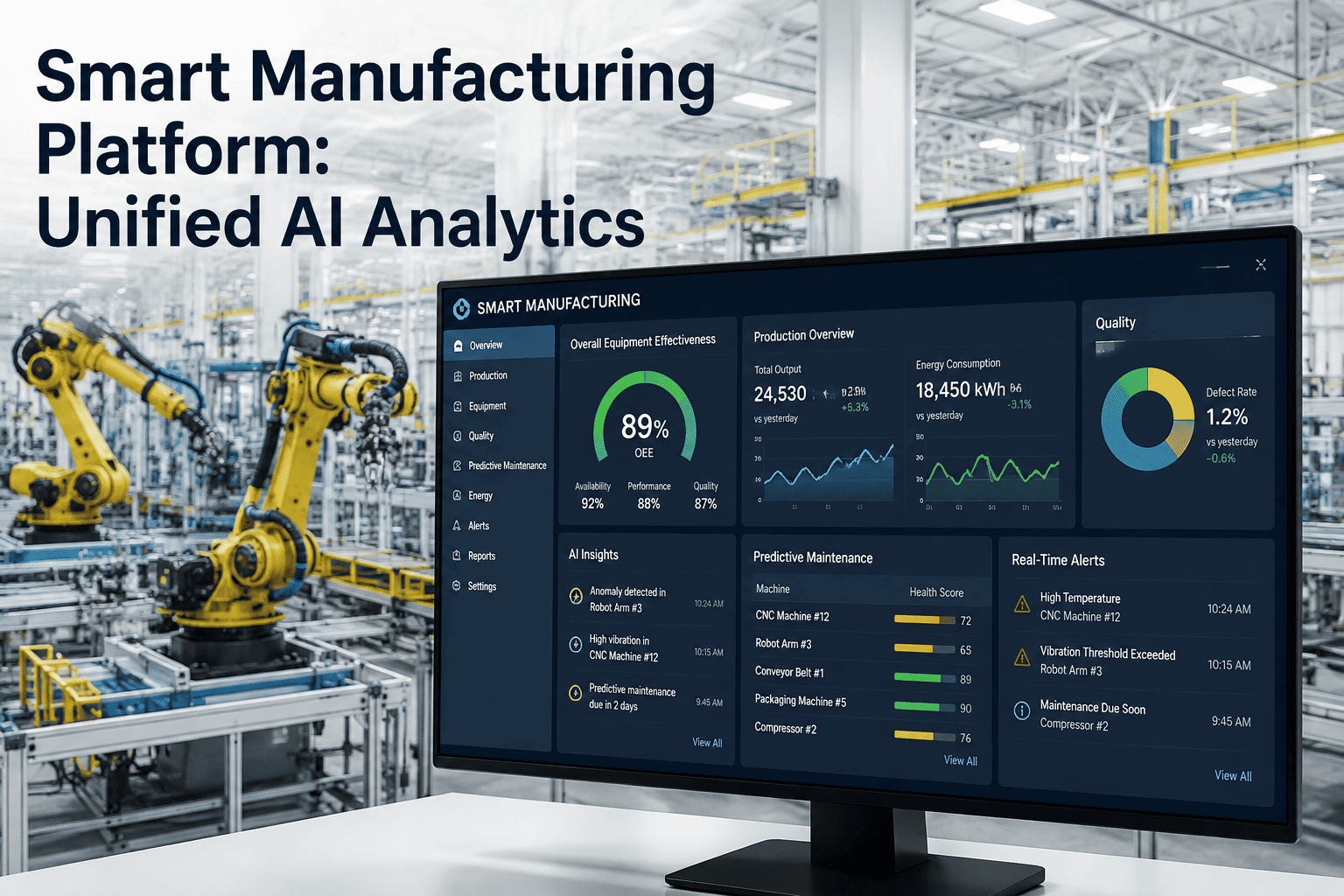
Only 20% of shopfloor data is currently being utilized, according to industry research—a staggering waste of the insights that could drive efficiency, predict failures, and optimize production. The factory of the future treats data infrastructure as a first-class citizen in facility design, with network architecture, sensor placement, and computing resources planned alongside production equipment. This data-first approach transforms raw operational information into actionable intelligence that flows seamlessly from edge devices to cloud platforms.
Four-Layer Data Architecture
Long-term analytics, AI model training, enterprise integration, multi-site coordination
Local data processing, real-time analytics, AI inference, predictive maintenance triggers
Industrial protocols, machine communication, PLC integration, MES connectivity
Smart sensors, IoT devices, equipment monitoring, environmental sensing
Automation and Material Flow Design
The global Autonomous Mobile Robots market is projected to grow from $2.01 billion in 2024 to $4.56 billion by 2030, reflecting the rapid shift from fixed automation to flexible, intelligent material handling systems. Modern factory design must accommodate both traditional automated guided vehicles (AGVs) and next-generation autonomous mobile robots (AMRs) that navigate dynamically, avoid obstacles, and collaborate safely with human workers. This requires thoughtful floor layout, charging infrastructure, and traffic management systems that optimize material flow without disrupting production.
AGV (Automated Guided Vehicles)
- Fixed paths via tracks, wires, or reflectors
- Predictable, repetitive routes
- Lower initial cost
- Stop when encountering obstacles
- Best for stable, high-volume workflows
AMR (Autonomous Mobile Robots)
- AI-driven autonomous navigation
- Dynamic path planning with SLAM
- Higher flexibility and adaptability
- Intelligent obstacle avoidance
- Ideal for changing layouts and mixed traffic
The shift from AGV to AMR reflects broader factory design principles: flexibility over fixed infrastructure, intelligence at the edge, and systems that adapt to changing requirements rather than requiring facilities to adapt to them.
Optimize Your Material Flow with AI-Powered Insights
iFactoryApp's simulation tools help you model material flow, robot traffic patterns, and production bottlenecks before implementation.
Digital Twin-Driven Factory Design
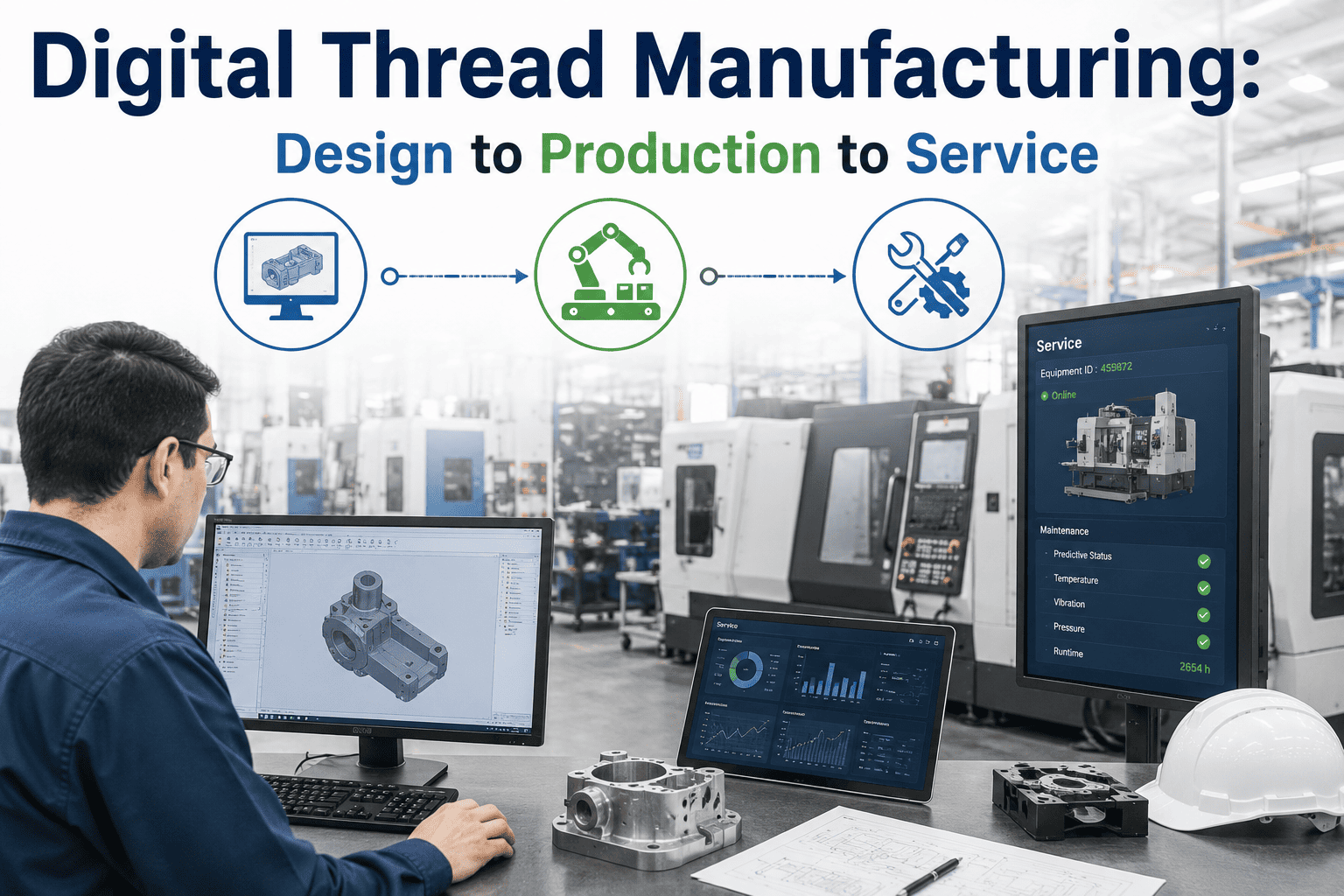
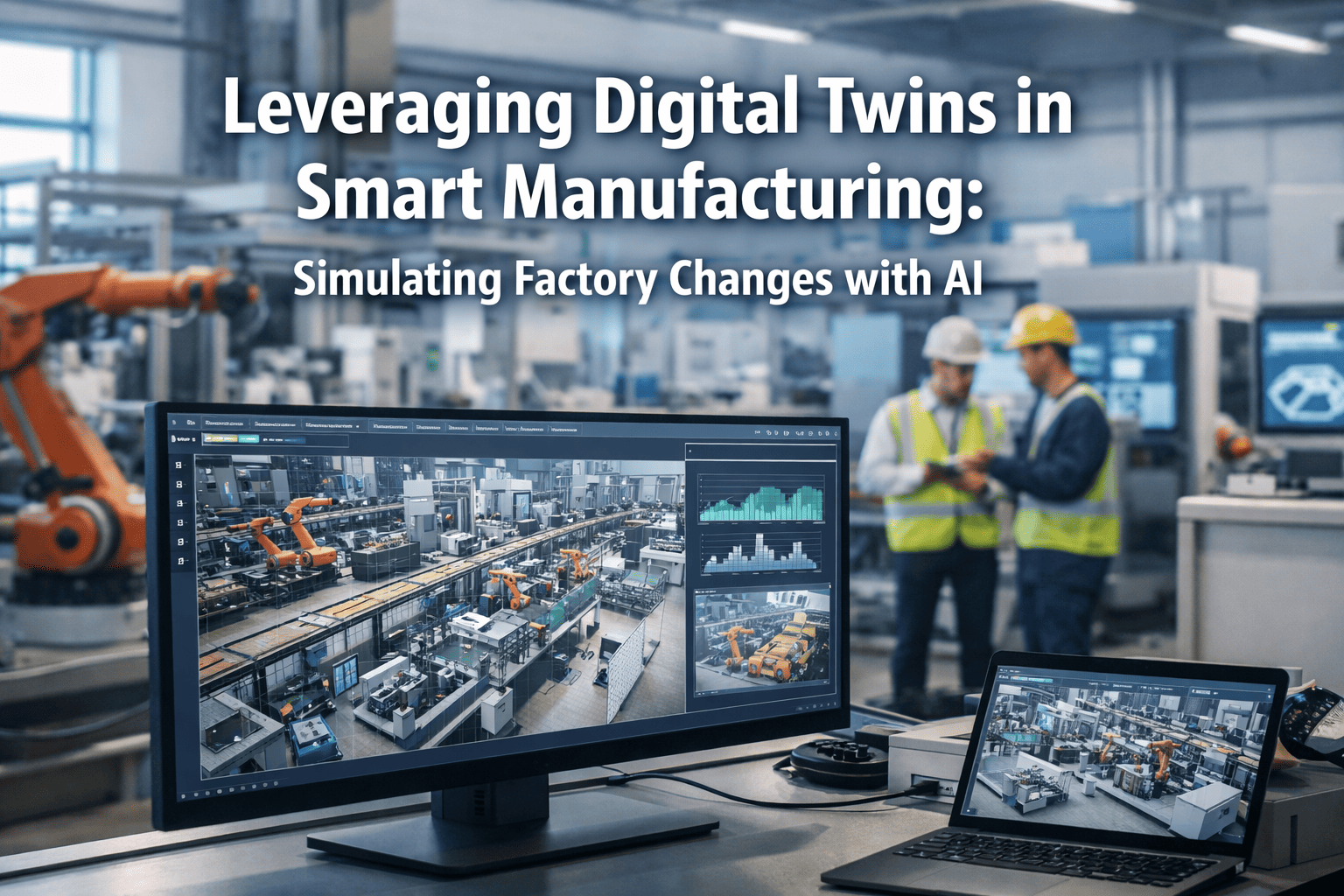
The digital twin market is projected to grow from $21.14 billion in 2025 to approximately $149.81 billion by 2030—a staggering 47.9% compound annual growth rate that reflects how central virtual simulation has become to modern manufacturing. Digital twins enable manufacturers to test factory layouts, production scenarios, and equipment configurations in virtual environments before committing resources to physical implementations. This "virtual commissioning" approach reduces development time by up to 50% while eliminating costly trial-and-error in the real world.
Digital Twin Applications in Factory Design
Sustainable Factory Design
Eighty percent of a product's environmental impact is determined at the design stage—and the same principle applies to factory facilities. Sustainable manufacturing is projected to reach $257.66 billion globally by 2026, driven by ESG requirements, carbon regulations, and the simple economics of energy efficiency. The factory of the future embeds sustainability into its architectural DNA, from building orientation that maximizes natural lighting to closed-loop water systems and on-site renewable energy generation. These aren't just environmental benefits—they translate directly to operational cost reductions of 20-30%.
Green Factory Design Elements
Renewable Energy Integration
On-site solar, wind, or geothermal power generation combined with battery storage systems. Some facilities achieve energy-positive operation, producing more power than consumed.
Water Recycling Systems
Closed-loop water treatment and recycling reduces freshwater consumption by 20-30%. Advanced filtration enables water reuse for cooling, cleaning, and process applications.
Smart Energy Management
AI-driven energy optimization reduces consumption by 18-24%. Smart sensors and automated controls adjust lighting, HVAC, and equipment power based on real-time occupancy and production schedules.
Circular Material Flows
Design for disassembly, material recovery, and waste-to-resource systems. Zero-waste-to-landfill has been achieved in many industrial parks by 2024.
Implementation Roadmap: From Vision to Reality
Transforming an existing facility or designing a new factory for the future requires a phased approach that balances quick wins with long-term architectural decisions. The most successful implementations start with comprehensive assessment, build pilot capabilities that prove value, and then scale proven solutions across the enterprise. This roadmap provides a structured framework for the journey from traditional manufacturing to intelligent, adaptive production environments.
Assess & Strategize
- Conduct digital maturity assessment across all facilities
- Map current data flows and identify infrastructure gaps
- Define target state architecture and design principles
- Establish ROI framework and success metrics
- Secure executive sponsorship and cross-functional team
Design & Pilot
- Create digital twin of pilot production line or area
- Deploy edge computing and sensor infrastructure
- Implement modular workstation concepts in contained area
- Test AMR integration and human-robot collaboration zones
- Document lessons learned and refine playbooks
Scale & Integrate
- Expand proven solutions across facility
- Integrate OT and IT systems on unified data platform
- Deploy fleet management for mobile robots
- Implement predictive maintenance across all critical assets
- Begin sustainability monitoring and optimization
Optimize & Evolve
- Continuous improvement driven by AI-powered analytics
- Expand digital twin to full facility simulation
- Implement cross-site coordination and benchmarking
- Explore emerging technologies (5G, advanced robotics)
- Refresh design principles based on operational learnings
Start Your Factory of the Future Journey Today
iFactoryApp provides the digital foundation for modern factory design—from digital twins and data infrastructure to predictive analytics and production optimization.
Frequently Asked Questions
What are the key design principles for a factory of the future?
The six key design principles are modular and reconfigurable layouts, data-first infrastructure, human-centric design, digital twin integration, scalability by design, and embedded sustainability. These principles ensure facilities can adapt to changing market demands while maintaining operational efficiency. Modular designs reduce layout change time by up to 80%, while digital twins cut development time by 50%.
How does edge computing benefit factory design?
Edge computing processes data locally at the factory floor rather than sending everything to the cloud. This approach reduces latency for real-time decisions, improves security by keeping sensitive data on-premises, and cuts cloud bandwidth costs. By 2025, an estimated 75% of industrial data will be processed at the edge. Edge computing implementations typically generate positive ROI within 12-24 months through reduced downtime and improved operational efficiency.
What is the difference between AGV and AMR systems?
Automated Guided Vehicles (AGVs) follow fixed paths using tracks, wires, or reflectors, making them predictable but inflexible. Autonomous Mobile Robots (AMRs) use AI-driven navigation with onboard sensors to move freely, avoid obstacles dynamically, and adapt to changing environments. AMRs are better suited for facilities with changing layouts and mixed human-robot traffic, while AGVs remain cost-effective for stable, high-volume repetitive routes.
How do digital twins improve factory planning?
Digital twins create virtual replicas of physical factories that can be used to simulate production scenarios, test layout changes, and optimize operations without disrupting actual production. Benefits include 50% reduction in development time through virtual commissioning, 15% cost reduction within the first year, and 30% reduction in buffer and storage investments compared to static planning approaches. The digital twin market is projected to reach $149.81 billion by 2030.
What layout type is best for flexible manufacturing?
Cellular layouts often provide the best balance of efficiency and flexibility for modern manufacturing. By clustering workstations into self-contained cells organized around product families, cellular layouts reduce work-in-progress inventory by 50-90% while maintaining the ability to adapt to changing product mixes. Many factories now use hybrid approaches that combine cellular concepts with modular equipment that can be reconfigured as production requirements evolve.
How can sustainable design reduce factory operating costs?
Sustainable factory design reduces operating costs by 20-30% through energy efficiency, water recycling, and waste reduction. Smart energy management systems with AI-driven optimization can cut energy consumption by 18-24%. On-site renewable energy generation reduces electricity costs and provides energy independence. Since 80% of environmental impact is determined at the design stage, embedding sustainability into initial facility plans maximizes both environmental and economic returns.
Building Tomorrow's Manufacturing Today
The factory of the future isn't a distant vision—it's being designed and built right now by manufacturers who understand that competitive advantage comes from the convergence of flexible layouts, intelligent data infrastructure, and adaptive automation. The technologies are proven. The principles are established. The question isn't whether to transform, but how quickly you can move from pilot to production scale.
Organizations that treat factory design as a strategic capability—investing in modular infrastructure, edge computing, digital twins, and sustainable systems—will lead their industries. Those that continue with incremental improvements to traditional facilities will find themselves increasingly unable to meet the agility, efficiency, and sustainability demands of modern markets.
Start with assessment. Pilot with purpose. Scale with confidence. The factory of the future begins with the design decisions you make today.
.jpeg)
