In too many food and beverage plants, planning is a relay where the baton keeps getting dropped. Sales promises volume nobody told the plant about. The plant finds out a week before execution and scrambles. Procurement learns about the milk shortage after the line is already short. And every month ends the same way: a flurry of last-minute promotions, freezing, and sometimes dumping product just to balance the books. That is not a planning problem — it is an alignment problem, and it is exactly what a real S&OP process is built to end. The goal is deceptively simple: get sales, the plant, supply chain, and procurement to agree on one number and run the business from it. An iFactory analytics layer is what turns that one number into something every function can see and trust.
iFactory · Food & Beverage Integrated Planning
Building an S&OP Process That Drives One Number and Ends the Firefighting
F&B S&OP has to align sales, plant, supply chain, and procurement around a single plan — while absorbing perishability, seasonality, and promotions that other industries never face. Here is how to build the cycle that actually holds.
1
number every function plans from
10-30%
inventory cut from mature S&OP
18-36 mo
rolling planning horizon
Monthly
cycle, with weekly touchpoints
What S&OP Actually Is — Stripped of the Jargon
Sales and operations planning is one integrated process that forces every function to agree on a single, shared plan for the months ahead. Not a sales forecast that the plant ignores. Not a production schedule that has not seen the demand signal. One reconciled number for demand, supply, inventory, and finance that everyone commits to and runs the business from. It typically runs as a monthly cycle with weekly touchpoints, looking 18 to 36 months out, and its whole purpose is to surface misalignment far enough ahead that you can actually fix it — instead of discovering it the week of execution, when your only options are bad ones.
Why Food and Beverage Breaks Generic S&OP
You cannot lift an S&OP playbook from electronics or auto parts and drop it into a dairy or a bakery. F&B carries constraints those industries never see, and each one bends the process. Ignore them and the plan looks tidy on paper and collapses in the plant.
Perishability
Raw materials and finished goods decay. Plan demand wrong and product does not just sit — it spoils. Shelf life has to live inside the plan, not outside it.
Primary input balancing
Milk, livestock, and crops arrive on their own schedule, not yours. The plan must balance what comes in against what sells — surplus has nowhere good to go.
Seasonality & weather
Demand swings on holidays, heat waves, and seasons. A forecast that ignores the calendar and the sky is a forecast that will be wrong in predictable ways.
Promotions
A promo spikes demand overnight. If it is planned for profit and fed into supply early, it works. If it is a surprise to the plant, it becomes a fire to fight.
Frequent new products
Constant NPD and SKU proliferation mean the plan is never static. Launches and sunsets have to be sequenced against capacity, not bolted on after.
The common thread
Every one of these connects demand to supply on a tight clock. F&B S&OP lives or dies on getting the signal across functions early.
Want to see which of these constraints is breaking your current plan? Talk to a planning specialist and we will pressure-test your cycle against them.
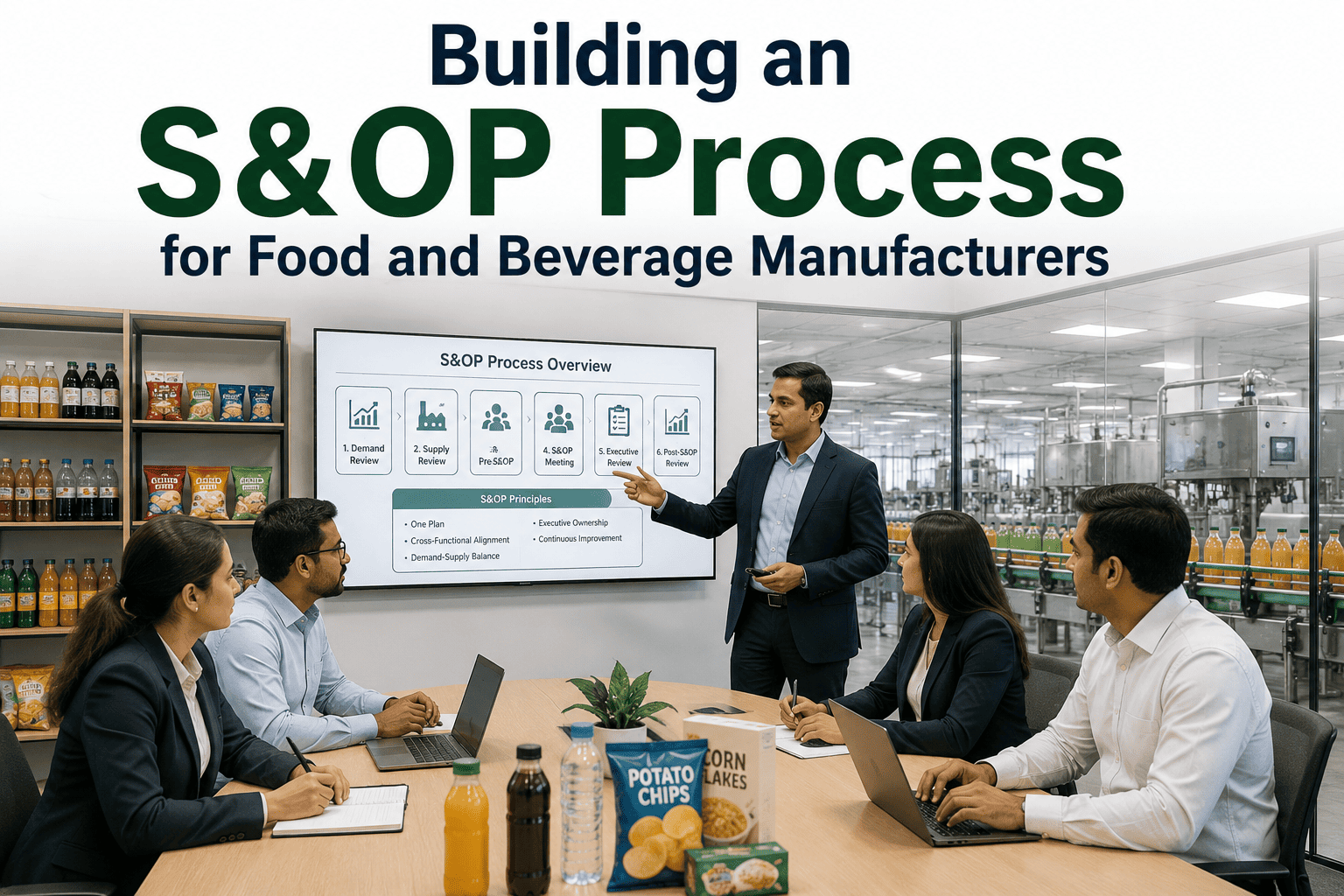
The Monthly Cycle: Six Steps, One Baton
A working S&OP process is a relay run on a calendar. Each step hands a clean baton to the next, and by the end the whole organization is holding one agreed plan. Here is the cycle that holds — and what each leg has to deliver before it passes the baton on.
1
Product Review
R&D and product teams set what is launching, ramping, and sunsetting. Sequence NPD against capacity before it ever hits the forecast.
Hands off: the product roadmap
2
Demand Review
Sales and marketing build one consensus, unconstrained forecast — promotions, seasonality, and trends folded in, not bolted on.
Hands off: the demand plan
3
Supply Review
The plant and procurement test that forecast against capacity, primary input, shelf life, and changeovers. Where it cannot be met, they say so now.
Hands off: the supply plan & the gaps
4
Finance Review
Finance reconciles the plan against budget and last month's actuals, and tracks forecast accuracy over a rolling window.
Hands off: the plan in dollars
5
Pre-S&OP
Functional leaders meet to close the gaps between demand, supply, and finance — so the executive meeting decides, not debates.
Hands off: the reconciled plan & decisions needed
6
Executive S&OP
Leadership reviews, resolves the trade-offs, and signs off. The output is the one number the whole business now runs from.
Hands off: the committed plan
The Empty Seat: Why Most S&OP Processes Fail
There is a reason so many S&OP efforts stall, and it is almost never the software. It is an empty seat at the table. Think of an eight-person rowing crew — one missing seat and the whole boat loses speed and direction. S&OP is the same. Every function has to be in the room, because each absence shows up as a specific, predictable failure downstream.
No Sales seat
Demand plan misses real orders and promo plans — the plant builds the wrong mix
No Plant seat
Forecast ignores capacity and changeovers — the plan is impossible before it starts
No Supply Chain seat
Inventory and shelf-life constraints go unseen — spoilage and stockouts follow
No Procurement seat
Primary input and long-lead materials are missed — supply is short at execution
If your S&OP table has an empty seat from product, sales, plant, supply chain, or finance, you have already found your biggest improvement opportunity. By its nature S&OP produces disagreement — that is the point. Functional heads should argue the trade-offs in the room, on the plan, weeks ahead, instead of fighting fires alone on the floor.
From Firefighting to One Number: The Shift
The whole payoff of S&OP is the move from reactive scramble to proactive plan. Here is what actually changes when the cycle starts to hold.
Sales promises volume the plant never saw
becomes
One consensus forecast every function commits to
Plant learns the plan a week before execution
becomes
Supply tests the plan weeks ahead, with time to fix
Promotions surprise the line and spike waste
becomes
Promos planned for profit and fed to supply early
Surplus balanced by freezing or dumping
becomes
Input and demand matched before product is made
Each function chasing its own local KPI
becomes
One plan tied to profit, not departmental scores
Want to map your firefighting moments to the cycle step that would prevent them? Book a demo and we will build the picture on your data.
Frequently Asked Questions
How is S&OP different from our demand forecast?
A forecast is one input; S&OP is the whole reconciliation. The forecast says what sales expects to sell. S&OP takes that, tests it against plant capacity, primary input, shelf life, inventory, and finance, then produces one committed plan every function runs from. A forecast nobody else has validated is exactly what leads to the week-of-execution scramble.
What makes F&B S&OP harder than other industries?
Perishability and primary inputs. In most industries, a demand miss leaves you with inventory; in food and beverage it leaves you with spoilage, and your raw material arrives on the cow's or the harvest's schedule, not yours. Layer in heavy promotions, seasonality, and constant new products, and the plan has to connect demand to supply on a much tighter clock.
How long does a monthly S&OP cycle take?
The full cycle runs over a month — product, demand, supply, and finance reviews feeding pre-S&OP and then the executive meeting — with weekly touchpoints in between to catch fast-moving changes. The planning horizon itself rolls 18 to 36 months out, because the value is in seeing misalignment early enough to act on it.
Who needs to be in the room?
At minimum, the leaders of product, sales and marketing, plant operations, supply chain, and finance — plus procurement, which is critical in F&B because of primary input and long-lead materials. An empty seat from any of these shows up as a specific failure downstream: missed promos, impossible schedules, spoilage, or short supply at execution.
Do we need new software to start?
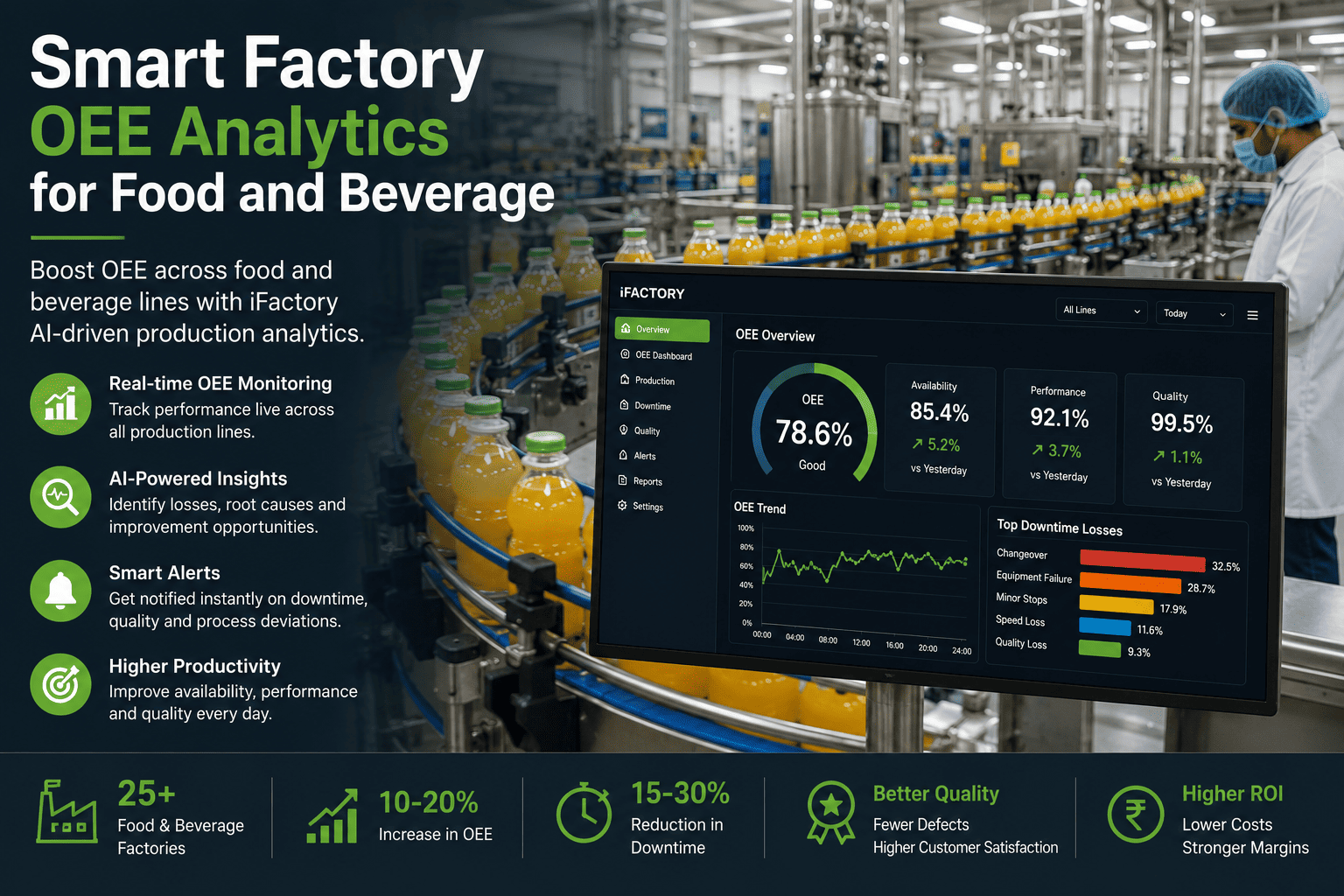
The process comes first — the cycle, the cadence, and the full table. But the common stumbling block is fragmented data, where each function plans from its own numbers. A single source of truth that every seat can see is what turns the meetings from opinion-trading into fact-based decisions. An analytics layer over your existing systems is typically where plants begin.
Stop running the business from five different numbers.
Build the One Number Your Whole Plant Plans From
Bring your current planning cadence — wherever it stands. We will map your demand, supply, inventory, and finance signals into one shared view, surface the misalignments your monthly scramble keeps hiding, and show you where the firefighting starts. Turnkey analytics over your existing systems: pre-configured, integrated across functions, with perishability and promotions built in. Live in weeks, not quarters.
10-30%
inventory on the table