When manufacturers deploy AI strategically, the results speak for themselves: 35-50% reduction in unplanned downtime, 25-30% decrease in maintenance costs, and ROI ratios reaching 10:1 within 18 months. With 77% of manufacturers now implementing AI—up from 70% just two years ago—the question is no longer whether to adopt, but how to adopt responsibly. The organizations achieving the highest returns combine advanced technology with clear governance frameworks, workforce development and systematic implementation approaches that scale proven solutions across operations.
Strategic AI Integration for Manufacturing Excellence
From predictive maintenance reducing downtime by 50% to demand forecasting optimizing inventory by 30%, AI delivers quantifiable operational improvements when implemented with clear governance frameworks.
Industrial AI Adoption Strategies: A Framework for Measurable Manufacturing Value
The manufacturing sector stands at a pivotal moment in its technological evolution. Artificial intelligence has moved beyond experimental pilots into production-ready solutions that deliver measurable returns. The global AI in manufacturing market reached $5.94 billion in 2024 and is projected to surge to $62.33 billion by 2032, growing at a compound annual growth rate of 35.1%. This explosive growth reflects AI's proven ability to transform forecasting accuracy, maintenance operations, and production efficiency across the industry.
The Current State of AI in Manufacturing
Manufacturing generates more data than any other industry, creating the foundation for AI-driven transformation. The 2025 State of AI in Manufacturing Survey reveals that adoption has accelerated significantly, with organizations moving from experimentation to scaled deployment. AI is primarily employed in production optimization (31%), customer service (28%), and inventory management (28%), with predictive maintenance emerging as the highest-value application.
AI Adoption Maturity Stages
Ready to Implement AI in Your Manufacturing Operations?
iFactoryApp helps manufacturers identify high-ROI AI opportunities and build strategic implementation roadmaps tailored to your specific operational challenges.
High-Impact AI Use Cases in Manufacturing
Understanding where AI delivers the greatest value is essential for strategic adoption. The most impactful applications combine machine learning capabilities with operational data to solve specific manufacturing challenges. Each use case addresses a critical pain point while generating measurable returns on investment.
According to McKinsey, AI in manufacturing and supply chain operations alone could reduce costs by as much as half a trillion dollars annually across the global industry.
Predictive Maintenance
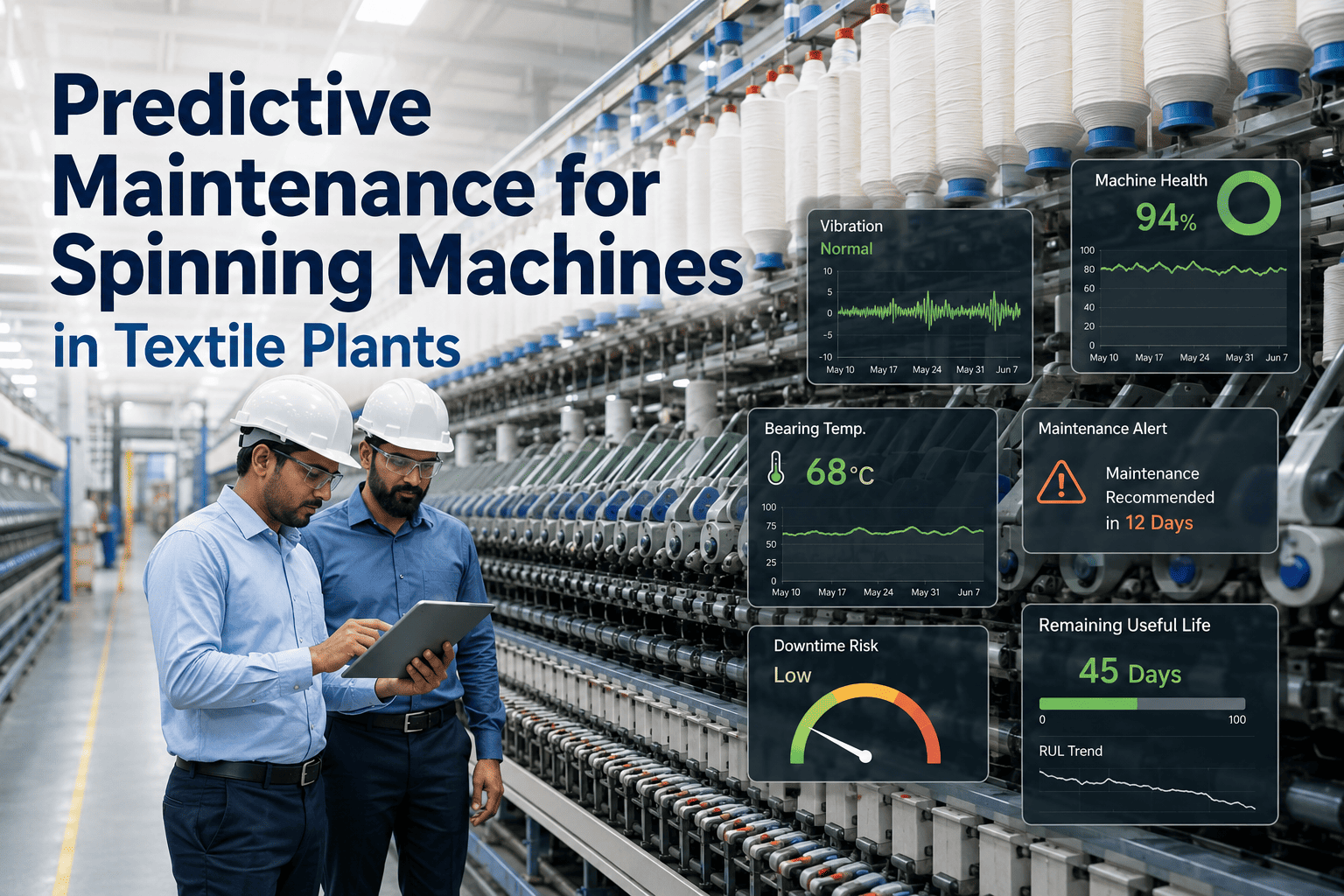
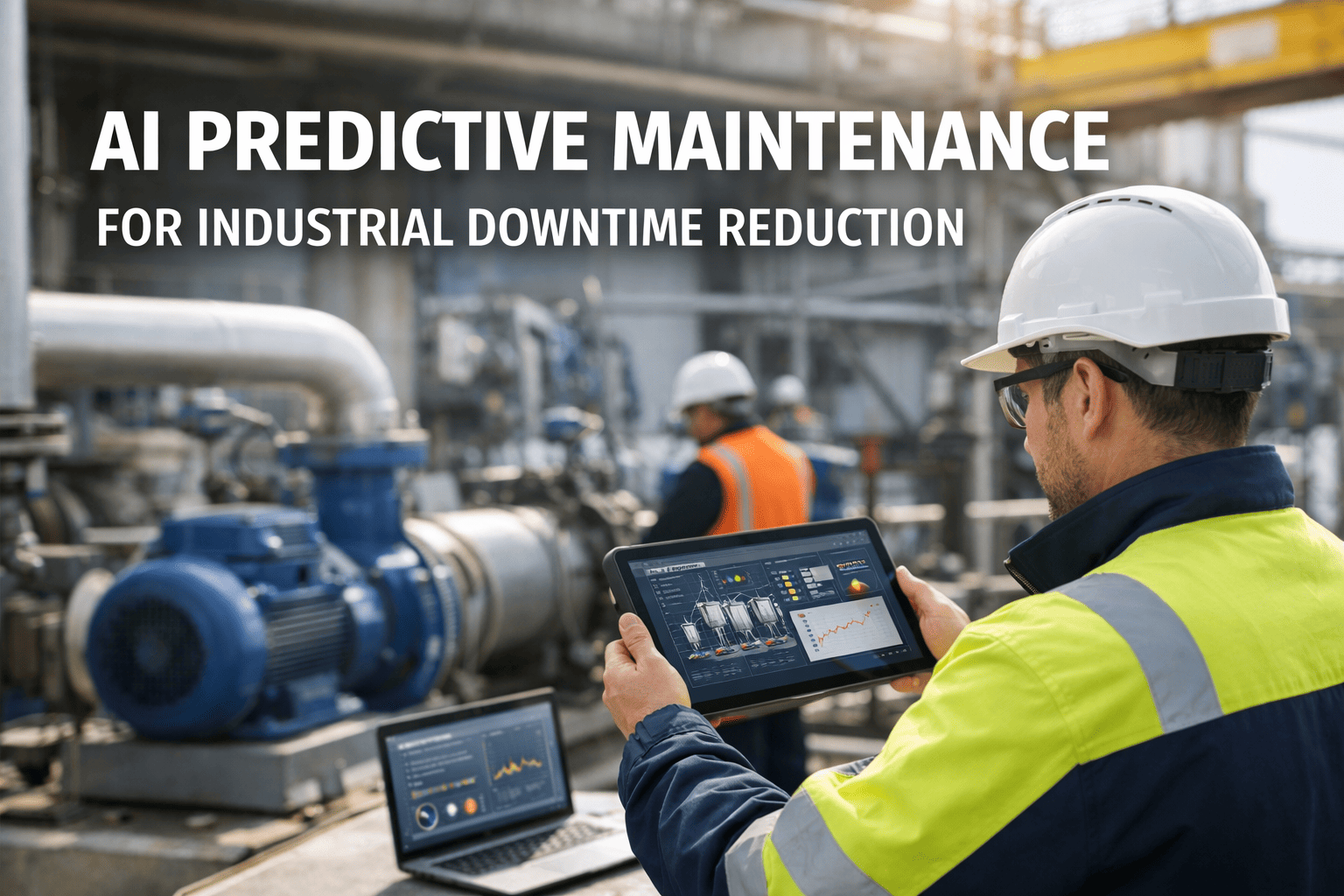
AI analyzes sensor data—vibration, temperature, acoustic signatures—to predict equipment failures 2-6 weeks in advance with 92% accuracy. Delivers 25-30% cost savings and 10:1 ROI.
Quality Control & Inspection
Computer vision systems scan products in real-time, detecting defects that human inspectors might miss. Achieves 90% detection accuracy and improves product quality by 35%.
Demand Forecasting
Machine learning analyzes historical sales, market trends, and external factors to predict customer demand. Organizations are 3x more likely to improve KPIs with AI forecasting.
Supply Chain Optimization
AI predicts disruptions, optimizes inventory levels, and streamlines logistics. 61% of manufacturing executives report decreased costs from AI-powered supply chain management.
Leadership Framework for Responsible AI Use
As AI becomes more prevalent in manufacturing, governance frameworks are essential for ensuring ethical, transparent, and compliant deployment. Only 35% of companies currently have an AI governance framework in place, yet 87% of business leaders plan to implement AI ethics policies. Strong governance protects organizations from regulatory risks while building trust with employees, customers, and partners.
Responsible AI governance requires structural, relational, and procedural practices that operationalize ethical principles across the organization.
Accountability
Clearly defined responsibility for AI outcomes with oversight bodies and review processes
Transparency
Clear disclosure of AI system implementation to stakeholders and general awareness
Fairness
AI developed to mitigate bias and support equitable treatment across all operations
Safety & Security
Systems that are secure, reliable, and resilient to failures or adversarial attacks
Privacy & Data
AI that upholds individual data rights and complies with applicable protection laws
Human-Centric
AI that supports human well-being and aligns with fundamental rights and values
Global AI Governance Frameworks
EU AI Act (2024)
Risk-based classification system categorizing AI as unacceptable, high, limited, or minimal risk with corresponding requirements.
Legally BindingNIST AI RMF
Voluntary framework for managing AI risks with guidance on governance, mapping, measuring, and managing AI systems.
FrameworkOECD Principles
First intergovernmental principles on AI adopted globally, encouraging responsible stewardship of trustworthy AI.
GuidelinesBuild Your AI Governance Framework
Our experts help manufacturing leaders establish governance frameworks that ensure responsible AI deployment while maximizing operational value.
Building AI-Ready Workforce Capabilities
The AI skills gap represents one of the most significant barriers to successful implementation. While 75% of companies are adopting AI, only 35% of workers have received AI training in the past year. Executives estimate that 40% of their workforce may need to reskill as a result of implementing AI over the next three years. Addressing this gap requires strategic investment in training, new hiring approaches, and cultural transformation.
The AI Skills Gap Challenge
Workforce Development Strategies
Continuous Learning
Workshops, online courses, and certification programs building AI literacy progressively
Cross-Functional Teams
Multidisciplinary collaboration between data scientists and operations personnel
Personalized Paths
AI-powered platforms adapting training to individual learning styles and objectives
Apprenticeships
Hands-on learning combining theory with practical AI implementation experience
Real-World ROI: Case Studies in Manufacturing AI
The most compelling evidence for AI adoption comes from manufacturers who have implemented solutions and measured results. These case studies demonstrate the tangible returns possible when AI is deployed strategically with clear governance and workforce support.
Siemens
Production Planning OptimizationAI-powered automation optimized production planning and scheduling, identifying bottlenecks before they impacted operations.
General Mills
Logistics & Supply Chain AIAI models assess daily shipments from plants to warehouses with real-time performance data driving waste reduction.
Unilever
Supply Chain OptimizationAI-powered automation predicts and prevents stockouts while optimizing logistics across global supply networks.
Steel Manufacturer
Predictive MaintenanceIoT sensors and ML algorithms achieved 92% predictive accuracy, identifying failures 2-6 weeks in advance.
Strategic Implementation Roadmap
Successful AI adoption follows a disciplined approach that balances ambition with pragmatism. The organizations achieving the highest returns start with clearly defined business problems, establish strong data foundations, and scale proven solutions systematically.
Assessment & Foundation
1-3 Months- Identify high-value use cases aligned with business priorities
- Assess current data infrastructure and quality
- Establish baseline performance metrics
- Define governance structure and risk framework
Pilot & Validation
3-6 Months- Deploy AI solution on critical equipment for proof of concept
- Collect 6-12 months of operational data for model training
- Validate predictions against actual outcomes
- Measure initial ROI and refine business case
Scaling & Integration
6-12 Months- Expand successful pilots across departments and sites
- Integrate AI with ERP, CMMS, and MES systems
- Standardize processes and documentation
- Build internal AI capabilities and expertise
Optimization & Evolution
12+ Months- Monitor model performance and retrain with new data
- Explore advanced use cases including agentic AI
- Foster AI-driven decision-making culture
- Track KPIs and demonstrate ongoing ROI
Overcoming Common Implementation Challenges
Even with clear strategies, manufacturers face significant hurdles in AI adoption. Understanding these challenges and preparing mitigation strategies increases the likelihood of successful implementation.
Data Quality & Silos
Manufacturing firms often store data in isolated systems with varying formats, making aggregation difficult.
Legacy System Integration
Many organizations use outdated systems that aren't easily compatible with modern AI technology.
Skills Gap & Talent
Rapid technological change has created a skills gap, with workers lacking AI expertise.
Change Management
AI adoption requires overhauling existing processes, creating resistance from established teams.
The Future of AI in Manufacturing
The next frontier in manufacturing AI is agentic systems—AI capable of autonomous decision-making and multi-step task execution. Currently, 23% of organizations are scaling agentic AI in at least one business function, with IT, knowledge management, and supply chain leading adoption.
Frequently Asked Questions
What is the typical ROI timeline for AI in manufacturing?
Most manufacturers achieve positive ROI within 12-24 months, with some predictive maintenance implementations reaching full payback in as little as 11 months. McKinsey research indicates leading organizations achieve 10:1 to 30:1 ROI ratios within 12-18 months of implementation.
Which AI use case should manufacturers prioritize first?
Predictive maintenance is often the highest-value starting point because it addresses a universal pain point (equipment downtime costs $260,000+ per hour on average), has well-established solution patterns, and delivers measurable ROI quickly with 25-30% maintenance cost reduction.
How much data is needed to train effective AI models?
For predictive maintenance, new equipment typically requires 6-12 months of operational data before AI models achieve optimal accuracy. Historical maintenance records, sensor readings, and performance metrics form the training foundation.
What governance framework should manufacturers adopt?
Manufacturers should establish frameworks based on accountability, transparency, fairness, safety, privacy, and human-centric design. The EU AI Act provides a useful risk-based classification approach, while NIST's AI Risk Management Framework offers voluntary guidance.
How do manufacturers address the AI skills gap?
Successful organizations invest in continuous learning programs, create cross-functional teams combining AI expertise with domain knowledge, and establish partnerships with educational institutions. Consider that 40% of workforce may need reskilling over the next three years.
What percentage of manufacturers are currently using AI?
According to the 2025 State of AI in Manufacturing Survey, 77% of manufacturers have implemented AI to some extent, up from 70% in 2023. AI is primarily employed in production solutions (31%), customer service (28%), and inventory management (28%).
Transform Your Manufacturing Operations with Strategic AI
Industrial AI adoption represents one of the most significant opportunities for manufacturers to improve efficiency, reduce costs, and build competitive advantage. With 77% of manufacturers already implementing AI and a projected market of $62 billion by 2032, the question is not whether to adopt, but how to adopt strategically. Success requires identifying high-ROI use cases, establishing strong governance frameworks, investing in workforce capabilities, and scaling proven solutions systematically.