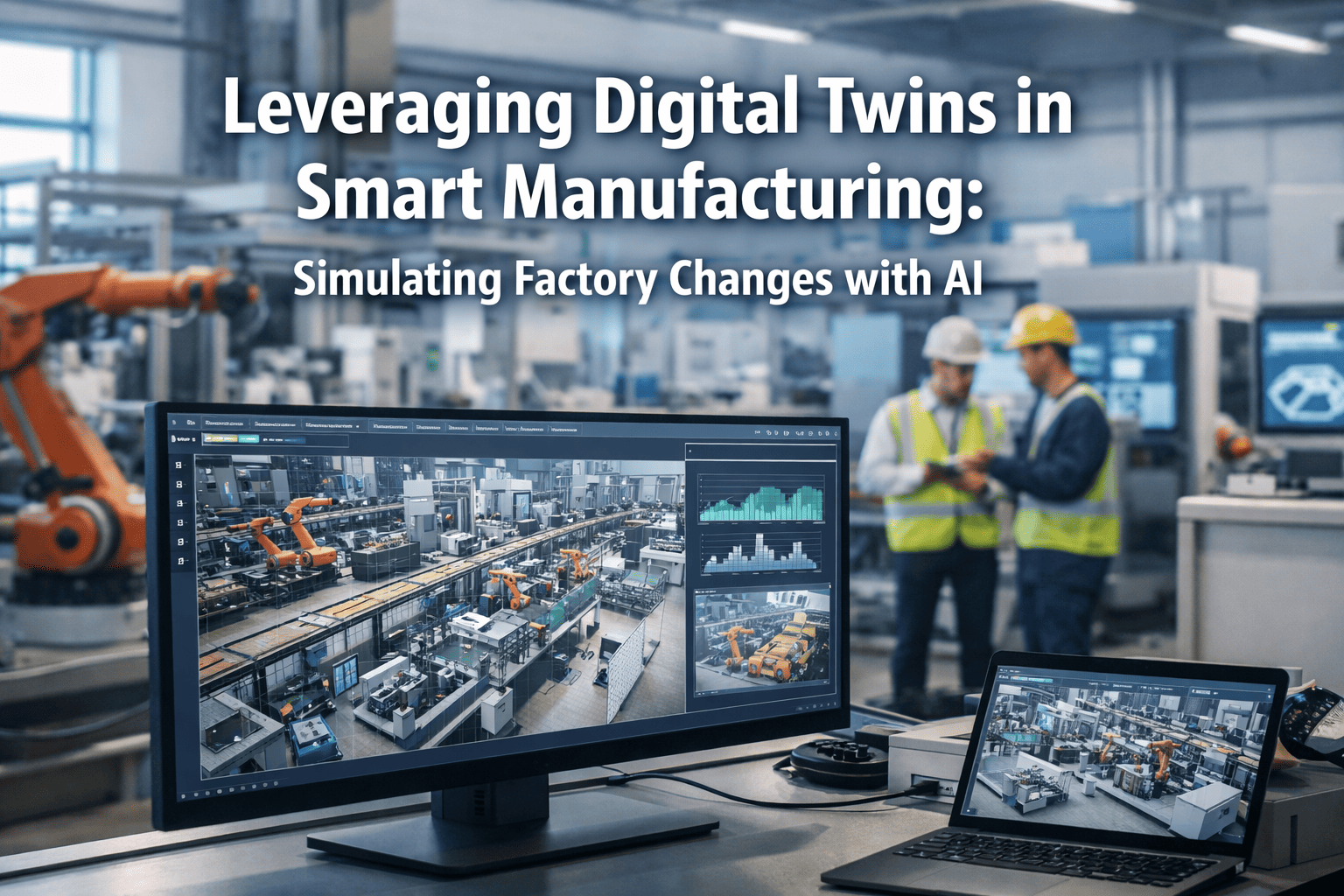
The fourth industrial revolution is no longer coming—it's here, and it's separating winners from laggards at an accelerating pace. 97% of manufacturers now plan to invest in smart manufacturing technology, with 78% allocating more than 20% of their improvement budgets to digital transformation. The smart factory market has reached $392.85 billion and is racing toward $900 billion by 2034. Yet despite this momentum, most manufacturers struggle to assess their actual readiness—where they stand today, what gaps exist, and which investments will deliver the highest returns.
This Industry 4.0 Readiness Checklist provides a structured framework to evaluate your factory's digital maturity across six critical dimensions. Whether you're just beginning your smart manufacturing journey or optimizing an existing transformation, this checklist identifies gaps, prioritizes investments, and creates a roadmap for 2026 and beyond. McKinsey projects first-mover manufacturers can achieve a 122% cash flow boost—while non-adopters risk a 23% decline. The time to assess your readiness is now.
Industry 4.0 Readiness Checklist for Manufacturers in 2026
The 2026 Smart Manufacturing Landscape
Understanding Industry 4.0 Readiness Levels
Industry 4.0 readiness isn't binary—it's a spectrum from complete outsiders to top performers. The most widely-adopted assessment models use a six-level framework (0-5) measuring maturity across multiple dimensions. Understanding where your organization falls on this spectrum reveals both current capabilities and the path forward.
Industry 4.0 Maturity Levels
Outsider
No Industry 4.0 activities planned or implemented. Reactive operations, manual processes, siloed data.
Beginner
Initial digitization efforts. Basic automation, some data collection, pilot projects underway.
Intermediate
Connected systems, cross-functional data sharing, defined digital strategy, expanding technology adoption.
Experienced
Integrated operations, predictive capabilities, real-time visibility, proactive decision-making.
Expert
Highly automated, AI-driven optimization, digital twins, self-adjusting processes, enterprise-wide integration.
Top Performer
Fully realized Industry 4.0. Autonomous operations, prescriptive analytics, continuous innovation, industry leader.
The Six Dimensions of Industry 4.0 Readiness
Comprehensive Industry 4.0 readiness assessment evaluates six interconnected dimensions. Each dimension requires specific capabilities to achieve digital maturity. Weakness in any single dimension limits the effectiveness of the others—strategy without technology is vision without execution; technology without people is investment without returns.
Six Dimensions of Industry 4.0 Readiness
1. Strategy & Leadership
Executive commitment, digital roadmap, investment allocation, organizational vision for Industry 4.0 transformation.
- Defined digital transformation strategy
- Executive sponsor and governance
- Budget allocation (20%+ recommended)
- Clear KPIs and success metrics
2. Smart Factory Infrastructure
Automation hardware, sensors, connectivity backbone, cybersecurity systems, and edge computing capabilities.
- Factory automation hardware
- IoT sensors deployed at scale
- Network infrastructure (5G/WiFi6)
- Cybersecurity protocols
3. Operations & Processes
Data-driven decision making, predictive maintenance, real-time monitoring, process optimization capabilities.
- Real-time production monitoring
- Predictive maintenance deployed
- Quality control automation
- Process optimization analytics
4. Products & Services
Smart product capabilities, digital services, customization, and data-driven product development.
- Product data collection capability
- Digital service offerings
- Mass customization capability
- Product lifecycle management
5. Data & Connectivity
IoT deployment, data integration platforms, analytics capabilities, and information architecture.
- Unified data platform
- IT/OT convergence
- Cloud/edge architecture
- Advanced analytics/AI capability
6. People & Culture
Digital skills, training programs, change management, and organizational readiness for transformation.
- Digital skills training program
- Change management process
- Cross-functional collaboration
- Innovation culture
Dimension 1: Strategy & Leadership Checklist
Strategy and leadership provide the foundation for successful Industry 4.0 transformation. Without executive commitment, clear vision, and allocated resources, technology investments fail to deliver expected returns. Research shows 52% of manufacturers have created central teams to lead smart manufacturing initiatives—signaling the importance of dedicated governance.
Strategy & Leadership Readiness Checklist
Executive Commitment
Governance & Organization
Roadmap & Investment
Dimension 2: Smart Factory Infrastructure Checklist
Infrastructure provides the physical and digital backbone for Industry 4.0 capabilities. Without sensors, connectivity, and automation hardware, data-driven operations are impossible. According to Deloitte's 2025 survey, top investment priorities include factory automation hardware (41%), active sensors (34%), and vision systems (28%).
Smart Factory Infrastructure Checklist
Automation Hardware
Sensors & IoT
Connectivity & Security
Accelerate Your Industry 4.0 Readiness
iFactory's integrated CMMS and MES platform provides the digital foundation for Industry 4.0 transformation. Our solution connects sensors, automates data collection, enables predictive maintenance, and delivers real-time visibility—helping manufacturers advance from Level 1-2 to Level 3-4 maturity in months, not years.
Dimension 3: Operations & Processes Checklist
Operations and processes represent where Industry 4.0 delivers tangible value—reduced downtime, improved quality, optimized throughput. The shift from reactive to predictive operations marks a critical maturity milestone. Currently, 67% of manufacturers actively implement preventive maintenance to reduce downtime, with predictive capabilities growing rapidly.
Operations & Processes Checklist
Production Monitoring
Maintenance Strategy
Quality & Optimization
Dimension 4-6: Data, Products & People Checklists
The final three dimensions—Data & Connectivity, Products & Services, and People & Culture—complete the Industry 4.0 readiness picture. Data provides the intelligence; products extend value to customers; people make transformation possible. Notably, human capital remains the lowest maturity category in most organizations, with only 29% of technicians rated "very prepared" for digital technologies.
Data & Connectivity
Products & Services
People & Culture
Technology Investment Priorities for 2026
Knowing what to invest in—and in what order—determines transformation success. Based on 2025 survey data and industry ROI analysis, manufacturers should prioritize technologies that build foundational capabilities before pursuing advanced innovations. Data analytics and connectivity form the base upon which AI, digital twins, and autonomous systems are built.
Technology Investment Priorities 2025-2026
90-Day Industry 4.0 Readiness Action Plan
Assess & Align
- Complete this readiness checklist across all 6 dimensions
- Identify current maturity level (0-5) for each dimension
- Benchmark against industry peers
- Secure executive sponsor and define governance
- Conduct cybersecurity assessment (68% already have)
Prioritize & Plan
- Identify highest-impact gaps between current and target state
- Define 3-5 year roadmap with quarterly milestones
- Allocate budget (20%+ of improvement budget recommended)
- Select Tier 1 technology investments
- Develop workforce training plan
Pilot & Launch
- Launch pilot project on highest-impact opportunity
- Deploy foundational systems (CMMS, sensors, analytics)
- Begin workforce training program
- Establish KPIs and measurement dashboards
- Document lessons learned and scale plan
Start Your Industry 4.0 Journey Today
iFactory provides the complete digital foundation for Industry 4.0 readiness—CMMS, MES, IoT integration, predictive maintenance, and real-time analytics in a single platform. Our implementation team helps manufacturers assess current maturity, prioritize investments, and achieve measurable results within 90 days. Join the 97% investing in smart manufacturing.
Frequently Asked Questions
What is Industry 4.0 readiness?
Industry 4.0 readiness measures how prepared a manufacturing organization is to adopt and benefit from fourth industrial revolution technologies including IoT, AI, robotics, cloud computing, and data analytics. Readiness assessments typically evaluate six dimensions: Strategy & Leadership, Smart Factory Infrastructure, Operations & Processes, Products & Services, Data & Connectivity, and People & Culture. Organizations score from Level 0 (outsider with no Industry 4.0 activities) to Level 5 (top performer with fully realized capabilities) based on their technology deployment, organizational capabilities, and digital maturity. The assessment identifies gaps, prioritizes investments, and creates a transformation roadmap.
What percentage of manufacturers are adopting Industry 4.0 technologies?
According to 2025 industry surveys: 97% of manufacturers plan to invest in smart manufacturing technology (Rockwell Automation), 78% allocate more than 20% of their improvement budget to smart manufacturing initiatives (Deloitte), 52% have created central teams to lead smart manufacturing initiatives, 46% use Industrial IoT (IIoT), 29% are deploying AI/ML at facility level, and 57% use cloud computing. The global smart manufacturing market reached $392.85 billion in 2025 and is projected to reach $900 billion by 2034. However, only 8% use self-optimizing processes widely, and only 6% have full digital modeling capability—indicating significant growth opportunity.
What are the six dimensions of Industry 4.0 readiness?
The six key dimensions of Industry 4.0 readiness are: (1) Strategy & Leadership—executive commitment, digital roadmap, investment allocation, organizational vision; (2) Smart Factory Infrastructure—automation hardware, sensors, connectivity backbone, cybersecurity systems; (3) Operations & Processes—data-driven decision making, predictive maintenance, real-time monitoring, process optimization; (4) Products & Services—smart product capabilities, digital services, customization, product lifecycle management; (5) Data & Connectivity—IoT deployment, data integration, cloud/edge architecture, analytics capabilities; (6) People & Culture—digital skills, training programs, change management, innovation culture. Each dimension requires specific capabilities to achieve Industry 4.0 maturity, and weakness in any single dimension limits the effectiveness of others.
How much should manufacturers invest in Industry 4.0?
According to Deloitte's 2025 Smart Manufacturing Survey, 78% of manufacturers allocate more than 20% of their improvement budget to smart manufacturing initiatives—this serves as the industry benchmark. Investment priorities for 2025-2026 include: factory automation hardware (41% cite as top priority), active sensors (34%), vision systems (28%), and data analytics platforms. The global Industry 4.0 market is valued at $164.7 billion in 2024 and projected to reach $570.5 billion by 2033. McKinsey projects first-mover manufacturers embracing Industry 4.0 can see 122% cash flow boost by 2025, while non-adopters risk 23% decline. ROI varies by technology: predictive maintenance delivers 10:1 to 30:1 returns within 12-18 months.
What are the biggest barriers to Industry 4.0 adoption?
Top barriers identified in 2025 surveys include: Skills gap (35% cite adapting workers to "Factory of the Future" as top concern, only 29% of technicians are "very prepared" for digital technologies), Talent shortage (3.8 million manufacturing jobs could remain unfilled by 2033), Cybersecurity risks (91% experienced at least one cyber breach in past year, though 68% conducted security assessments), Integration complexity (connecting legacy systems with new technologies), High capital expenditure (especially challenging for SMEs), Aging equipment (67% cite as top challenge to improvement), Lack of understanding of new technologies (37%), and Resource/staff limitations (34%). Success requires addressing technology, skills, and organizational change simultaneously.
What technologies should manufacturers prioritize for Industry 4.0?
Based on 2025 investment data and ROI analysis, manufacturers should prioritize in tiers: Tier 1 (Foundation)—Data analytics platforms, factory automation hardware (41% priority), active sensors/IoT (34% priority, 46% current adoption); Tier 2 (Optimization)—CMMS/MES systems (largest technology segment), predictive maintenance (30-50% downtime reduction, 10:1-30:1 ROI), cloud computing (57% adoption by 2025); Tier 3 (Advanced)—AI/ML (29% deploying at facility level, market growing 23% CAGR to $153.9B by 2030), digital twins (only 6% have full capability), advanced robotics (31% of smart factory market). Foundation technologies must be in place before advanced capabilities deliver full value.
Your Industry 4.0 Journey Starts with Honest Assessment
The manufacturers thriving in 2026 aren't necessarily those with the biggest budgets or most advanced technology—they're the ones who honestly assessed their readiness, identified their gaps, and systematically closed them. With 97% planning smart manufacturing investments and 78% allocating significant budgets, the competitive bar is rising rapidly. Those who delay risk not just missing opportunities but actively falling behind competitors who are building capabilities today.
This checklist provides the framework. The assessment reveals your starting point. The roadmap shows the path forward. What matters now is action—securing executive commitment, launching pilot projects, and building the foundational capabilities that enable everything else. First movers can achieve 122% cash flow improvement. The question isn't whether to pursue Industry 4.0 readiness—it's how quickly you can advance from your current level to the next.