
The Industry 4.0 revolution represents the most significant paradigm shift in manufacturing since the introduction of assembly line production, fundamentally transforming how products are designed, manufactured, and delivered to global markets. Powered by artificial intelligence, Internet of Things, cloud computing, advanced analytics, and robotics, this fourth industrial revolution creates intelligent, connected, adaptive manufacturing ecosystems that deliver unprecedented competitive advantages through operational excellence, innovation velocity, and customer responsiveness.
Manufacturers embracing comprehensive Industry 4.0 transformation strategies through platforms like iFactoryapp are achieving remarkable performance improvements including 40-60% increases in productivity, 50-70% reductions in time-to-market, 30-45% decreases in operating costs, 60-80% improvements in product quality, and 25-40% enhancements in customer satisfaction—creating sustainable competitive differentiation that positions them as market leaders in an increasingly technology-driven industrial landscape.
Global Industry 4.0 market size by 2027
Of manufacturers prioritizing digital transformation
Average productivity improvement achieved
Return on investment within three years
What is Industry 4.0 Transformation?: Understanding AI's Central Role
Industry 4.0 transformation encompasses the comprehensive integration of digital technologies throughout manufacturing operations, supply chains, and business processes to create cyber-physical production systems where intelligent software guides physical manufacturing activities. This transformation extends far beyond simple automation or technology adoption, requiring fundamental changes in organizational culture, business models, workforce capabilities, and strategic thinking that position manufacturers to thrive in an era where technology mastery determines competitive success.
Artificial intelligence serves as the intelligence layer that makes Industry 4.0 transformation truly transformative rather than merely digitizing existing processes. AI analyzes vast operational datasets to identify optimization opportunities invisible to human analysis, predicts future states enabling proactive decision-making, discovers novel strategies through machine learning that exceed human-defined approaches, and autonomously adapts operations to changing conditions without manual intervention. Without AI, digital transformation generates data but requires manual analysis; with AI, transformation creates self-optimizing systems that continuously improve performance.
Cyber-Physical Integration
Seamless connection between digital systems and physical manufacturing operations through IoT sensors, edge computing, and real-time data exchange that creates comprehensive operational visibility and control.
AI-Driven Intelligence
Machine learning algorithms that analyze operational data to optimize processes, predict outcomes, prevent problems, and autonomously improve performance through continuous learning from experience.
Digital Twin Technology
Virtual replicas of physical assets and processes that enable risk-free experimentation, scenario simulation, predictive optimization, and training in digital environments before physical implementation.
Key Technologies Enabling Industry 4.0
Multiple converging technologies create the foundation for Industry 4.0 transformation. Internet of Things (IoT) provides connectivity infrastructure with sensors, smart devices, and industrial networks capturing comprehensive operational data from equipment, processes, materials, and products. Artificial Intelligence and Machine Learning deliver intelligence that transforms data into actionable insights through pattern recognition, predictive modeling, optimization algorithms, and autonomous decision-making capabilities.
Cloud computing provides scalable infrastructure for data storage, advanced analytics, and collaborative access to information across geographically distributed operations. Edge computing enables real-time processing and control directly on manufacturing equipment with minimal latency. Advanced robotics and automation execute AI-generated optimizations with precision and consistency while handling dangerous or repetitive tasks.
Digital twins create virtual environments for simulation, testing, and optimization without disrupting physical operations. Additive manufacturing enables rapid prototyping and customized production. Augmented reality enhances human capabilities through digital information overlays guiding maintenance, assembly, and training. Blockchain ensures transparent, secure tracking throughout supply chains and product lifecycles.
Why It Matters: Achieving Sustainable Competitive Edge
Manufacturing competitiveness increasingly depends on technology mastery as Industry 4.0 capabilities become prerequisites for market participation rather than optional enhancements. Customers demand shorter lead times, greater customization, consistent quality, transparent sustainability performance, and competitive pricing—requirements that traditional manufacturing approaches cannot satisfy simultaneously. Regulatory environments mandate environmental performance improvements, supply chain transparency, and product safety documentation that manual systems struggle to provide.
Labor challenges including workforce aging, skills shortages, and rising labor costs in developed markets require automation and AI augmentation to maintain productivity and competitiveness. Supply chain disruptions exposed by recent global events necessitate resilience, visibility, and agility that traditional approaches cannot deliver. Innovation velocity requirements for new product introductions, process improvements, and business model evolution demand capabilities for rapid experimentation, virtual validation, and accelerated learning cycles.
Companies that delay Industry 4.0 transformation face escalating competitive disadvantages as technology-advanced competitors achieve superior cost structures, faster time-to-market, better quality consistency, enhanced customer experiences, and stronger sustainability performance. The performance gap between digital leaders and laggards widens continuously as AI systems accumulate operational data and experience, creating self-reinforcing advantages that become increasingly difficult to overcome. Early adopters gain years of learning advantages, established technology partnerships, developed organizational capabilities, and market positioning that late movers struggle to match. Assess your transformation readiness with our Industry 4.0 maturity assessment.
Accelerate Your Industry 4.0 Transformation Journey
Partner with iFactoryapp to implement proven AI-powered strategies that deliver measurable improvements in productivity, quality, flexibility, and competitiveness through comprehensive digital transformation.
Book a Demo Contact SupportBenefits: Enhanced Flexibility and Significant Cost Savings
Industry 4.0 transformation delivers comprehensive benefits spanning operational efficiency, strategic capabilities, financial performance, and competitive positioning. Organizations implementing holistic digital transformation strategies using platforms like iFactoryapp achieve measurable improvements including 40-60% productivity increases, 50-70% time-to-market reductions, 30-45% operating cost decreases, 60-80% quality improvements, 35-50% inventory reductions, 45-65% faster decision-making, and 25-40% customer satisfaction enhancements that create sustainable competitive advantages.
Operational Flexibility and Manufacturing Agility
Flexibility represents a critical competitive capability where Industry 4.0 delivers transformative improvements. Traditional manufacturing optimizes for volume efficiency through dedicated equipment, long production runs, and standardized products—approaches that struggle with market demands for variety, customization, and rapid change. Digital transformation enables flexible manufacturing that economically produces small batches, custom products, and frequent product transitions without sacrificing efficiency.
Digital twins enable virtual commissioning of new products and processes, reducing new product introduction time by 50-70% through virtual testing and optimization before physical implementation. AI-powered production scheduling optimizes for both variety and efficiency simultaneously, discovering configurations that traditional approaches cannot identify. Reconfigurable automation including collaborative robots and flexible workcells adapts quickly to new products and processes. Modular production architectures enable rapid capacity adjustments and product mix changes.
Mass customization becomes economically viable through AI optimization managing complexity of producing unique products while maintaining efficiency through intelligent batching, sequencing, and resource allocation. Companies achieve variety previously impossible or prohibitively expensive, creating competitive differentiation through customization capabilities while maintaining cost structures competitive with standardized production. Supply chain flexibility improves through real-time visibility, predictive analytics, and dynamic coordination enabling rapid response to demand changes, supplier disruptions, and market opportunities.
Comprehensive Cost Reduction and Efficiency
Cost reduction from Industry 4.0 transformation extends across all expense categories through multiple complementary mechanisms. Labor productivity improvements of 40-60% result from automation handling routine tasks, AI augmenting human decision-making, digital work instructions reducing errors and training time, and optimized scheduling minimizing idle time. Material utilization improves 25-35% through precise process control, quality prediction preventing scrap, and optimization identifying opportunities for alternative materials or reduced consumption.
Energy costs decrease 30-45% through intelligent equipment scheduling, optimization eliminating inefficient operating modes, load balancing, and integration with renewable energy and demand response programs. Maintenance expenses reduce 25-35% through predictive interventions preventing costly failures, optimized scheduling minimizing disruption, and extended equipment life from optimal operating conditions. Inventory costs drop 35-50% through accurate demand forecasting, optimized production scheduling, supplier coordination enabling just-in-time delivery, and reduced buffer stocks from better process control.
Quality costs including inspection, rework, scrap, warranty, and customer complaints decrease 60-75% through AI-powered 100% inspection, predictive quality control preventing defects, and consistent process execution. Overhead costs reduce through automated reporting, optimized planning, and digital rather than physical information flows. These cumulative cost reductions typically deliver 30-45% total operating cost improvement, dramatically strengthening competitive positioning through superior cost structure.
Innovation Velocity and Time-to-Market
Innovation speed represents critical competitive capability where Industry 4.0 delivers substantial advantages. Digital design tools, simulation capabilities, and virtual testing enable rapid iteration through multiple design alternatives without building physical prototypes. Digital twins allow concurrent engineering where product design and manufacturing process development proceed simultaneously, identifying manufacturability issues during design rather than after prototypes fail production trials.
AI-powered generative design explores thousands of design alternatives automatically, identifying optimal configurations that human designers might never conceive. Virtual commissioning validates manufacturing processes digitally before equipment arrives, eliminating traditional debug periods that consumed weeks or months. Additive manufacturing enables rapid prototyping and low-volume production of complex geometries impossible with traditional manufacturing, compressing development cycles from months to weeks.
Data-driven experimentation through A/B testing and statistical analysis accelerates learning about customer preferences, optimal designs, and effective manufacturing processes. Collaborative platforms enable distributed teams to work simultaneously on designs, compressing sequential workflows into parallel activities. These capabilities combine to deliver 50-70% reductions in time-to-market that create first-mover advantages, capture emerging opportunities, and respond to competitive threats faster than technology-lagging competitors can match.
Key Benefits of Industry 4.0 Transformation:
- 50% Productivity Increase: AI optimization and automation maximize output per resource
- 70% Faster Time-to-Market: Digital tools accelerate innovation and product launches
- 45% Cost Reduction: Comprehensive efficiency across labor, materials, energy, maintenance
- 80% Quality Improvement: AI-powered control ensures consistent specifications
- 60% Greater Flexibility: Economic production of variety and customization
- 50% Inventory Reduction: Predictive demand and optimized scheduling
- 40% Customer Satisfaction: Superior quality, delivery, and customization
How It Works: Systematic Transformation Steps
Successful Industry 4.0 transformation requires systematic approaches that manage complexity while delivering early value demonstrating benefits and building organizational support for broader implementation. Transformation follows structured phases addressing technology deployment, process redesign, organizational capability development, and culture change that together create sustainable digital manufacturing capabilities.
Conduct comprehensive assessment of current state operations, technology infrastructure, data maturity, organizational capabilities, and competitive positioning. Identify high-value transformation opportunities through analysis of operational pain points, competitive gaps, and strategic priorities. Develop transformation roadmap with phased implementation plan, investment requirements, expected benefits, risk mitigation strategies, and success metrics aligned with business objectives.
Establish digital infrastructure including IoT sensor networks, connectivity systems, cloud platforms, edge computing devices, and data integration frameworks. Implement data governance establishing standards for quality, security, and management. Deploy pilot programs on high-ROI applications demonstrating quick wins that build organizational confidence. Initiate workforce training programs developing capabilities in digital technologies, data analytics, and new ways of working.
Deploy AI-powered optimization for critical processes including production scheduling, quality control, predictive maintenance, and energy management. Implement digital twins for key assets and processes enabling virtual testing and optimization. Establish real-time operational dashboards providing comprehensive visibility. Integrate systems across manufacturing execution, enterprise resource planning, supply chain management, and quality systems creating unified digital environment.
Deploy advanced technologies including autonomous control systems, augmented reality for maintenance and training, advanced robotics and automation, and blockchain for supply chain transparency. Scale successful implementations across additional equipment, processes, facilities, and business units. Establish continuous improvement frameworks where systems automatically learn and optimize from operational experience.
Extend digital capabilities across value chains connecting with suppliers, logistics providers, and customers for end-to-end optimization. Implement advanced analytics supporting strategic decision-making on capacity planning, market positioning, and business model innovation. Establish innovation programs continuously exploring emerging technologies and novel applications creating sustainable competitive advantages.
Case Studies: Industry Leaders Achieving Transformation Success
Manufacturers across diverse industries have achieved remarkable results through comprehensive Industry 4.0 transformation, demonstrating technology's capacity to deliver substantial competitive advantages. These success stories illustrate how systematic digital transformation creates measurable improvements in productivity, quality, flexibility, and financial performance. Discover transformation strategies proven successful in your specific industry context.
Automotive Manufacturer: Complete Digital Factory
A leading automotive manufacturer producing 500,000 vehicles annually implemented comprehensive Industry 4.0 transformation using iFactoryapp across design, manufacturing, supply chain, and after-sales service. The initiative addressed challenges including increasing product complexity with electrification, mass customization demands with thousands of configuration combinations, supply chain disruptions requiring resilience, and sustainability requirements for carbon-neutral manufacturing.
Productivity improvement across all operations
Reduction in time-to-market for new models
Annual operational cost savings achieved
Improvement in first-time quality metrics
Electronics Contract Manufacturer: Flexibility Excellence
A global electronics contract manufacturer serving multiple OEM customers implemented Industry 4.0 capabilities enabling unprecedented flexibility to produce thousands of distinct product variants across consumer electronics, medical devices, and industrial equipment. Digital transformation focused on flexible automation, AI-powered scheduling optimizing for variety and efficiency, and digital twins enabling rapid new product introduction.
Increase in product variety handled economically
Reduction in changeover time between products
Improvement in on-time delivery performance
Incremental revenue from flexibility advantages
Process Manufacturer: Sustainability Leadership
A global specialty chemicals manufacturer operating 23 facilities implemented comprehensive digital transformation achieving both operational excellence and sustainability leadership. Industry 4.0 capabilities including AI process optimization, digital twins for virtual R&D, advanced analytics for supply chain coordination, and comprehensive environmental monitoring enabled simultaneous improvements in efficiency, quality, and sustainability performance.
Reduction in energy intensity per unit
Decrease in greenhouse gas emissions
Faster new product development cycles
Group-wide annual benefits achieved
Challenges: Addressing Skills Gaps and Implementation Barriers
While Industry 4.0 benefits are substantial, organizations face significant implementation challenges that must be addressed systematically to ensure successful transformation and sustained value realization. Understanding these obstacles and developing comprehensive mitigation strategies is essential for managing investment risk and achieving desired business outcomes.
Technical Skills and Expertise Gaps
Industry 4.0 requires capabilities spanning data science, AI/machine learning, IoT technologies, cybersecurity, systems integration, and change management—skill combinations that are scarce in manufacturing organizations traditionally focused on mechanical engineering and production management.
Cultural Resistance and Change Management
Digital transformation requires fundamental changes in decision-making approaches, work processes, organizational structures, and leadership styles that encounter resistance from individuals and groups comfortable with traditional approaches and concerned about job security.
Legacy System Integration Complexity
Most manufacturers operate with decades-old equipment and enterprise systems that lack modern connectivity, requiring significant integration effort, custom development, and sometimes equipment retrofitting to enable Industry 4.0 capabilities.
Investment Requirements and ROI Uncertainty
Comprehensive transformation requires substantial investment in technology infrastructure, implementation services, training programs, and organizational development with benefits that accrue over multiple years, creating ROI justification challenges.
Data Security and Cybersecurity Risks
Connected manufacturing systems create expanded attack surfaces and cybersecurity vulnerabilities requiring comprehensive security architectures, continuous monitoring, and organizational security awareness that many manufacturers lack experience managing.
Vendor Selection and Technology Integration
Navigating complex technology markets with numerous vendors, platforms, and standards while ensuring chosen technologies integrate effectively and align with organizational needs and long-term strategies presents significant challenges.
Addressing the Skills Challenge Through Strategic Approaches
The skills challenge represents the most critical barrier to Industry 4.0 success as technologies can be purchased but capabilities must be developed. Successful organizations employ multi-faceted strategies combining internal development, external partnerships, and organizational redesign. Comprehensive training programs develop existing workforce capabilities in digital technologies, data literacy, and new ways of working through formal education, hands-on experience, and mentoring.
Strategic hiring brings specialized expertise in data science, AI/machine learning, IoT technologies, and digital transformation into organizations, with placement in centers of excellence supporting multiple business units. Partnerships with technology providers like iFactoryapp access external expertise and proven capabilities without requiring complete internal development. Collaboration with universities and technical institutions creates talent pipelines while keeping organizations connected to emerging technologies and best practices.
Organizational restructuring creates digital transformation teams, innovation labs, and centers of excellence providing focus, resources, and leadership for capability development. Cross-functional teams combining domain expertise with digital capabilities foster knowledge transfer and develop hybrid skills. Continuous learning cultures encouraging experimentation, accepting intelligent failures, and sharing lessons learned accelerate organizational capability development and adaptation to rapidly evolving technologies. Access expert guidance for building Industry 4.0 capabilities tailored to your organization.
Future: Transformation Outlook and Emerging Opportunities
The future of Industry 4.0 transformation promises even more transformative capabilities as emerging technologies mature and industry adoption accelerates. Understanding these trends enables manufacturers to make strategic technology investments positioning them for long-term competitive success in an increasingly digital industrial landscape where continuous innovation determines market leadership.
Autonomous Manufacturing and Self-Optimizing Systems
Future manufacturing will feature increasing autonomy where AI systems not only optimize within human-defined parameters but autonomously define objectives, discover strategies, implement improvements, and continuously evolve capabilities through reinforcement learning. These self-managing systems will approach or exceed human expertise across operational domains, enabling lights-out manufacturing operating continuously with minimal supervision while maintaining or improving quality and efficiency beyond human-controlled operations.
Advanced Human-Machine Collaboration
Rather than simple automation replacing humans, future Industry 4.0 emphasizes sophisticated human-machine collaboration where AI augments human capabilities through intelligent assistance, decision support, and capability enhancement. Augmented reality interfaces will provide workers with superhuman vision, real-time guidance, and access to expertise anywhere globally. Collaborative robots will work alongside humans safely, learning from demonstration and adapting to individual preferences.
Sustainable and Circular Manufacturing
Digital technologies will enable circular economy business models where products are designed for disassembly, materials are tracked throughout lifecycles, and manufacturing processes optimize for minimal environmental impact. AI will optimize complex trade-offs between cost, performance, and sustainability. Digital product passports on blockchain will provide transparent documentation enabling material recovery and remanufacturing. Carbon-neutral manufacturing will become competitive requirement rather than optional enhancement.
Ecosystem Integration and Platform Business Models
Manufacturing will increasingly operate through digital platforms and ecosystems connecting suppliers, manufacturers, logistics providers, customers, and service providers for coordinated optimization and value creation. Manufacturers will participate in multi-sided platforms rather than operating as standalone entities. Data sharing and AI-powered coordination across ecosystem participants will create value impossible for individual companies to achieve independently.
Stay ahead of emerging technologies and industry developments to continuously reshape manufacturing competitiveness through innovation and strategic technology adoption.
Emerging Industry 4.0 Trends Shaping Manufacturing:
- Autonomous Manufacturing: Self-optimizing operations with minimal human intervention
- Human-Machine Collaboration: AI-augmented workers with enhanced capabilities
- Circular Economy: Sustainable production with material recovery and reuse
- Digital Ecosystems: Platform business models connecting value chain participants
- 5G Connectivity: Ultra-low latency enabling real-time coordination at scale
- Quantum Computing: Breakthrough optimization of complex manufacturing systems
- Generative AI: Automated design, optimization, and decision-making
- Blockchain Integration: Transparent supply chains and sustainability verification
Conclusion: Begin Your Transformation Journey Today
Industry 4.0 transformation represents essential evolution for manufacturers seeking to thrive in technology-driven markets where operational excellence, innovation velocity, and customer responsiveness determine competitive success. By strategically implementing AI, IoT, digital twins, advanced analytics, and automation, manufacturers gain capabilities for flexibility, efficiency, quality, and sustainability that create sustainable competitive advantages impossible to achieve through traditional approaches.
Success requires comprehensive strategies encompassing technology deployment, process redesign, organizational capability development, and culture change guided by clear vision and systematic execution. Manufacturers who partner with experienced technology providers like iFactoryapp accelerate transformation, minimize risks, and achieve faster time-to-value through proven platforms, industry expertise, and best practices developed across hundreds of successful implementations.
Start your free trial with iFactoryapp! Experience firsthand how leading manufacturers worldwide are achieving transformation success through AI-powered smart manufacturing capabilities. Our industry specialists will work with you to assess transformation opportunities, develop customized roadmaps, and guide implementation ensuring you realize full potential of Industry 4.0 technologies. Begin your journey toward digital manufacturing excellence today and position your organization as a technology leader in your industry.
Frequently Asked Questions
What is the difference between Industry 4.0 and simple automation or digitization?
Industry 4.0 transformation differs fundamentally from simple automation or digitization through comprehensive integration of cyber-physical systems, AI-driven intelligence, and adaptive capabilities. Traditional automation mechanizes tasks but operates through pre-programmed sequences requiring human intervention for changes. Digitization converts paper processes to digital formats but maintains manual workflows and decision-making. Industry 4.0 creates intelligent, connected, self-optimizing systems where AI analyzes real-time data to continuously optimize operations, predict future states, and autonomously adapt to changing conditions. Digital twins enable virtual testing and optimization before physical implementation. Cyber-physical integration connects digital intelligence with physical manufacturing seamlessly. Transformation extends beyond individual processes to encompass entire value chains from design through manufacturing, supply chain, and product lifecycle management. The result is adaptive manufacturing that continuously improves performance through machine learning rather than static systems requiring manual optimization.
How long does Industry 4.0 transformation take and what are typical costs?
Transformation timelines and costs vary significantly based on organizational size, current technology maturity, scope of implementation, and ambition level. Focused pilot programs addressing specific high-value applications can deliver results within 3-6 months with investments of $100,000-$500,000, providing quick wins that build organizational support. Comprehensive plant-level transformation typically requires 18-24 months and $2-5 million investment covering sensors and IoT infrastructure, cloud platforms and software licenses, integration services and custom development, training and change management programs, and ongoing operating expenses. Enterprise-wide transformation across multiple facilities may span 3-5 years with investments of $10-50 million depending on scale and complexity. However, phased approaches enable value realization throughout implementation rather than requiring complete deployment before benefits begin. Most manufacturers achieve positive ROI within 18-24 months through productivity improvements, cost reductions, quality enhancements, and increased flexibility. Platforms like iFactoryapp reduce costs and accelerate timelines through proven solutions, pre-built integrations, and implementation expertise.
How can manufacturers address skills gaps and workforce concerns about Industry 4.0?
Successful organizations address skills challenges through multi-faceted strategies combining internal development, external partnerships, and organizational redesign. Comprehensive training programs develop existing workforce capabilities in digital technologies, data literacy, and new ways of working through formal education, hands-on experience, mentoring, and external courses. Strategic hiring brings specialized expertise in data science, AI/machine learning, IoT, and digital transformation into organizations. Partnerships with technology providers like iFactoryapp access external capabilities and proven expertise. Collaboration with universities creates talent pipelines. Organizational restructuring establishes digital transformation teams and centers of excellence. Workforce concerns about job displacement are addressed by emphasizing that Industry 4.0 augments rather than replaces human capabilities, creating new roles requiring higher skills and offering career advancement opportunities. Transparent communication about transformation vision, benefits, and workforce implications builds trust. Involving employees in transformation planning and implementation creates ownership and reduces resistance. Focus on redeployment rather than layoffs demonstrates organizational commitment to workforce. Organizations successfully managing these human dimensions achieve faster adoption and sustainable transformation success.
What are the biggest risks in Industry 4.0 transformation and how can they be mitigated?
Primary transformation risks include technology investments failing to deliver expected benefits, cybersecurity breaches disrupting operations or compromising intellectual property, organizational resistance undermining adoption, skills shortages limiting capability development, integration failures with legacy systems, and vendor dependencies creating lock-in. Mitigation strategies include rigorous business case development with realistic benefit projections and risk assessment, phased implementation starting with pilots demonstrating quick wins before broader deployment, comprehensive cybersecurity architecture with network segmentation, encryption, monitoring, and incident response capabilities, strong change management with stakeholder engagement, communication, and training programs, systematic capability development through training, hiring, and partnerships, careful vendor selection with evaluation of financial stability, technology roadmaps, and integration capabilities, and establishment of governance structures providing oversight, decision-making authority, and accountability. Working with experienced transformation partners like iFactoryapp who understand both technology and manufacturing operations significantly reduces implementation risks through proven approaches, best practices, and expert guidance. Organizations following systematic transformation approaches while maintaining flexibility to adapt based on learning achieve far better outcomes than those attempting wholesale transformation without proper planning and risk management.
What is the future direction of Industry 4.0 and how should manufacturers prepare?
Future Industry 4.0 evolution will feature autonomous manufacturing with self-optimizing operations, advanced human-machine collaboration augmenting worker capabilities, sustainable and circular manufacturing optimizing environmental performance, ecosystem integration through digital platforms, 5G connectivity enabling real-time coordination, quantum computing for breakthrough optimization, generative AI automating design and decision-making, and blockchain ensuring transparency and trust. Manufacturers should prepare by establishing digital transformation as strategic priority with board-level commitment and adequate resources, building foundational capabilities in data infrastructure, AI/analytics, and digital technologies, developing organizational cultures encouraging experimentation and continuous learning, creating partnerships with technology providers and ecosystem participants, monitoring emerging technologies through innovation programs and industry collaboration, investing in workforce development with emphasis on digital skills and adaptability, and maintaining strategic flexibility to adapt transformation roadmaps as technologies mature and opportunities emerge. Organizations treating Industry 4.0 as continuous transformation journey rather than one-time project position themselves to capitalize on emerging capabilities while building competitive advantages through accumulated learning and established technology mastery.
Ready to Begin Your Industry 4.0 Transformation?
Join leading manufacturers worldwide leveraging iFactoryapp to implement proven transformation strategies that deliver measurable improvements in productivity, quality, flexibility, and competitive positioning.
Book a Demo Contact Support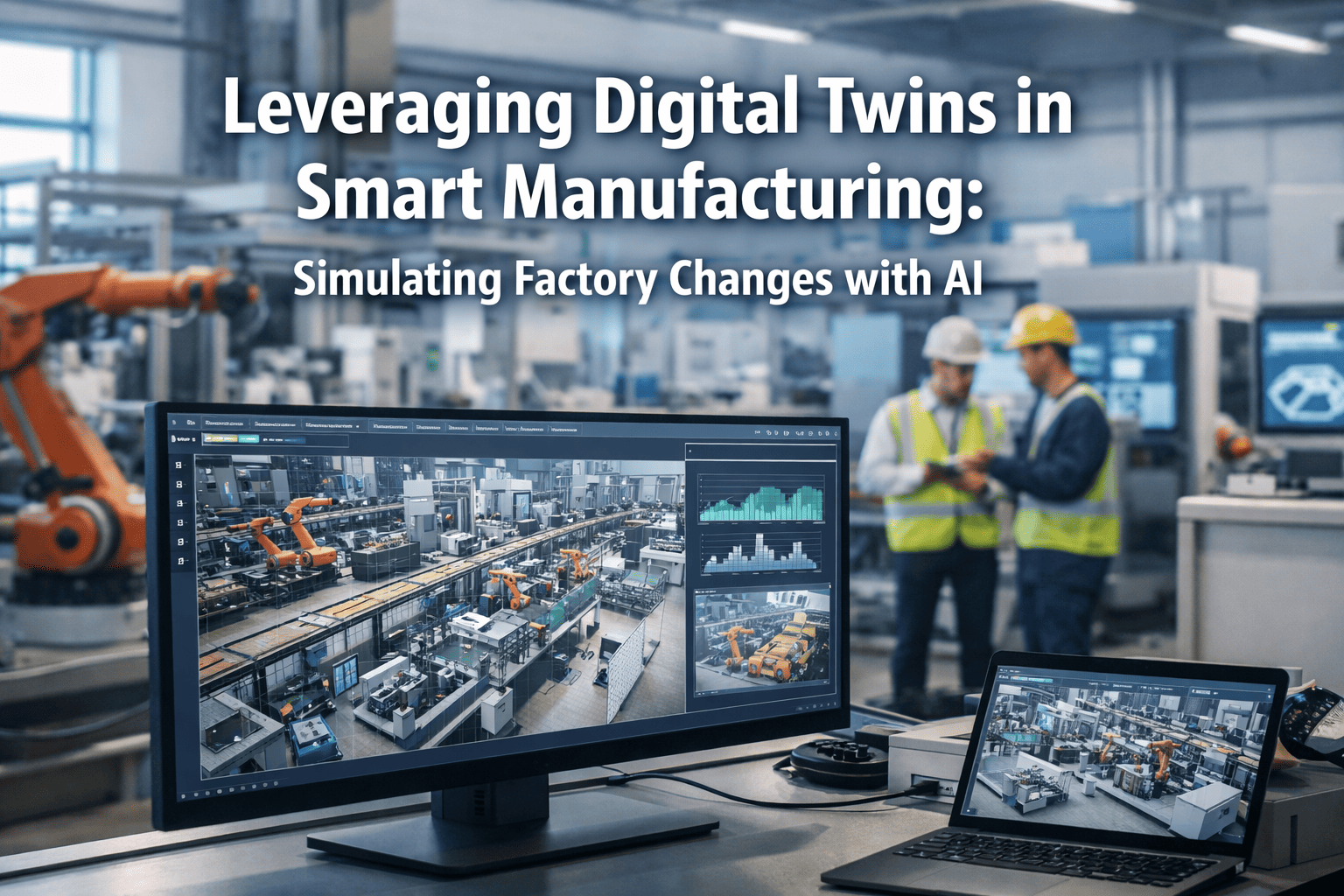


.jpeg)


