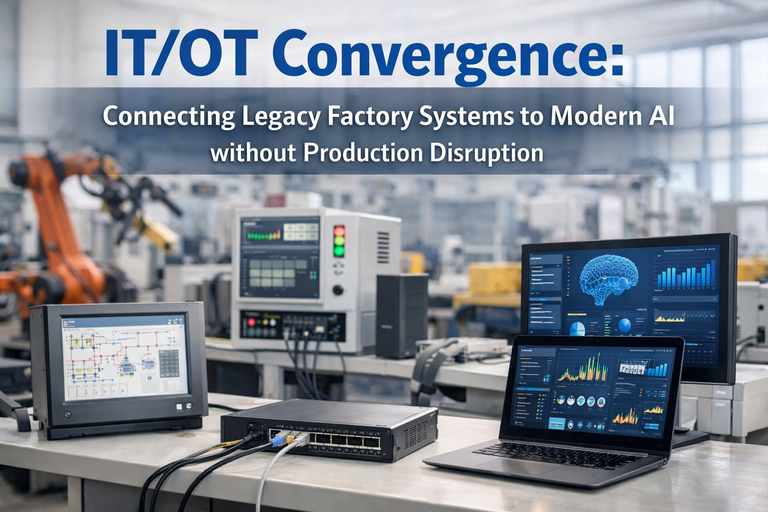
Here's the uncomfortable truth about factory modernization: 50% of manufacturers are running OT assets that are 15+ years old — and only 30% can deliver real-time data to their frontline workers. Your PLCs, SCADA systems, and legacy controllers hold decades of production intelligence, but they speak protocols that modern AI systems don't understand. The gap between your factory floor and your AI ambitions isn't a technology problem — it's a connectivity problem. And it's solvable without ripping out a single machine or stopping a single production line. This guide shows you exactly how to bridge legacy OT systems to modern AI using OPC UA, MQTT, and the Unified Namespace — the 3-layer architecture that connects any protocol to any AI model. Book a free integration assessment to map your protocol landscape.
AI-Native Digital Transformation for Smart Manufacturing
Join iFactory's expert-led session covering brownfield AI deployment, OPC UA/MQTT architecture, Unified Namespace design, and legacy PLC integration — with live architecture review and open Q&A for your specific plant challenges.
Register Now — Free Session →Why IT/OT Convergence Fails: 5 Barriers Keeping Your Factory Data Siloed
Most convergence projects stall because they approach the problem backwards — starting with the IT system and trying to force OT data into its format. These are the five barriers that kill integration projects, and how iFactory solves each one without disrupting production.
Legacy Protocol Fragmentation
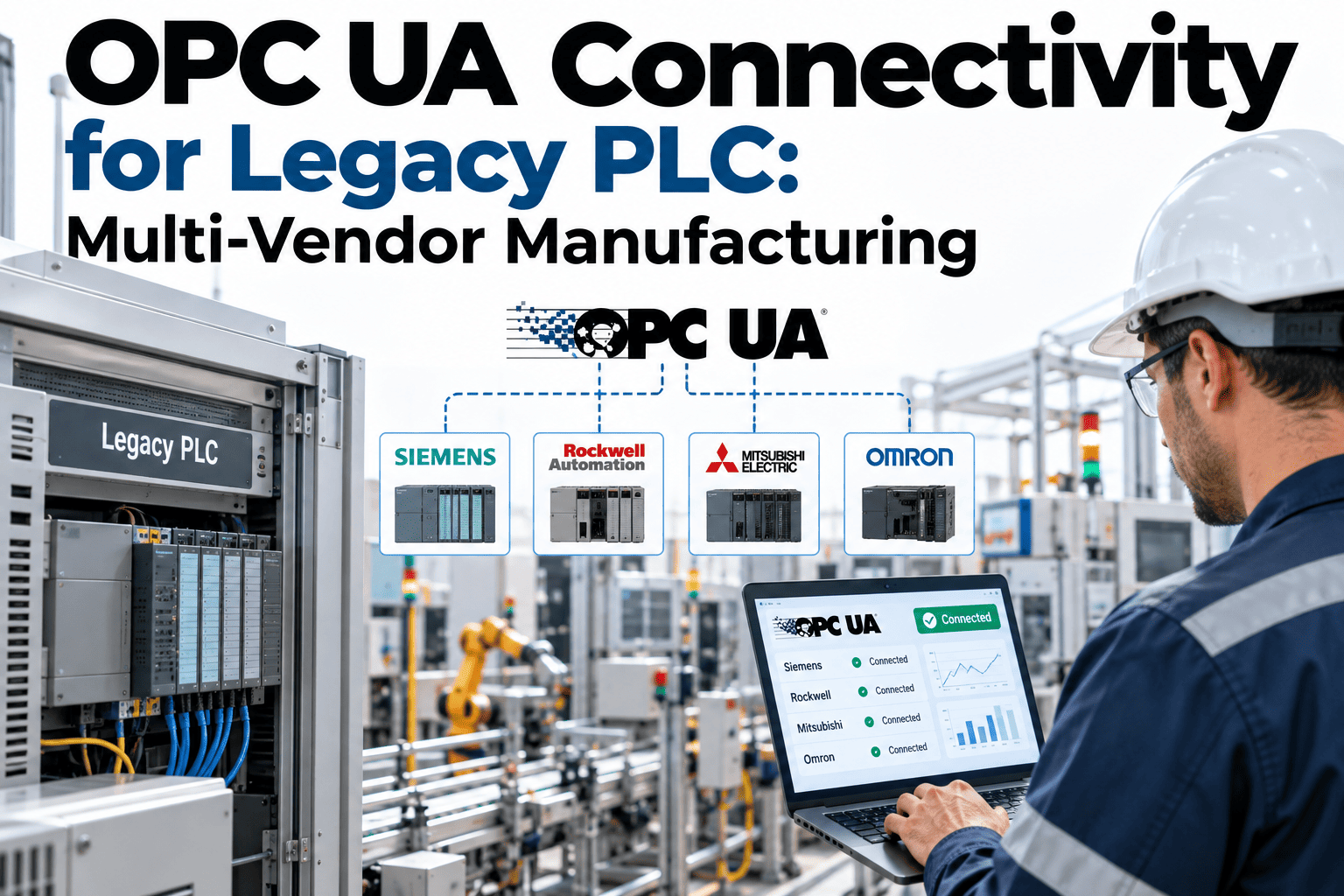
Your factory floor speaks dozens of languages — Modbus RTU on older PLCs, EtherNet/IP on Allen-Bradley, PROFINET on Siemens, BACnet on building systems, and proprietary protocols on specialized equipment. No single AI platform understands them all natively.
Fear of Production Disruption
The #1 reason OT teams block integration projects: "Don't touch my running system." Any convergence approach that requires PLC reprogramming, network reconfiguration, or production downtime is dead on arrival. OT teams prioritize uptime over innovation — and they're right to.
Data Without Context Is Noise
Raw sensor values are useless without context. A temperature reading of 72.4 means nothing unless you know which machine, which sensor, which production line, and what the acceptable range is. Most integration tools dump raw tags into databases — creating data lakes that nobody can use.
IT/OT Cultural Divide
IT teams want agility, scalability, and cloud-native architecture. OT teams want stability, reliability, and proven uptime. These priorities aren't wrong — they're just different. Projects that force one team to adopt the other's approach fail every time.
Security Exposure at the Convergence Point
Connecting OT to IT creates the exact attack surface that adversaries exploit. Manufacturing is the #1 cyberattack target for the 4th year running. Only 15% of manufacturers have robust cybersecurity practices. Convergence without security architecture is an open invitation.
The Protocol Stack: How OPC UA and MQTT Bridge Legacy to AI
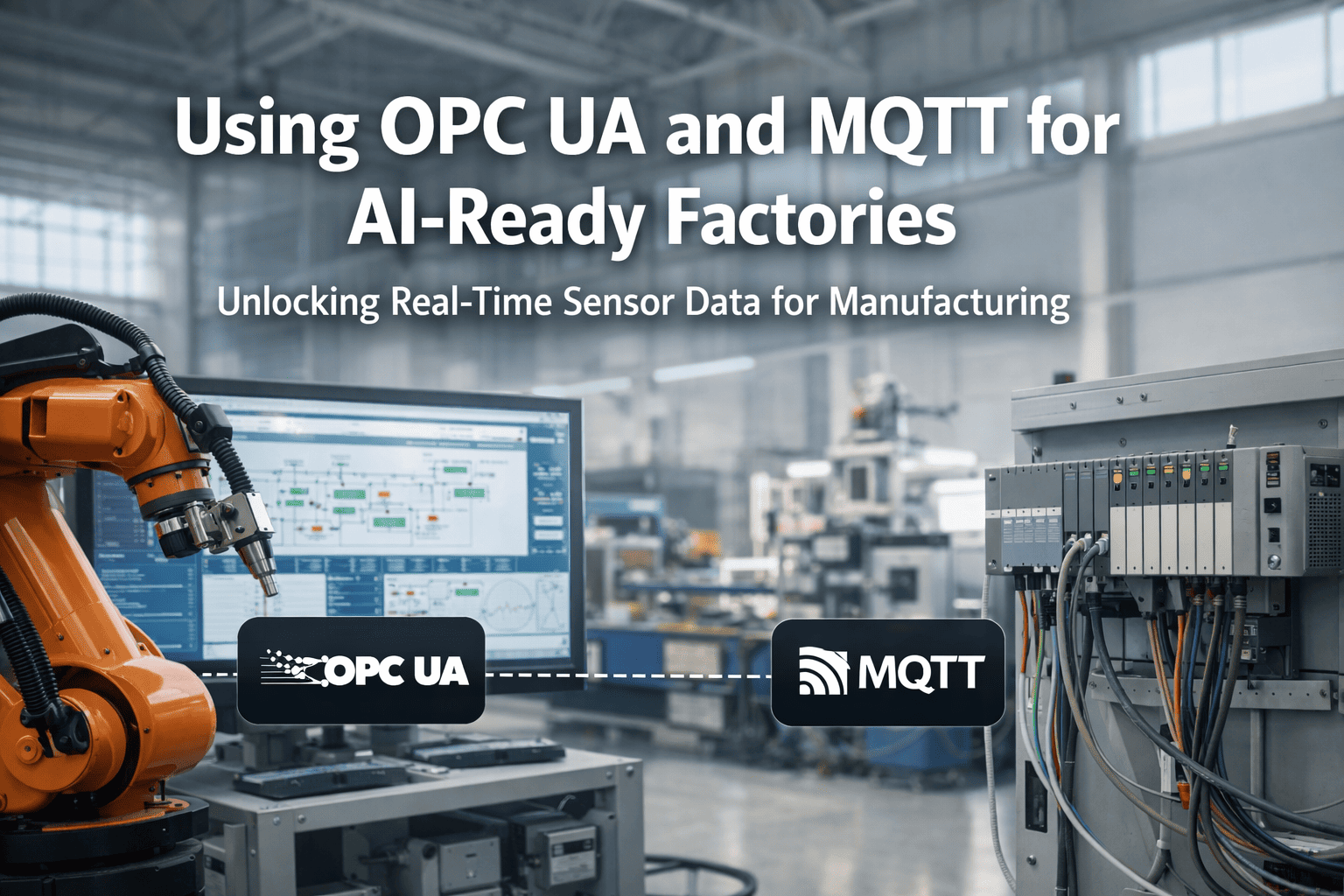
OPC UA and MQTT are the two protocols that make IT/OT convergence possible without replacing legacy equipment. Together, they form the communication backbone that connects any PLC, SCADA, or sensor to modern AI — and iFactory uses both by design.
iFactory's 3-Layer Architecture: Legacy Floor to AI in 90 Days
iFactory doesn't require you to rip and replace. The architecture wraps around your existing equipment and creates a data-ready layer that AI can consume immediately. Here's the step-by-step path from brownfield factory to AI-powered operations.
Edge Gateways Read From Legacy Equipment
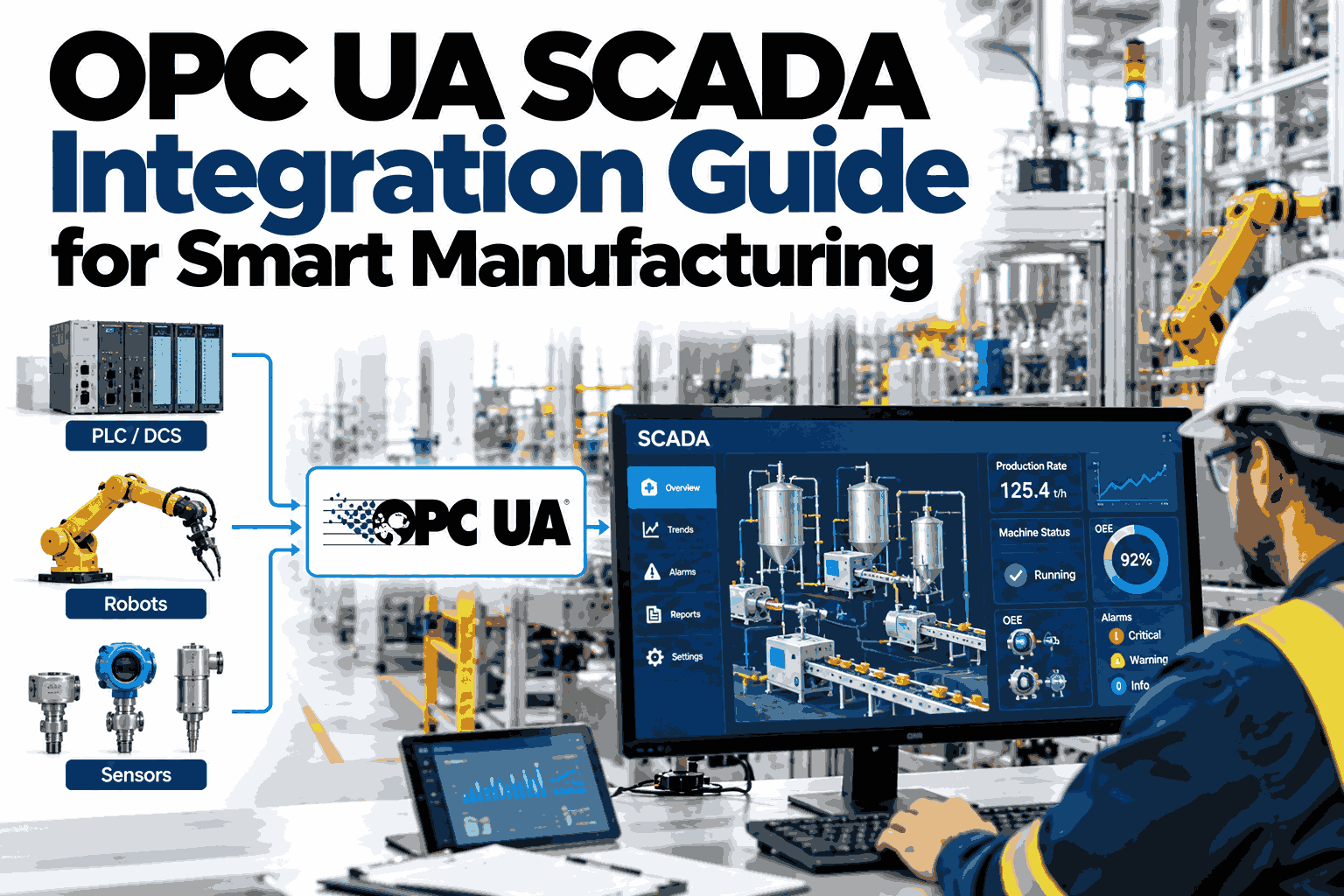
Deploy iFactory edge gateways alongside existing PLCs, SCADA, and sensors. Each gateway passively reads data via OPC UA, Modbus, EtherNet/IP, PROFINET, S7, or 100+ other protocols. No PLC reprogramming. No network reconfiguration. No production stops.
Unified Namespace Organizes Everything
Raw data flows into iFactory's Unified Namespace via MQTT — where it's automatically tagged with ISA-95 context (site, area, line, cell, asset, sensor). MES, ERP, and CMMS data joins the same bus. One single source of truth for your entire operation.
AI Models Consume Contextualized Data
AI models — predictive maintenance, quality inspection, energy optimization, scheduling agents — subscribe to UNS topics and begin inference on live production data. Edge AI runs locally on NPU gateways. Results flow back into the UNS for operator dashboards and automated workflows.
What the Industry Experts Say
The most critical infrastructure challenge facing manufacturers today is integrating operational technology with information technology. 70% of OT systems are projected to connect to IT networks within the next two years.
80% of manufacturers plan to invest 20% or more of their improvement budgets in smart manufacturing initiatives. The complexity of IT/OT convergence exceeds the internal capabilities of most organizations.
IT/OT combined market expected to surpass $1 trillion by 2027. Data is at the heart of convergence — the most valuable asset driving operational efficiency, decision-making, and innovation.
IT/OT convergence isn't about replacing what works. It's about connecting what works to what's possible. Your legacy PLCs and SCADA systems hold decades of production intelligence — iFactory makes that intelligence accessible to modern AI without touching a single line of PLC code or stopping a single production run.
Connect Your Legacy Factory to AI in 90 Days
iFactory bridges any protocol to any AI model through the Unified Namespace — zero PLC changes, zero downtime, production-grade from Day 1.
Frequently Asked Questions
50% of Factories Run 15-Year-Old OT — Yours Doesn't Have to Stay Disconnected
iFactory bridges any legacy protocol to modern AI through the Unified Namespace. No rip-and-replace. No PLC changes. No downtime. Just connected, contextualized, AI-ready data.