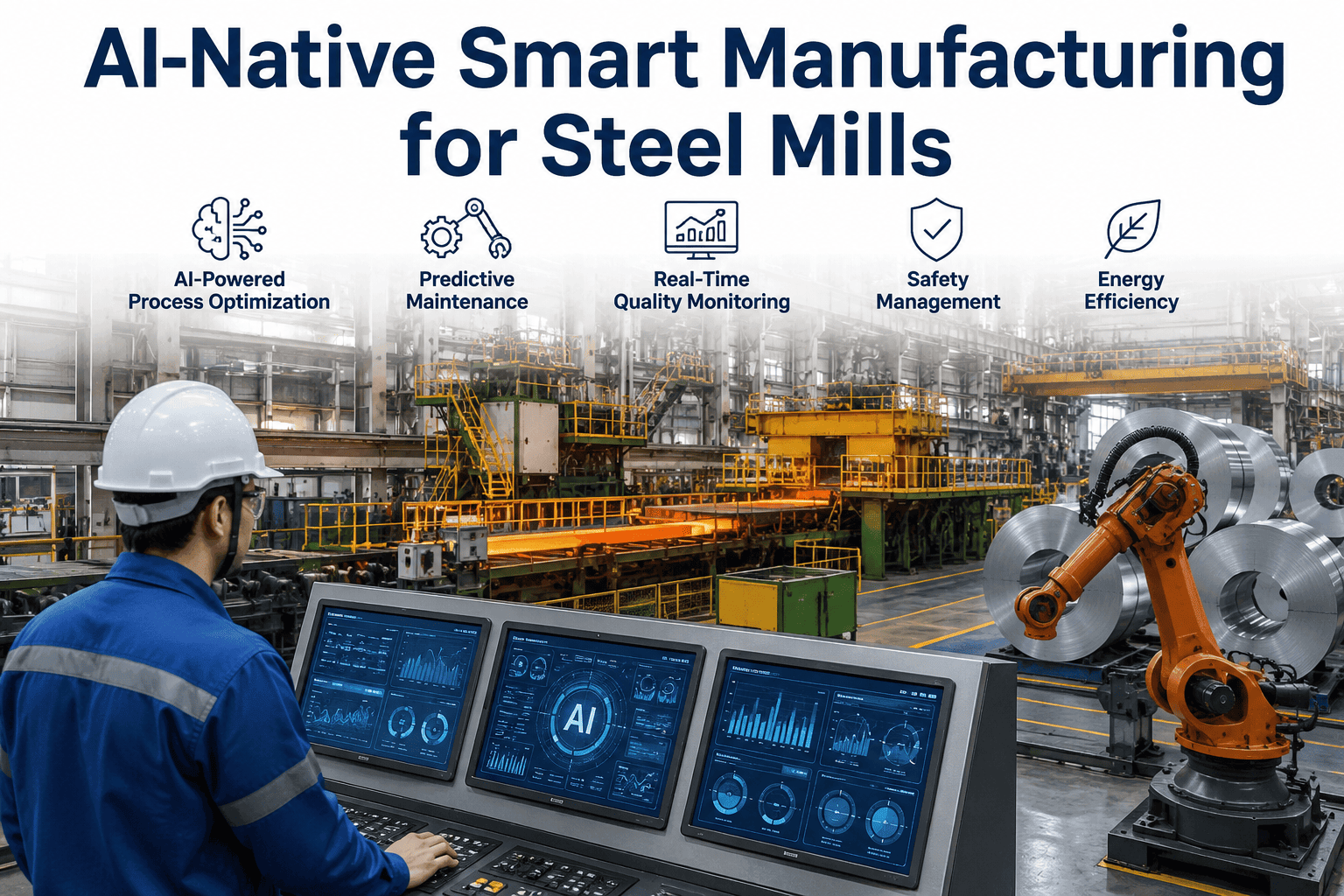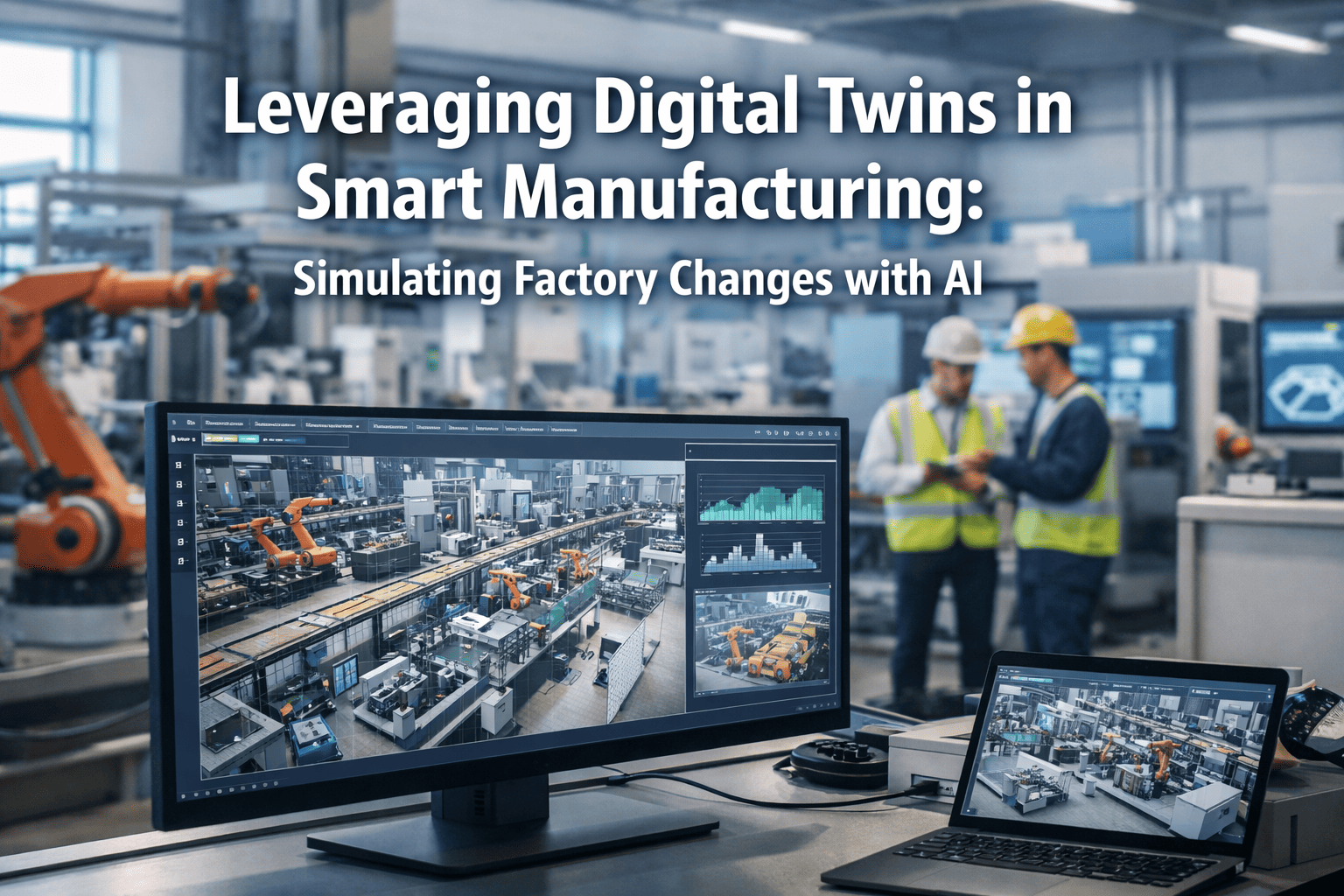
Siemens and NVIDIA announced in 2026 they're building the world's first fully AI-driven, adaptive manufacturing site — an "AI Brain" that continuously analyzes digital twins, tests improvements virtually, and deploys validated changes to the shop floor autonomously. This isn't Industry 4.0 with better dashboards. This is Manufacturing 6.0: factories where AI isn't a bolt-on tool — it's the operating system. The architectural blueprint that makes this possible is no longer theoretical. It's being deployed right now — from PLC-level data ingestion through NVIDIA edge inference to SAP ERP integration. And the manufacturers who build this stack first will define the competitive landscape for the next decade.
AI-Native Digital Transformation for Smart Manufacturing
Join iFactory's expert-led session on how AI-native architecture — including PLC/SCADA data ingestion, edge AI inference, CMMS automation, and ERP integration — is reshaping how manufacturers plan, operate, and optimize production at scale.
The gap between Industry 4.0's promise and its reality is an architecture problem. 80% of AI projects fail to deliver value — not because the models are bad, but because factory data is trapped in legacy PLCs speaking PROFINET, SCADA systems running Modbus RTU, and ERP platforms that can't consume real-time sensor feeds. Manufacturing 6.0 solves this with a unified, layered intelligence stack that connects every signal from the shop floor to the boardroom — with AI embedded at every layer, not bolted on top.
The Manufacturing 6.0 Architecture: 5 Layers That Connect Shop Floor to Boardroom
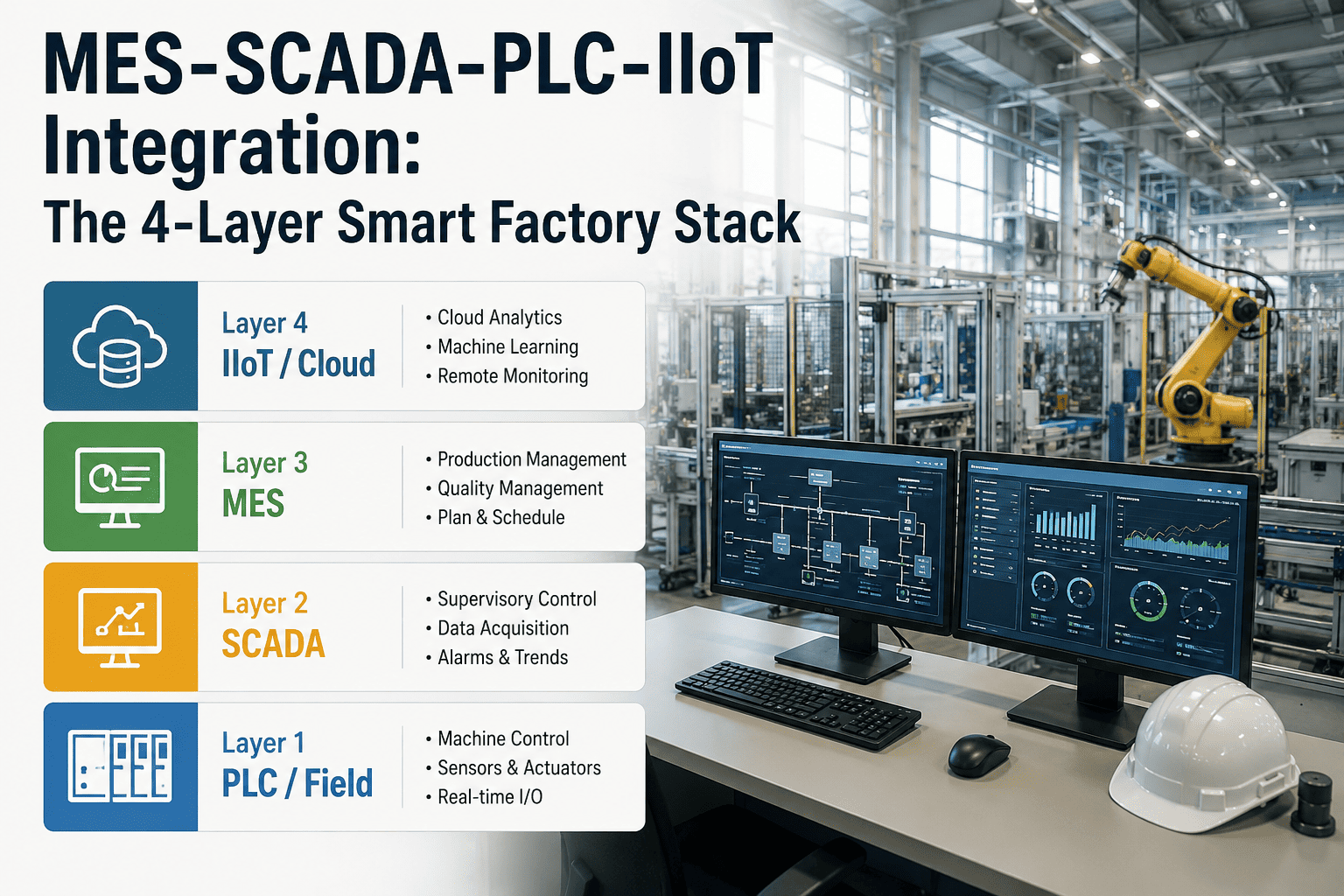
An AI-native factory isn't a single product — it's a layered architecture where physical sensors, edge computing, operational intelligence, cloud AI, and enterprise systems work as one integrated stack. Here's the complete blueprint, and where iFactory fits as the operational intelligence core:
Why most AI projects fail at this point: They try to connect cloud AI directly to PLCs — skipping the edge normalization and operational intelligence layers entirely. The result: 300ms+ latency, disconnected work orders, and AI insights that never reach technicians. iFactory's architecture solves this by sitting at Layer 3 — the operational bridge between raw machine intelligence and human action.
The Protocol Problem: Bridging Legacy OT and Modern AI
The #1 barrier to AI-native manufacturing isn't model quality — it's data access. 65% of manufacturing APIs still use legacy protocols, and 40% of critical business logic is locked in non-API systems. Here's how the Manufacturing 6.0 stack bridges the gap:
Normalization
iFactory connects to both legacy and modern protocols natively — giving machines from the 1980s the same AI-driven monitoring as brand-new equipment. See how iFactory bridges your OT/IT gap in a 30-minute demo →
The ISA-95 Alignment: Where AI Agents Operate at Each Level
Manufacturing 6.0 architecture aligns with the ISA-95 international standard for enterprise-control system integration — but adds AI agent capabilities at every functional level. Here's how intelligence is distributed across the stack:
The NVIDIA Edge-to-Cloud AI Stack for Manufacturing
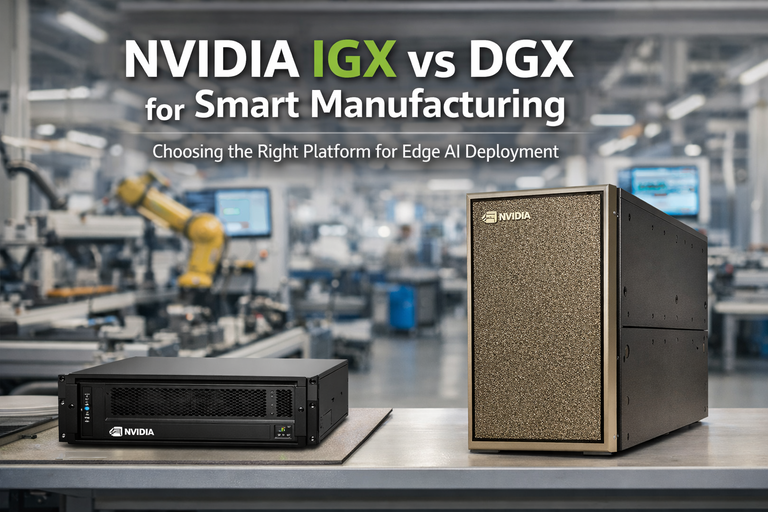
Manufacturing 6.0 requires AI compute at multiple scales — from sub-10ms edge inference on the production line to petaflop-scale model training in the data center. Here's how NVIDIA hardware maps to the architecture:
iFactory: The Operational Intelligence Core of Manufacturing 6.0
NVIDIA provides the AI compute. SAP provides the enterprise planning. iFactory provides the operational bridge — converting edge AI insights into automated work orders, predictive schedules, and real-time dashboards that actually reach your maintenance team. Without this layer, AI stays in the lab.
Why 80% of Manufacturing AI Projects Fail — and How Architecture Fixes It
The failure isn't technology. It's integration. Research from RAND, MIT, and Deloitte consistently identifies the same root causes — all of which are architecture problems that Manufacturing 6.0 is specifically designed to solve:
Implementation Roadmap: Building Your Manufacturing 6.0 Stack
You don't need to build the full stack on day one. The most successful implementations start at the operational intelligence layer and expand outward. Here's the phased approach iFactory supports:
Deploy iFactory as your cloud-native CMMS. Connect IIoT sensors to 5–10 critical assets using OPC UA/MQTT gateways. Establish the unified data pipeline. Most teams are operational within weeks.
Add NVIDIA Jetson or DGX Spark nodes for local AI inference. Activate predictive maintenance, anomaly detection, and quality inspection models. iFactory automatically converts edge alerts into work orders.
Connect iFactory to SAP S/4HANA or your ERP via REST/OData APIs. Production KPIs, maintenance costs, and OEE metrics flow into financial planning in real time. Operations and finance plan from the same data.
Expand across all assets and production lines. Deploy digital twins, on-premise LLMs, and autonomous scheduling. iFactory becomes the operational nervous system of your entire factory — connecting every sensor, every model, and every work order into a unified intelligence layer.
Frequently Asked Questions
Industry 4.0 focused on connectivity — connecting machines to networks and collecting data. Manufacturing 6.0 focuses on intelligence — AI isn't a tool you attach to a process, it's the operating system that runs the factory. The key difference is architectural: Manufacturing 6.0 embeds AI at every layer (edge, operations, enterprise) with closed-loop automation, while Industry 4.0 typically bolts AI analytics on top of existing systems.
No. The architecture is hardware-flexible. NVIDIA Jetson for edge inference and DGX for on-premise LLMs represent the premium option, but the stack works with any edge compute that supports OPC UA/MQTT output. iFactory integrates with whatever hardware you choose — the critical requirement is the unified data pipeline and operational intelligence layer, not specific GPU hardware.
iFactory connects to SAP S/4HANA and SAP ECC via REST APIs, OData services, and RFC/IDoc connectors. Production KPIs, maintenance costs, asset health scores, and OEE metrics sync in real time — enabling finance, operations, and supply chain teams to plan from the same live data. SAP BTP (Business Technology Platform) can also serve as an integration middleware layer for more complex deployments.
Yes — and this is the primary design constraint. Edge gateways at Layer 2 translate legacy protocols (Modbus RTU, PROFINET, EtherNet/IP) into modern standards (OPC UA, MQTT, JSON). Retrofit IoT sensors attach to legacy machines without modification. iFactory has connected equipment from the 1980s into the same unified intelligence layer as brand-new CNC machines.
Phase 1 (iFactory CMMS + sensors on critical assets) takes 2–4 weeks and costs $30K–$50K for a focused pilot. Full Manufacturing 6.0 stack with edge AI, ERP integration, and plant-wide coverage typically takes 8–12 months. Most manufacturers achieve measurable ROI within 3–6 months of Phase 1 deployment. iFactory's cloud-native SaaS model eliminates heavy upfront infrastructure costs.
Your Manufacturing 6.0 Journey Starts With a 30-Minute Architecture Review
Every factory's stack is different. We'll map your current OT/IT landscape, identify integration gaps, and show you exactly how iFactory connects your PLCs, sensors, and ERP into a unified AI-native architecture. No commitment. No pressure. Just a live walkthrough of the blueprint powering the next generation of smart manufacturing.