Every minute your plant historian silently drops data points, your engineering team is making decisions on incomplete evidence. OSIsoft PI costs $200,000+ annually at enterprise scale. InfluxDB clusters crash under concurrent read loads. TimescaleDB requires PostgreSQL expertise your OT team doesn't have. The wrong historian isn't just a storage problem — it's a $1.2M-per-year compounding liability in missed anomalies, failed audits, and delayed predictive alerts. Before your next infrastructure renewal, read this. Book a free data architecture session with iFactory engineers →
The Historian Decision Is a Revenue Decision
Industrial time-series databases are the foundation of every predictive maintenance, energy optimisation, and compliance workflow your facility runs. Choosing the wrong one — or misconfiguring the right one — creates data gaps that cascade into unplanned downtime, failed SIL audits, and AI models trained on corrupted baselines. This comparison gives operations leaders the ROI framework to evaluate OSIsoft PI, InfluxDB, and TimescaleDB against real manufacturing workloads.
What Is a Process Historian — and Why the Architecture Choice Matters
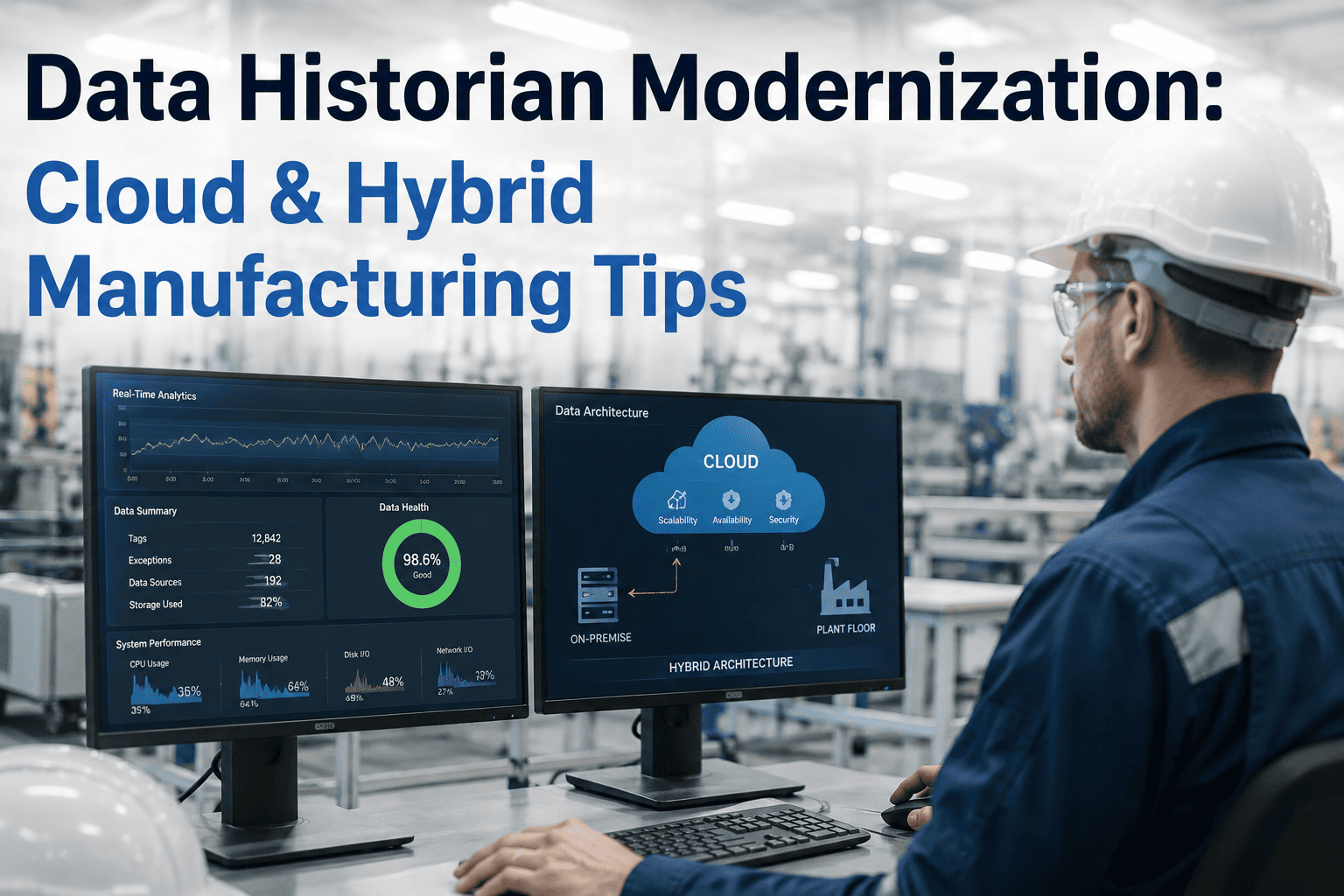
A process historian is a time-series database purpose-built for industrial telemetry: sensor readings, PLC outputs, SCADA tags, and control system events sampled at intervals from milliseconds to minutes. Unlike relational databases, historians must handle write amplification at scale — a 500-asset plant with 10 tags each, sampled every second, generates 432 million data points per day. The compression algorithm, indexing strategy, and query planner you choose determines whether your analytics layer receives clean, queryable data — or a backpressured stream that drops samples under load.
- Compression ratios vary from 4:1 (naive timestamp storage) to 100:1 (delta-of-delta encoding with Gorilla compression)
- Query latency for 90-day range scans spans 80ms (InfluxDB IOx columnar) to 4.2s (legacy PI SQL connector)
- High-availability configurations differ: PI uses mirrored AF servers; InfluxDB uses Raft consensus; TimescaleDB relies on Patroni or pgBackRest
- OPC-UA native connectors exist for PI and iFactory's integration layer — InfluxDB and TimescaleDB require middleware
OSIsoft PI System: Enterprise Depth, Enterprise Cost
The PI System (now AVEVA PI) remains the reference implementation for process historians in oil and gas, power generation, and large-scale chemicals manufacturing. Its Asset Framework (AF) allows engineers to model equipment hierarchies, attach calculations, and build event frames — capabilities no open-source alternative matches out of the box. PI Vision provides role-based dashboards that operations managers can configure without SQL knowledge. The liability is cost and vendor lock-in: PI stores data in a proprietary binary format, PI Data Archive requires Windows Server, and migration projects typically span 12-18 months.
- Strengths: Mature ecosystem, 20,000+ connector libraries, regulatory acceptance in FDA 21 CFR Part 11 environments
- Weaknesses: $150K-$300K/year licensing, Windows-only server tier, query performance degrades past 500K tags without PI Relay architecture
- Best fit: Regulated industries (pharma, nuclear, refining) where audit trails and vendor SLAs outweigh cost concerns
InfluxDB: Cloud-Native Speed, Operational Complexity
InfluxDB 3.0 (IOx engine) represents a genuine architectural shift — replacing the TSM storage engine with an Apache Arrow columnar format that achieves sub-100ms range queries on billion-row datasets. The Flux query language enables downsampling, joins, and statistical functions without leaving the historian layer. InfluxDB Cloud Dedicated removes cluster management overhead. The operational risk is ecosystem immaturity: industrial connectors are community-maintained, OPC-UA integration requires Telegraf configuration expertise, and the 2.x-to-3.0 migration broke backward compatibility for thousands of production deployments in 2023.
- Strengths: Best raw ingest throughput, native time-series functions, active open-source community, cloud and on-premise deployment
- Weaknesses: No native OPC-UA connector, Flux learning curve, breaking changes between major versions, limited CMMS integrations
- Best fit: Greenfield IoT deployments, data engineering teams with cloud-native skills, high-frequency edge analytics
TimescaleDB: SQL Familiarity, PostgreSQL Foundation
TimescaleDB extends PostgreSQL with hypertable partitioning, continuous aggregates, and compression policies that make it viable as a process historian without abandoning SQL. For manufacturers whose analytics teams already write PostgreSQL queries, the adoption curve is near-zero. Continuous aggregates pre-compute hourly and daily rollups, cutting dashboard query times from seconds to milliseconds. The limitation is write throughput: TimescaleDB peaks at roughly 1-2M rows/second before PostgreSQL's WAL overhead creates backpressure — adequate for mid-scale plants but insufficient for large continuous process operations.
- Strengths: Full SQL compatibility, mature replication (Patroni, Citus), rich analytical functions, lowest licensing cost
- Weaknesses: Lower write ceiling than InfluxDB, no native historian UI, requires DBA expertise for tuning, no vendor SLA without Timescale Cloud
- Best fit: Mid-scale discrete manufacturing, teams with PostgreSQL expertise, environments where SQL compatibility with ERP systems is required
| Dimension | Legacy Friction (Misconfigured / Wrong Tool) | Optimised Excellence (Right Historian + iFactory) |
|---|---|---|
| Data Ingestion | Dropped samples at peak load; 15-30% data gaps in high-frequency assets | Buffered edge ingestion with guaranteed delivery; zero-gap archives |
| Query Performance | 4-8 second dashboard load times; engineers avoid ad-hoc analysis | Sub-200ms range queries; self-service analytics across 90-day windows |
| AI/ML Readiness | Inconsistent timestamps break LSTM training; models trained on corrupted baselines | Normalised, aligned telemetry feeds directly into iFactory predictive models |
| Compliance Audit | Manual data extraction for ISO 55000 and OSHA reports; 40+ hours per audit | Auto-generated compliance exports from historian metadata; 2-hour audit preparation |
| Total Cost | $200K+/year PI licensing plus $80K integration maintenance annually | Right-sized historian + iFactory layer: 40-60% TCO reduction at equivalent scale |
| Scalability | Historian tier requires forklift upgrade at 500K tag threshold | Horizontal scale-out with sharding; 10x capacity with no architecture change |
The iFactory Integration Layer: Historian-Agnostic Analytics
iFactory's PLC/SCADA integration layer sits above the historian tier — reading from PI, InfluxDB, TimescaleDB, or raw OPC-UA endpoints with a unified API. This means your predictive maintenance models, energy dashboards, and compliance workflows are not re-engineered when you migrate historians. The integration layer normalises timestamp alignment, handles compression artifacts, and applies automated gap-filling policies before data reaches the AI analytics engine. Manufacturers using iFactory report 6-week historian migrations with zero downtime to analytics workflows.
- Unified query API across PI, InfluxDB, TimescaleDB
- Automated timestamp normalisation and gap-fill
- Pre-built OPC-UA and MQTT connectors
- 6-week migration vs. 12-month legacy projects
- 40-60% TCO reduction vs. PI-only architecture
- Eliminate $80K/year integration maintenance
- Auto-generated compliance reports cut audit prep 95%
- No DBA required for historian tier operations
- AI models trained on clean, gapless historian data
- 14-21 day predictive failure lead time vs. reactive alerts
- Scale from 20 to 2,000 tags with no re-architecture
- First-year savings typically $400K-$1.2M
iFactory engineers will audit your current historian configuration, identify data gaps affecting your AI models, and deliver a right-sized migration roadmap — at no cost. Most assessments complete in one week and identify $200K+ in recoverable savings.