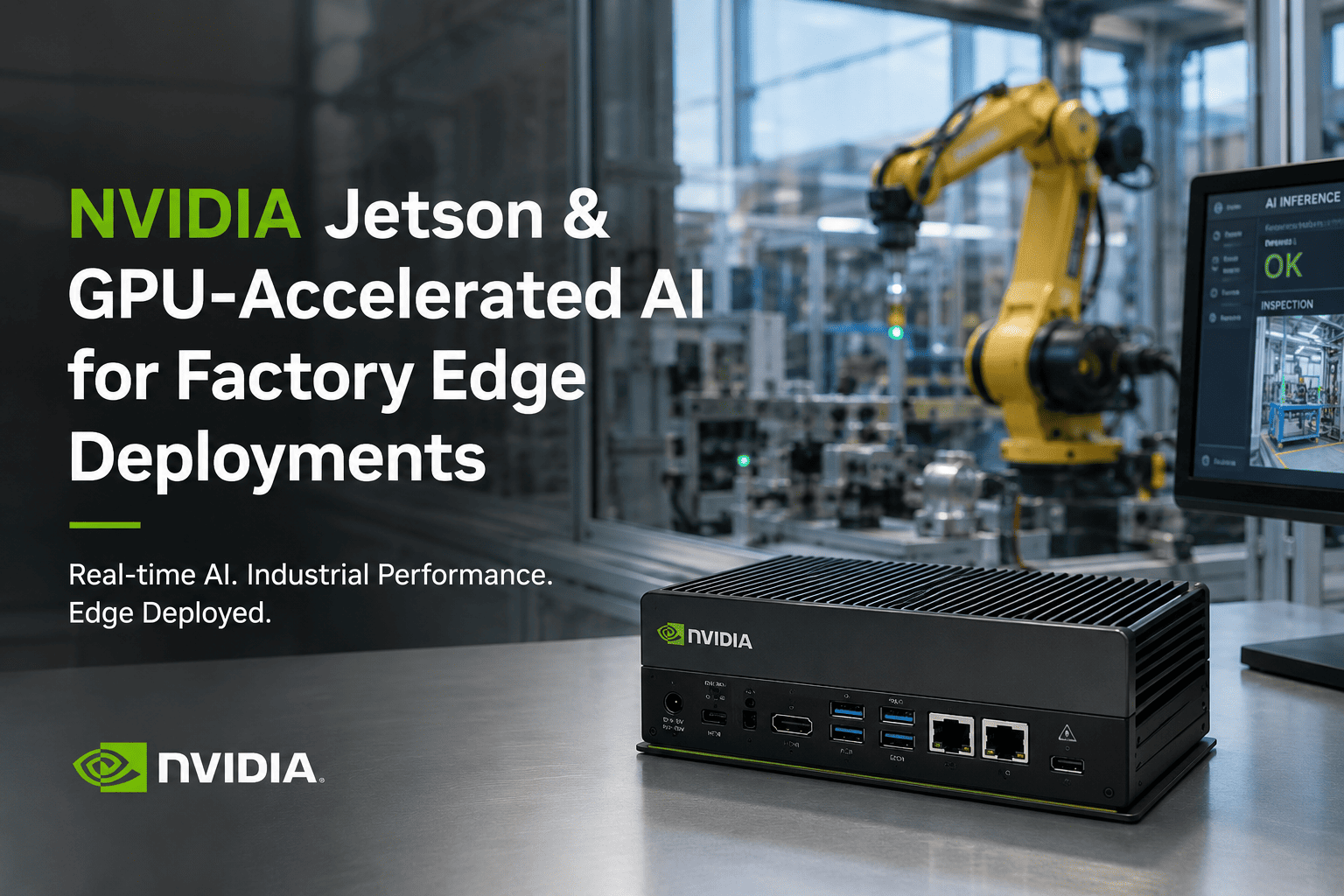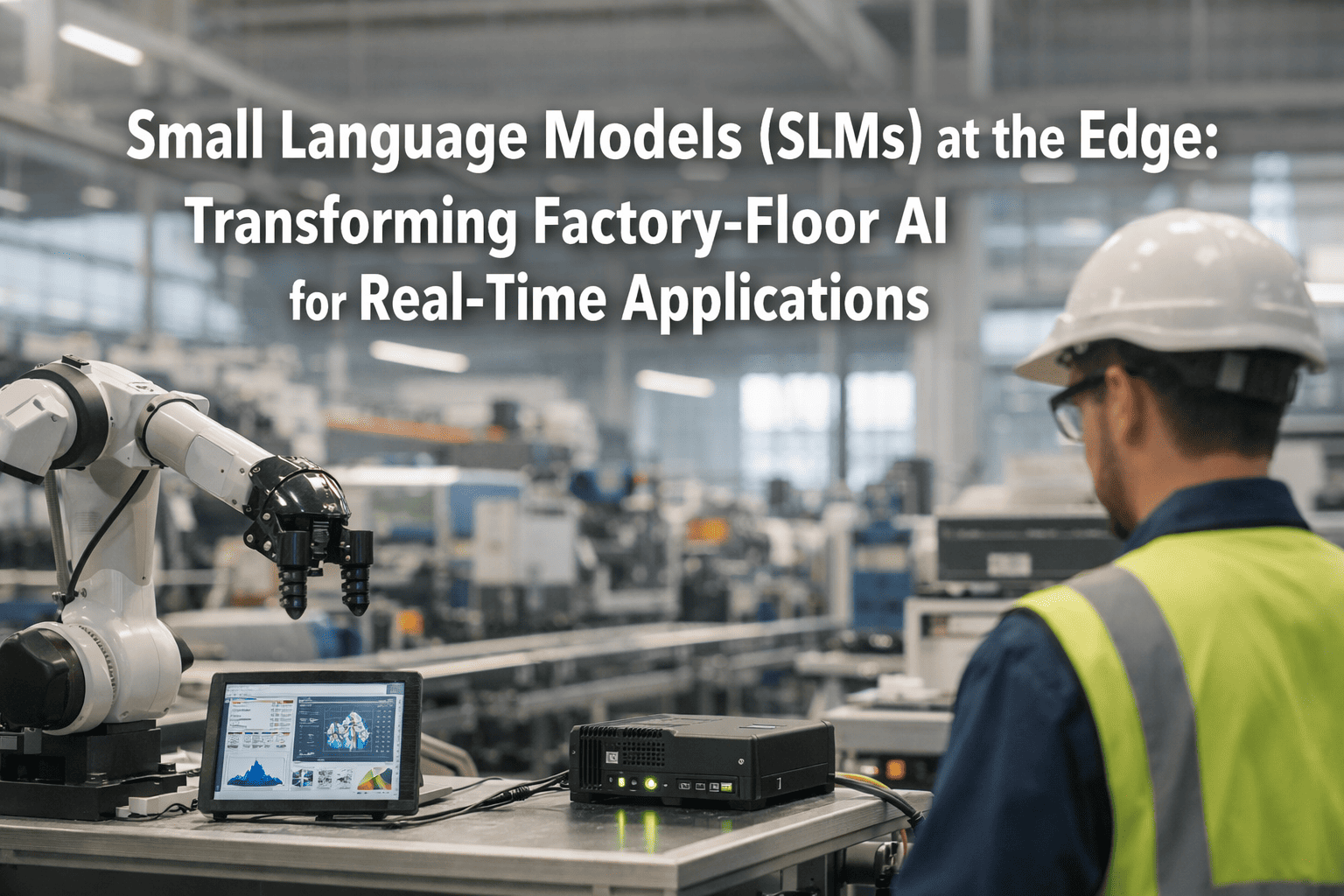
A maintenance technician asks your factory's private LLM: "What's the torque spec for the Stage 3 gearbox bearing on Line 7?" In 0.8 seconds, the model — running locally on a $4,699 NVIDIA DGX Spark sitting in your server room — retrieves the answer from 15 years of maintenance manuals, SOPs, and work order history. No data leaves your premises. No cloud API call. No subscription fee per query. No risk of proprietary process knowledge leaking to a third-party model. This is what on-premise LLM deployment looks like in 2026 — and it's no longer reserved for companies with data center budgets.
AI-Native Digital Transformation for Smart Manufacturing
Join iFactory's expert-led session on how AI-native architecture — including on-premise LLM deployment, RAG pipelines for maintenance knowledge, and CMMS integration — is enabling manufacturers to deploy sovereign, production-grade AI without cloud dependency.
The economics of on-premise LLM deployment have fundamentally shifted. NVIDIA's DGX Spark delivers 1 petaflop of AI performance with 128GB unified memory for $4,699. Open-source models like Llama 4, Qwen3, and Mistral Large 3 match or exceed GPT-4 on industrial tasks. Quantization techniques (NVFP4) cut memory requirements by 4× without meaningful accuracy loss. For manufacturers with sensitive process data, regulatory requirements, or simply the desire to stop paying per-token API fees — running your own LLM on-premise is now both practical and economically compelling.
Why Factories Need Private LLMs: 4 Drivers Cloud AI Can't Solve
Cloud LLM APIs work for generic tasks. Factory AI is different — it requires access to proprietary data, operates under strict security constraints, and needs to function when the internet is down. Here's why on-premise deployment is becoming the default for manufacturing:
Step 1: Choose Your Hardware — The 2026 On-Premise LLM Sizing Guide
The right hardware depends on model size, concurrent users, and whether you need inference only or fine-tuning capability. Here's the definitive sizing matrix for factory LLM deployment in 2026:
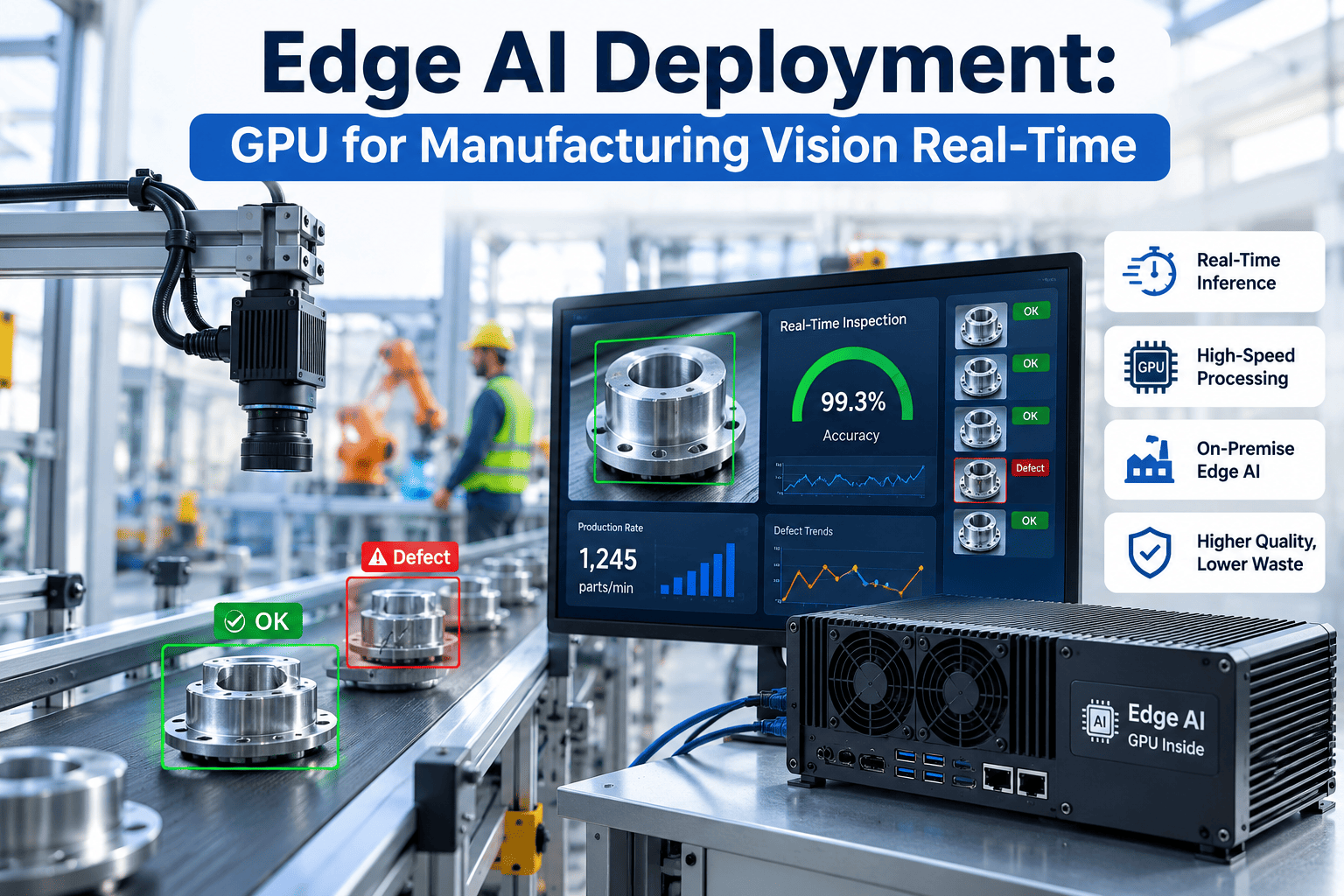
The sweet spot for most factories: NVIDIA DGX Spark at $4,699 runs 8–20B parameter models at 20+ tokens/second — more than fast enough for interactive maintenance Q&A, document retrieval, and troubleshooting. Its 128GB unified memory handles models up to 200B with quantization. For most single-plant deployments, this is the right starting point.
Step 2: Select & Quantize Your Model
Open-source LLMs have reached — and in many industrial tasks, surpassed — the performance of proprietary cloud APIs. The key is choosing the right model for your use case and applying quantization to fit your hardware's memory constraints:
Practical rule: For factory RAG and maintenance Q&A, a Llama 4 8B at full precision or a 70B at INT4/NVFP4 delivers excellent results on DGX Spark. Start with the smaller model — it's faster, easier to fine-tune, and handles 90% of factory knowledge retrieval tasks. Scale up only if you need complex multi-step reasoning.
Step 3: Build the RAG Pipeline — Connecting Your LLM to Factory Knowledge
A base LLM knows nothing about your factory. RAG (Retrieval-Augmented Generation) connects it to your proprietary knowledge — maintenance manuals, SOPs, work order history, and equipment specifications — without retraining the entire model:
iFactory provides the operational data backbone that makes factory RAG work — 15 years of maintenance history, equipment specs, and work orders indexed and ready for your private LLM. See how iFactory powers on-premise AI in a 30-minute demo →
Step 4: Integrate with PLC/SCADA and ERP Systems
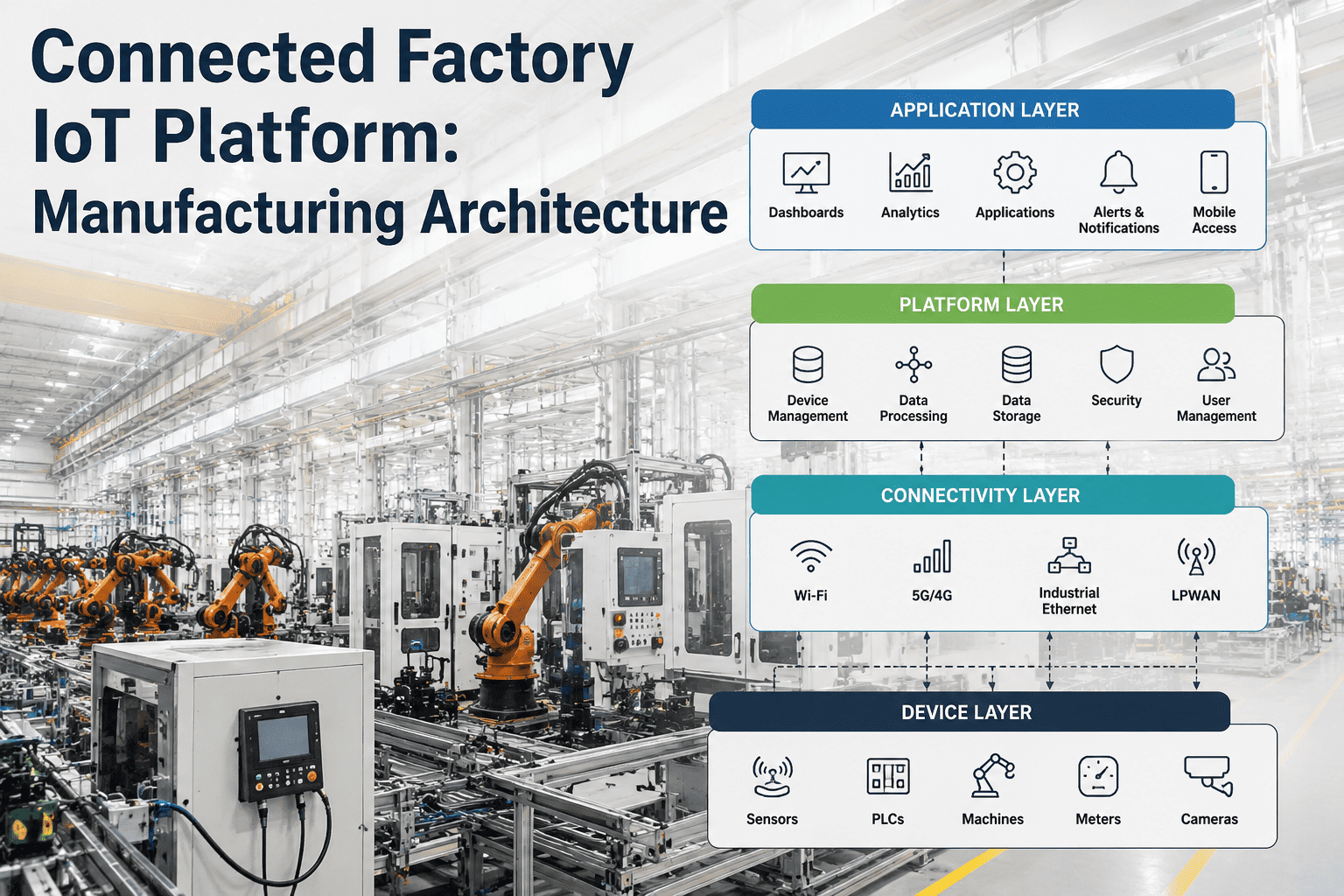
A factory LLM becomes truly powerful when it can query live operational data — not just static documents. Here's how the integration stack connects your LLM to real-time plant systems and enterprise planning:
iFactory: The CMMS That Makes Factory LLMs Actually Useful
An LLM without operational data is just a chatbot. iFactory provides the maintenance history, asset data, work order system, and ERP integration that turn your private LLM into a production-grade factory AI assistant — with full audit trails and human-in-the-loop governance.
Step 5: Deploy — The 4-Phase Implementation Roadmap
You can go from unboxing hardware to running your first factory LLM query in days, not months. Here's the proven deployment sequence:
Deploy DGX Spark (or your chosen hardware). Install Ollama (pre-installed on DGX Spark). Pull Llama 4 8B. Run your first local inference within minutes. Validate basic Q&A performance on general manufacturing knowledge.
Deploy vector database (ChromaDB or Milvus). Ingest maintenance manuals, SOPs, and equipment specs from iFactory's document management. Configure chunking strategy and embedding model. Test retrieval accuracy with real technician questions.
Connect LLM to iFactory CMMS via REST API for work order generation and asset history access. Bridge PLC/SCADA data via OPC UA/MQTT gateway for real-time machine context. Add SAP/ERP integration for parts and inventory awareness.
Fine-tune the model on your plant's specific vocabulary, failure modes, and maintenance procedures using LoRA (Low-Rank Adaptation) — no full retraining needed. Deploy to maintenance team with iFactory's UI integration. Monitor usage, accuracy, and technician feedback for continuous improvement.
Frequently Asked Questions
For RAG-based maintenance knowledge retrieval (looking up torque specs, troubleshooting steps, SOP references), an 8B parameter model like Llama 4 8B handles 90% of use cases with fast response times. For complex multi-step reasoning (root cause analysis across multiple sensor streams), scale to 32–70B. The 8–20B range is the sweet spot on DGX Spark — fast enough for interactive use with excellent accuracy when paired with good RAG retrieval.
RAG dramatically reduces hallucination because the model answers from your actual documents — not from training memory. Every response includes source citations (which manual, which SOP section) so technicians can verify. iFactory's governance layer logs every AI recommendation and requires human approval before any action is executed on equipment. The LLM recommends; humans decide.
Yes. LoRA (Low-Rank Adaptation) and tools like LLaMA Factory, Unsloth, and NVIDIA NeMo AutoModel make fine-tuning accessible to maintenance engineers. You need a curated dataset of 500–2,000 question-answer pairs based on your plant's actual maintenance scenarios. The fine-tuning process takes hours, not weeks, on DGX Spark. iFactory can help generate this training data from your existing work order history.
A minimal deployment: DGX Spark ($4,699) + iFactory CMMS subscription + 2–4 weeks of setup time. A production-grade deployment with RAG, PLC integration, and ERP connectivity: $15K–$50K including hardware, integration, and iFactory's platform. Compare this to cloud LLM API costs of $0.01–$0.06 per 1K tokens — for a factory running 10,000+ queries daily, on-premise pays for itself within 3–6 months.
iFactory connects to your local LLM via REST API. It provides the operational data layer: complete asset histories, maintenance manuals, work order templates, parts inventory, and technician schedules. When the LLM generates a maintenance recommendation, iFactory converts it into a tracked work order with assigned technician, required parts, and scheduled timing. Every AI interaction is logged for compliance and continuous improvement.
Deploy Your Factory's Private AI in Weeks, Not Months
Your maintenance knowledge shouldn't live in a third-party cloud. iFactory gives your on-premise LLM the operational data, CMMS integration, and governance framework it needs to become a production-grade factory AI assistant. See it working in 30 minutes.