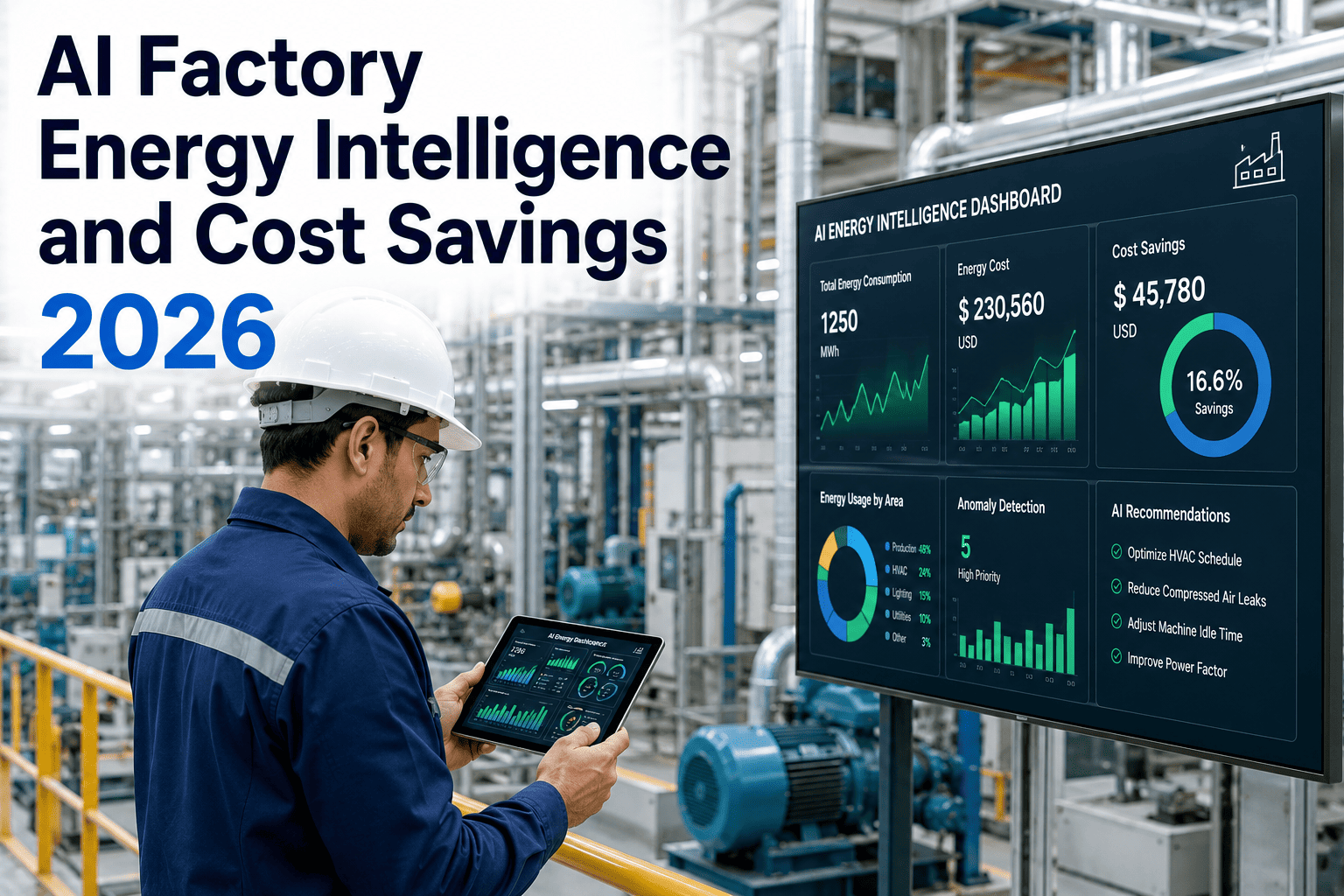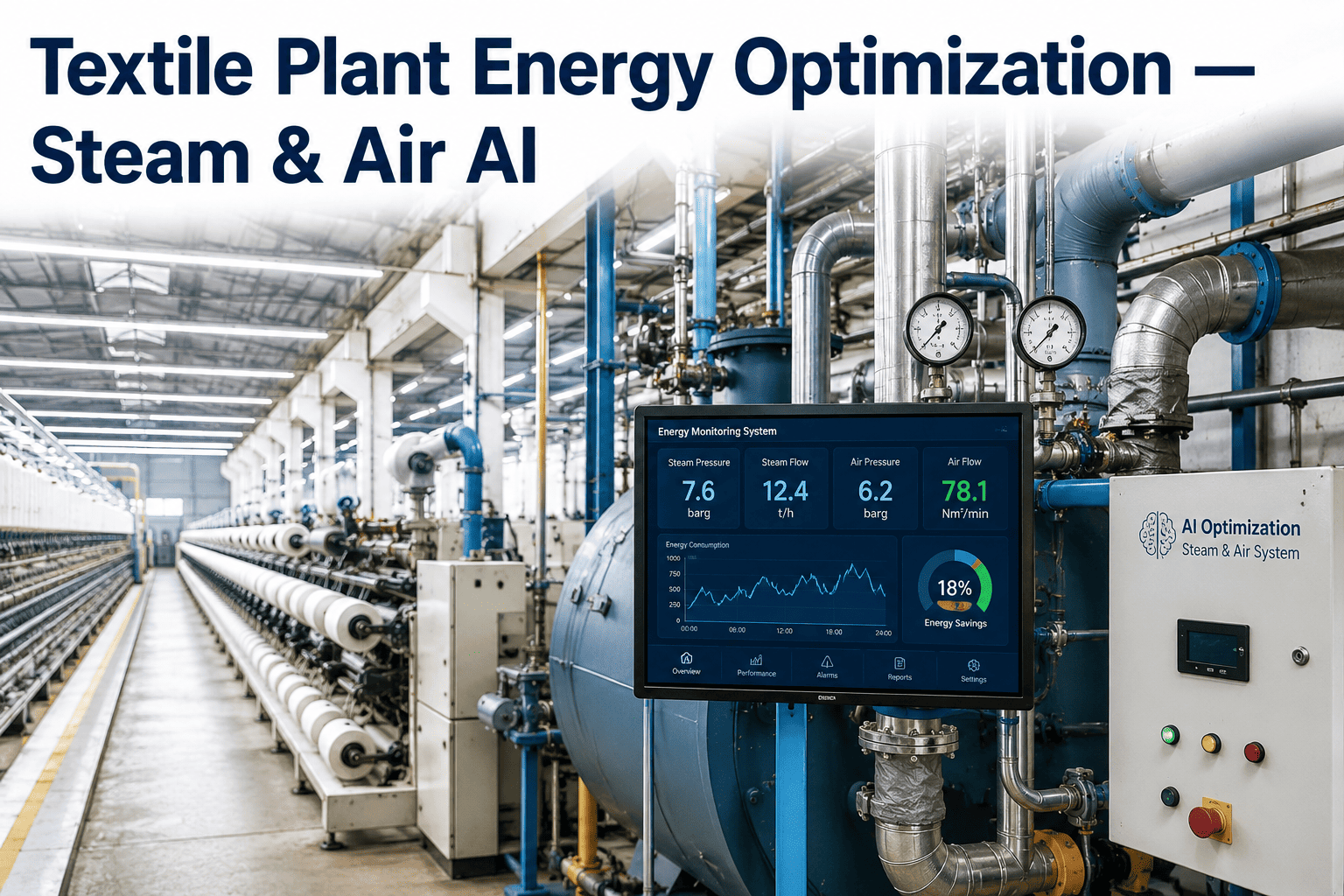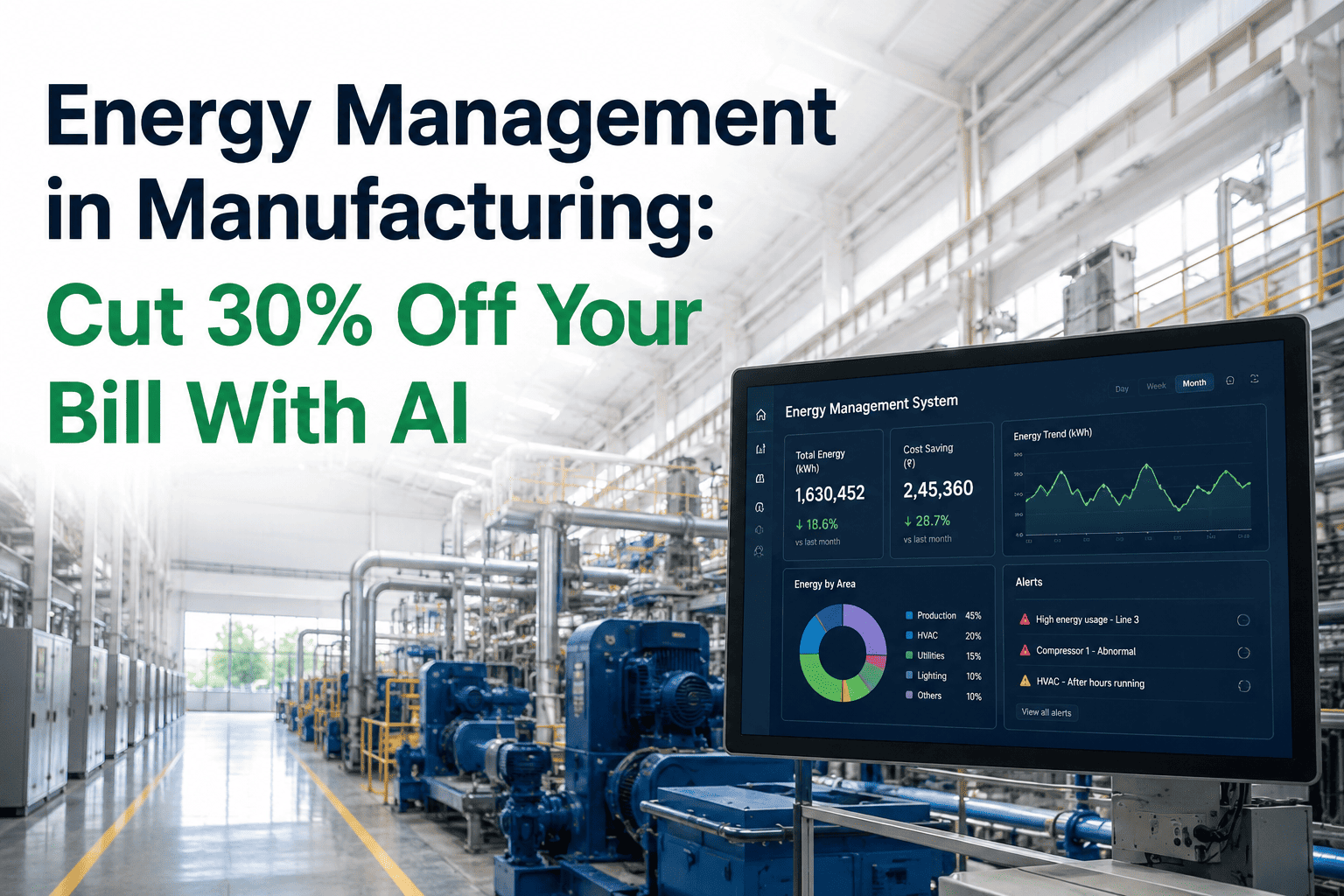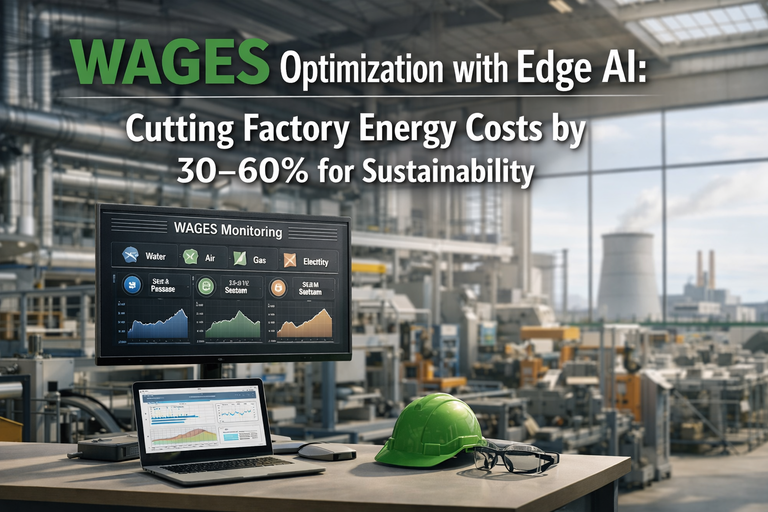
Your factory spent $5 million on utilities last year. The AI found $600,000 of it was waste — compressed air leaking through 30% of fittings nobody knew about, HVAC cooling empty zones at 3 AM, steam traps failed open for months, and a chiller running two compressors at 40% load when one at 80% would have done the job. None of this showed up on a single quarterly energy audit. Edge AI sees it all, in real time, every second of every shift. Manufacturers implementing AI-driven WAGES optimization are cutting utility costs by 30–60% — and it's becoming the #1 business case for industrial AI.
AI-Native Digital Transformation for Smart Manufacturing
Join iFactory's expert-led session on how AI-native architecture — including WAGES monitoring, real-time energy optimization, and ESG-ready reporting — is reshaping how manufacturers reduce costs, meet sustainability targets, and prove ROI from AI investments.
Energy costs represent 15–25% of total manufacturing expenses, yet most factories operate with annual audits and monthly utility bills as their only visibility. The waste compounds silently — compressed air leaks that cost $500–$1,000 per year each, HVAC systems overcooling empty zones, steam traps failed open, motors running below optimal efficiency. AI changes the equation entirely: continuous monitoring, real-time anomaly detection, and automated optimization that identifies savings within 30 days of deployment. Energy cost reduction is rapidly becoming the primary — and most financially defensible — business case for industrial AI.
What Is WAGES? The 5 Utility Streams Draining Your Bottom Line
WAGES stands for Water, Air, Gas, Electricity, and Steam — the five utility streams that power every manufacturing operation. Each one represents both a cost center and an optimization opportunity. Here's where the money goes, and where AI finds the waste:
The hidden multiplier: These five streams don't waste independently — they compound. An HVAC system overcooling increases electricity AND chiller water consumption. A compressed air leak forces compressors to run harder, consuming more electricity AND generating more waste heat. AI sees these cross-system interactions that siloed monitoring misses entirely.
Why Annual Energy Audits Miss 80% of the Waste
Traditional energy management operates on annual audits and monthly bills — a snapshot approach in a continuous-consumption world. AI-driven WAGES monitoring flips this model entirely:
- Continuous sub-second monitoring of every utility stream
- Real-time anomaly detection — leaks caught within minutes
- Cross-system correlation finds compounding waste patterns
- Automated load shifting to off-peak utility pricing
- ESG-ready carbon tracking with verifiable audit trails
- Annual audits — a single snapshot of a 365-day problem
- Leaks found months after they start — thousands wasted silently
- Siloed meters — HVAC, air, and water tracked independently
- Flat-rate consumption — no peak/off-peak optimization
- Manual carbon reports — weeks of spreadsheet work per quarter
iFactory's energy monitoring module tracks all 5 WAGES streams in a single dashboard — with automated alerts, AI anomaly detection, and ESG-ready reports. See your factory's hidden energy waste in 30 minutes →
The ROI Reality: Why Energy Is Becoming the #1 Business Case for AI
Energy cost reduction is rapidly overtaking predictive maintenance as the primary financial justification for industrial AI. The reason: energy savings are immediate, measurable, and show up directly on the P&L — no complex attribution models required.
iFactory: WAGES Monitoring That Pays for Itself in Under 12 Months
iFactory's energy monitoring module tracks all 5 WAGES streams in real time, detects anomalies automatically, generates ESG-ready reports, and integrates with your CMMS for automated maintenance triggers. Most facilities identify significant savings within the first 30 days.
The ESG Reporting Advantage: From Cost Center to Compliance Asset
WAGES optimization isn't just about cutting costs — it's about building the data infrastructure that ESG reporting, carbon accounting, and regulatory compliance demand. AI-driven energy monitoring gives you both simultaneously:
How to Start: A 4-Phase WAGES Optimization Roadmap
You don't need to instrument every pipe and wire on day one. The fastest ROI comes from targeting the biggest waste streams first — typically compressed air and HVAC — and expanding from proven savings.
Connect smart meters and sub-meters to iFactory's energy module. Establish real-time baselines for electricity, compressed air, and water. Most teams gain actionable visibility within weeks — often discovering quick wins that pay for the deployment.
AI models learn your facility's consumption patterns and begin flagging anomalies: compressed air leaks, HVAC overcooling, phantom loads, failed steam traps. iFactory converts each anomaly into a prioritized maintenance work order automatically.
AI schedules energy-intensive tasks during off-peak pricing windows, stages compressors and chillers at optimal efficiency points, and coordinates cross-system optimization. This is where the 30–60% savings compound.
Automated carbon tracking, Scope 1/2 reporting, and energy-per-unit KPIs feed into ESG disclosures and customer sustainability questionnaires. Continuous AI optimization compounds savings year over year as models learn your facility's patterns.
Phase 1 starts with a 30-minute demo. We'll show you exactly how iFactory connects to your meters, what WAGES data you'd see from day one, and where the biggest savings opportunities hide in your plant. Book your demo and start finding hidden energy waste →
Frequently Asked Questions
WAGES stands for Water, Air (compressed), Gas, Electricity, and Steam — the five primary utility streams that power manufacturing operations. Together, they represent 15–25% of total manufacturing costs. Monitoring and optimizing all five simultaneously delivers significantly better results than tracking electricity alone, because waste patterns often cross system boundaries.
Most facilities identify significant savings within 30 days of deployment — typically from quick wins like compressed air leak detection, HVAC scheduling corrections, and phantom load elimination. Deeper optimization through AI-driven load shifting and cross-system coordination compounds over months 2–6. Average payback period is under 11 months, with some facilities achieving ROI within the first quarter.
Yes. iFactory integrates with existing utility meters, SCADA, BAS/BMS systems, and sub-metering infrastructure. Many buildings already have 60–80% of the required data available — it's just not being analyzed by AI. Additional IoT sensors can be added incrementally to unlock deeper insights, but meaningful optimization starts with data you already have.
iFactory continuously calculates Scope 1 (on-site combustion) and Scope 2 (purchased electricity) emissions using real-time sensor data and grid emission factors. Reports are generated automatically — no quarterly spreadsheet scrambles. Data meets ISO 50001 standards and supports CSRD, SEC climate disclosure, and customer sustainability questionnaire requirements with sensor-backed audit trails.
A focused pilot covering electricity, compressed air, and water monitoring on your highest-consumption systems typically starts at $20K–$40K including sensors, integration, and iFactory's cloud-native platform. For a facility spending $5M annually on utilities, even a 12% reduction delivers $600K in annual savings. iFactory's SaaS model keeps upfront costs low — you pay per monitored stream, not per server.
Your Factory Is Wasting 30% of Its Energy. Let's Find It.
Every month without WAGES monitoring is money evaporating through leaks, inefficient staging, and overcooled zones. iFactory's energy module finds the waste within 30 days and keeps finding it — continuously, automatically, at every shift. See it in 30 minutes.