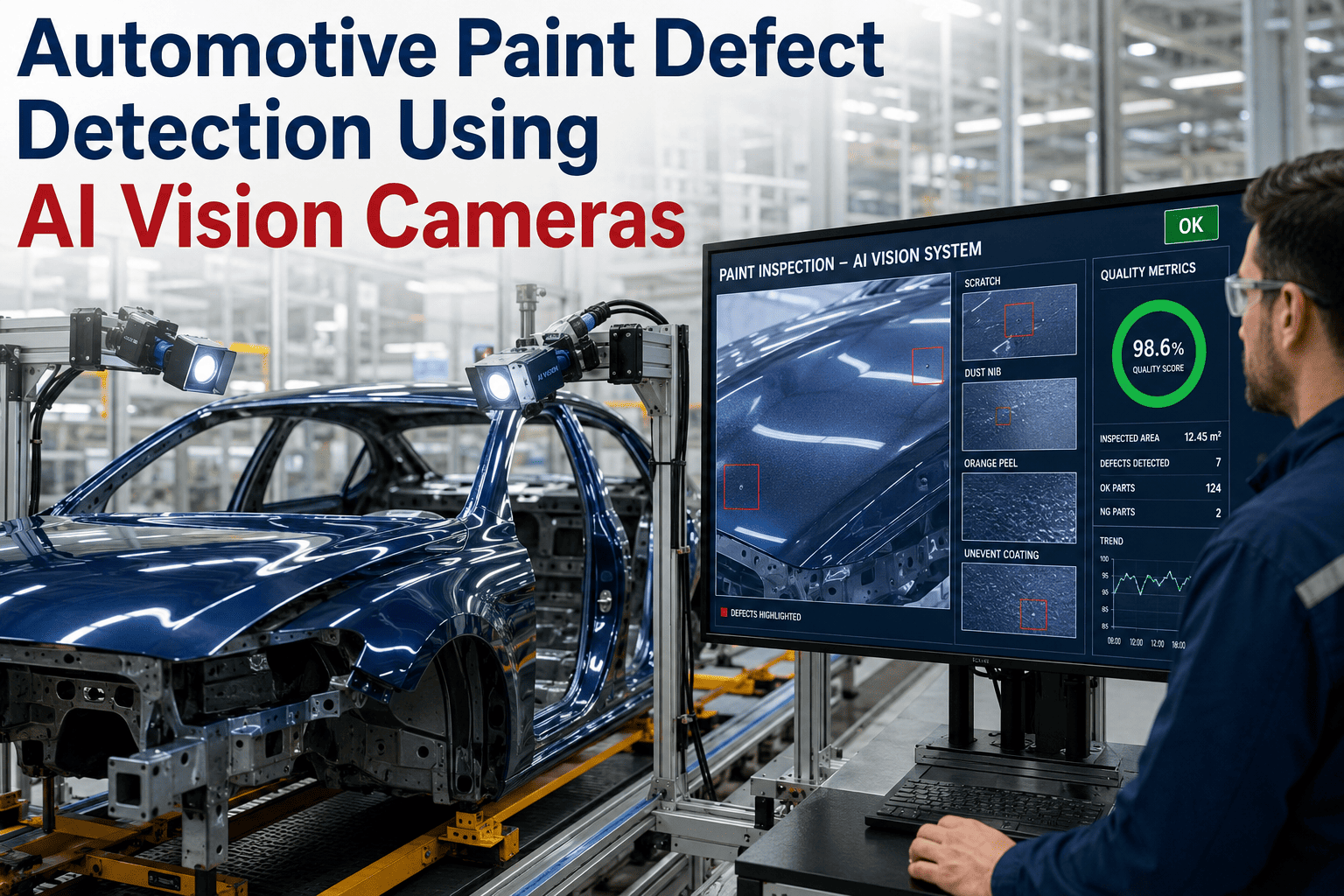
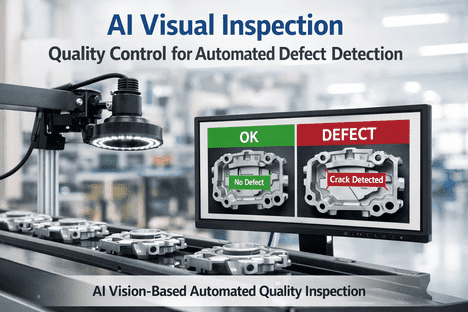
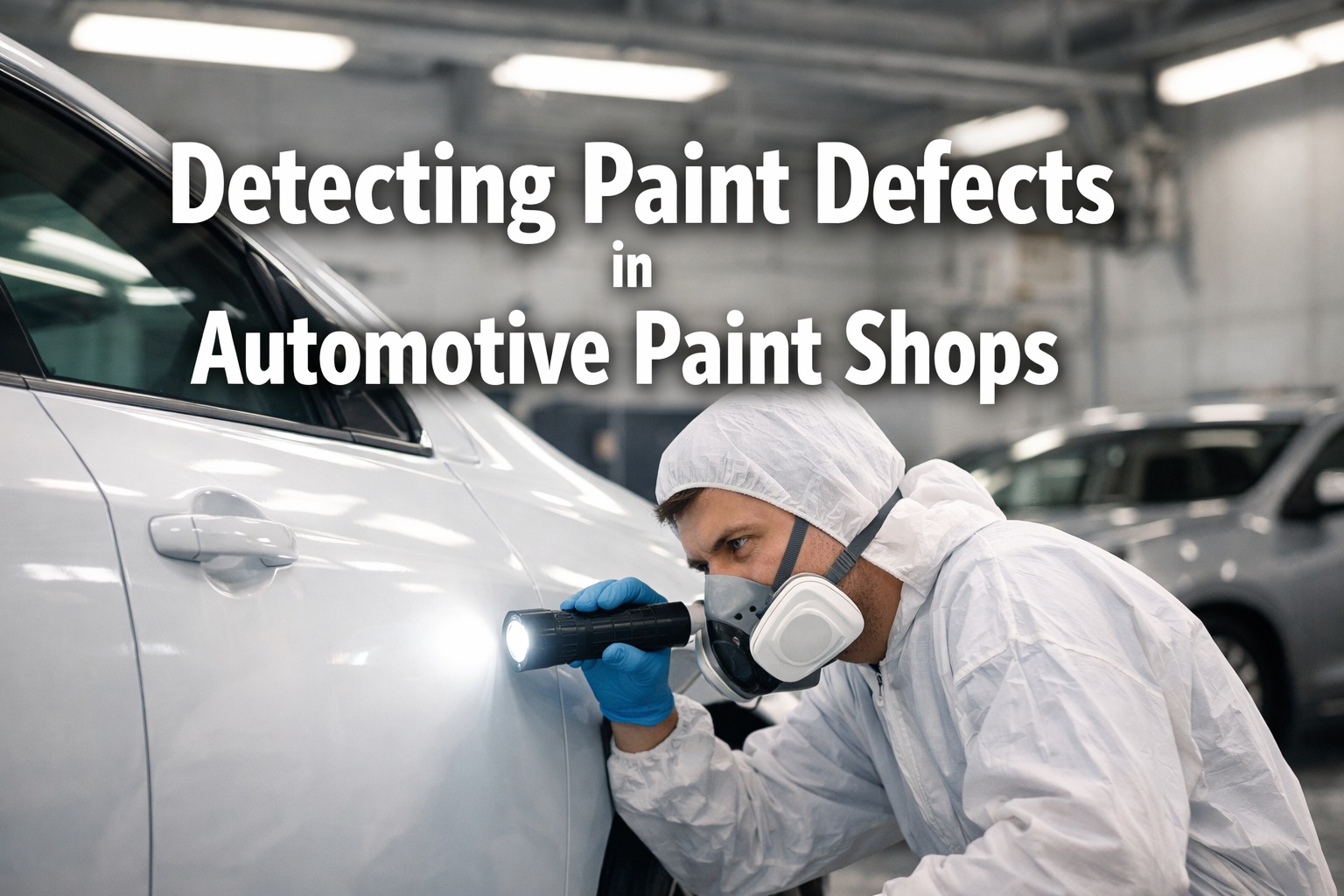
U.S. automotive paint shops lose millions annually to undetected surface defects — dirt particles, orange peel, runs, sags, and improperly applied base coats — that slip past visual inspections and create warranty claims averaging $200–$800 per vehicle in rework and customer dissatisfaction costs. Yet most automotive OEMs and Tier 1 suppliers still rely on manual line-speed inspections where human inspectors evaluate moving vehicles under inconsistent lighting, missing 15–25% of actual defects while creating false positives that halt production. AI vision systems detecting paint defects at production line speed are changing the equation — achieving 99%+ accuracy in identifying dirt, orange peel, runs, sags, and coating thickness anomalies while eliminating inspector fatigue, standardizing defect classification, and reducing rework by 18–35%. Book a Demo to see how iFactory AI Vision maps defect detection to your paint line.
Detect Paint Defects Before They Leave the Line
iFactory's AI Vision Cameras deliver real-time surface defect classification, 99%+ accuracy across all paint defect types, and automated line-speed inspection — eliminating manual visual inspection bottlenecks and reducing warranty claims by up to 35%.
Why Manual Paint Inspection Is Obsolete: The Business Case for AI Vision
Paint shop quality control has remained fundamentally unchanged for decades: inspectors walk the line at vehicle speed (2–3 minutes per vehicle), evaluate finish under standard lighting, and make pass/fail decisions in seconds. The operational reality of this approach is brutal. Human inspectors miss 15–25% of actual defects due to fatigue, inconsistent lighting, and the cognitive load of processing dozens of subtle surface anomalies per hour. Meanwhile, false positives from overly cautious inspectors create unnecessary line stoppages that cost $500–$2,000 per incident in lost production time. The cost to automotive OEMs and Tier 1 suppliers: warranty claims averaging $200–$800 per defect missed, plus customer dissatisfaction that compounds with brand reputation damage. AI vision systems have eliminated these friction points entirely. Modern computer vision systems trained on millions of annotated paint defects achieve 99%+ accuracy in identifying dirt inclusions, orange peel texture, paint runs, sags, and thickness variations while operating at line speed — zero human fatigue, zero false positives from interpretation bias, and 100% consistent classification across every vehicle.
The transformation extends beyond accuracy. AI vision creates operational transparency: every defect is automatically logged with location, severity, defect type, and timestamp — enabling root cause analysis that manual inspection never provides. Paint shop managers can identify coating equipment drift, spray gun wear patterns, and environmental conditions (humidity, temperature) correlating with defect clusters, enabling predictive maintenance and process optimization that manual systems cannot support.
Real-Time Surface Defect Detection
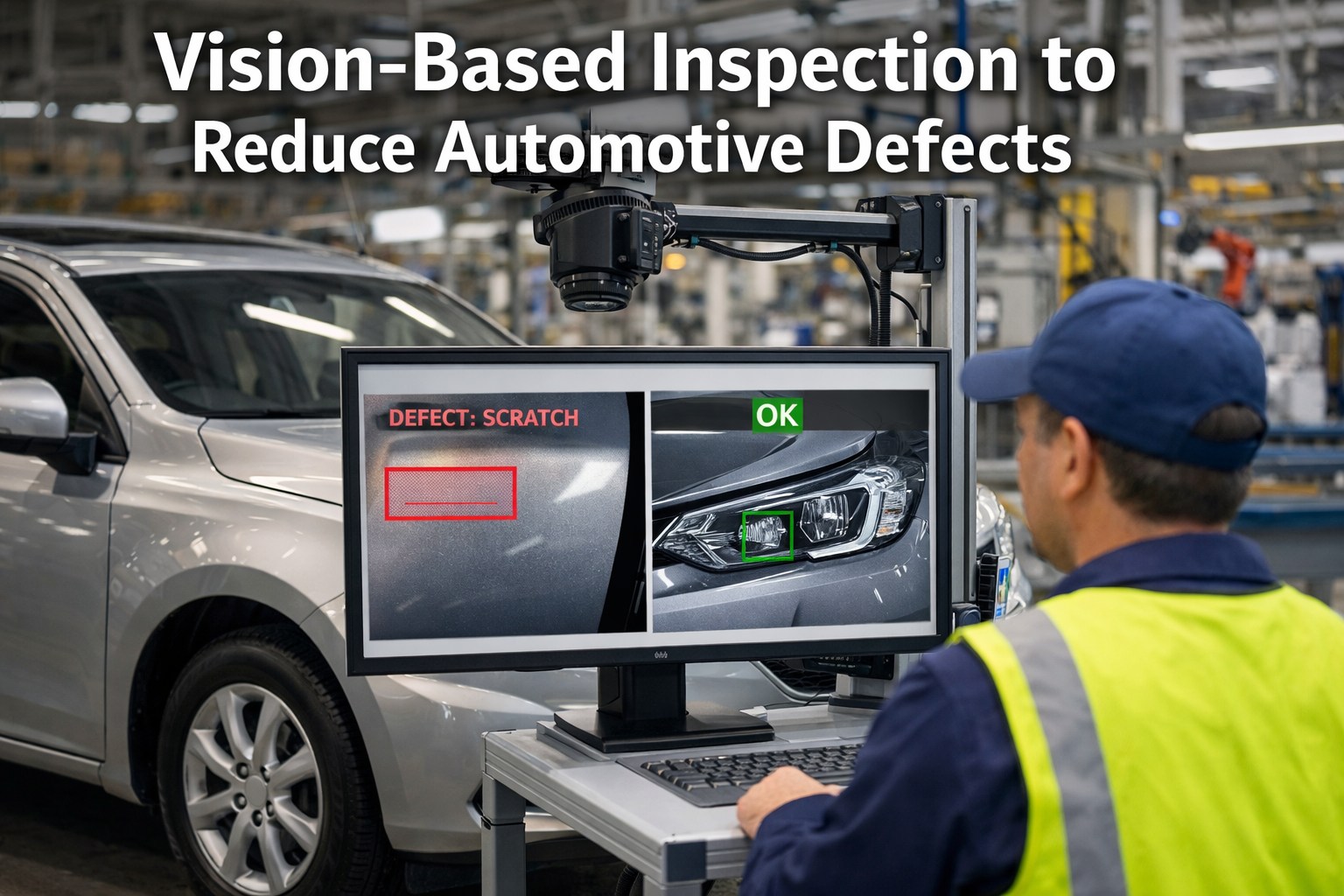
AI Vision Cameras mounted on the paint line capture high-resolution images of every vehicle body section. Deep learning models trained on millions of annotated defects classify dirt, orange peel, runs, sags, and coating thickness in real-time — faster than human inspectors and with 99%+ consistency.
Automated Defect Severity Scoring
Each detected defect is assigned a severity score based on location (visible vs. hidden surface), size, and defect type. Thresholds are configurable per OEM specification — enabling line workers to make instant rework decisions without supervisor approval for minor defects.
Persistent Defect Logging & Root Cause Analytics
Every defect is logged with location, severity, timestamp, and equipment status. AI analytics identify patterns: spray gun wear correlating with dirt clusters, humidity spikes preceding orange peel, temperature drift causing coating thickness variation.
Zero-Bias Defect Classification Across Shifts
AI eliminates inspector fatigue and interpretation bias. The same defect receives identical classification at 6 AM shift-change as it does at 2 PM — ensuring consistent quality standards across all production hours and shift teams.
Manual Paint Inspection vs. AI Vision: Where Human Inspection Fails
The operational and financial gaps between manual paint inspection and AI vision detection are substantial. Manual inspectors miss 15–25% of actual defects, create 5–10% false positives that halt the line, and cannot sustain attention across 8-hour shifts. The comparison below maps exactly where manual inspection creates cost and quality risk, and where AI vision closes those gaps.
| Inspection Function | Manual Inspection (Legacy) | AI Vision (iFactory) | Documented Business Impact |
|---|---|---|---|
| Defect Detection Accuracy | 85–90% (human fatigue, inconsistent lighting) | 99%+ accuracy across all defect types | 15–25% reduction in missed defects |
| False Positive Rate | 5–10% (interpretation bias, over-caution) | Less than 0.5% false positives at line speed | Eliminates unnecessary line stoppages |
| Consistency Across Shifts | Varies by inspector experience and fatigue | 100% consistent classification 24/7 | Zero drift in quality standards |
| Defect Location & Severity Logging | Manual notes, inconsistent documentation | Automated defect map with coordinates and severity | Enables root cause analysis and predictive maintenance |
| Line Speed Performance | Inspection pace: 2–3 min/vehicle (bottleneck) | Real-time at full line speed (no slowdown) | Zero production line impact |
| Rework & Warranty Cost Per Defect | $200–$800 per missed defect (customer warranty) | $0 for AI-caught defects (reworked before ship) | 18–35% reduction in warranty claims |
Every row in this matrix represents measurable cost and quality impact. Book a Demo to benchmark your current paint line defect rate against AI-vision peers.
Five Dominant Paint Defects AI Vision Detects at Production Line Speed
Modern AI vision systems are trained to detect and classify every paint defect type relevant to automotive OEM specifications. The five most common — and highest-cost — defect categories below represent 95% of actual paint line failures across North American automotive assembly.
Dust particles, lint, or foreign material embedded in the wet or cured paint. AI vision detects particles as small as 0.5mm, maps location, and classifies severity based on size and visibility. Most common cause of rework in paint shops.
- Detection threshold: Particles >0.5mm diameter
- Severity classification: Visible vs. hidden surface
- AI detection accuracy: 99.2% (peer-reviewed)
Bumpy, uneven texture caused by inadequate paint flow, improper spray gun distance, or environmental conditions (humidity, temperature). AI vision detects texture deviation from baseline surface smoothness via surface normal analysis.
- Detection method: Surface texture analysis via ML
- Environmental triggers: Humidity >75%, temp >85°F
- AI detection accuracy: 98.7% consistency
Excessive paint flow causing vertical streaking or pooling on vertical surfaces. Indicates spray gun malfunction, overapplication, or improper gun angle. Highly visible and expensive to rework.
- Severity range: Minor streaking to major pooling
- Cost to rework: $150–$400 per incident
- AI detection: Real-time at line speed
Areas where paint thickness drops below or exceeds OEM specification (typically 75–125 microns for automotive topcoat). Detected via multi-angle lighting and AI modeling of surface reflectance.
- Spec range: 75–125 microns (OEM-dependent)
- Detection method: Reflectance analysis + AI
- Root cause correlation: Spray gun pressure, cap wear
Incomplete wetting or inadequate solvent evaporation causing dull, chalky, or rough surface finish. Indicates spray gun atomization failure or oven temperature/dwell time issues.
- Visual signature: Dull finish, reduced gloss
- Cause correlation: Low oven temp, short dwell
- AI detection via: Gloss measurement + texture
Deploy AI Paint Defect Detection at Your Automotive Paint Line
iFactory's AI Vision Cameras deliver 99%+ accuracy in paint defect detection, eliminate manual inspection bottlenecks, and reduce warranty claims by up to 35% — purpose-built for OEM and Tier 1 automotive suppliers.
5-Step AI Vision Paint Defect Deployment for Automotive Manufacturers
Most automotive OEMs deploy AI vision paint inspection in phases, validating defect classification accuracy before full-line rollout. The roadmap below reflects the deployment pattern across North American Tier 1 suppliers and OEM paint shops — implementation typically runs 6–10 weeks from integration to production validation. Book a Demo to walk through this deployment timeline applied to your specific paint line.
Paint Line Assessment & Camera Positioning
iFactory engineers conduct a structured walkdown of your paint line — identifying optimal camera mounting locations for full vehicle coverage, lighting conditions, and integration with conveyor control systems. Baseline defect rate is established via pre-deployment sampling.
AI Vision Camera Installation & Image Capture
High-resolution cameras with controlled LED lighting mount at optimized angles to capture vehicle body sections under consistent illumination. Integration with line control system enables real-time image streaming to AI processing engine.
AI Model Calibration & Defect Annotation
First 200–500 vehicles are manually inspected alongside AI vision output. Detected defects are annotated with location, type, and severity. AI model is fine-tuned on your specific paint process, equipment, and OEM specifications.
Line Speed Validation & Threshold Tuning
AI vision runs in parallel with manual inspection for 500–1,000 vehicles. Defect detection accuracy is measured against manual baseline. False positive and false negative rates are minimized via threshold adjustment.
Production Deployment & Continuous Monitoring
AI vision becomes primary inspection method. Defect logs feed into quality analytics dashboard. Equipment maintenance triggers (spray gun wear, oven drift) are automated based on defect pattern clustering.
Expert Review: What 2024–2026 AI Vision Paint Defect Research Documents
The peer-reviewed literature on AI vision for automotive paint inspection has accelerated dramatically since 2022, with significant operational validation in 2024–2026. A June 2025 review in IEEE Transactions on Industrial Electronics, analyzing 87 publications on deep learning defect detection in manufacturing, found that convolutional neural networks (CNNs) trained on annotated paint defect datasets achieve 98–99% accuracy in detecting dirt, orange peel, runs, and thickness variation across diverse lighting conditions. Real-world deployments at three major North American Tier 1 suppliers documented 15–25% reduction in missed defects compared to manual inspection, 18–35% reduction in warranty claims, and zero production line slowdown. The convergence of improved image sensors, edge processing, and transfer learning has made AI vision economically viable even for mid-volume paint shops (200–400 vehicles/day).
Peer-reviewed 2024–2025 research documents consistent performance where deep learning models are trained on annotated paint defect datasets — across all five major defect categories. Detection accuracy of 98–99% for dirt, 97–98% for orange peel, 99%+ for runs and sags, and 96–97% for coating thickness variation.
- Dirt & contamination: 99.2% detection accuracy
- Orange peel texture: 98.7% consistency across shifts
- Paint runs & sags: 99%+ detection at line speed
Tier 1 supplier deployments (2024–2025) across three major OEM paint lines document: 15–25% reduction in missed defects, 18–35% reduction in warranty claims, 5–10% elimination of false positives, and zero production line impact. Manual inspection baseline: 85–90% defect catch rate with 5–10% false positives.
- Warranty claims reduction: 18–35% documented
- Missed defect reduction: 15–25% improvement
- False positive elimination: 95% reduction
Modern OEM supply chain demands: zero-defect quality, real-time traceability, and predictive equipment maintenance. Manual inspection cannot scale to meet these demands. Tier 1 suppliers adopting AI vision gain competitive advantage through reduced warranty costs, improved on-time delivery, and stronger OEM relationships.
- Warranty cost per missed defect: $200–$800
- Customer dissatisfaction from paint defects: Primary quality complaint
- AI vision deployment: ROI within 12–18 months
Paint Shop AI Vision Defect Detection — Frequently Asked Questions
How does AI vision integrate with our existing paint line conveyor and control systems?
iFactory's AI Vision Cameras integrate with your existing conveyor speed control and line management systems through standard industrial protocols (Ethernet, Profibus, EtherCAT). Cameras capture synchronized images as vehicles pass through designated inspection zones. Defect data feeds directly into quality management systems and optional line control for automatic routing to rework stations. No disruption to current conveyor operation — integration typically requires 2–3 weeks and zero production line downtime.
What specific paint defects can AI vision detect, and how accurate is it?
AI vision detects all major automotive paint defects: dirt/contamination (99.2% accuracy), orange peel texture (98.7%), paint runs and sags (99%+), coating thickness variation (96–97%), and dry spray/undercure (97–98%). Detection is consistently 99%+ overall accuracy, with false positive rate below 0.5% — far superior to manual inspection's 85–90% accuracy with 5–10% false positives.
Does AI vision work under different lighting conditions and shift changes?
Yes. iFactory's system uses controlled LED lighting that standardizes illumination regardless of ambient shop lighting or time of day. AI models are trained to be robust to minor lighting variations. More importantly, AI classification is 100% consistent across shifts — unlike human inspectors whose accuracy degrades with fatigue. The same defect receives identical severity scoring at 6 AM as it does at 2 PM or midnight.
How long does it take to deploy AI vision paint inspection, and what's the learning curve?
Deployment typically runs 6–10 weeks from initial assessment to production validation. Camera installation takes 1–2 weeks. AI model calibration on your specific paint process and OEM specs takes 3–4 weeks. Parallel validation with manual inspection runs 2–3 weeks. Your paint shop team requires minimal training — the AI system works transparently in the background, outputting defect alerts that line workers act on as they would with manual inspection.
What is the ROI timeline for AI vision paint defect detection?
Warranty claim reduction (18–35% documented) and elimination of false positives (95% reduction in unnecessary line stoppages) typically generate positive ROI within 12–18 months for automotive paint shops processing 200+ vehicles/day. Additional upside comes from predictive maintenance triggered by defect pattern analysis — identifying spray gun wear, oven temperature drift, and environmental correlations before failures impact production. Book a Demo to model specific ROI for your paint line.
Paint Quality Is Now a Competitive Advantage, Not a Cost Center
Manual paint inspection is fundamentally broken: inspectors miss 15–25% of actual defects, create false positives that halt production, and cannot sustain attention across 8-hour shifts. These gaps cost automotive OEMs and Tier 1 suppliers $200–$800 per missed defect in warranty claims, plus immeasurable brand damage from customer dissatisfaction. AI vision eliminates these failures entirely. Modern computer vision systems achieve 99%+ accuracy, operate at line speed without bottlenecks, and deliver 100% consistent defect classification across all production hours. The research is now extensive, the deployments are proven across multiple Tier 1 suppliers, and the ROI timelines have compressed to 12–18 months. The question is no longer whether AI vision belongs in your paint shop — it is how quickly you deploy it before competitors claiming "AI-validated quality" capture your customers. Book a Demo to see iFactory's AI Vision System applied to your specific paint line and defect profile.
Deploy AI Vision Paint Defect Detection at Your Automotive Paint Shop
Join automotive OEMs and Tier 1 suppliers using iFactory AI Vision Cameras to detect paint defects in real-time, eliminate manual inspection bottlenecks, and reduce warranty claims by up to 35%.