Six months ago, a quality director at a mid-sized pharmaceutical manufacturer spent every Tuesday morning reconciling paper batch records against the MES log, hunting for signature gaps in the sterilization step that had already delayed two product releases that quarter. Each discrepancy meant a deviation investigation, a CAPA, and a sleepless night for the ops team. Today, that same director reviews a live dashboard showing batch disposition times cut in half, zero signature exceptions across 47 batches, and an audit trail that the FDA reviewer called "the cleanest I've seen." The difference wasn't a new ERP or a bigger quality team. It was a single shift: from paper-based and hybrid EBR workflows to a fully automated, on-premise electronic batch record system that closes the loop in real time.
From Paper to Proof: Automate Batch Record Execution & Close the Quality Loop in One Quarter
iFactory replaces manual, paper-based batch record workflows with a turnkey, on-premise electronic batch record (EBR) system that automates data collection, enforces SOPs, and delivers audit-ready records — without ripping out your existing MES.
The Results Speak in Batch Numbers
Pharma manufacturers who deploy iFactory's EBR automation see measurable, auditable improvements in batch release speed, compliance rate, and operator efficiency — all within a single quarter.
What a Fully Automated EBR System Does for You
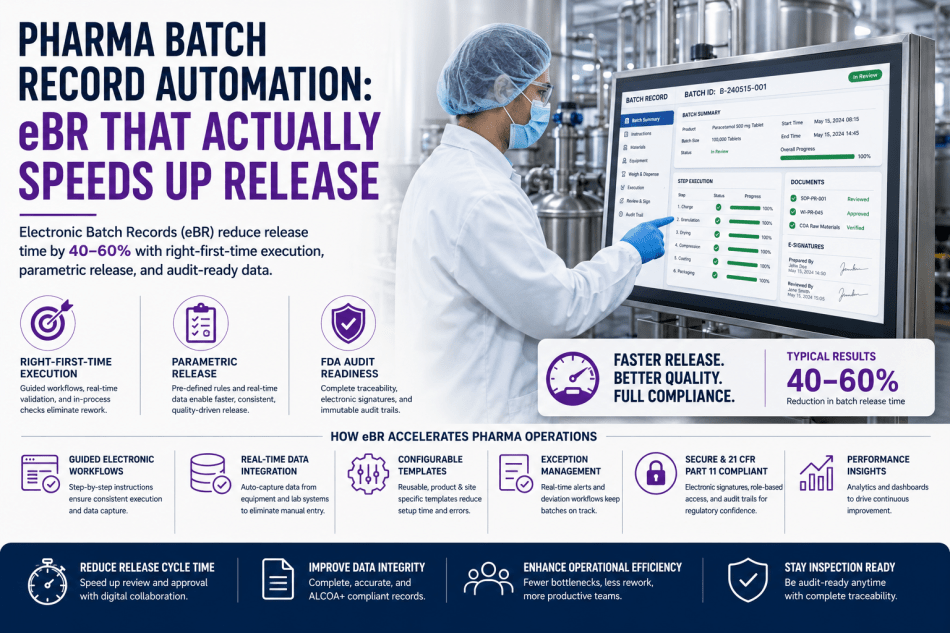
iFactory's MES Workflow module turns your existing batch instructions into a live, enforceable, and auditable digital process — no paper clipboards, no manual data transcription, no post-batch reconciliation.
Real-Time Data Capture from Every Source
iFactory ingests data directly from scales, pH meters, temperature sensors, and operator touchscreens — timestamped, user-verified, and written to the batch record as it happens. No manual entry means no transcription errors.
Automated SOP Enforcement & Gating
Each step in the batch record is gated by the previous step's completion. If a parameter drifts outside the validated range, the workflow pauses and alerts the supervisor automatically — preventing non-conforming batches from moving forward.
Digital Signature & Audit Trail
21 CFR Part 11 compliant electronic signatures are captured at every required step. The audit trail records who did what, when, and what they saw — producing a complete, unalterable history that satisfies any regulatory review.
Live Batch Status Dashboard
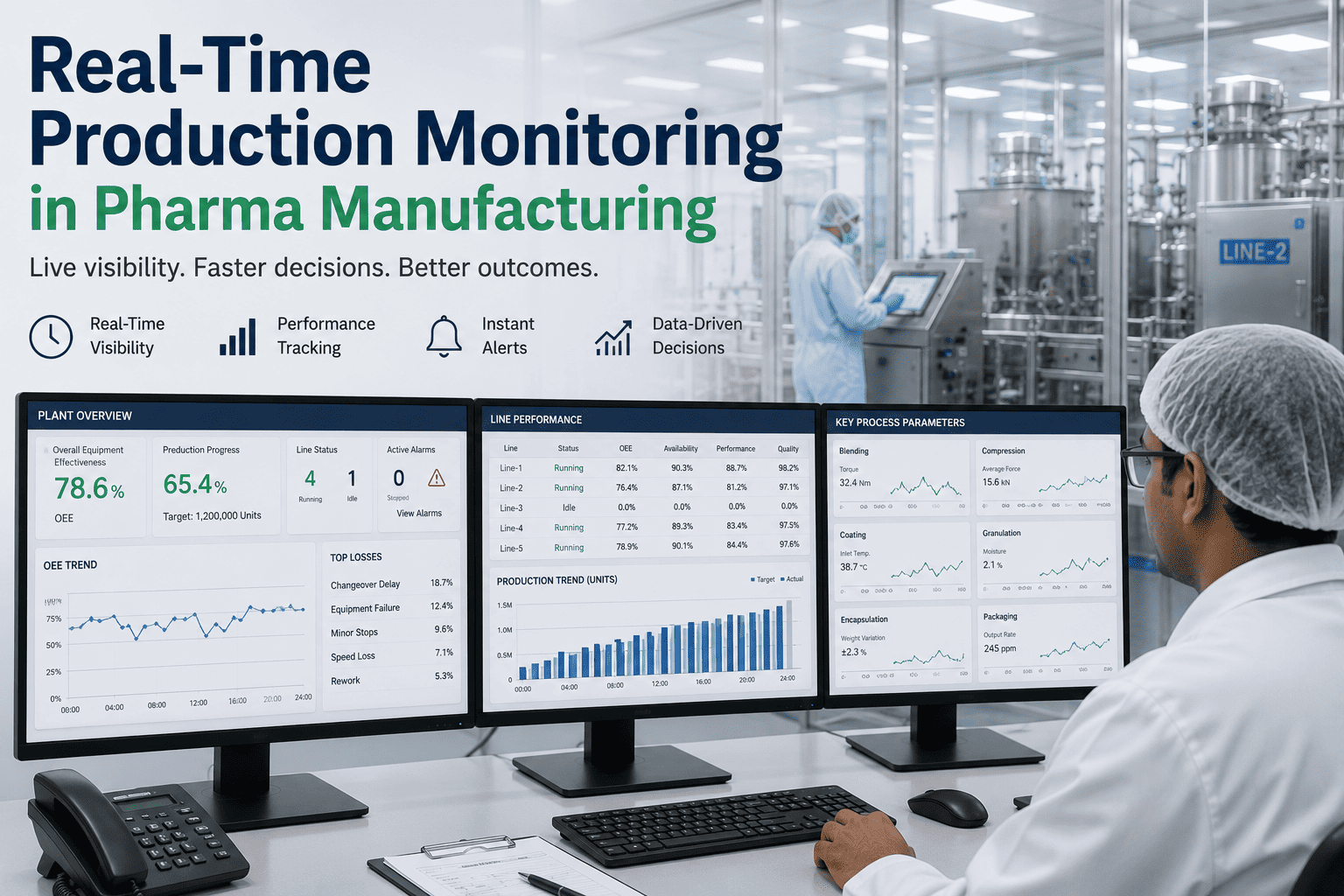
Operations and quality teams see the exact status of every active batch — which step it's on, whether it's within spec, and if any interventions are needed — without walking the floor or chasing down paper records.
Automated Deviation & CAPA Triggers
When a parameter exceeds its limit, iFactory automatically creates a deviation record, notifies the relevant team, and can initiate a CAPA workflow — reducing the time between the event and the corrective action from days to minutes.
Structured Batch Record Export
At batch completion, iFactory generates a structured, searchable electronic batch record in PDF, XML, or database format — ready for archival, review, or submission to regulatory authorities. No more scanning or filing.
The Hidden Cost of a Paper-Based Batch Record
Paper and hybrid EBR systems aren't just slow — they introduce risk, hide defects, and waste operator time that should be spent on value-added work. Here's what that costs you, every single batch.
Data Entry Errors Delay Release by Days
Operators transcribe readings from instruments onto paper logs, then a clerk re-enters them into the MES. A single typo — 37.2°C instead of 37.5°C — triggers a deviation investigation that can hold a batch for 48 hours. At $50,000 per hour of lost production, that's a $2.4 million risk per incident.
Signature Gaps Create Audit Finding Exposure
In a paper workflow, a missing supervisor signature on a sterilization step can go unnoticed for days. When discovered during an FDA inspection, it's a Form 483 observation — and a potential warning letter. The average cost of a regulatory action in pharma manufacturing exceeds $10 million in remediation, legal fees, and lost market share.
Post-Batch Reconciliation Consumes 40% of Quality Team Time
Your quality team spends nearly half their week manually reconciling paper batch records against the MES log, chasing down missing entries, and reconstructing the sequence of events. That's time they could spend on continuous improvement, root cause analysis, or process validation — work that actually drives value.
Stop buying more paper. Book a 30-min walkthrough and see how iFactory automates your EBR workflow in 12 weeks.
From Paper to Proof in Four Steps
iFactory's deployment model is purpose-built for pharma: on-premise, no cloud dependency, and a pilot that delivers a working, validated EBR workflow in 6–12 weeks.
Map Your Batch Instruction to a Digital Workflow
We take your existing batch record — paper or electronic — and translate it into a digital, step-by-step workflow in iFactory's MES Workflow engine, including all parameters, limits, signatures, and gating rules.
Connect to Your Plant Floor Data Sources
iFactory connects directly to your scales, sensors, PLCs, and operator touchscreens — all on your local network, with zero data leaving the plant. No cloud dependency, no data egress risk.
Validate the Workflow in a Pilot Batch
We run a live pilot batch alongside your existing process. Operators use the digital workflow, iFactory captures the data, and we validate the output against your approved batch record — typically in 6–12 weeks.
Go Live & Close the Loop
Once validated, you cut over to the digital workflow. iFactory handles every batch from there — capturing data, enforcing SOPs, managing signatures, and producing audit-ready records automatically.
iFactory Delivers a Turnkey EBR System — No Surprises
We don't just hand you software and walk away. iFactory is an end-to-end, managed service that includes everything you need to go from paper to proof in one quarter.
End-to-End Deployment in 6–12 Weeks
We handle the workflow mapping, data source integration, validation, and operator training. You hand over data-source access, and we deliver a working pilot.
On-Premise Appliance — Zero Cloud Dependency
iFactory runs on an NVIDIA appliance on your plant network. No cloud, no data egress, no cybersecurity exposure. Your batch records never leave your facility.
21 CFR Part 11 Compliant by Design
Digital signatures, audit trails, and data integrity are built into the platform from day one. No bolt-on modules or custom scripting to achieve compliance.
24×7 Managed Service & Support
iFactory's operations team monitors your system around the clock. If something breaks, we fix it — before it affects your batch release schedule.
Common Questions About EBR Automation
Stop Chasing Paper. Start Proving Compliance in Real Time.
Schedule a 30-minute walkthrough with our pharma operations team. We'll show you how iFactory automates your EBR workflow — from batch start to audit-ready record — in a single quarter.