Power plant control rooms are the nerve centers of energy production, where operators manage complex processes across boilers, turbines, generators, and balance-of-plant systems. Yet many control rooms still rely on outdated human-machine interfaces (HMIs) and alarm systems that flood operators with thousands of nuisance alerts each shift. This overload leads to desensitization, missed critical events, and slower response times during emergencies. According to the Electric Power Research Institute (EPRI), alarm floods — defined as more than 10 alarms per 10 minutes — occur in over 70% of fossil-fuel plants during startups and transients. The result is increased risk of equipment damage, unplanned outages, and safety incidents. Modernizing the control room with AI-driven dashboards, ISA-101-compliant HMI design, and structured alarm management following ISA 18.2 can dramatically improve operator situational awareness and reduce alarm floods by up to 85%. This article explores the key components of a successful control room modernization project, from display philosophy to alarm rationalization, and provides a roadmap for power plant operators seeking to upgrade their control systems without replacing the entire DCS.
The Hidden Cost of Outdated Control Rooms
Many power plants operate with control systems that were installed 15-20 years ago. These legacy HMIs often feature cluttered graphics, inconsistent color coding, and alarms that are poorly prioritized. Operators must navigate through dozens of screens to find the information they need, wasting precious seconds during critical events. The human factors of control room design — lighting, console ergonomics, display layout — are frequently ignored, contributing to operator fatigue and errors. A study by the Nuclear Regulatory Commission found that poor HMI design was a contributing factor in 30% of significant events at nuclear plants. For fossil and combined-cycle plants, the numbers are similar. The cost of a single unplanned outage due to operator error can exceed $500,000 per day in lost revenue and repair costs. Modernizing the control room is not just about aesthetics; it is a direct investment in reliability, safety, and operational excellence.
ISA 101 HMI Design: The Foundation of Modernization
The ISA 101 standard provides a framework for designing HMIs that improve operator situational awareness. Key principles include high-performance graphics that show process conditions at a glance, consistent navigation, and the use of color only to indicate abnormal states. Traditional HMIs often use bright colors on normal conditions, which desensitizes operators to alarms. ISA 101 recommends a gray-scale background with color reserved for alerts. Implementation involves creating a display philosophy document, developing a style guide, and building hierarchical screens that allow operators to drill down from plant overviews to detailed loops. For example, a combined-cycle plant might have an overview screen showing all three pressure levels in the heat recovery steam generator, with color-coded bars indicating deviations. Clicking on a section opens a more detailed view. This approach reduces cognitive load and helps operators identify problems faster.
Key ISA 101 Principles
- High-performance graphics with minimal clutter
- Gray-scale background with color for alarms only
- Consistent navigation and screen hierarchy
- Data-driven displays showing trends and deviations
- Operator-centered design with user testing
Alarm Rationalization: Taming the Flood
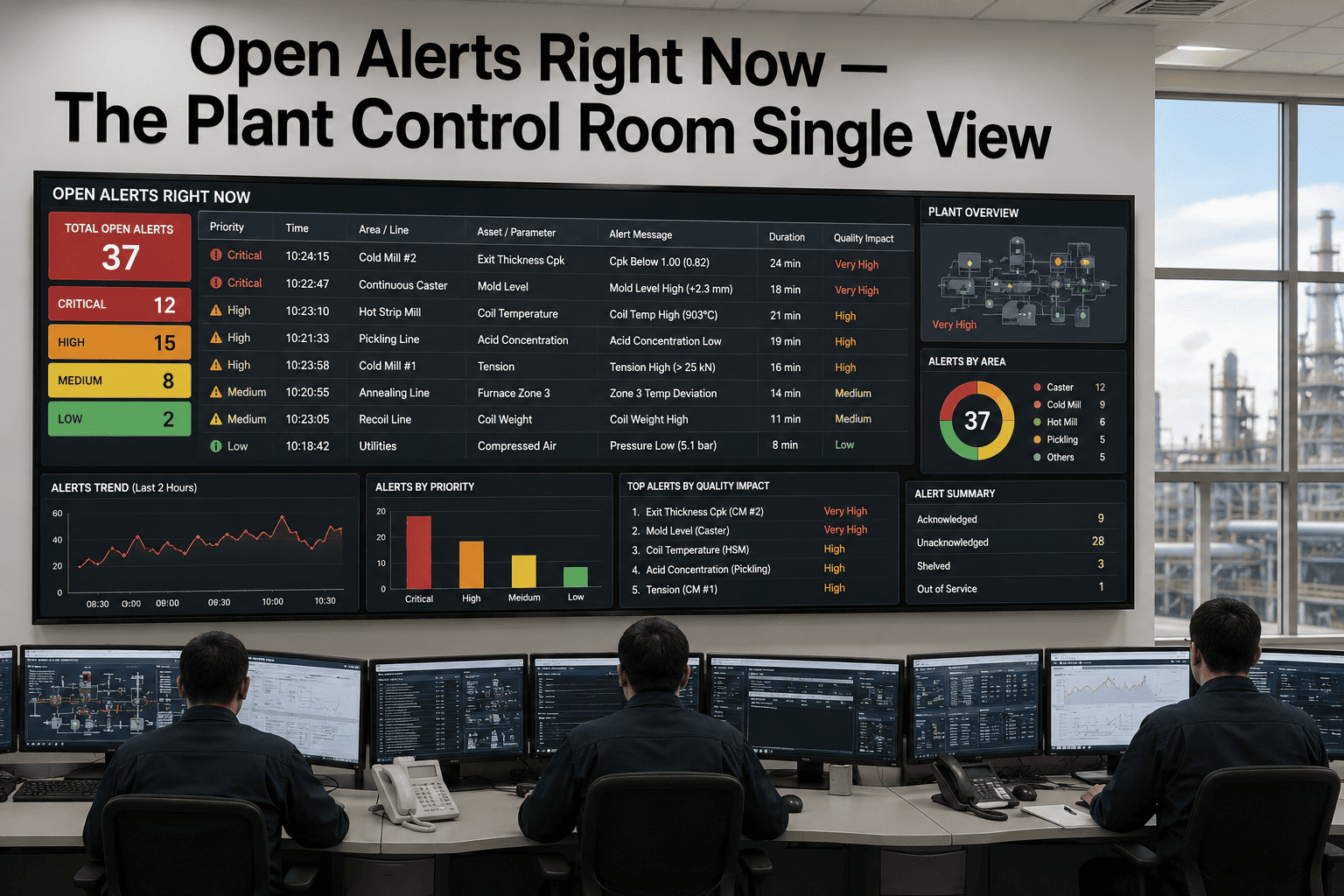
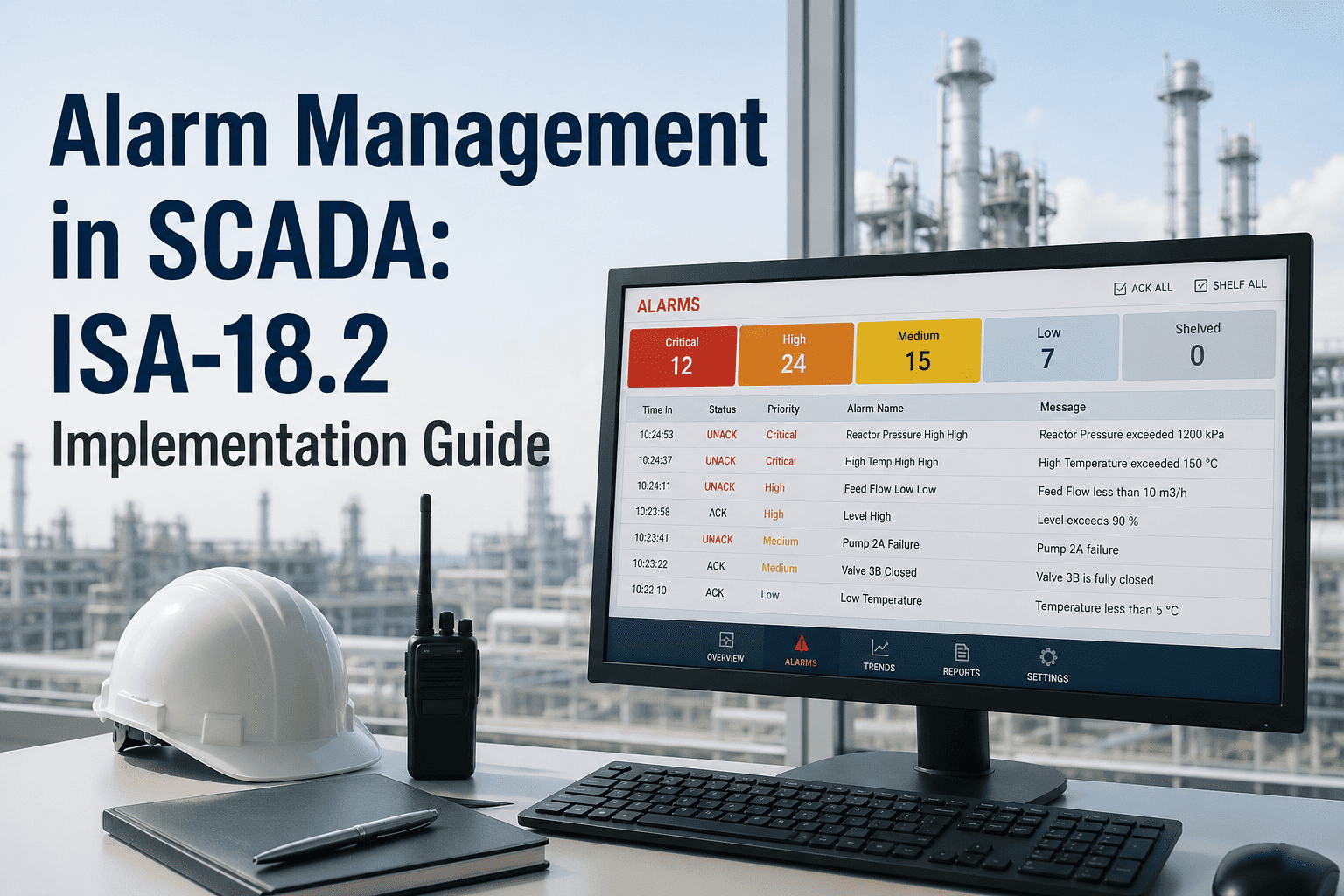
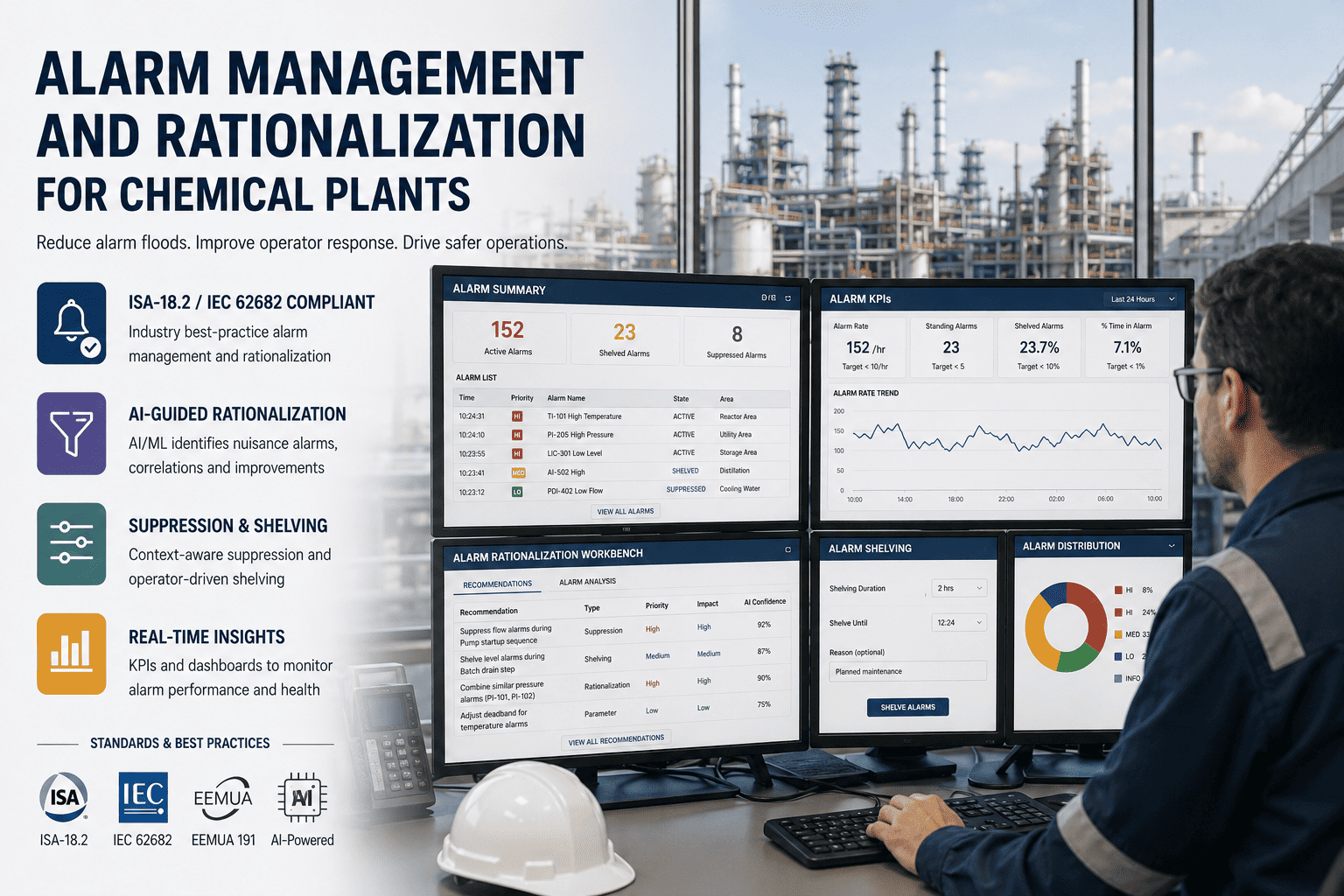
Alarm rationalization is the process of reviewing every alarm in the system to ensure it is necessary, actionable, and properly prioritized. The ISA 18.2 standard defines a lifecycle for alarm management, from identification to monitoring. A typical rationalization project involves forming a cross-functional team of operators, engineers, and maintenance staff. Each alarm is evaluated against criteria such as: Is the condition truly abnormal? Does the operator need to take action? Will the alarm be suppressed automatically if the condition clears? Nuisance alarms — those that are repetitive, fleeting, or chattering — are eliminated or redesigned. For example, a pressure alarm that triggers during every startup due to normal pressure swings might be suppressed during that phase. The result is a streamlined alarm system where operators can trust that every alert requires their attention. Studies show that after rationalization, the number of alarms per operator per shift drops from thousands to fewer than 150, meeting the benchmark set by the Abnormal Situation Management (ASM) Consortium.
Step-by-Step Modernization Roadmap
Audit and Assessment
Conduct a thorough audit of the current control room, including HMI graphics, alarm system performance, operator workflows, and console ergonomics. Use tools like alarm KPI dashboards to measure flood frequency, stale alarms, and operator response times. This baseline data guides the modernization plan.
Display Philosophy Development
Create a display philosophy document that defines the look and feel of the new HMI. Include guidelines for color usage, font sizes, navigation structure, and screen hierarchy. This document ensures consistency across all plant areas and simplifies future modifications.
Alarm Rationalization Workshop
Assemble operators, engineers, and subject matter experts to review each alarm in the system. Use the ISA 18.2 criteria to classify alarms as critical, warning, or advisory. Eliminate nuisance alarms and implement dynamic suppression where appropriate. Document the rationalization in a master alarm database.
HMI Graphic Redesign
Redesign all HMI graphics following ISA 101 principles. Use high-performance graphics libraries or custom solutions to create intuitive, data-rich displays. Implement a hierarchical navigation system with overview, area, and detail levels. Test graphics with operators in a simulated environment before deployment.
AI Dashboard Integration
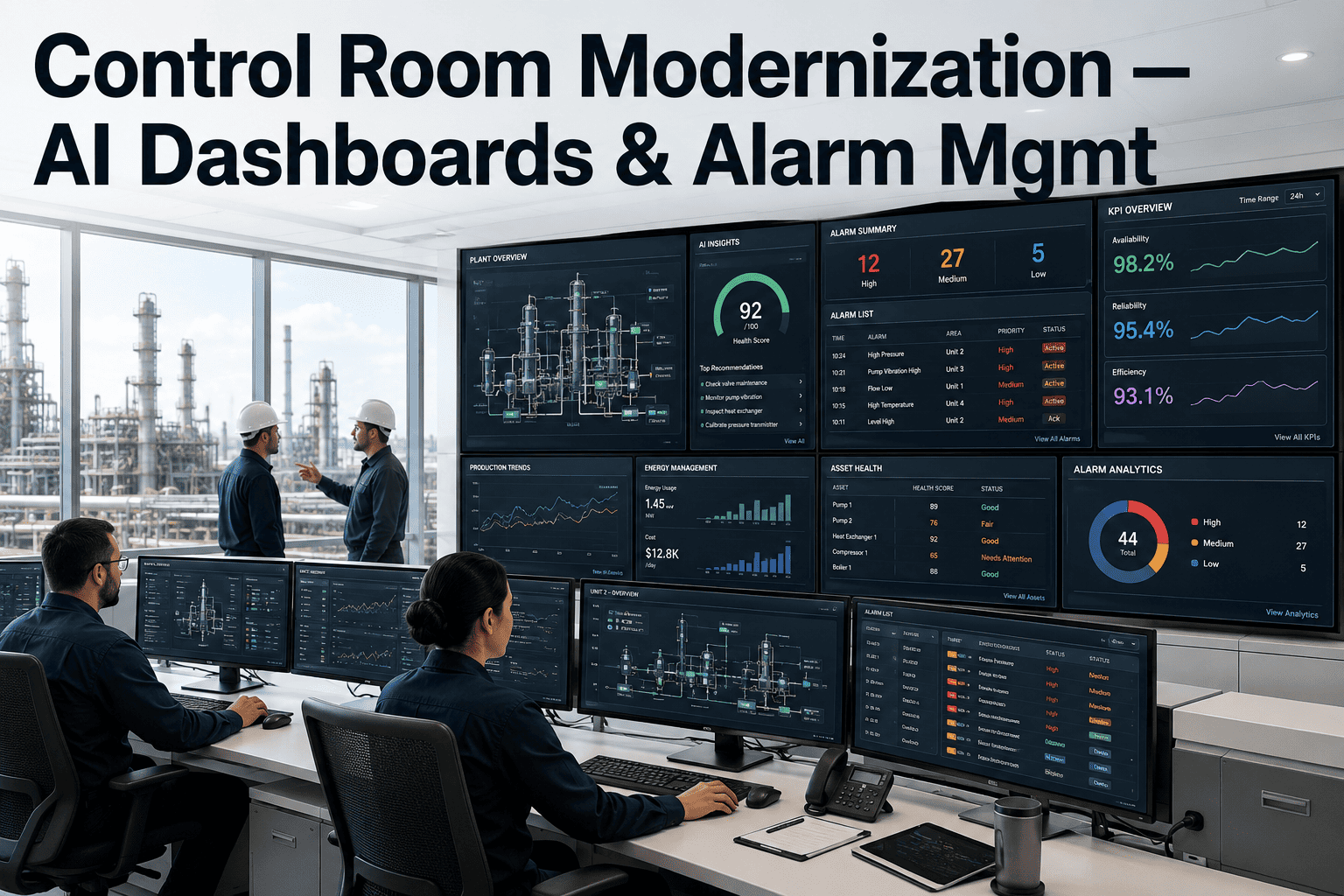
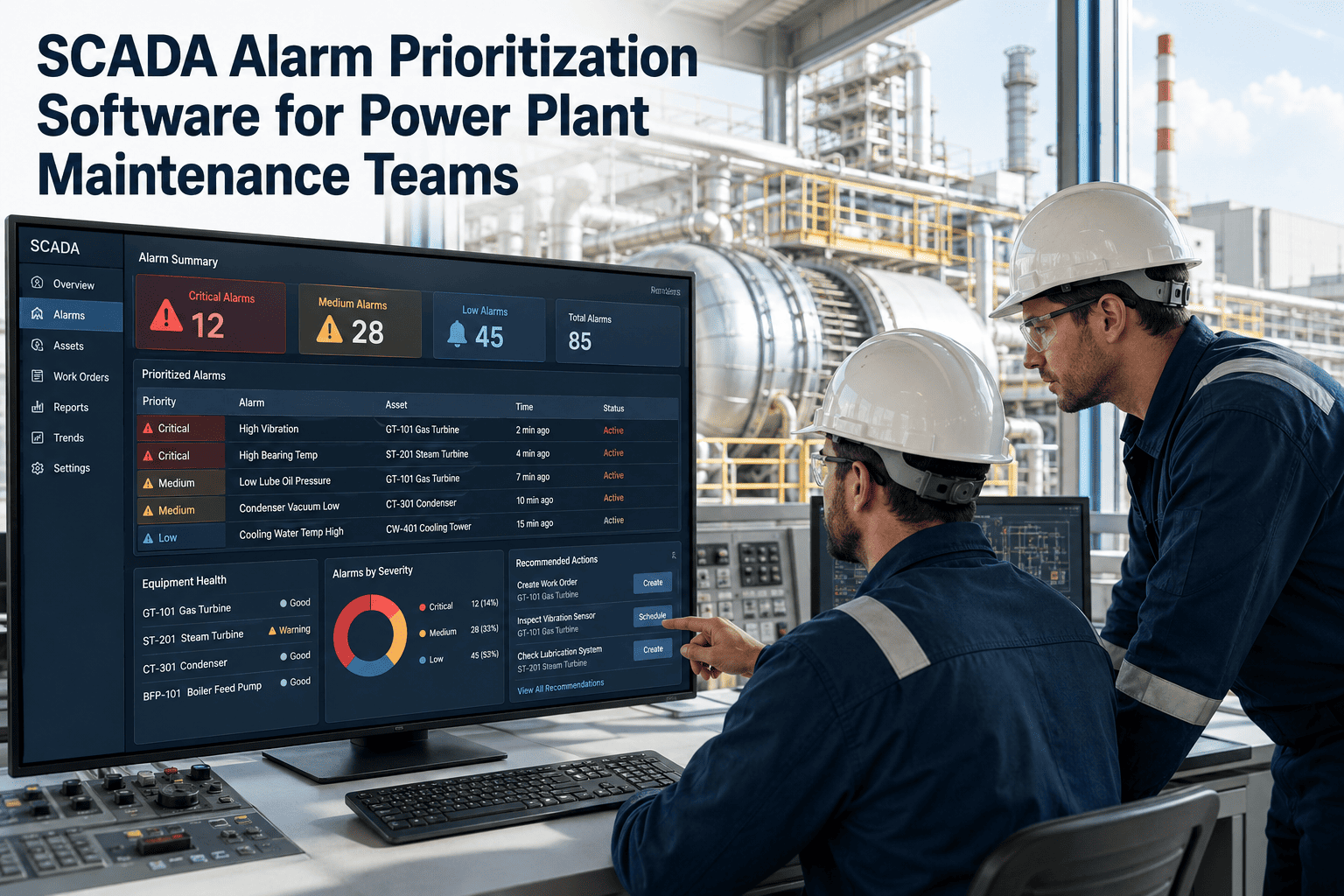
Integrate AI-powered dashboards that provide predictive analytics, anomaly detection, and decision support. These dashboards analyze real-time data from the DCS to predict equipment failures, optimize combustion, and recommend operator actions. AI models can also prioritize alarms based on context and severity.
Operator Training and Change Management
Train operators on the new HMI and alarm system using simulators and on-the-job coaching. Emphasize the new alarm philosophy and how to interact with AI dashboards. Change management is critical to ensure operator buy-in and smooth transition. Monitor KPIs post-deployment to measure improvement.
Ready to Transform Your Control Room?
Book a demo to see how our AI dashboards and alarm management solutions can improve your plant's performance.
AI Dashboards: The Next Frontier in Operator Decision Support
AI dashboards go beyond traditional SCADA displays by incorporating machine learning models that analyze historical and real-time data. These dashboards can predict turbine bearing temperatures, detect early signs of tube leaks in boilers, and optimize sootblowing schedules. For example, an AI model trained on 5 years of data can identify patterns that precede a forced outage, giving operators hours or days of advance warning. The dashboard presents this information in a simple traffic-light format: green for normal, yellow for caution, red for action required. Operators can click on a red alert to see the underlying data and recommended actions. This reduces the cognitive burden of monitoring hundreds of parameters and allows operators to focus on decision-making. In one case study, a 600 MW coal plant reduced unplanned outages by 30% after deploying AI dashboards for boiler and turbine monitoring.
Before vs After: Measurable Improvements
| Metric | Before Modernization | After Modernization |
|---|---|---|
| Alarm floods per shift | 8-12 | 0-1 |
| Total alarms per operator per shift | 1,500+ | 120 |
| Operator response time to critical alarm | 5-8 minutes | 1-2 minutes |
| Time to identify root cause | 15-20 minutes | 3-5 minutes |
| Operator fatigue index (1-10) | 8 | 3 |
Operator Console Ergonomics and Control Room Environment
Modernization is not just about software. The physical environment of the control room plays a crucial role in operator performance. Ergonomic consoles with adjustable height, multiple monitors, and proper lighting reduce physical strain. Ambient lighting should be indirect and dimmable to reduce glare on screens. Acoustic treatment minimizes noise distractions. The layout should allow operators to see each other and the main display wall without turning their heads. Human factors engineering also considers shift patterns and workload distribution. For example, a control room with three operators might have one focused on combustion, one on steam cycle, and one on balance of plant. Ergonomic improvements can reduce operator fatigue by up to 50%, leading to better decision-making during long shifts. Investing in the physical environment complements the digital upgrades and ensures operators can perform at their best.
Cybersecurity Considerations in Control Room Modernization
As control rooms become more connected with AI dashboards and remote monitoring, cybersecurity must be a priority. The DCS upgrade project should include network segmentation, secure remote access, and intrusion detection systems. All new software should be tested for vulnerabilities and comply with NERC CIP standards for power plants. Operator consoles should have multi-factor authentication, and alarm management systems should log all operator actions for audit trails. The integration of AI models introduces new attack surfaces, such as data poisoning of training datasets. A robust cybersecurity framework ensures that modernization does not introduce new risks. Regular penetration testing and employee training on phishing and social engineering are essential. By addressing cybersecurity from the start, plants can enjoy the benefits of modern control rooms without compromising safety or reliability.
Frequently Asked Questions
How long does a typical control room modernization project take?
A full modernization project, including HMI redesign, alarm rationalization, and AI dashboard integration, typically takes 6 to 12 months depending on plant size and complexity. The timeline includes an initial audit phase (4-6 weeks), display philosophy development (2-4 weeks), alarm rationalization workshops (4-8 weeks), graphic redesign (8-12 weeks), AI model training and integration (8-12 weeks), and operator training (4-8 weeks). Parallel tasks can reduce overall duration. For example, alarm rationalization can proceed simultaneously with HMI graphic design. Many plants choose a phased approach, starting with the most critical unit or area to demonstrate value before expanding to the entire plant. A phased approach also allows for lessons learned to be incorporated into subsequent phases.
Can I modernize my control room without replacing the DCS?
Yes, modernization can often be achieved without replacing the entire DCS. Many legacy DCS systems support OPC and other communication protocols that allow new HMI and alarm management software to overlay the existing system. Third-party solutions like iFactory's AI dashboards can connect to the DCS via OPC UA, Modbus, or proprietary gateways. Alarm rationalization is purely a software and process activity that does not require hardware changes. However, if the DCS hardware is obsolete or unsupported, a partial upgrade of controllers or I/O may be necessary. In such cases, a control system migration strategy can be developed to replace components incrementally. The key is to focus on the operator interface and alarm system first, as these provide the highest return on investment in terms of operator performance and safety.
What are the key performance indicators for a successful modernization?
Key performance indicators (KPIs) for control room modernization include: number of alarm floods per shift, total alarms per operator per shift, operator response time to critical alarms, time to identify root cause of abnormal events, operator fatigue levels (measured through surveys or biometrics), and frequency of unplanned outages. Additional KPIs include: operator satisfaction scores, training completion rates, and compliance with ISA 18.2 and ISA 101 standards. Post-modernization, plants should track these metrics monthly and compare them to baseline data. A successful project typically achieves an 80-90% reduction in alarm floods, a 50% reduction in operator response time, and a 30% reduction in unplanned outages. Regular monitoring ensures that improvements are sustained and that any drift is corrected promptly.
How do AI dashboards integrate with existing alarm management systems?
AI dashboards integrate with existing alarm management systems by ingesting real-time data from the DCS and analyzing it using machine learning models. The AI can prioritize alarms based on context, such as current plant load, equipment health, and operational phase. For example, during startup, the AI might suppress alarms that are normal for that phase and elevate alarms that indicate genuine issues. The AI dashboard also provides predictive alerts, such as a forecast of bearing temperature reaching a critical level in 30 minutes. These alerts are presented alongside traditional alarms, but with a clear distinction (e.g., different color or icon). The integration is typically done via OPC UA or a similar protocol, and the AI dashboard can be displayed on a separate monitor or overlaid on the existing HMI. The goal is to augment, not replace, the existing alarm system, giving operators additional decision support without adding complexity.
What training is required for operators to use the new HMI and AI dashboards?
Operator training for modernized control rooms typically consists of three phases: classroom instruction on the new HMI philosophy and alarm management principles, simulator-based training using a replica of the new system, and on-the-job coaching during the first weeks of operation. The training should cover how to navigate the new hierarchical displays, how to interpret AI dashboard alerts, and how to respond to alarms in the rationalized system. Operators need to unlearn old habits, such as acknowledging every alarm without reading it. Simulator training is especially valuable because it allows operators to practice in a safe environment. The training duration is typically 40-80 hours per operator, spread over 2-4 weeks. Post-training assessments and refresher courses ensure long-term proficiency. Change management programs that involve operators in the design process can also reduce resistance and improve adoption.
Start Your Modernization Journey Today
Contact our team to schedule a free consultation and discover how we can help you achieve a safer, more efficient control room.
.png)