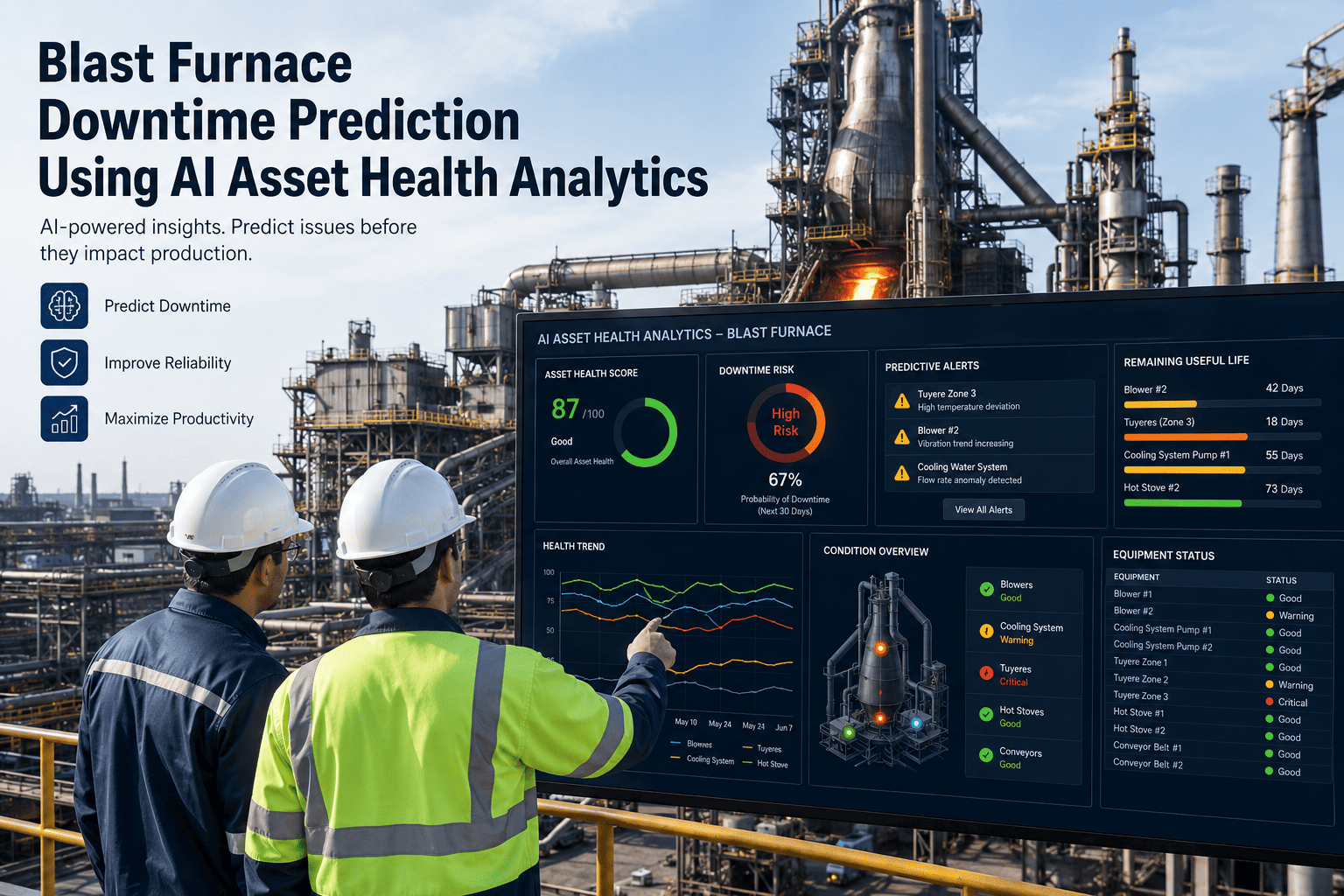
An operator watching a steel plant SCADA screen during a process upset can face more than 200 alarms in a single hour, far beyond the roughly six per hour that ISA-18.2 considers manageable in steady-state operation. When that many alarms fire at once, an operator does not act on all of them, they act on none of them, and the one alarm that actually mattered gets buried in the noise. Converting that noise into prioritized, actionable maintenance work orders is what separates a plant reacting to failures from one preventing them — book a demo to see your alarm data turned into action.
Steel Plant · SCADA Integration
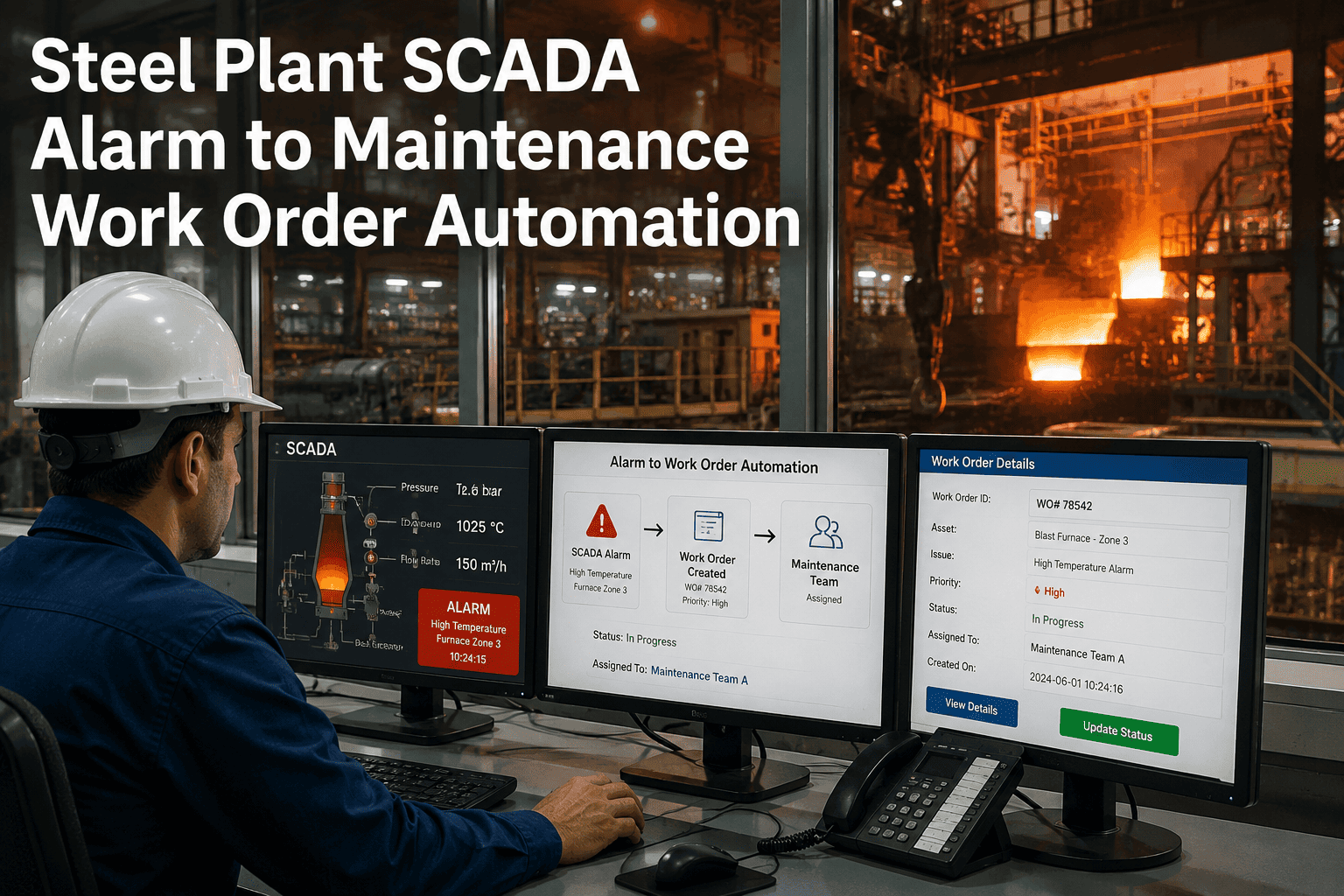
Steel Plant SCADA Alarm to Maintenance Work Order Automation
Turn rationalized SCADA alarms into prioritized, trackable maintenance work orders automatically — no more alarms scrolling off the screen unactioned.
78%
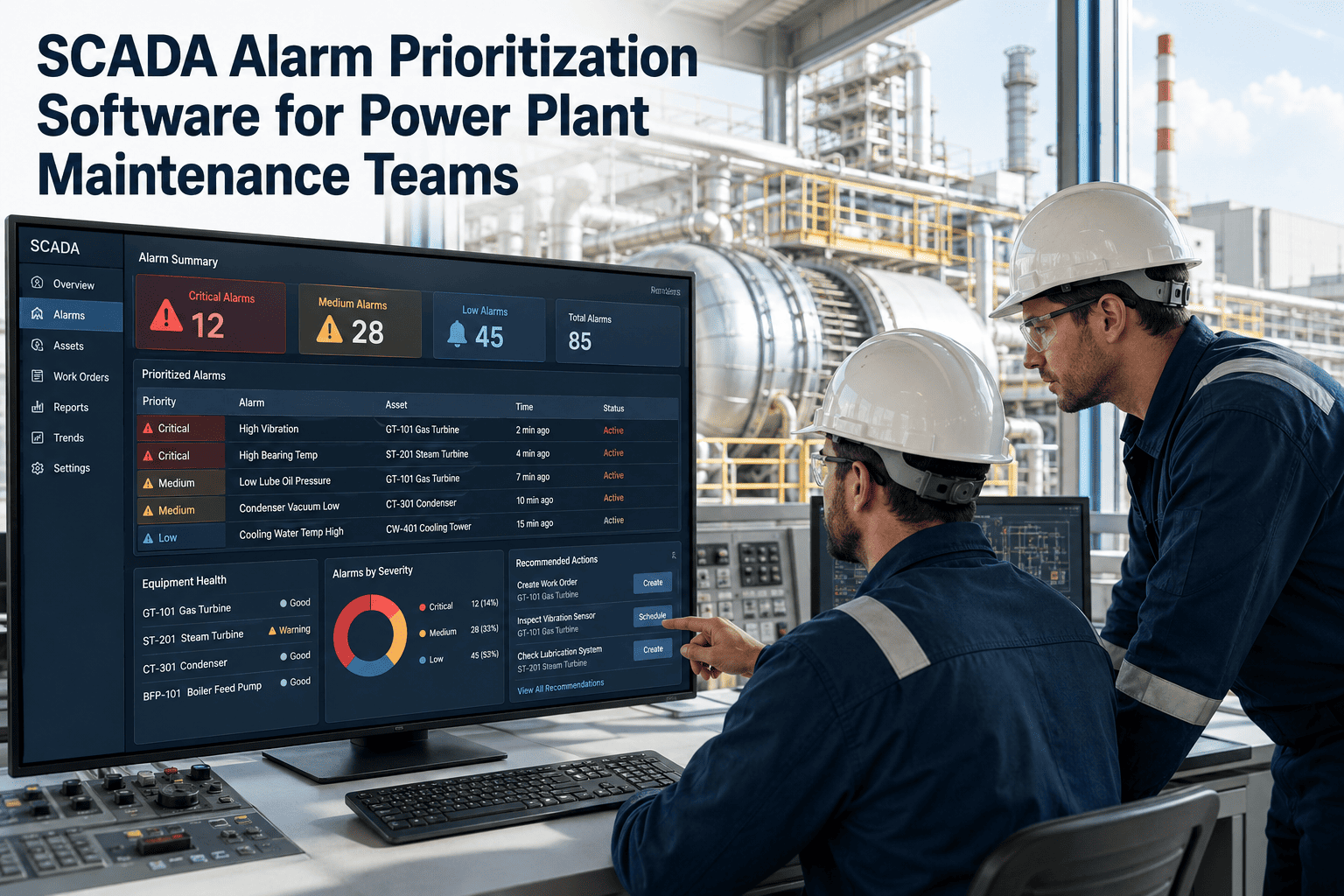
of industrial facilities are still running alarm philosophies designed decades ago, generating floods of low-priority noise that bury the one alert that actually requires action.
The ISA-18.2 Lifecycle, Applied to a Steel Plant Floor
Alarm rationalization is not a one-time cleanup — it is a repeatable cycle that keeps a SCADA system honest as processes and equipment change.
From Alarm to Work Order in One Connected Flow
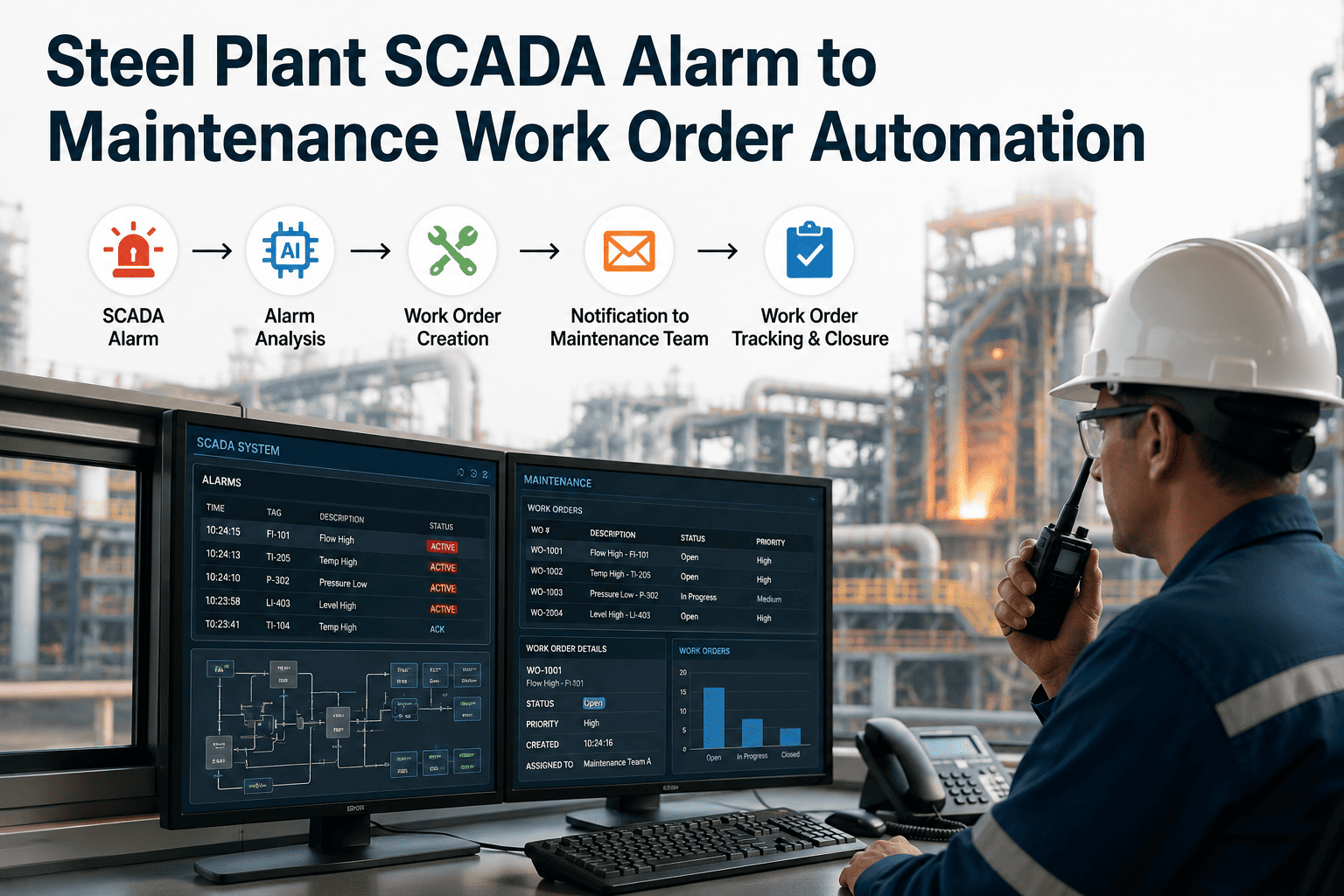
The gap most plants never close is the manual handoff between an alarm firing and a technician being dispatched. Automating that handoff is where the real time savings live.
SCADA Alarm Fires
Rationalized alarm crosses its documented threshold with a defined priority already attached.
Consequence Check
The alarm is matched against its Master Alarm Database entry — cause, consequence, and required response.
Work Order Generated
A prioritized work order is created automatically in the CMMS with the responsible crew already assigned.
Technician Dispatched
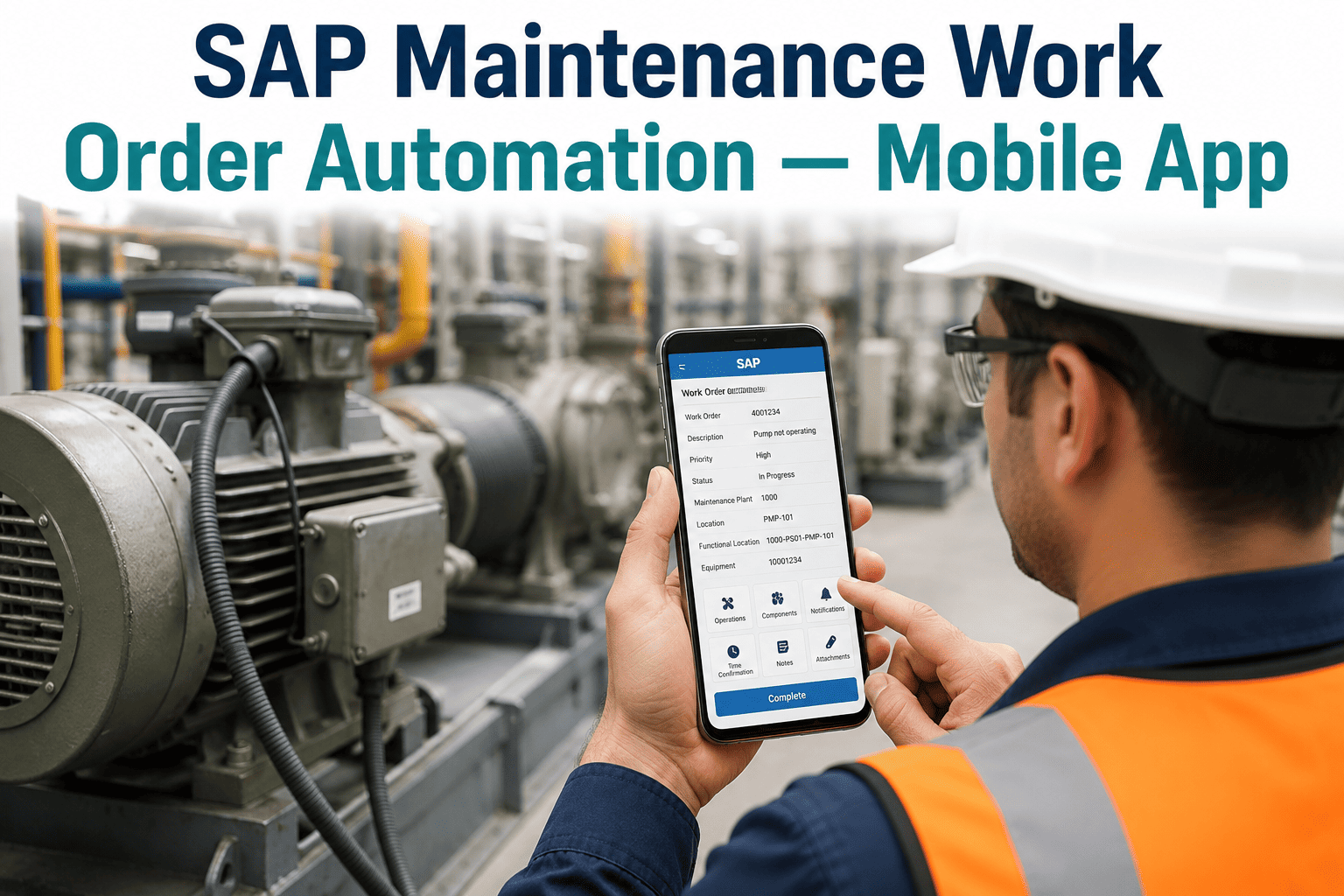
Mobile notification reaches the right technician with asset history attached, no radio relay required.
An alarm flood has been a contributing factor in some of the most studied industrial incidents on record. Rationalization is not paperwork — it is the operational firewall between controlled production and a shutdown.
Before and After Rationalization
Before
200+ alarms per hour during normal operation
No consistent priority classification
Alarms manually relayed to maintenance by radio
Response logged after the fact, if at all
After
Fewer than 10 alarms per hour in normal operation
Every alarm carries a documented priority
Work orders generated automatically in the CMMS
Response time to critical events improves by up to 35%
Manual Alarm Response vs. Automated Work Order Generation
| Factor | Manual Response | Automated Work Order |
|---|
| Dispatch method | Radio or verbal handoff | Mobile notification with asset history |
| Prioritization | Judgment call in the moment | Pre-defined by Master Alarm Database |
| Response tracking | Logged manually, often incomplete | Timestamped automatically end to end |
| Flood handling | Operator overwhelmed, alarms missed | State-based suppression prevents floods |
Frequently Asked Questions
What counts as an alarm flood under ISA-18.2?
ISA-18.2 defines an alarm flood as more than ten alarms annunciating within a ten-minute window, a threshold that sounds generous until a single equipment trip cascades into dozens of secondary alarms across interconnected systems. Steady-state operation should average fewer than six alarms per operator per hour, with anything above thirty considered a genuine flood condition that overwhelms an operator's ability to respond.
Book a demo to see your current alarm rate measured against this benchmark.
Does automating work orders mean replacing our existing SCADA platform?
No, the vast majority of alarm management improvements come from configuration and integration rather than a platform replacement. Rationalized alarm data is read from your existing SCADA system and routed into a work order engine that connects to your current CMMS, so the floor-level control system stays exactly as it is while the response workflow around it becomes automated.
Contact support to review compatibility with your current SCADA vendor.
How long does an alarm rationalization project take for a steel plant?
Timelines depend on the number of alarm points and process areas involved, but most plants complete an initial rationalization pass on their highest-alarm-count areas within a few months, then roll the same methodology across remaining areas. The work order automation layer can typically go live area by area as each rationalization pass completes, rather than waiting for the entire plant to finish.
Book a demo to scope a rationalization timeline for your plant.
What is state-based alarm suppression and why does it matter?
State-based suppression automatically silences alarms that are expected and non-actionable during known process transitions such as startup, shutdown, or a planned product changeover. Without it, routine transitions trigger dozens of alarms that are technically accurate but operationally meaningless, training operators to ignore alarms in general — which is exactly the fatigue pattern that causes a real alarm to be missed later.
Contact support to see suppression logic configured for your process states.
Can this system prioritize alarms based on predicted asset failure, not just threshold breaches?
Yes, an AI layer can correlate live alarm patterns with historical asset health data to surface predictive alerts before a hard threshold is actually breached, effectively giving maintenance teams earlier warning than a traditional setpoint alarm allows. This shifts a portion of the work order queue from reactive breakdown response toward planned intervention scheduled around production windows.
Book a demo to see predictive alerting layered on top of your rationalized alarms.
Stop Losing Critical Alarms in the Noise
Rationalized SCADA alarms that generate prioritized maintenance work orders automatically, with full response tracking built in.