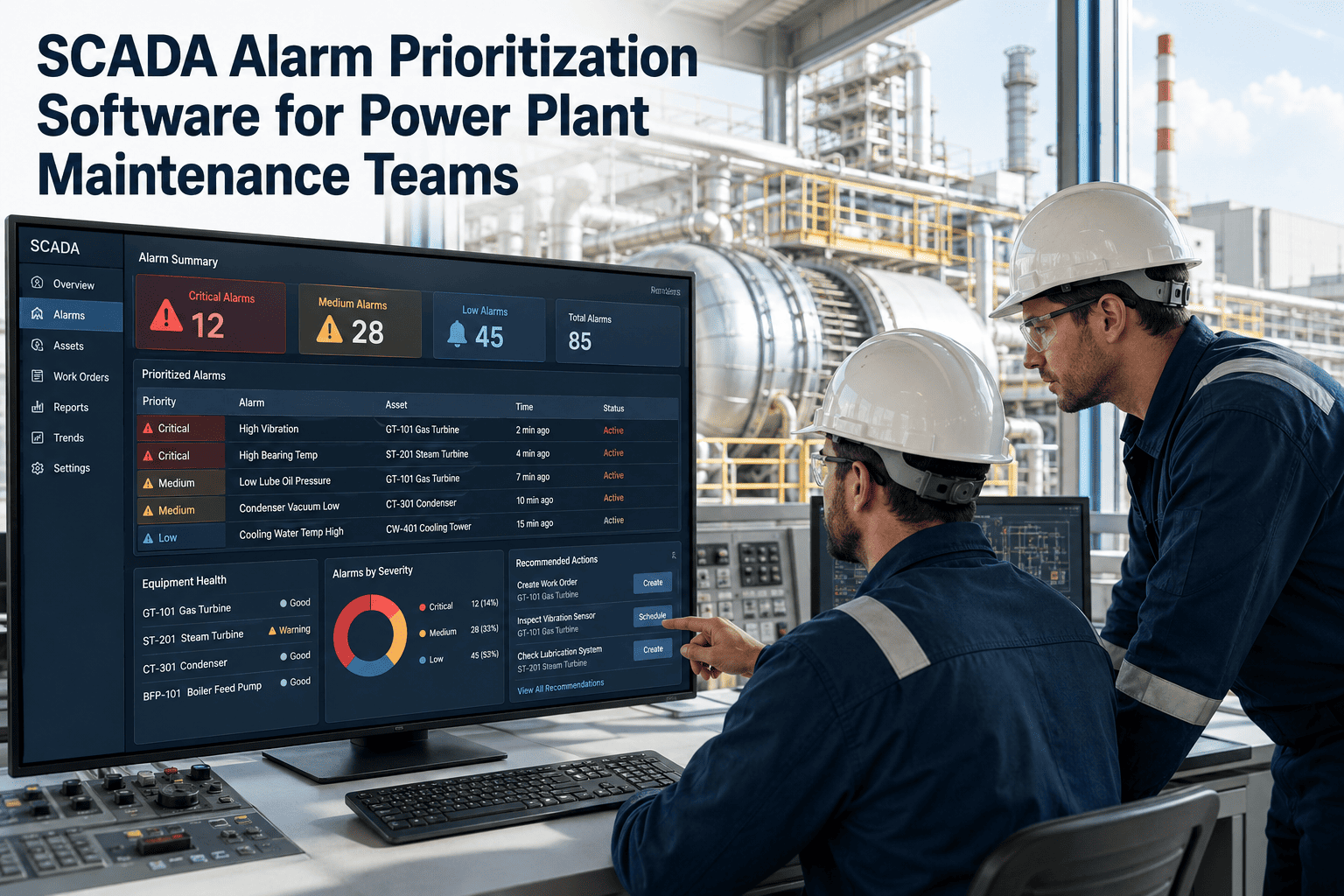
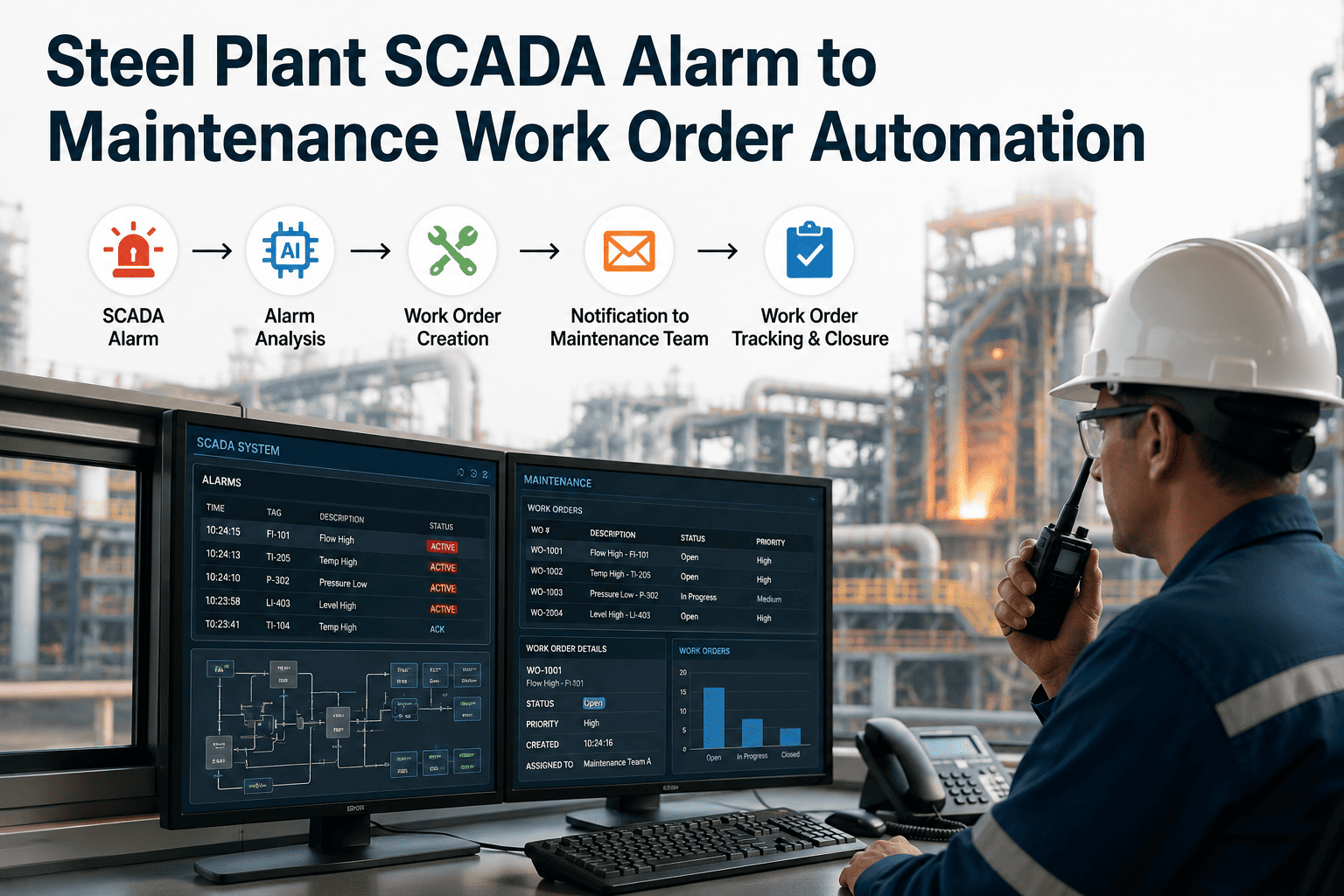
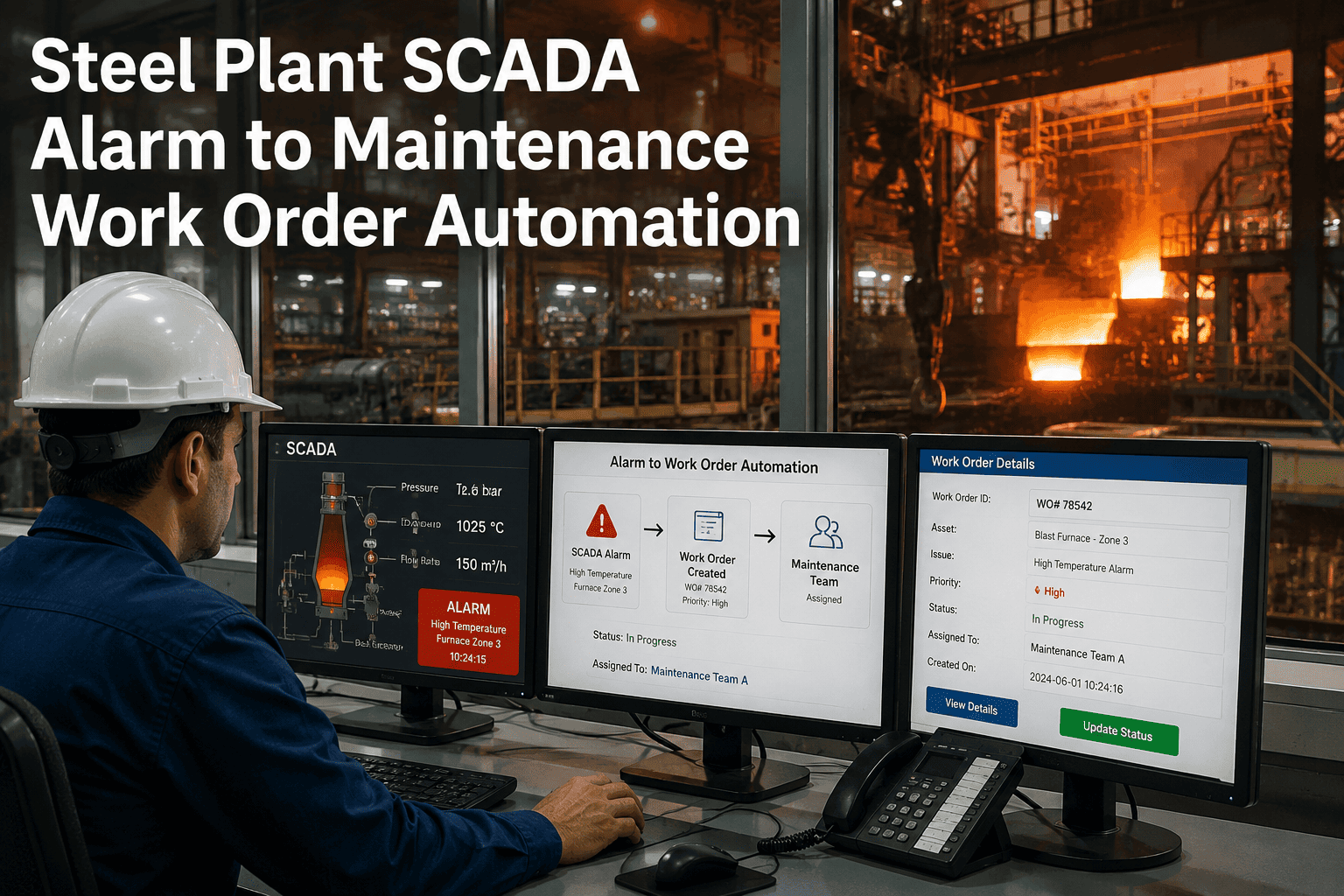
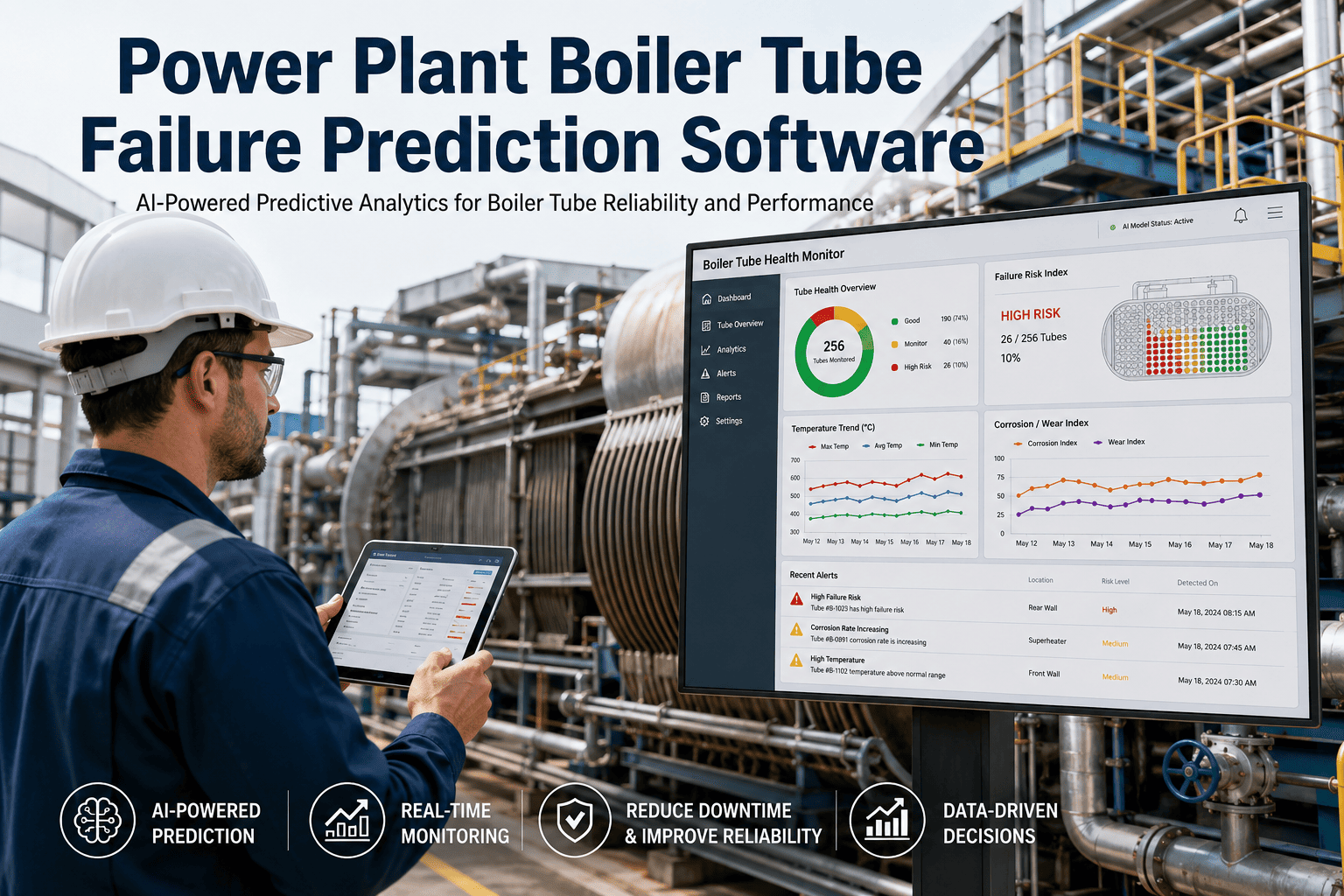
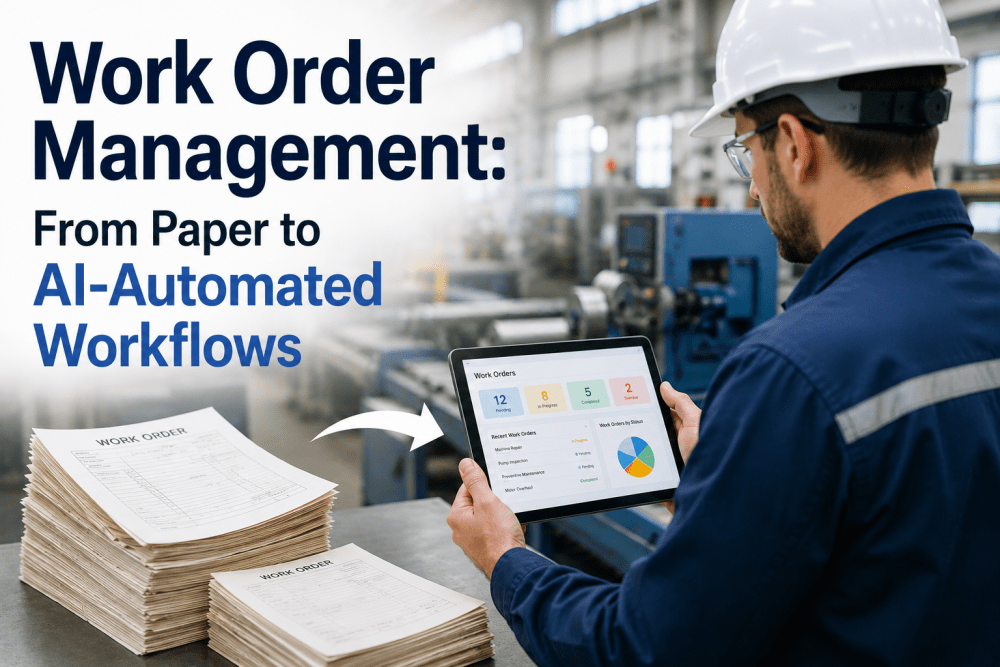
A power plant control room operator managing boiler, turbine, and balance-of-plant systems simultaneously cannot treat every SCADA alarm as equally urgent, yet many plants still present alarms with no consistent priority logic behind them. Without prioritization, a routine sensor drift alarm competes for attention with a genuine bearing temperature excursion, and during a real upset that ambiguity is exactly what causes a critical alert to be missed. Alarm prioritization software fixes this by assigning every alarm a documented priority tied to actual consequence and required response time, so book a demo to see prioritization applied to your plant's alarm data.
Power Plant · SCADA Integration
SCADA Alarm Prioritization Software for Power Plant Maintenance Teams
Every alarm classified by consequence and urgency, automatically converted into a prioritized maintenance queue your team can actually keep up with.
Where Your Plant's Alarm Rate Actually Stands
ISA-18.2 sets clear benchmarks for what a manageable alarm environment looks like. Most plants that have never rationalized their alarms are running well outside this range without realizing it.
| Condition | Alarm Rate | Status |
|---|
| Steady-state target | Fewer than 6 per operator hour | Manageable |
| Upper manageable limit | Up to 12 per operator hour | Acceptable |
| Warning zone | 12 to 30 per operator hour | Needs review |
| Flood condition | More than 10 in a 10-minute window | Critical |
How Every Alarm Gets Classified
Priority is assigned by combining how severe the consequence is with how quickly a response is actually required.
Critical
Severe consequence, immediate response — generator or turbine safety systems
High
Significant consequence, response required within minutes — boiler tube conditions
Medium
Moderate consequence, response within the shift — auxiliary equipment trends
Low
Informational, logged for review — non-urgent sensor drift or maintenance notes
From Classification to Maintenance Queue
1
Alarm fires and is matched against its documented priority in the Master Alarm Database
2
Priority is weighed against current plant load and running unit status
3
Alarm is placed into the maintenance queue ranked by true urgency, not arrival order
4
Team lead sees a single ranked list instead of a raw, unsorted alarm feed
Facilities that implement ISA-18.2 based prioritization commonly cut active alarm counts to under 500 and alarm rates to fewer than 10 per hour in normal operation. Response time to critical events has been reported to improve by up to 35%.
What Prioritization Changes in Practice
35%
Reported improvement in response time to genuinely critical events
<500
Active alarms after rationalization, down from thousands in an unmanaged system
<10/hr
Typical alarm rate achieved in normal operating conditions after prioritization
Expert Insight
A plant that alarms everything effectively alarms nothing, because the operator has no way to tell which one matters most in the moment it matters. Prioritization is the mechanism that restores that distinction — it does not require fewer sensors or less monitoring, it requires an honest, documented answer to a simple question for every single alarm: what happens if nobody responds to this in the next five minutes versus the next five hours.
Industry guidance drawn from ANSI/ISA-18.2 alarm prioritization principles
Frequently Asked Questions
How is an alarm's priority actually determined?
Priority is assigned during the rationalization process by evaluating the real consequence of not responding to that specific alarm within its required timeframe, then documenting that decision in a Master Alarm Database rather than leaving it to operator judgment in the moment. This means the same alarm always carries the same priority regardless of who is on shift, which removes a significant source of inconsistency in how plants have traditionally handled alarm response.
Book a demo to see the prioritization criteria applied to your plant's alarm list.
Can priority levels change based on plant load or running configuration?
Yes, dynamic alarming logic can adjust an alarm's effective priority based on current plant conditions, since the same reading might be routine at full load but urgent during startup or a partial outage. This context-aware approach is more accurate than a single fixed priority that ignores what the plant is actually doing at the time the alarm fires.
Contact support to discuss dynamic alarming for your specific unit configurations.
Does this replace our control room operators' judgment?
No, prioritization is designed to support operator decision-making by presenting a ranked, trustworthy view of what needs attention first, not to remove the operator from the loop. Operators still make the final call on how to respond, but they make that call with a system that has already done the work of separating genuine urgency from routine noise.
Book a demo to see how the prioritized queue is presented to control room staff.
How long does it take to rationalize and prioritize alarms across an entire plant?
Timelines depend on the number of alarm points and units involved, but most plants complete an initial pass on their highest-priority systems, such as turbine and boiler safety alarms, within the first few weeks, then extend the same methodology across balance-of-plant systems over subsequent months. Prioritization can go live incrementally as each system's rationalization is completed rather than waiting for a single plant-wide cutover.
Contact support to scope a rationalization timeline for your plant.
Can this integrate with our existing SCADA and DCS platforms?
Yes, prioritization logic is built to work with existing SCADA and DCS alarm data rather than requiring a control system replacement, reading alarm tags and configuring priority classifications directly against the data already flowing through your current platform. This is what makes it possible for most plants to see improvement in weeks rather than after a lengthy capital project.
Book a demo to review compatibility with your current SCADA and DCS setup.
Give Your Control Room a Queue It Can Trust
Every alarm classified by real consequence and urgency, so your team always knows what to respond to first.