In the rapidly evolving landscape of Industry 4.0, the ability to transform raw PLC sensor data into actionable predictive maintenance work orders represents a fundamental shift in manufacturing operations. Modern factories generate terabytes of data daily from programmable logic controllers (PLCs), sensors, and actuators, yet most of this information remains underutilized. By implementing a robust industrial IoT platform like iFactory, manufacturers can bridge the gap between machine-level signals and enterprise maintenance systems. This integration guide explores how to create a seamless data pipeline that converts real-time PLC readings into automated maintenance triggers, reducing unplanned downtime by up to 45%. With iFactory's AI-driven dashboards and no-code automation capabilities, shop floor teams can finally unlock the full potential of their machine data. Book a Demo to see how leading manufacturers are achieving predictive maintenance excellence.
Transform Your Shop Floor Data into Actionable Insights
Connect PLCs, sensors, and automation systems in one unified platform. Reduce downtime and boost OEE with AI-powered predictive maintenance.
Real-Time PLC Data Acquisition
iFactory connects directly to major PLC brands including Siemens, Allen-Bradley, Mitsubishi, and Modbus via native drivers and OPC UA. The platform ingests data at sub-second intervals, capturing critical parameters like temperature, vibration, pressure, and cycle times. This raw data is automatically normalized and timestamped, creating a reliable foundation for downstream analytics. With built-in edge processing, data is filtered locally to reduce cloud costs while ensuring high-fidelity signals for predictive models.
Sensor Fusion and Data Enrichment
Beyond basic PLC signals, iFactory aggregates data from additional sensors such as accelerometers, thermocouples, and flow meters. The platform applies sensor fusion algorithms to correlate multiple data streams, identifying subtle patterns that precede equipment failure. For example, a slight increase in motor vibration combined with a temperature rise can trigger an early warning. This enriched data set is stored in a time-series database optimized for industrial workloads.
AI-Powered Anomaly Detection
Machine learning models trained on historical failure data continuously analyze incoming sensor streams. iFactory's AI engine detects deviations from normal operating baselines, flagging anomalies with confidence scores. The system learns from each event, improving accuracy over time. Alerts are generated in real time via email, SMS, or push notifications, ensuring maintenance teams are informed before a breakdown occurs.
Automated Work Order Generation
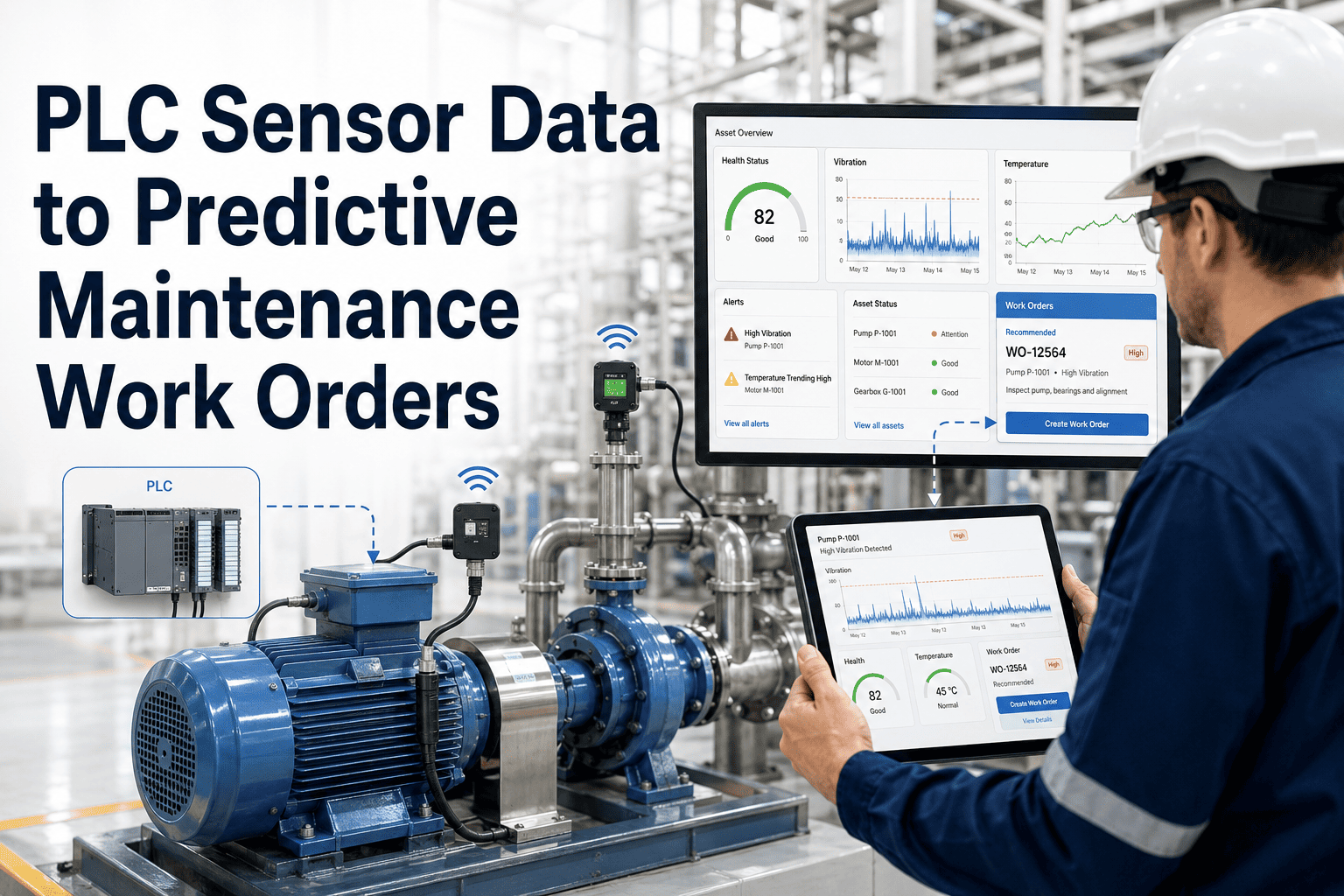
When an anomaly exceeds predefined thresholds, iFactory automatically creates a predictive maintenance work order in your CMMS or ERP system (SAP, Oracle, Maximo). The work order includes relevant sensor data, recommended actions, and priority level. This eliminates manual data entry and ensures that maintenance tasks are triggered by actual machine conditions rather than calendar-based schedules.
How the Data Pipeline Works
PLC and Sensor Connectivity
iFactory supports 50+ industrial protocols including EtherNet/IP, Profinet, and OPC UA. Data is collected from PLCs, sensors, and edge gateways using secure MQTT or REST APIs.
Data Processing and Normalization
Incoming raw signals are cleansed, normalized, and aligned by timestamp. Missing values are interpolated, and outliers are flagged for review. The processed data is stored in a scalable time-series database.
AI Model Inference
Pre-trained models analyze the data stream for patterns indicative of wear, imbalance, or impending failure. Results are scored and correlated with historical failure records.
Work Order Dispatch
If the anomaly score exceeds the threshold, iFactory triggers a work order in your CMMS. The work order includes a detailed description, sensor snapshots, and a priority rating.
Ready to Automate Your Maintenance Workflows?
Connect your PLCs and sensors today. See how iFactory turns machine data into predictive work orders automatically.
Key Integration Capabilities
PLC Connectivity
Native support for Siemens S7, Allen-Bradley ControlLogix, Mitsubishi iQ-R, and Modbus TCP/RTU. Data acquisition at 100ms intervals with buffered storage.
Sensor Integration
Connect vibration, temperature, pressure, and flow sensors via analog inputs, IO-Link, or wireless mesh networks. Data fusion combines multiple sensor types.
CMMS/ERP Sync
Bidirectional integration with SAP PM, Oracle EAM, IBM Maximo, and Infor EAM. Work orders, asset hierarchies, and spare parts catalog are synchronized.
AI Dashboard
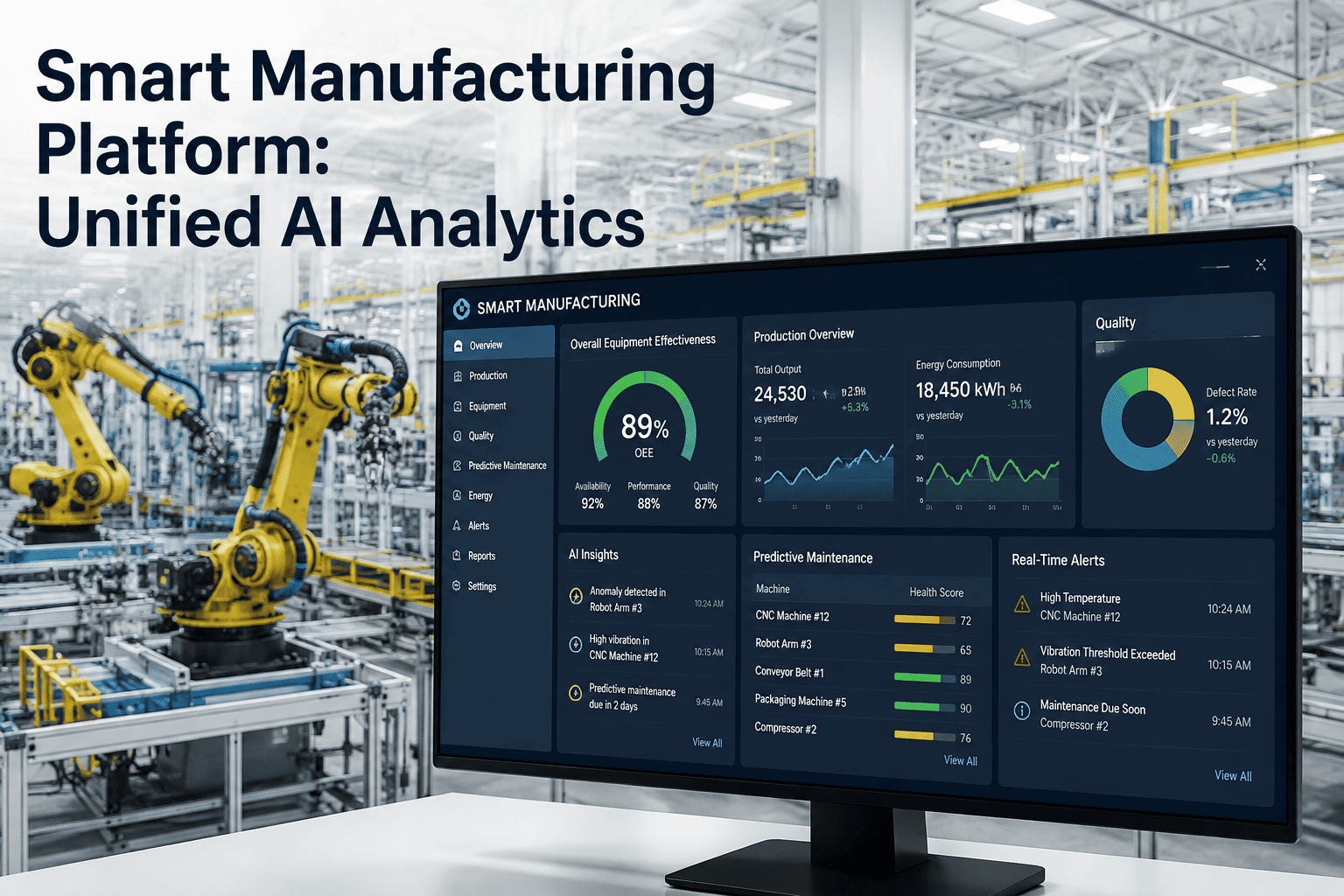
Real-time visualization of machine health scores, anomaly trends, and maintenance KPIs. Customizable widgets for OEE, MTBF, and MTTR.
Alerting and Notifications
Multi-channel alerts via email, SMS, Microsoft Teams, and Slack. Escalation rules ensure critical issues reach the right personnel immediately.
Historical Analytics
Store years of sensor data for long-term trend analysis. Compare failure patterns across similar assets to optimize maintenance strategies.
Implementation Roadmap
| Phase | Activities | Duration |
|---|---|---|
| Discovery | Assess current PLC infrastructure, identify critical assets, define data collection points | 2 weeks |
| Connectivity | Install edge gateways, configure protocol adapters, establish secure data transmission | 3 weeks |
| Model Training | Collect baseline data, train AI models on historical failures, validate accuracy | 4 weeks |
| Integration | Connect to CMMS, configure work order templates, set up alerting rules | 2 weeks |
| Go-Live | User training, parallel run, performance monitoring, continuous improvement | 1 week |
Performance Metrics Dashboard
Frequently Asked Questions
How does iFactory handle legacy PLCs without modern communication protocols?
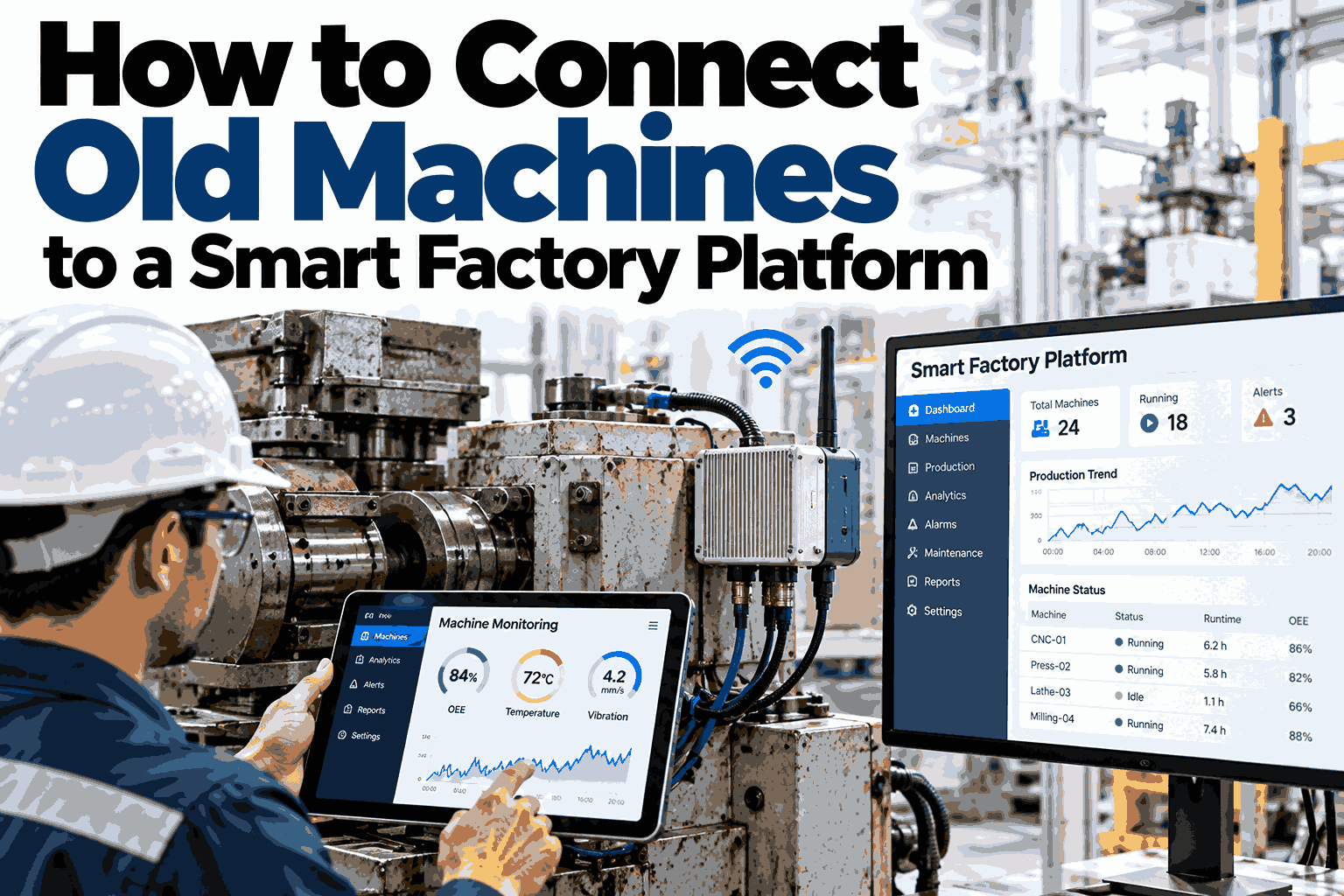
iFactory supports legacy PLCs through protocol converters and edge gateways that translate older serial protocols (RS-232, RS-485) into modern MQTT or OPC UA. For very old systems, we offer a hardware adapter that reads raw I/O signals and converts them to digital data. This ensures that even decades-old equipment can participate in predictive maintenance workflows. Book a Demo to discuss your specific legacy integration needs.
What is the typical latency from sensor reading to work order creation?
End-to-end latency is typically under 5 seconds for most deployments. This includes PLC data acquisition, edge processing, AI inference, and work order dispatch. For time-critical applications, iFactory offers an edge AI module that runs inference locally, reducing latency to under 500 milliseconds. The cloud-based fallback ensures reliability even during network interruptions. Book a Demo to see a live latency benchmark.
Can iFactory integrate with our existing CMMS or ERP system?
Yes, iFactory provides pre-built connectors for SAP PM, Oracle EAM, IBM Maximo, Infor EAM, and many others. The integration uses REST APIs or direct database connections to synchronize asset hierarchies, work orders, and maintenance history. Custom integrations can be built using iFactory's low-code integration studio. Support is available to help with complex configurations.
How are AI models trained for anomaly detection?
Models are initially trained on historical data that includes both normal operation and failure events. iFactory uses a combination of supervised learning (for known failure modes) and unsupervised learning (for novel anomalies). The models are continuously retrained using a feedback loop where maintenance teams validate alerts. Over time, the system becomes highly accurate at predicting failures specific to your equipment. Book a Demo to learn about our model training process.
What security measures are in place for data transmission and storage?
All data is encrypted in transit using TLS 1.3 and at rest using AES-256. iFactory is SOC 2 Type II certified and compliant with ISO 27001. Role-based access control (RBAC) ensures that only authorized personnel can view or modify data. On-premises deployment is available for organizations with strict data residency requirements. Support can provide a detailed security whitepaper.
Start Your Predictive Maintenance Journey Today
Connect your first PLC in under an hour. Let our experts guide you from sensor data to automated work orders.