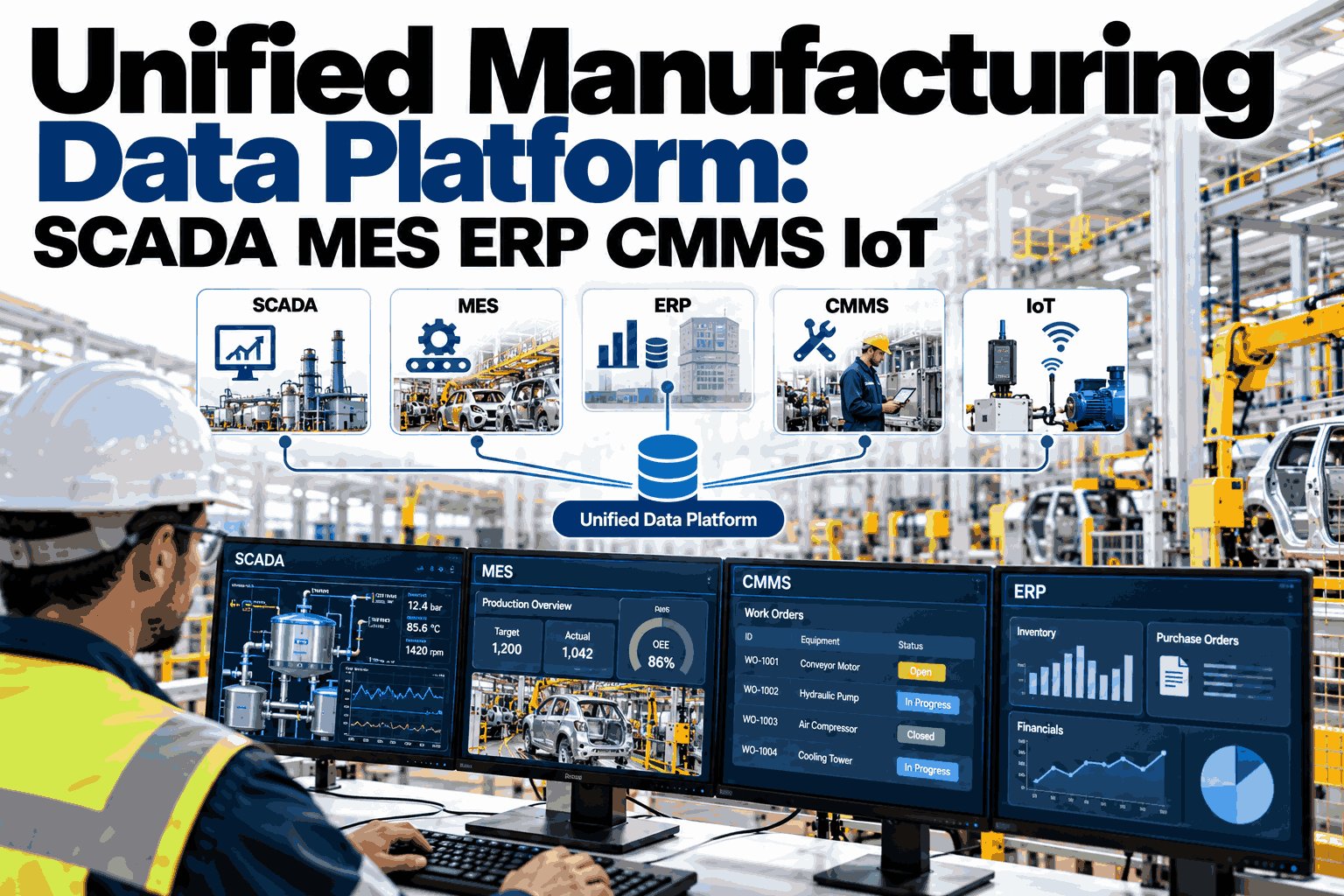
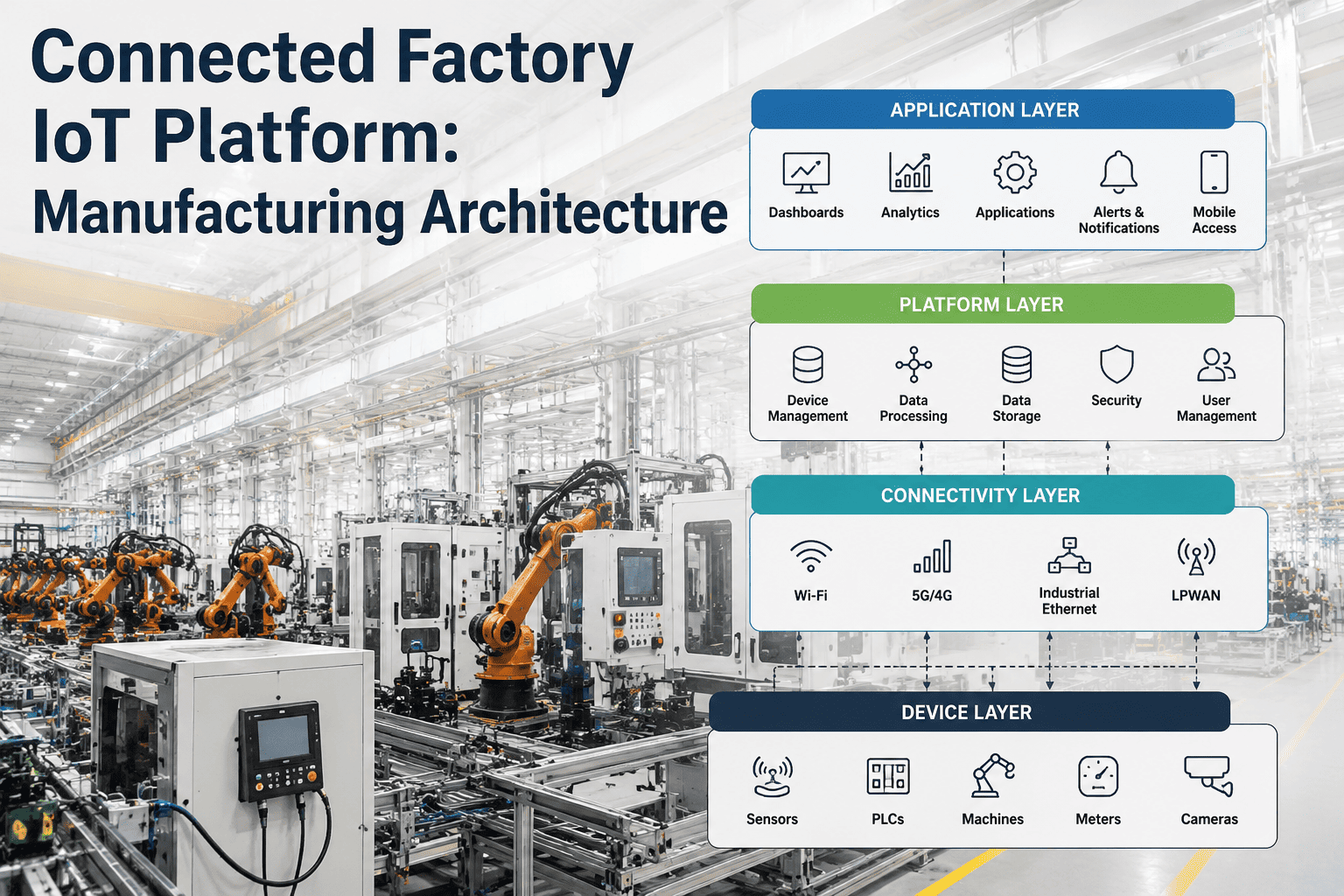
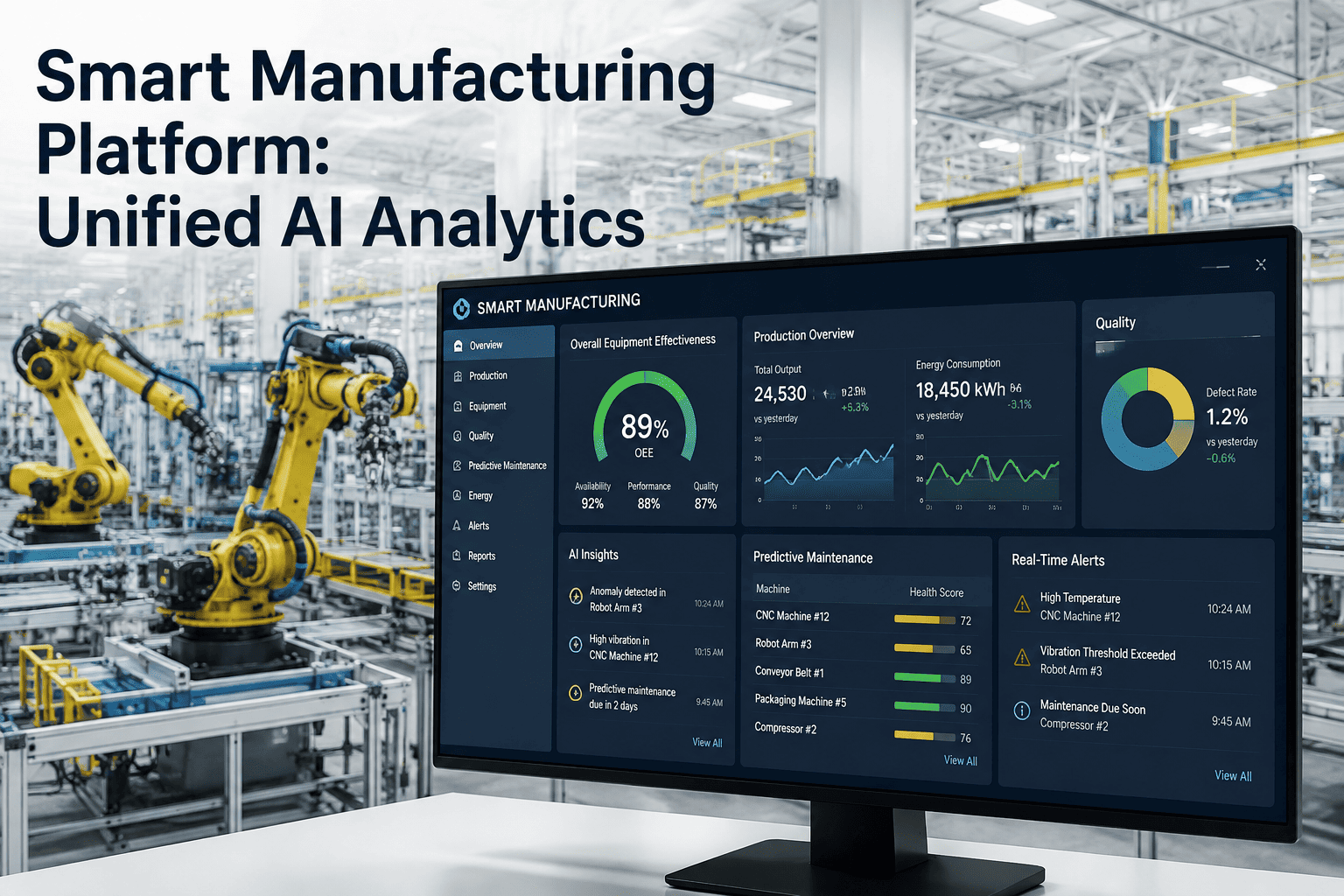
Most plants already run PLCs, SCADA, an MES, a CMMS and an ERP, each doing its own job well, but each holding its own slice of the picture. The result is a plant that generates enormous amounts of data without ever assembling it into one view that a person can actually act on. A connected factory architecture is not about replacing any of these systems, it is about building the layer that lets them speak to each other and to the AI and workflows built on top, and our team can map this architecture against your current systems.
Industrial data integration
Connect PLCs, SCADA, MES, CMMS and ERP Into One Working Picture
iFactory AI sits on top of your existing systems and brings machine data, production data and maintenance data into a single layer that feeds real-time analytics and AI.
The silo problem
Every System Knows Its Own Job, None Knows the Whole Picture
A PLC knows what the machine is doing right now. The MES knows what the production order calls for. The CMMS knows when maintenance last touched the equipment. The ERP knows what was planned and billed. None of them, on their own, can answer a question that spans more than one of these worlds.
Siloed systems
Each system answers only its own question
Cross-system questions need manual reconciliation
Decisions lag behind what is actually happening
Connected architecture
One layer merges data from every system
Cross-system questions answer automatically
Decisions reflect real-time conditions
The layers
Four Layers That Make Up a Connected Architecture
Machine layer
PLCs and sensors generating real-time operating data.
Systems layer
SCADA, MES, CMMS and ERP managing their own processes.
Unified data layer
A common model that merges data from every system above.
AI and workflow layer
Analytics, AI models and automated workflows built on the unified data.
Map Your Own System Landscape
Share which PLC, SCADA, MES, CMMS and ERP systems you currently run and see how a unified data layer would connect them.
Integration hub
How Data Actually Flows Between Systems
PLC and SCADA dataMES production dataCMMS and ERP records
Unified data layer
Real-time dashboardsAI-driven alertsAutomated workflows
This hub pattern means any new system added later plugs into the same layer instead of needing its own one-off integration with every other system. To see how your own systems would plug in, ask our team about your integration points.
What this unlocks
Questions a Connected Architecture Can Actually Answer
| Question | Systems involved | Without integration |
|---|
| Did a maintenance gap cause this downtime | CMMS and SCADA | Manual cross-check of two separate logs |
| Is this order behind because of a quality hold | MES and quality system | Phone call between production and quality teams |
| Does machine performance match the ERP plan | PLC and ERP | Manual comparison of two separate reports |
| Which shift had the most unplanned stops | SCADA and MES | Pulling and merging two separate exports |
Common pitfalls
Three Mistakes That Derail Integration Projects
1
Trying to replace systems instead of connecting them
Rip-and-replace projects take years and risk disrupting working processes.
2
Building one-off integrations per system pair
Each new connection becomes its own project instead of plugging into a shared layer.
3
No owner for the unified data model
Without a clear owner, the data model drifts out of sync with the systems feeding it.
Expert review
The systems you already run are rarely the problem, the missing layer between them is. Start by mapping what data each system already has, then build the connections rather than the replacements.
Watch for
A roadmap that leads with system replacement rather than data connection.
Do next
Pilot the unified layer on two systems with a clear cross-system question before expanding further.
— iFactory smart manufacturing specialists
Frequently asked questions
What Plants Ask About Connected Factory Architecture
Do we need to replace our MES or ERP to do this?
No, the whole point of a connected architecture is to work with the systems you already have rather than replacing them, since most systems already expose the data needed for a unified layer to connect to.
Ask about your current systems.
How long does a typical integration take?
Starting with two systems and one clear question usually gets a working connection running faster than attempting to integrate every system at once from the start.
Discuss a phased approach.
What happens when we add a new system later?
A new system connects to the same unified data layer rather than needing a separate integration with every existing system, which is what keeps the architecture manageable as it grows.
Talk through future additions.
Who should own the unified data model?
A clear owner, often someone spanning operations and IT, keeps the data model aligned as source systems change, and this ownership question is worth settling before the project starts rather than after.
Ask about ownership models.
Does this work across multiple plants with different systems?
Yes, the unified layer is designed to handle different source systems at different sites, mapping each into the same common model so multi-site reporting works consistently.
Discuss your multi-site setup.
From separate systems to one picture
Give Every System You Run a Shared Layer to Speak Through
Book a session with iFactory AI to map your current PLC, SCADA, MES, CMMS and ERP landscape and see how a connected architecture fits.